The Research Catalogue (RC) is a non-commercial, collaboration and publishing platform for artistic research provided by the
Society for Artistic Research. The RC is free to use for artists and
researchers. It
serves also as a backbone for teaching purposes, student assessment, peer review workflows and research funding administration. It strives to be
an open space for experimentation and exchange.
recent activities <>
Perspectives on time in the music by Stockhausen: the experience of a performer
(2026)
Karin DE FLEYT
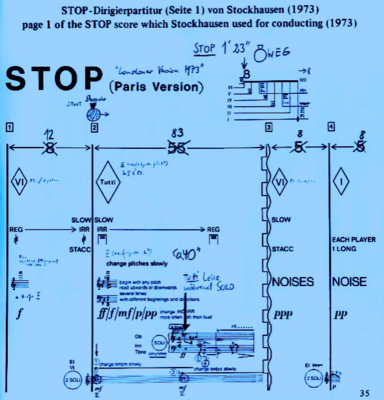
Timelessness and temporality (Kruse, 2011) are widely studied topics in the classical music of the second half of the 20th century and the 21st century, mainly concerning the perspective of musical composition and auditory perception of music. But what is the perspective of temporal layeredness in the performer’s experience? This quote offers a starting point (Noble, 2018): “music whose temporal organisation optimises human information processing and embodiment expresses human time, and music whose temporal organisation subverts or exceeds human information processing and embodiment points outside of human time, to timelessness .”
Specialized in the repertoire of Karlheinz Stockhausen, I want to investigate the role of temporality in music from the perspective of a performer. I will delve into the richness of different layers of temporal awareness in an artistic experience through experiential, embodied, and sensorial knowledge, using different temporal compositions by Stockhausen as case studies: HARMONIEN (2006) for flute solo,, Xi (1986) for flute solo and STOP (1969) for ensemble.
Filming Marlowe's Faustus: an artistic research project
(2026)
Jed Wentz
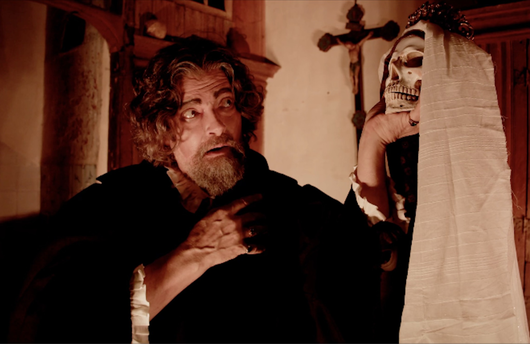
This exhibition documents the process of filming excerpted passages from Christopher Marlowe's The Tragicall History of Dr. Faustus as a series of monologues and tableaux. The resulting film, Scene's from the Tragicall History of D. Faustus, is here uploaded in its entirety, accompanied by supplementary materials related to its creation.
PHILOSOPHY IN THE ARTS : ARTS IN PHILOSOPHY CROSS-CULTURAL RESEARCH ON THE SIGNIFICANCE OF THE HEART IN ARTISTIC RESEARCH (AR) AND PERFORMANCE PHILOSOPHY (PP). PEEK-Project(FWF: AR822).
(2026)
Arno Boehler
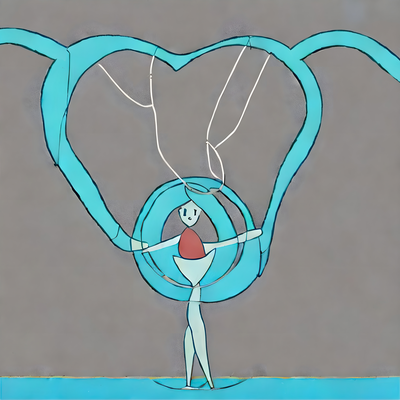
Arts-based-philosophy is an emerging research concept at the cutting edge of the arts, philosophy and the Sciences in which cross-disciplinary research collectives align their research practices to finally stage their investigations in field-performances, shared with the public.
Our research explores the significance of the HEART in artistic research and performance philosophy from a cross-cultural perspective, partially based on the concepts of the HEART in the works of two artist-philosophers, in which philosophy already became arts-based-philosophy: Nietzsche’s Thus Spoke Zarathustra and Aurobindo’s poetic opus magnum Savitri. We generally assume that the works of artist-philosophers are not only engaged in “creating concepts” (Deleuze), but their concepts are also meant to be staged artistically to let them bodily matter in fact.
The role of the HEART in respect to this process of “bodily mattering” is the core objective under investigation: Firstly, because we hold that atmospheres trigger the HEART of a lived-body to taste the flavor of things it is environmentally engaged with basically in an aesthetic manner (Nietzsche). In this respect the analysis of the classical notion for the aesthete in Indian philosophy and aesthetics, sahṛdaya––which literally means, “somebody, with a HEART”––becomes crucial. Secondly, because the HEART is said to be not just reducible to one’s manifest Nature, but has access to one’s virtual Nature as well. The creation hymn in the oldest of all Vedas (Rgveda) for instance informs us that a HEART is capable of crossing being (sat) & non-being (asat), which makes it fluctuate among these two realms and even allows its aspirations to let virtual possibilities matter. Such concepts show striking similarities with contemporary concepts in philosophy-physics, e.g. the concepts of “virtual particles” and “quantum vacuum fluctuations” (Barad).
recent publications <>
Topographies of the obsolete
(2026)
Anne-Helen Mydland
Topographies of the Obsolete is an artistic research project conceived in 2012 by
University of Bergen Professors Neil Brownsword and Anne Helen Mydland,
in collaboration with six European HEI’s and the British
Ceramics Biennial.
Emerging through two phases (2012-15; 2015-2020) it has to date engaged
ninety-seven interdisciplinary artists, scholars, cultural commentators and
students from thirteen countries. It has transformed participants’ practices, with
works originating out of the initial research being celebrated on an international
platform. Topographies of the Obsolete has received funding from a variety
of
institutions, alongside its core support from the Norwegian Artistic Research
Programme (2013-15 & 2015-17), whose peer review system (2015)
rated it
as ‘exemplary… strengthening artistic research and its scope beyond potential
communities of practitioners/researchers’. The project explores the landscape and associated histories of post-industry,
with an initial emphasis on Stoke-on-Trent, a world-renowned ceramics capital that bears evidence of fluctuations in global fortunes.
OLSKROKSMOTET BLUES
(2026)
Ann Kroon
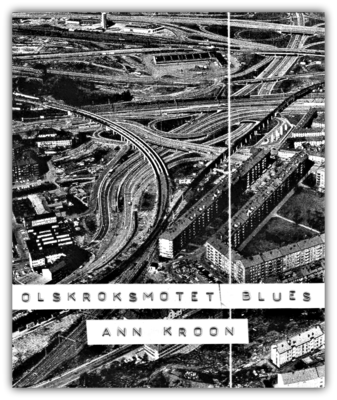
Olskroksmotet Blues är den avslutande delen i mitt autoetnografiska projekt som pågick i olika former mellan 2014-2021, och där jag bland annat publicerat två artiklar (Kroon 2015 och 2016). RC expositionen består av tre delarbeten - arkivblad, arkivmönster och göteborg grid – jämte bakgrund och teori & metod. Utifrån min historia som fosterbarn söker jag fånga såväl mina egna erfarenheter och uttryck, som att sätta dessa i ljuset av större samhälleliga skeenden. Olskroksmotet Blues var också del av Mikrohistoriers fysiska grupputställning på Konstfack, Stockholm i september 2021.
Monotheist Mythology
(2026)
Tolga Theo Yalur
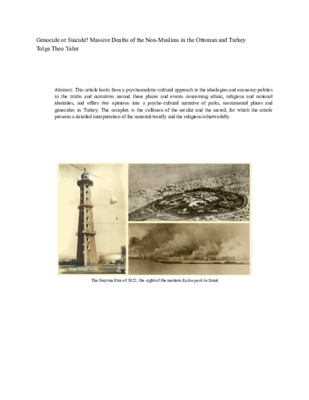
This article explores monotheistic religions as powerful linguistic and social structures that function through a mechanism of collective delusion. Drawing on Jacques Lacan’s structuralist insights, the text argues that these faiths are not based on objective history but are fictions codified long after the events they describe.