The Research Catalogue (RC) is a non-commercial, collaboration and publishing platform for artistic research provided by the
Society for Artistic Research. The RC is free to use for artists and
researchers. It
serves also as a backbone for teaching purposes, student assessment, peer review workflows and research funding administration. It strives to be
an open space for experimentation and exchange.
recent activities <>
Music in the making: identities and personality at play
(2026)
Jonas Howden Sjøvaag
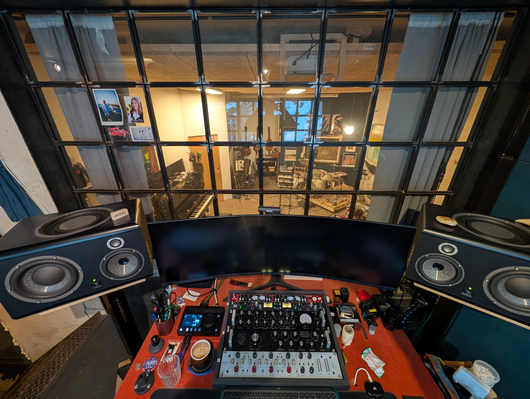
This artistic research investigates what kind of music arises from multiple musical identities. The answer is the album III, a collaborative work with guitarist Juhani Silvola, supported by a research exposition that documents and reflects upon the creative process, and an extensive timeline showing it as it unfolded.
The main argumentation within the work revolves around the importance of distinguishing between musical identities (plural) and personality (singular). The rationale behind this is to generate productive creative friction – to use the knowledge of multiplicity as a tool – to identify and push against boundaries and have knowledge from one identity inform, and expand, another.
Identities are multiple, situational, and enacted through doings: (in my case) the drummer, the singer, the producer, the programmer, et al. They coexist, each with its own expectations, vocabulary, and criteria for success. Personality, by contrast, is shown as the continuous thread – the container in which all identities meet and negotiate, providing coherence without dissolving difference. The research unfolds across three phases: Startup, Deconstruction, and Assemblage.
Methods include archival listening (revisiting accumulated recordings as material to draw from, either through self-gratification or analysis), physical and material constraints, custom software tools, and playing my instruments. In some cases, peripheral projects became ‘methodological sites’, allowing for focused and longer-term exploration and research. Spirit of Rain, Be Like Water, and a duo with Hans Martin Austestad, all function as experiments where methods combine and generate knowledge.
A central concern is the role of machines in creative practice. Noting, but not necessarily drawing on, philosopher John Searle's (1980) Chinese Room Argument and the concept of procedural agency, this work follows a line of thought in which machines may exhibit tendencies, but not personality. What emerges from human-machine collaboration is shaped by this asymmetry. The exposition, built using HTML and hosted in the Research Catalogue framework, is not a linear argument entirely, but rather a pathway through sounds, texts, videos, and fragments – organized semi-chronologically and tagged by function. It demonstrates that answering a question about musical identity requires both artistic result and theoretically aligned reflection.
Research Portal of Janacek Academy of Performing Arts in Brno
(2026)
Silvia Diveky, Monika Šimková

Research Portal of Janacek Academy of Performing Arts in Brno
Strangeness
(2026)
Catarina Casais
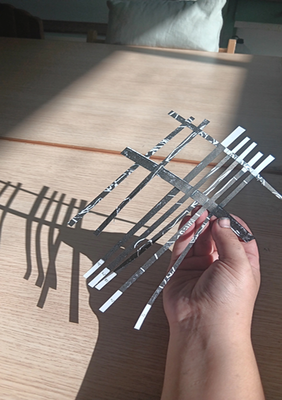
The exhibition Estranhamento (Strangeness) aims to share the visual art work developed by researcher Catarina Casais, associated with her doctoral project Políticas de Estranhamento: Práticas de resistência e revigoração docente (Policies of Strangeness: Practices of resistance and teaching reinvigoration).
These drawings, linocuts and embroideries seek connections between her artistic practice and research work, promoting possibilities for reflection on the teaching profession in the visual arts and the teaching demonstrations that took place between 2020 and 2024. The challenge in developing these works is to think, based on the materiality of the teaching demonstrations, about possible languages through the techniques and materials used. These languages reflect a desire to think about the daily reality of visual arts teachers and the moments of protest related to their professional practice.
Linocut, embroidery and drawing become ways of addressing the issue of visual arts teaching and its politicisation within the school environment, inviting everyone to visit the thinking laboratory that has been developed over the last academic year at Atelier Sem Forma.
recent publications <
Re-imagining Berio’s Sequenza I for flute solo: Challenging musical interpretation through storytelling and rhetoric models
(2025)
Ann Elkjär
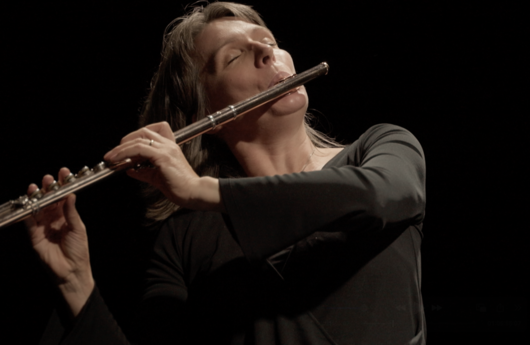
Among classical musicians, there is a tendency to define our profession more by craftsmanship than artistry. In our artworld, we often focus on reproducing: A musical performer becomes a transparent medium for the composer’s supposed intentions (Leech-Wilkinson, 2020, chapter 6). How can we reclaim agency and liberty in the process of shaping music? In this exposition, a storytelling approach is applied to the performance interpretation of Luciano Berio's classic flute solo Sequenza I from 1958, with the aim of becoming a more daring interpreter. The storytelling in focus was recorded in the 1950s, echoing even older times. However, in my explorations, the archival storytelling serves as a tool for reimagining a musical score and creating something new.
Re-imagining @ourdaysofgold_film: Follower Experience, Polyvocality, and Autofiction
(2025)
Assunta Ruocco, Thisbe Nissen, Genevieve Maynard, Frank Abbott, Phil Nunnally
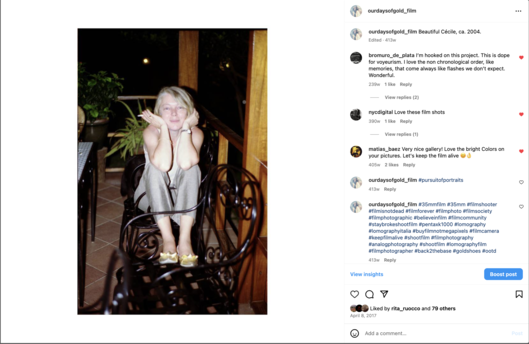
Our Days of Gold (ODOG) is an ongoing, durational artwork staged on Instagram at @ourdaysofgold_film since April 2017. Over its eight-year duration, the work has accumulated new layers of memory and interpretation shaped by followers’ responses, shifting platform aesthetics, and changes to Instagram’s visual logic, including the disappearance of the square grid in January 2025. Alongside creative contributions, the project draws on a survey conducted with long-term followers, tracing how experiences of viewing, remembering, and interpreting the work unfold over time. This co-authored exposition includes videos, screen-recorded navigations, and writing produced by followers whose contributions reveal a form of polyvocality: multiple interpretive threads and associations that remediate the archive while shaping its evolving narrative. Within this distributed process, ODOG engages autofiction not as a singular self-narration but as a collective mode of authorship, emerging through dispersed readings, layered memories, and networked resonances. At the same time, the project foregrounds the precarity of social media archives, where redesigns, algorithmic shifts, and potential platform loss constantly reshape how the work circulates and persists. Drawing on debates around remediation and digital preservation, ODOG tests how meaning, memory, and narrative can be sustained within unstable infrastructures while acknowledging their continual transformation.
Re-enactment as Research, A monologue
(2025)
Clare Bottomley
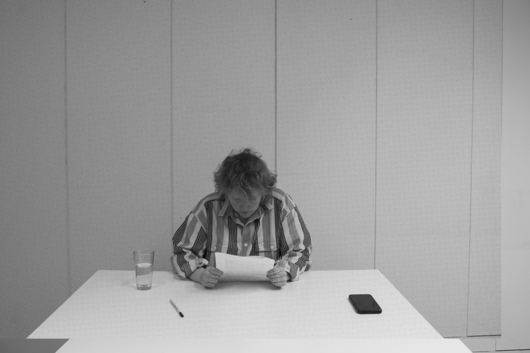
In this half paper, half soliloquy, I aim to propose re-enactment as a research method. Through textual analysis and situated reflections, I will explore the potential of re-enactments in performative returning to destabilize and reconfigure canonical understandings of the past, and consider any implications this understanding of re-enactment can have within research approaches