The Research Catalogue (RC) is a non-commercial, collaboration and publishing platform for artistic research provided by the
Society for Artistic Research. The RC is free to use for artists and
researchers. It
serves also as a backbone for teaching purposes, student assessment, peer review workflows and research funding administration. It strives to be
an open space for experimentation and exchange.
recent activities <>
SOUNDING OUT the SOUND of OUD
(2026)
DMA
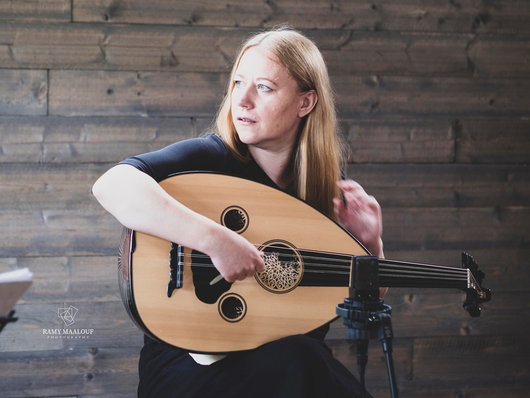
Documentation of preliminary steps and collection of musical material and related reflections during the first Term of the Master's Program in Improvisation and World Music.
December 2022
Empowering Collective Performing Arts: A Facilitator’s Collection of Voice and Dance Scores to Overcome Social Barriers
(2026)
Alice Presencer
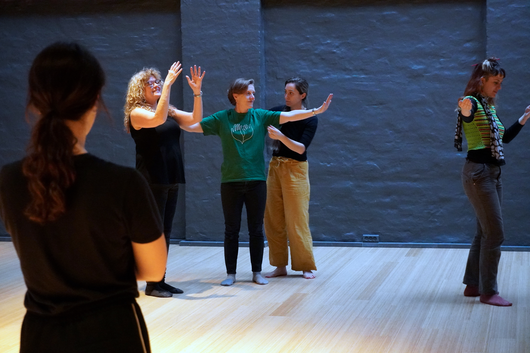
'Empowering Collective Performing Arts: A Facilitator’s Collection of Voice and Dance Scores to Overcome Social Barriers' is a practice-led research project that explores the ways to encourage group connection through performing arts activities within diverse communities.
Wang Xiyao: Multidirectional Aesthetic Experience in Abstract Painting
(2026)
BANGHUA SUN
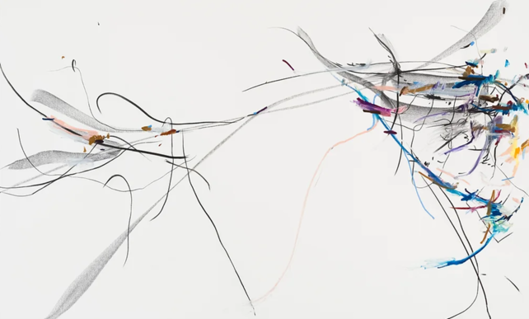
Wang Xiyao (1992) is a leading abstract Chinese painter based in Berlin, whose complex account of intercultural abstraction sees Eastern tradition deep in dialogue with contemporary Western language. It has replaced vivid, multilayered-meanings, deep personal experience, cultural memory, and common history, which have traditionally formalist postulates. Under the mentorship of Werner Büttner and Anselm Reyle and also inspired by Cy Twombly, Joan Mitchell, and Julie Mehretu, she began to elaborate a dynamic practice based on rhythmically interplaying color, line, and space. Many works are inspired by poetic and philosophical tradition, employing concepts such as Chinese Liu Bai (留白, intentional blank space) and moving into physical expression through dance and martial arts. In this respect, Wang's working process in creation corresponds to the concept of bodily perception in Maurice Merleau-Ponty and experiential aesthetics in John Dewey, considering immersion in the multisensory approach rather than pure visual contemplation. By an original synthesis in manifold aesthetic and sensory modalities, she thus develops multidirectional experiences, which are fascinatingly active and dialogic in the sense that they stir her viewer into an incessant questioning about form, culture, and consciousness.
recent publications <>
Unsettled Subject: From Emancipation to Separation
(2026)
Martin Pšenička
This essay is inspired by the contributions to this issue, whose common denominator seems to be the transformation of the nature of authorship and the position of the authorial subject, reflecting the broader theme of the position of the subject in the contemporary world. Some authors, responding to ArteActa’s previous call for submissions, “AI (and) Art: The Poetics of Prompting,” explore the changing conditions of artistic work with AI, while others focus on the interaction between materiality and human perception. All raise urgent questions related to the concept of the subject and the connection between the perceiving mind and the surrounding world. Through a historical reflection of poetics as the art of “prompting,” the text addresses theoretical conceptualization of the subject, in which emancipation at the level of the perceiver plays an increasingly important role. With the advent of AI as a “separate intellect” (Agamben 2025), the emancipation and transformation of (creative) subject raises questions stemming from today's paradox, in which all important and necessary emancipation efforts seem to be distorted or lead to tendencies that brutally contradict them. In this context, does AI bring about the final stage of the emancipation of the subject, or does this autonomous intellect enable hedonistic ochlos-authorship? Without reviving the laments of the past, the essay attempts to point out the fragility and uncertainty of the subject facing unprecedented pressure.
how to strike roots into the void – a trapeze artists view on artistic processes as permacultural growing
(2026)
Carmen Raffaela Küster
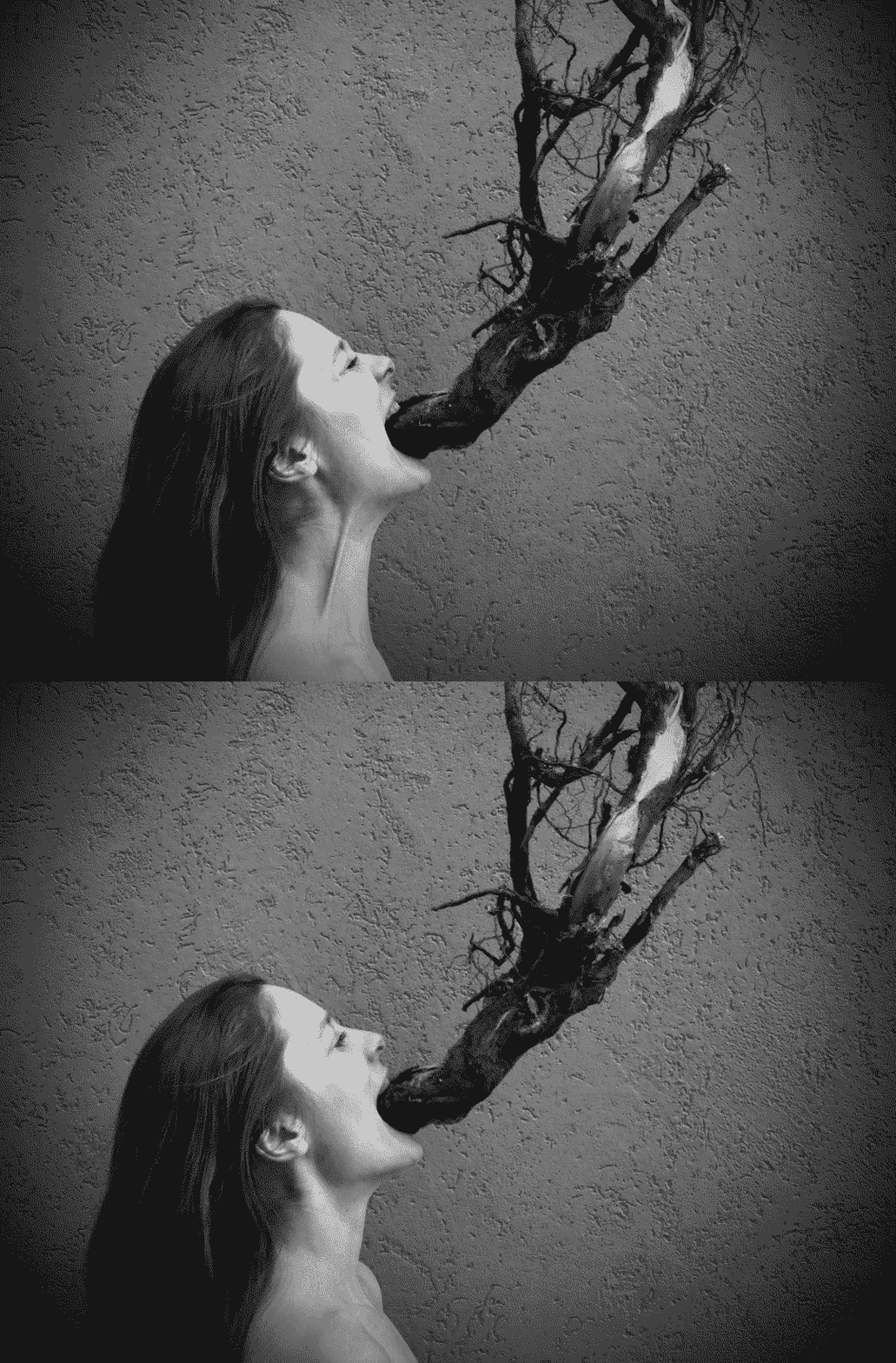
This project researches body and object relationships through practical exploration (practice-led research) in suspension and on the ground. It illuminates connected thoughts linked to posthuman philosophy, permaculture, physical movement and contemporary circus.
Our perception of the world is getting more global and connected, but we have not realised yet the full complexity of all the interdependencies and interplays. In fact it is more than questionable whether this might be graspable for any human to its full extend at all…
The state of being ‘in suspension’ is taken as an analogy for the times we live in – life itself. In a world in which pop-stars sing ‘I have no roots’ (Merton, 2016), mass-migration makes people leave their homes involuntarily and others choose nomadic livestyles that leave them only loosely connected with a geographical place and a single culture. But at the same time, we are always tightly connected (digitally) with ‘the whole world’.
'How to strike roots into the void?' is the essential question of this interdisciplinary research, which has its roots deep 'down' in aerial acrobatic movement. How could this rooting be possible at all? And in which ways? – referring to the question of quality: 'HOW' can we in these times as human being strike out our own roots? Who and what can keep us grounded? To whom or what are we reaching out to search for connection? What nourishes us? And where to hold on to, if the substrate is emptiness – the Void – the uncertainty of life itself?
Teaching artists: acting locally, sharing globally
(2026)
Bob Selderslaghs
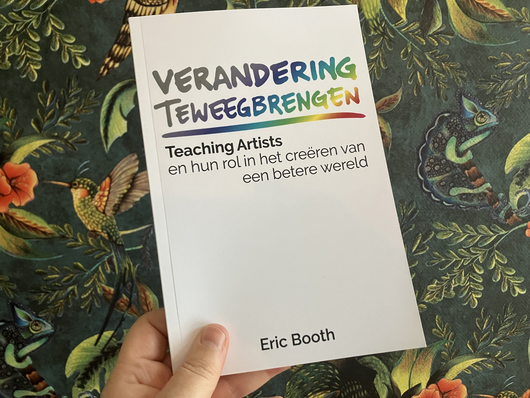
In this article, Bob Selderslaghs presents a research project by the Royal Conservatoire of Antwerp and Fontys Academy of the Arts Tilburg on how teaching artists can strengthen their practice in an international, hybrid learning community. Through inspiring lectures, practical experiments and in-depth reflection, participants gained recognition for their practice, expanded their artistic-pedagogical repertoire and built valuable contacts. The project emphasises the power of flexible frameworks, embodied learning and sustainable networks for greater visibility and impact in this dynamic field.