The Research Catalogue (RC) is a non-commercial, collaboration and publishing platform for artistic research provided by the
Society for Artistic Research. The RC is free to use for artists and
researchers. It
serves also as a backbone for teaching purposes, student assessment, peer review workflows and research funding administration. It strives to be
an open space for experimentation and exchange.
recent activities <>
Partisans With a Hoe - Spontaneous Gardening in Urban Space
(2025)
Ivana Balcaříková, Barbora Lungova

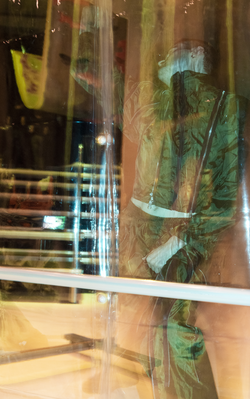
This project combines artistic and anthropological research on spontaneous gardening in open public space, predominantly in Brno, CZ. The team, mostly comprising recent graduates and graduate students of the Faculty of Fine Arts of Brno University of Technology, chose gardens and plantings which were, in most cases, rather exceptional. Unlike most typical front gardens, the ones in this study are somehow peculiar, due to their location, their composition and planting schemes, their scale, or methods of those who garden there. The anthropologists on the team analyzed a Facebook group dedicated to street gardening and conducted several interviews, while the artistic team responded to particular places with which they interacted. Some results of this research have been presented to the public in the form of an application comprising an audioguide and an interactive map; this exposition in the Research catalogue documents
some of these findings.
The team
Barbora Lungová is a visual artist and has taught at the Faculty of Fine Arts of the Brno University of Technology since 2007. Her field of practice is painting and art projects focusing on plants, gardening, and queerness. She is the coordinator of the Partisans with a Hoe project.
Lucia Bergamaschi is a visual artist working across the media of photography, sound, and installation. She earned an MA in Fine Art at Università Iuav di Venezia and an MA in Law at Università di Bologna. She is currently finishing her MA studies at the FFA BUT.
Nela Maruškevičová combines painting, installations, and glass in her artistic practice. She is a 2023 graduate of the FFA BUT. Kateřina Konvalinová is a visual artist interested in the overlapping spaces of art, communal life, farming, and ritual. She earned her MA in Fine Arts from the Academy of Fine Arts in Prague, and is currently a doctoral student at the FFA BUT.
Iva Balcaříková is a graphic designer and a member of the team behind the curated audio walks created by Galerie Art in Brno. She is currently finishing her MA studies at the FFA BUT. Hana Drštičková is a visual artist and a social anthropologist interested in environmental and queer topics. She graduated with an MA in Fine Arts from the FFA BUT in 2022 and with a BA in social anthropology from the Faculty of Social Sciences at Masaryk University and is currently a doctoral student at the Gender Studies Department of Charles University in Prague.
Anastasia Blokhina is a social anthropologist who graduated with an MA tfrom the Faculty of Social Sciences of Masaryk University in 2022. Polyna Davydenko is a photographer and a video artist who documents social and environmental issues in her work, most recently those connected with the war in Ukraine.
Filip Dušek is a media artist who studied at the Department of Photography at the FFA BUT.
The project was conducted under the Specific Research FaVU-S-23-8441 Program.
Working Title
(2025)
Kristin Anna Eyjolfsdottir
PROJECT DESCRIPTION
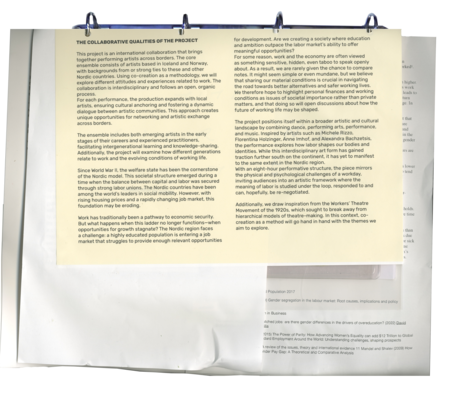
“Working Title” is an art performance about labor
conditions and class structures. The motivation behind the
piece is to interrogate the many ways in which work affects us. The boundaries between labor and art are also examined, as the physical and mental demands placed on the performers reflect the burdens of modern working life. The format mirrors a regular workday: the performance lasts eight hours, including a break. It is presented in two versions—a day shift and a night
shift.
Today, many sectors are marked by rapid change, demands for efficiency and ever-increasing productivity. Which values are prioritised, and which are undermined to meet the needs of such a labor market? In the piece, structural challenges will be studied and observed through scenarios acted out on stage.
Some examples of questions that will be used to form these scenarios:
-At what cost do you actually sell your time?
-What kind of value is, beyond the monetary, created for those who buy your time?
-In what ways, physically and mentally, do you experience your labouring hours, after you have clocked out?
The performance will explore themes such as:
- Monotony and repetition as fundamental elements of labor
- Power dynamics in the workplace and how privileges are
maintained and reinforced
- The body’s needs in relation to work: illness, disabilities,
menstruation, and pregnancy
- The physiological consequences of labor
- The value of time as an economic and social divide
- The close link between economic stability and mental health
In a time when the job market is shaped by rapid technological development, climate change and an uncertain future, thinking through alternatives for how to organise ourselves has become crucial. With this performance, we aim to dig into the mechanisms at stake in order to hopefully be able to both raise questions and think deeply about how we may face the challenges ahead collectively. A dynamic, experimental and collectively driven form of artistic expression is combined with societal critique. We believe in art as a way of adding to the discourse in poetic manners, activating questions through embodied experiences. With this unique format, we hope to open new perspectives on what labor means for individuals and society—and what values we
wish to build our common future upon.
recent publications <>
Sound, Performance, and Technology: Considering The Foley Grail
(2026)
Sara Pinheiro

Vanessa Theme Ament’s "The Foley Grail" was, for a long time, the only publication to discuss in detail the art of film sound effects (foley). In this issue, we review the third edition of the book while in dialogue with the author herself.
Norths: Navigating Instability By Ear
(2026)
Jorge Boehringer
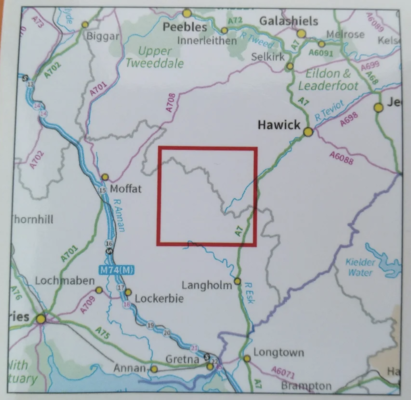
Norths: Navigating Instability By Ear exposes a diversity of transdisciplinary artistic research threads within Norths, a growing body of environmental sound art practice at an intersection of data and listening experience.
By rendering intangible data representations physically perceptible, ‘northness’ - understood as location, place, idea, and fiction - becomes a site for material interrogation of ‘standards’ applied to measurement, perception, being, knowing, and acting. Critical phenomenological and ecological issues emerge from the noise encountered when sonifying (near) real-time seismic and geomagnetic data, as well as data from communication systems.
In the present exposition conceptual corollaries from my experience making, reflecting on, and exhibiting these works are diffracted through language in a project to expose the material propositions of these works themselves. Cross-modulation (feedback) loops established within this exposition connect artistic practice to philosophical-linguistic expression, providing both an explication and an exploratory continuation of my ongoing research practice.
Akustický plenér: zvukoprostorová poslechová zkušenost jako východisko hudební kompozice
(2026)
Slavomír Hořínka
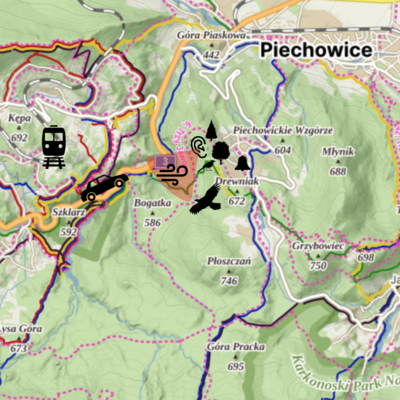
Pětice skladatelů – pedagog, tři studenti a jedna studentka se vydali naslouchat zvukové krajině polského předhůří Krkonoš, aby zkoumali vliv subjektivní percepce na výslednou podobu skladby. Nejdříve zaznamenávali své zvukoprostorové poslechové zkušenosti graficky do skicáků. Vzápětí formulovali tvůrčí záměry skladeb pro komorní ansámbl, které z těchto zkušeností vycházejí. V následujících čtyřech měsících zkomponovali studie s vědomím, že jsou určeny ke studiové realizaci. Kompoziční studie poté sami nahráli a celý proces společně reflektovali. Předložený text vstupuje do kontextu akustické ekologie, instrumentální syntézy a počítačem podporované skladby. Navazuje na kontinuální umělecký výzkum na katedře skladby HAMU v oblasti zvuku a prostoru a tvůrčích aplikací výsledků. Jeho cílem je prozkoumávat vztahy mezi subjektivní zvukoprostorovou zkušeností, volbou kompozičních strategií a výslednou podobou skladby.
Five composers – one teacher and four students – set out to listen to the soundscape of the Polish foothills of the Giant Mountains in order to explore the influence of subjective perception on the final shape of a composition. First, they noted down their sound-spatial listening experiences graphically in sketchbooks. They then formulated creative ideas for chamber ensemble compositions based on these experiences. Over the next four months, they wrote compositional studies with the intention of recording them in the studio. They then recorded the studies themselves and reflected on the entire process together. The presented text enters the context of acoustic ecology, instrumental synthesis, and computer-assisted composition. It builds on continuous artistic research at the Department of Composition at HAMU in the field of sound and space and the creative application of the results. Its goal is to
explore the relationships between subjective sound-spatial experience, the choice of compositional strategies, and the resulting shape of the composition.