The Research Catalogue (RC) is a non-commercial, collaboration and publishing platform for artistic research provided by the
Society for Artistic Research. The RC is free to use for artists and
researchers. It
serves also as a backbone for teaching purposes, student assessment, peer review workflows and research funding administration. It strives to be
an open space for experimentation and exchange.
recent activities <>
Creating Cultures of Care
(2026)
Debbie Straver, Gjilke Wytske Keuning, Nina Goedegebure
Nine research groups from HKU, Hanze University of Applied Sciences, Fontys, and Utrecht University of Applied Sciences are joining forces with UvH and UMCU to bring a new perspective on healthcare through the arts, supported by the SIA-SPRONG grant. Using a transdisciplinary approach, this research group and its partners are developing new methods, practices, and scenarios within healthcare and well-being contexts—not for, but with each other.
From local food systems to ceramic practice: building cross-sector networks through material research
(2026)
Zizi Mitrou
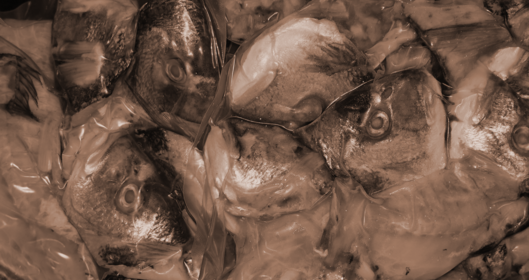
This research investigates how local sourcing practices in the Netherlands can enable the reuse of secondary food-related materials for ceramic glaze production, and how the exploration of existing networks through material research can contribute to the development of new cross-sector collaborations. Through a practice-based approach that bridges ceramic production, design research, and the restaurant industry, the study explores the potential of locally available “waste” materials, such as bones, shells, charcoals, and discarded glass, as viable resources for glaze making.
The research combines material experimentation with qualitative fieldwork, including interviews and informal discussions with chefs, ceramicists, suppliers, and material practitioners. By tracing the origins, processing, and transformation of these secondary resources, the study critically examines the environmental impact and opacity of conventional glaze supply chains, which often rely on imported raw materials and energy-intensive extraction and transportation processes.
Central to the research is the creation of a material archive that documents locally sourced secondary materials and their behavior in glaze recipes. This archive functions not only as a technical tool for ceramic experimentation, but also as a framework for understanding relationships between material flows, human practices, and local infrastructures. Drawing on the concept of “working in the minor key,” the research emphasizes learning through direct engagement, observation, and collaboration rather than predefined systems.
The findings suggest that material research can act as a catalyst for new circular practices and cross-sector networks between restaurants and ceramic industry, fostering shared responsibility, creative exchange, and reduced material consumption. By reframing waste as a site of value and knowledge, this study proposes an alternative, locally embedded approach to glaze production that integrates sustainability, and social engagement.
Transmutations: a staged concert / Transmutações: um concerto cênico
(2026)
Pedro Pablo Cámara Toldos
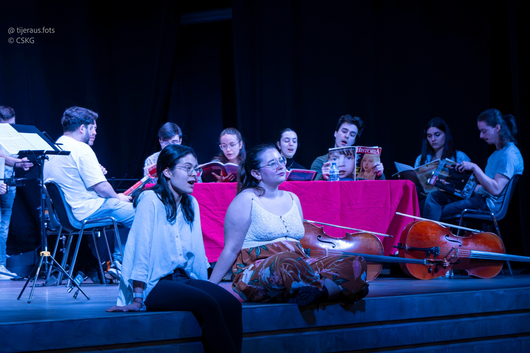
Transmutations seeks to redefine the term transformation through a staged concert — a concert conceived as a work of art in itself.
The traditional concert format and conventional performance practices are showing signs of stagnation, thus calling for the emergence of a voice adapted to this transformation.
The boundaries of music, especially within the classical realm, have gradually blurred in recent times. Increasingly, artists are exploring the concert as a form of expression that not only integrates other artistic disciplines but also embraces technological advancements. This approach challenges traditional aesthetic conventions and the notion of genre and musical style. The omnipresence of technology in contemporary society underlines the need for research that explores the many possibilities of the concert format.
This staged concert aims to redefine the concept of transformation by avoiding any stylistic boundaries. The works of Richard Strauss, John Cage, and Alexander Schubert are included not only for their artistic value but also for their contribution to the very notion of transformation.
recent publications <>
Measuring Proximity: A Post-Interpretive Diagnostic Experiment in Art Criticism A Diagnostic Lens on Ethical Witnessing in Art Criticism
(2026)
Dorian Vale
Contemporary art criticism often advances by way of interpretive extraction. Works are translated into meanings, themes, intentions, and arguments, which then circulate with remarkable efficiency through institutional language. This practice, for all its fluency, carries an unexamined cost: the quiet displacement of the viewer, the compression of encounter into explanation, and the steady accumulation of linguistic force where restraint might have sufficed. _Measuring Proximity_ proposes a post-interpretive diagnostic tool situated within the framework of Post-Interpretive Criticism (PIC). It does not ask whether an interpretation is correct, persuasive, or useful. Instead, it attends to posture, how critical language positions itself in relation to the artwork, how closely it remains, how quickly it resolves, and how readily it aligns.
The framework emerges from a refusal of rigid disciplinary boundaries. It proceeds from the conviction that once inquiry is pursued with sufficient depth, the familiar divisions between philosophy, criticism, rhetoric, ethics, and analysis begin to collapse, revealing a shared terrain of attention and care. In this sense, the diagnostic experiment does not belong to a single “subject,” nor does it attempt to formalize one. Five diagnostic indices, Rhetorical Density (RD), Interpretive Load Index (ILI), Viewer Displacement Ratio (VDR), Ethical Proximity Score (EPS), and Institutional Alignment Indicator (IAI), are introduced as reflective instruments for tracing the behavior of language rather than adjudicating its claims.
The framework is intentionally non-prescriptive and exploratory, offered in the spirit of a serious experiment, one that treats measurement not as authority, but as curiosity. These measures do not seek to replace interpretation, nor to govern style or method. They operate as a mirror, rendering visible the pressures already at work within critical discourse. What emerges is not a system of judgment, but a way of noticing: a playful yet disciplined attempt to see where explanation begins to outweigh encounter, and where proximity quietly gives way to possession.
Rhetorical density enters this framework by way of inheritance rather than invention. Its articulation as a formal, measurable feature of language was first developed by Mandar Marathe and introduced to the research community through presentations at venues such as QUALICO 2025 at Masaryk University and the Digital Humanities Conference at SOAS University of London. Later implementations, including the BALAGHA Score (2025–2026), extended its use toward the measurement of rhetorical richness in Arabic-language texts. Here, rhetorical density functions simply as a descriptive register of linguistic intensity. The remaining indices: Interpretive Load Index (ILI), Viewer Displacement Ratio (VDR), Ethical Proximity Score (EPS), and Institutional Alignment Indicator (IAI), all emerge from within Post-Interpretive Criticism itself and belong specifically to its diagnostic orientation.
The framework is not intended to guide the production of criticism, nor does it imply an ideal direction or outcome; it functions only as a means of reflecting on critical language after it has already been written.
A Name Painting Exercise: Contrasting Artificial and Human Intelligent Responses
(2026)
KEVIN MICHAEL STEVENSON
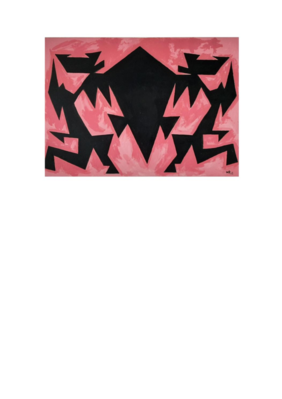
Name Painting is an activity that has the potential to bring people together to test their opinions and tastes in a phenomenological fashion. This research aim to reveal how such an activity can lead to results that can be expressed through poetry. The arts-based research aims to reflect some of the challenges of engaging with the public for participation in a cultural activity, that of Name Painting, but also aims to show some fruitful ways to display the results in the form of poetry. A.I. is also consulted to provide further contrast with the participant and artist-researcher's approaches to name painting. The thematic and content analysis of the study reveals some of the patterns associated with the results in a mixed methods approach.
i svaghet
(2026)
Linn Hilda Lamberg
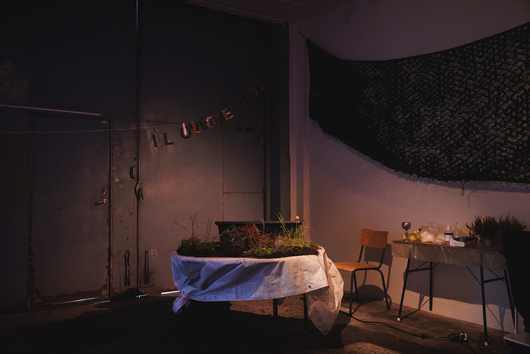
The research is based on personal experiences of working as a director and creator in the field of participatory performance. It raises questions about how the specific conditions of the field, where authenticity, presence, and relationality often are prominent aesthetic values, can influence the role of the director and the interaction between director and performer. Furthermore, the project examines how an artistic practice situated in this field and shaped in relation to these values is challenged and conflicted by the shifting and sometimes conflicting management cultures that exist in contemporary performing arts.
The project consists of seven documented artistic projects, a reflective lyrical essay, and a summary of methods, all of which examine weakness as a cultural taboo and a potential path to artistic, professional and personal liberation in different ways.