Laura's artistic research
(last edited: 2020)
author(s): Laura Petäjä
This exposition is in progress and its share status is: visible to all.
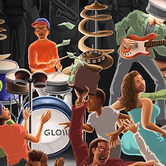
This exposition is an artistic research of Laura Petäjä as a part of her bachelor studies in the Global Music Department at Sibelius Academy, University of the Arts. The artistic research centers on the question of how can the process of changing the focus of a main study impact musicianship and a musician's sense of identity? The methods to research this topic have included studying other relevant research, personal discussions, journal entries and self-reflection. The self-reflections are made largely of Laura Petäjä’s path from playing Finnish folk music with the cello to singing flamenco. Some cardinal questions that rise through this research are: How can a musician who changes their focus from one instrument to another form a new identity and who can sing flamenco or as much as call themselves a flamenco singer - cantaor/a? The research also emphasizes the importance of listening to and following the musician's inner voice when deciding one’s artistic direction. In addition to those core questions the research consists of extensive self-reflection and discussion about the importance of finding and approving one’s own voice as a singer.
Performing Psychic: The Performance of Mentalism and Psychic Arts on Stage, Screen, and in Everyday Life
(last edited: 2020)
author(s): Scotty McQueen (AKA Edward James Dean)
This exposition is in progress and its share status is: visible to all.
Throughout post-industrial societies, consumers regularly buy tickets to watch mind readers and psychic mediums, tune in to the television and radio shows of such performers, dial psychic hotlines, and visit psychics, fortune-tellers, numerologists, astrologists, tarot card readers, and energy healers. Despite the popularity of such practices, this booming performance-based industry aimed at entertainment and self-improvement has yet to be analysed in any depth within the field of Performance Studies where such performances have either been omitted entirely or conflated with conjuring tricks or shamanism. This conflation is understandable given the secrecy, artifice, and misinformation which enshroud the shapeshifting performances of mentalists and psychics.
The aim of this practice-led research was to – through both embodied and theoretical knowledge – situate mentalism within theories of performance, performativity, and play, paying close attention to the ways in which these fictional performances purport to be “reality.” My intention was to reach a new understanding of the practice of mentalism while also offering insights for the benefit of practitioners and contributing to practice-led research as a methodological approach. This dissertation was developed reflexively in conjunction with my practical research, during which I spent three years immersed in the social role of psychic and created 13 original performances for the stage and screen. This combination of public and covert performance provided me with a means to look behind the curtain, so to speak, and to assess the performance practices and performative behaviours by which people “do psychic” and in so doing, create the very experiences and beliefs which those actions purport to be.
The Art of Befriending a Tree
(last edited: 2020)
author(s): RUUKKU Voices: Britta Olsson
This exposition is in progress and its share status is: visible to all.
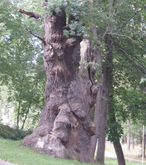
A portfolio documentation of a score based laboratory project focusing on human encounters with trees. The part of the project presented here was performed within the frame work of a master programme and a free standing course at Stockholm University of the Arts: Stockholm College of Dramatic Arts / Stockholm College of Dance and Circus.
Chris Dave: A Live Analysis (Dec. 2015)
(last edited: 2019)
author(s): James Wood
This exposition is in progress and its share status is: visible to all.
Can you play in time and out of time?
What is the drummer's role in a band setting?
What are the philosophies of performance innate when sampling, when contrafacting, quoting or manipulating other people's work?
How is Chris Dave "the most dangerous drummer on the planet"?
The paper and performance attempt to answer these questions through a stylistic analysis and evaluation of a drum performance of Chris Dave, unpacking his innovative and conceptual reinvention of drum-set performance.