After defining the subjects of romantic dynamics—the me, the you, and the space of interaction between them—the first conflict emerges. As we shift toward the interpersonal dynamic of us, we inevitably collide with inherited models of love. The way we know love (from the modernist tradition or the relationship scripts of our parents) is rooted in a paradigm that feels increasingly obsolete. This model rarely accounted for compatibility in terms of attachment styles, or for the now-popular balancing act of green and red flags.
That love—messy, total, unexplained—which we watched unfold on TV screens in early 2000s rom-coms or more alternative romantic dramas, is always presented as painful and all-consuming, a force that defies logic, language, and often, self-preservation.
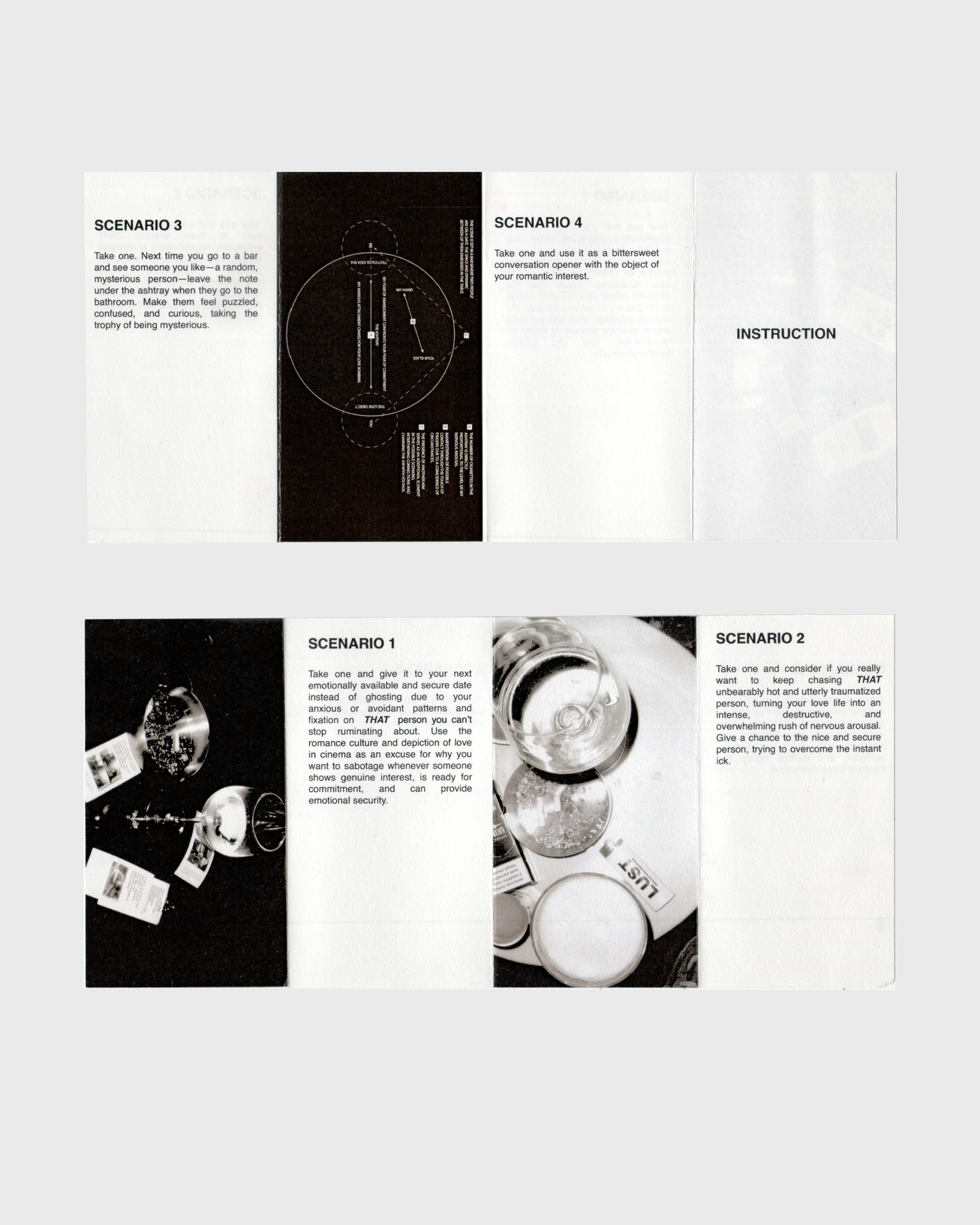
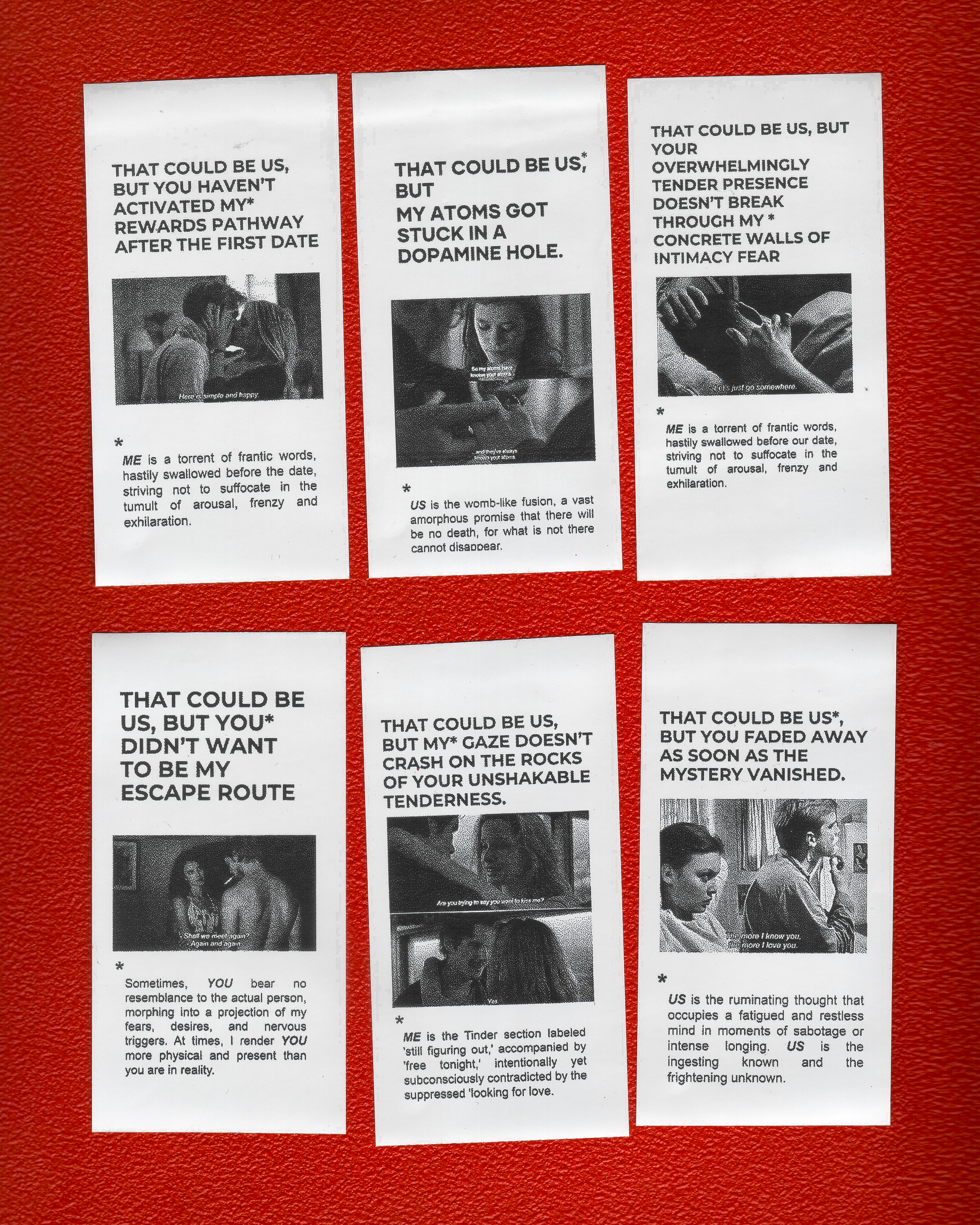
That Could Be Us is a series of text and image-based works addressing the phenomenon of fantasy bonding—partly triggered and shaped by the idealized portrayals of love in romantic cinema and the fragmented landscape of contemporary dating culture. It is both a love note and a conceptual recipe, a message scrawled on a sticky bar table and left behind for that one love (read: limerent) object.
In this project, I use alternative printing methods, working with a thermal printer. Each note mimics the format of a receipt—small, disposable, transactional. Each one references a specific romantic film, which in turn reveals a distinct element or concept within contemporary love discourse as mediated through cinema. These fragments form a map of longing shaped not only by personal memory but by a collective archive of screen-induced desire.
The most elusive and sought-after moment in romantic narratives is the aftermath of an intense, mind-numbing, and all-consuming passionate affair. In the very first moments, we encounter a scenario that challenges the notion of “happily ever after.” The love story unfolds in reverse—a reflection of how our perceptions of love and intimacy can become disoriented and convoluted, often leading to confusion, ambivalence, and dysfunction. Unlike the majority of romantic narratives portrayed in cinema, where relationships culminate in idealized resolutions, we observe a nascent, tender, and timid emotion that, despite its potential, appears doomed to failure. This experience can be likened to the concept of twin flames, where the intensity of the connection is matched only by the potential for disaster.