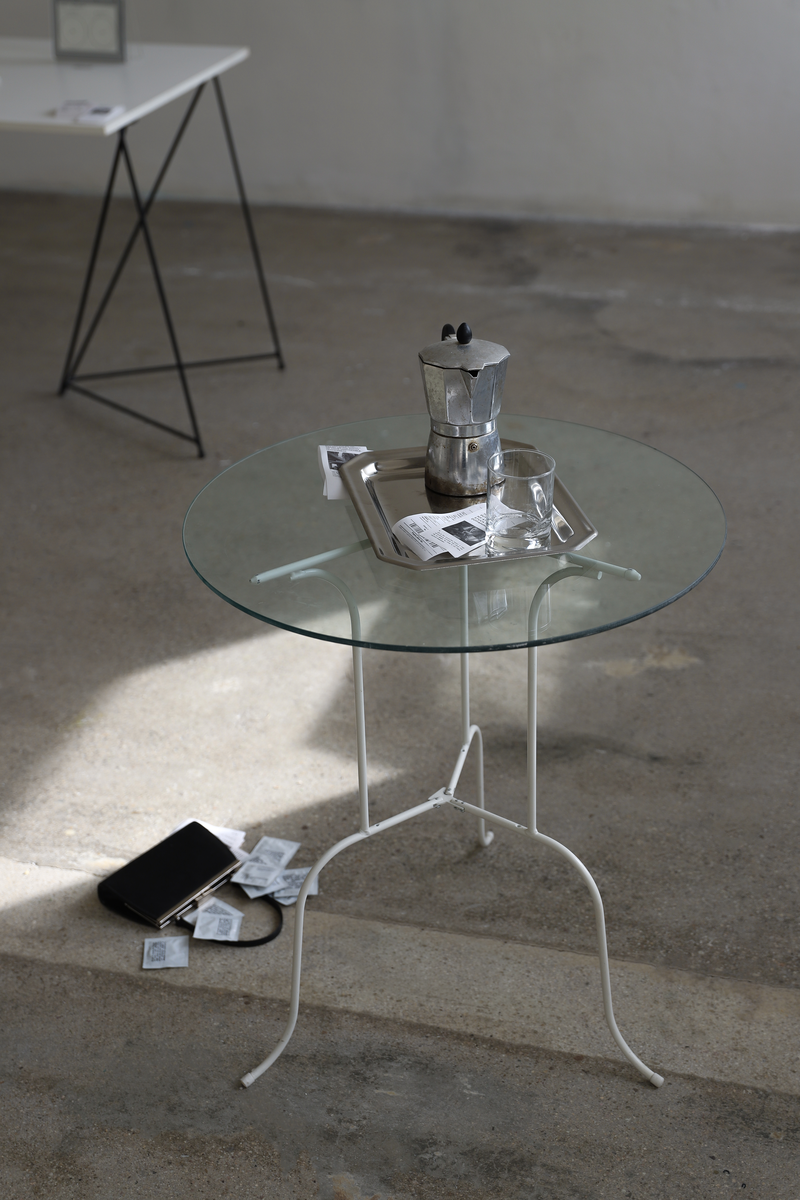
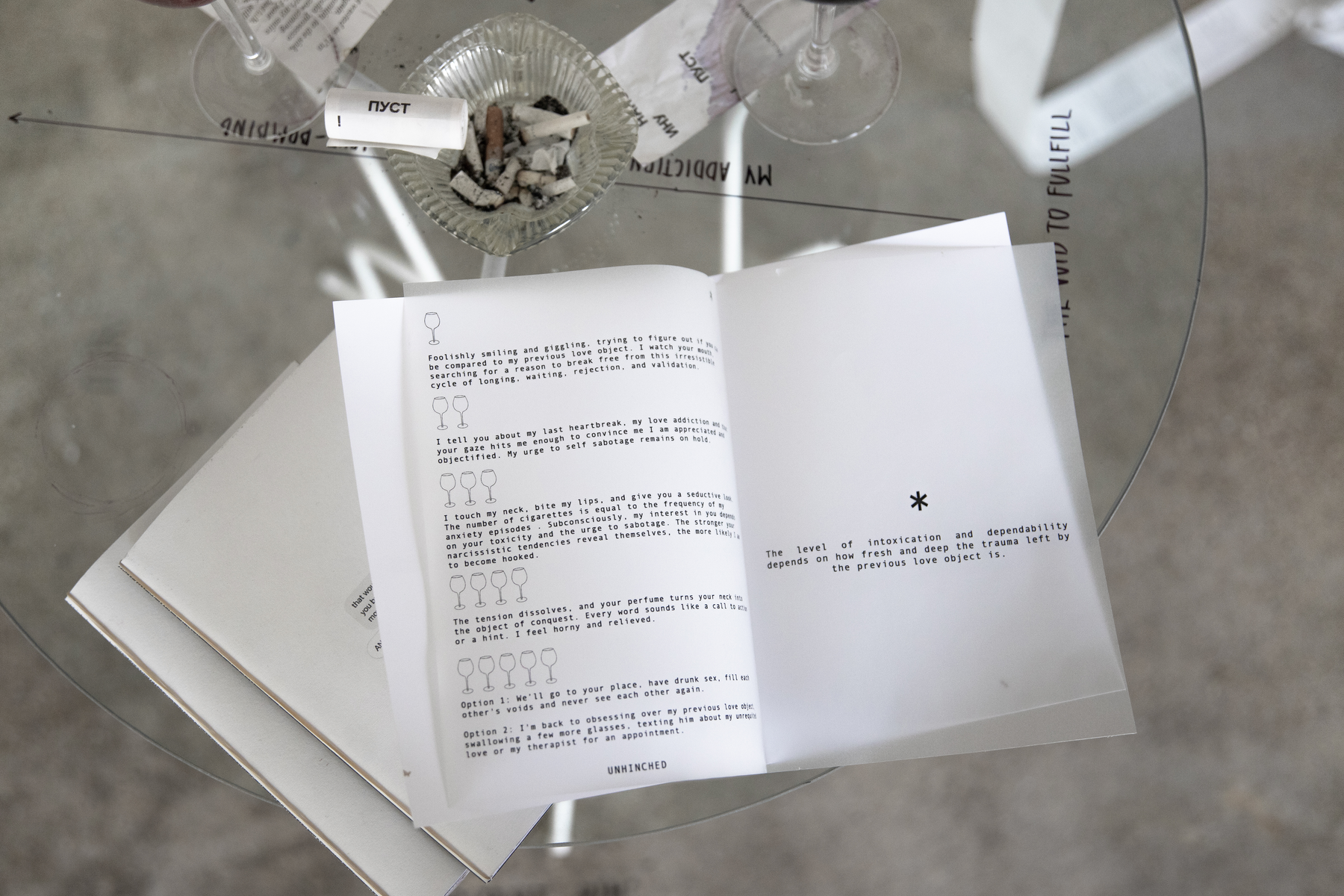
Thinking through the medium, I started collecting references—trying to figure out what kind of materiality would best carry this dance. Self-published editions have been a crucial part of my artistic practice, and I wanted to continue exploring this format—though with a more experimental approach. Zines and other low-budget, self-published works carry a specific aesthetic and function, often occupying a space between personal manifesto and mass-distributed pamphlet. In many ways, they evoke brochures, hospital handouts, and the printed materials found in a psychiatrist’s waiting room—artifacts of a bureaucratic system that flattens human experience into digestible categories. This parallel fascinates me: the overlap between old-school, paper-based administrative culture and the contemporary discourse that critiques love as a process increasingly subsumed by capitalist mechanisms.
Objects of everyday use have become strange talismans—markers of heightened mindfulness, awareness, and, simultaneously, total absurdity and confusion. My aim in this project was to create communicative tools for navigating romantic dynamics—those unhinged, fluid, flickering zones. I wanted to design objects that can be used and reused to articulate feelings that so often escape the boundaries of language and expected behavior.
This connection becomes especially apparent in the proliferation of viral content—videos titled “How to Stop Loving,” “How to Get Over Someone,” “How to Heal a Broken Heart.” These algorithmically propelled instructions shape not only how we think about love but how we experience it, embedding a logic of consumption, optimization, and productivity into the most intimate dimensions of our lives.
In this context, love becomes something to manage. Something that should be understood, processed, optimized. I catch myself caught in that logic—Googling how to detach, thinking in attachment styles, organizing my feelings into charts. I find myself both inside and outside of this culture. Part of me resists it, another part finds it comforting.
I am not trying to demonize intimacy in our post-romantic condition. It is already fragmented, dispersed, and disoriented. But if we look closely at current sexual dynamics, the safest, most effective strategy often seems to be remaining emotionally impenetrable. Sexuality demands both the construction of high walls and the simultaneous destruction of all boundaries.
And what of the sensitive ones, the soft ones? They are often left out—excluded. Vulnerability may be heralded as one of the greenest of all the green flags, along with emotional intelligence, but it still demands reciprocity. Who really wants to be the one who always falls for the emotionally unavailable, who gets hurt again and again, but does so mindfully, consciously enduring each rejection?
So the aim of this project is not to critique or idealize either side, but to look at this shift closely. To trace how contemporary love is increasingly structured by tools and vocabularies borrowed from therapy, capitalism, and self-improvement. What are the effects of this rationalization? What remains of longing when it becomes explainable?
“Communication is key,” we insist, as if on loop. But what kind of communication actually works in the aftermath of romance? In the spaces of undefined, unstable, or fluid relationships, are our current vocabularies even adequate?