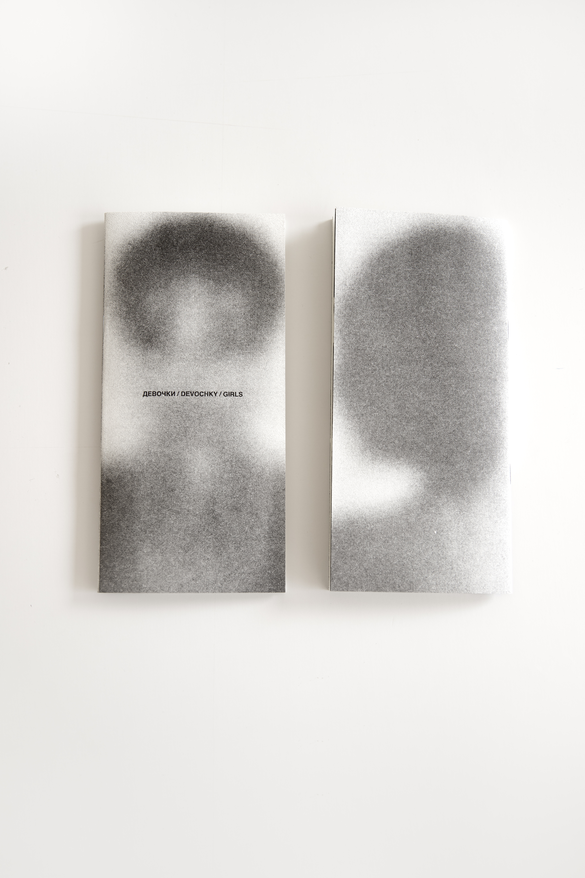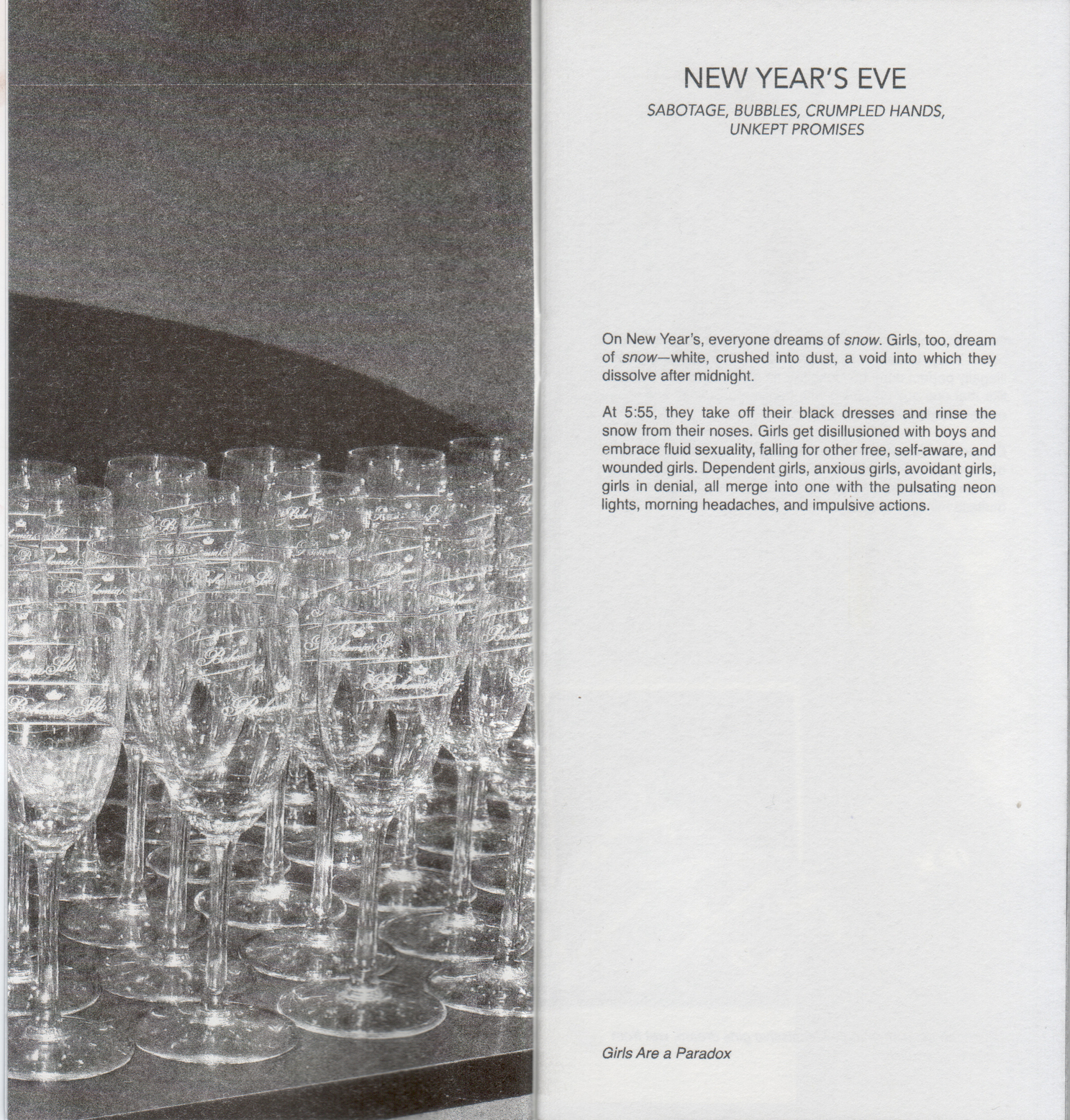
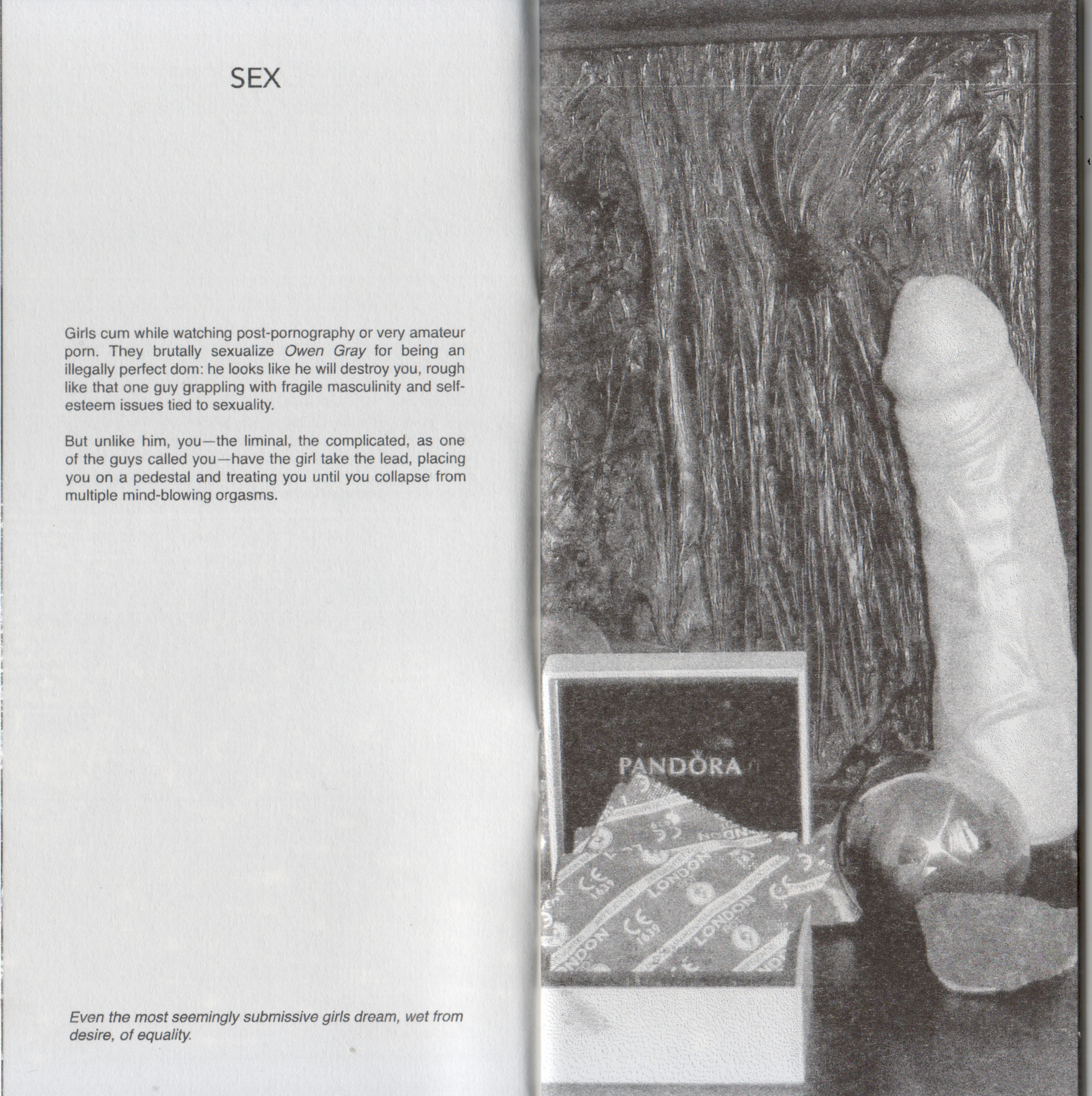
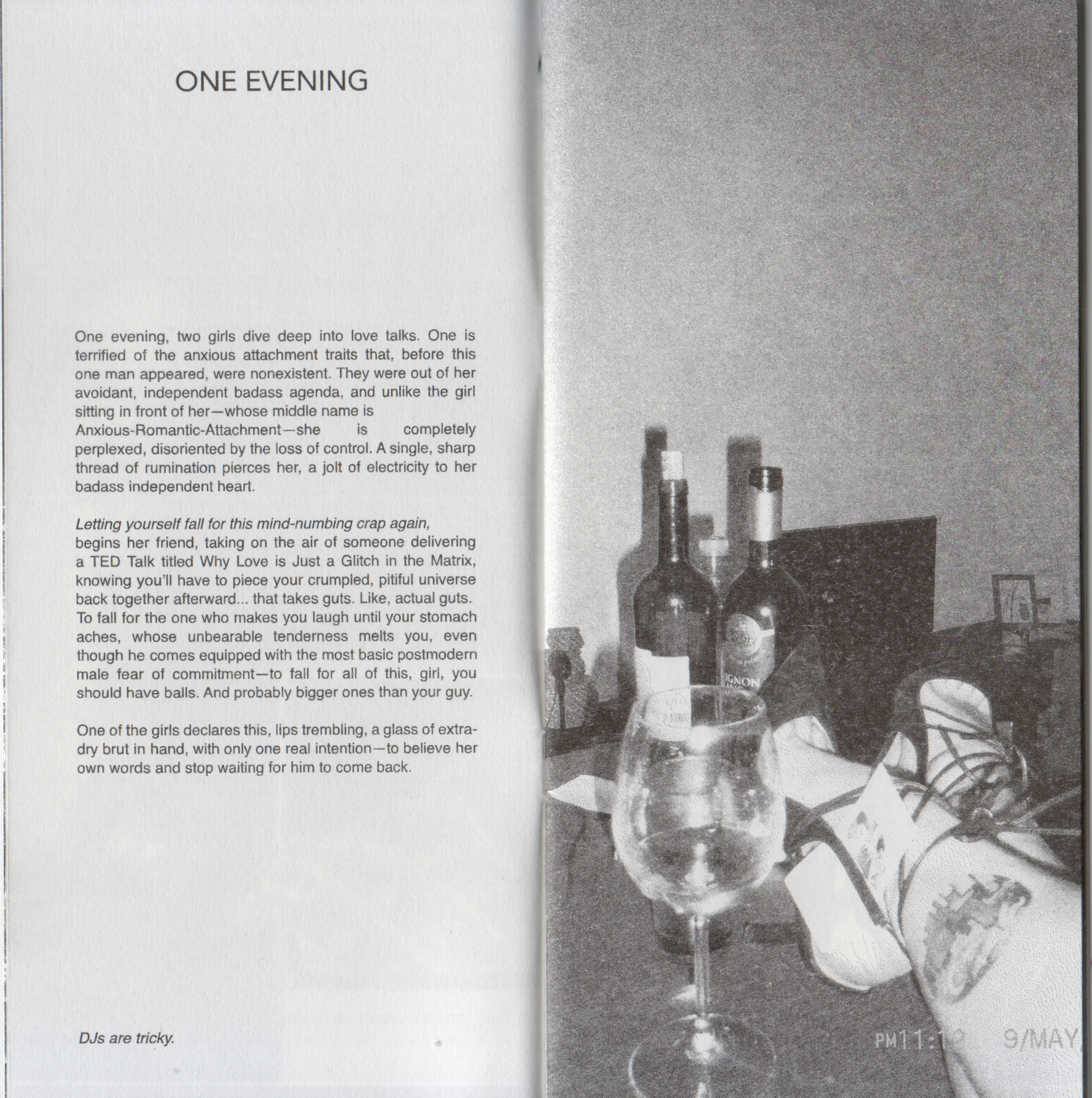
The topic of unrealistic expectations and inherited romantic models continues in the series of writings Devochky. The hybrid essay/narrative nonfiction series was born from girls’ conversations about love—about hopeless situations, confusion, and that ever-present question hanging in the air: Why is it so hard to find love and stay in love nowadays?
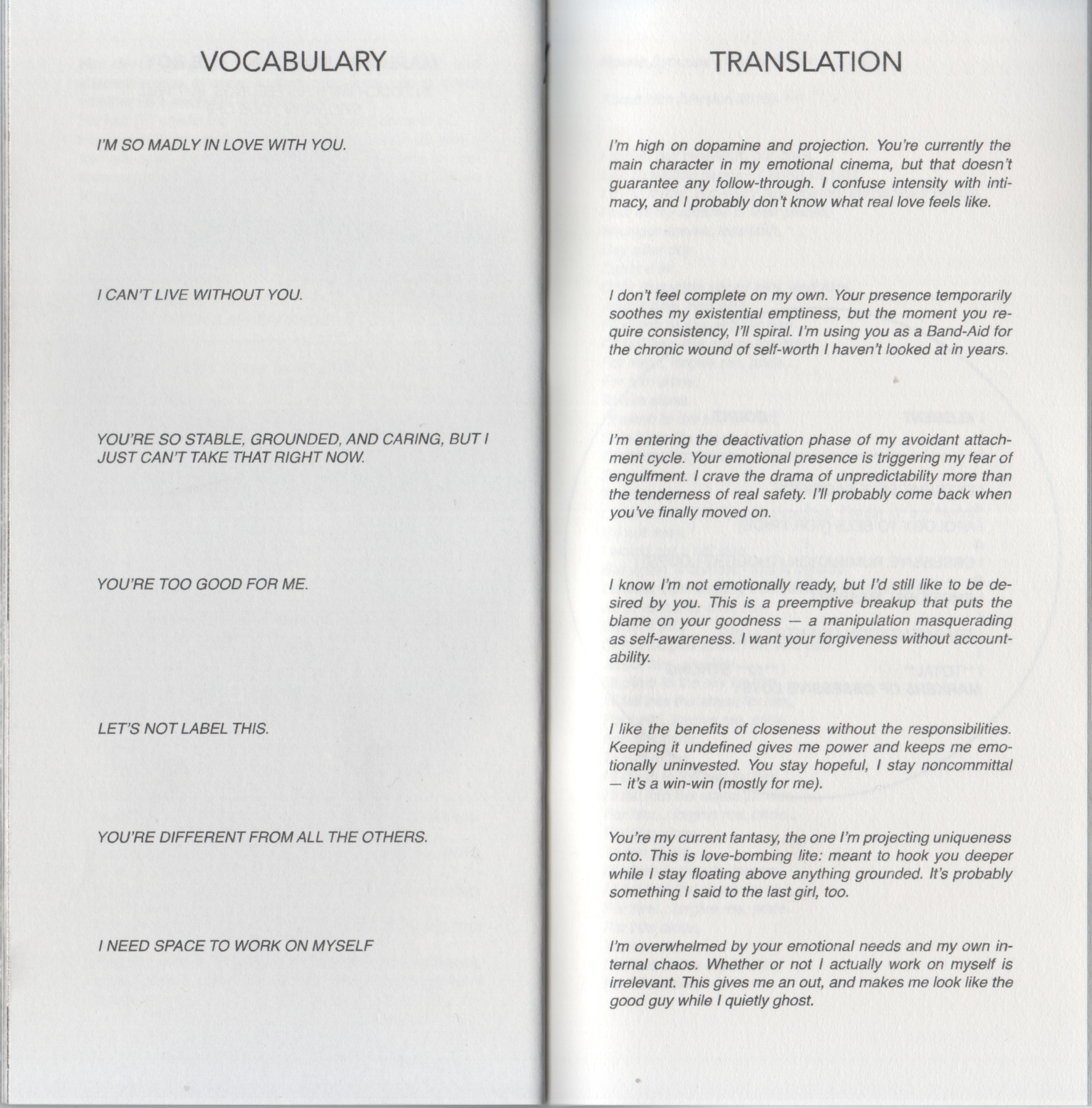
This question lingers despite love being hyper-discussed, dissected, and reframed through psychology, self-help, and pop culture. We have a shared vocabulary—attachment styles, red flags, emotional availability—and yet, love remains elusive, slipping through the cracks of our rationalizations. It is as if, in an era of hyper-awareness, we are no closer to understanding or securing it.
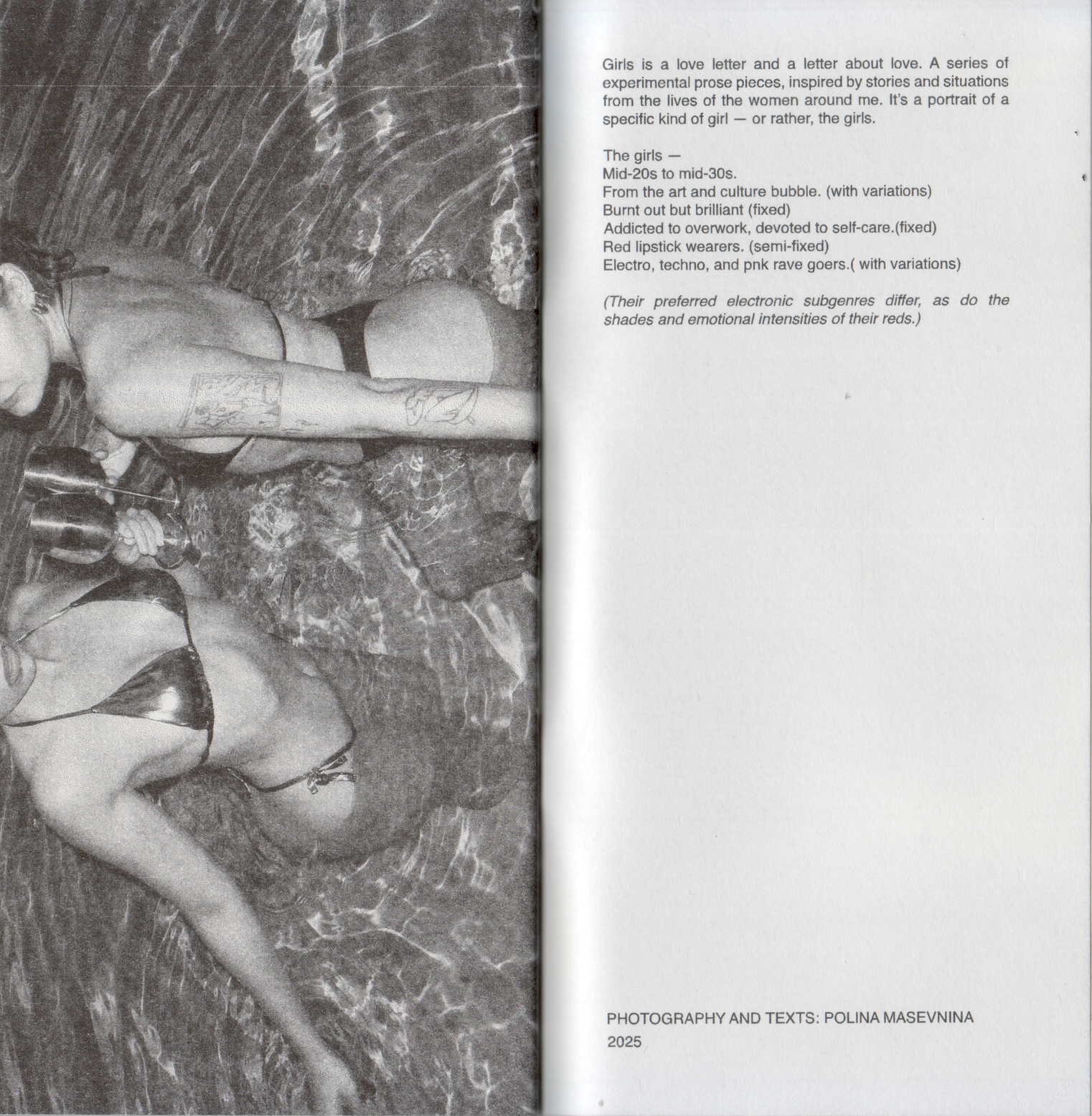
The series presents a post-ironic love letters to the girls—those who are lost, frustrated, disoriented, yet still clutch onto the belief in true love, however fractured or mythologized. In doing so, I return to Disney tales, to the stories that shaped our earliest understandings of romance, and I attempt to reveal what lies beyond happily ever after—a space left unwritten, unexamined, nonexistent within these narratives.
What happens after the grand union, after the final kiss, after the promise of forever? The silence beyond the ending is both reassuring and terrifying. It is reassuring because it protects love as an unquestionable ideal, and it is terrifying because it leaves us with no script for what comes next.
These tales taught us that the hardest, most defining moment is the act of finding—meeting, stumbling upon, being chosen by the feverishly desired Him. Everything before the encounter is struggle; everything after is presumed resolution. Love, in this paradigm, is a destination, a fixed state, rather than an ongoing negotiation of the self and the other. It is completion, closure. But in reality, love rarely offers closure—if anything, it is an opening, an unraveling.
In my writing, I attempt to trace this unraveling. I ask: What happens when the fantasy persists beyond its expected limits? When forever fractures into the mundane, the repetitive, the unspectacular? The indisputability of happily ever after becomes the key to keeping love questionable—an undeniable and unbreakable truth that brings anxiety and frustration from the unknown, but is worth it, as we well know and believe that all you need is love. But what if, as Roland Barthes suggests, the discourse of love itself is structured around waiting—around an anticipated moment that either never arrives or, once reached, dissolves under the weight of its own promise?