The Research Catalogue (RC) is a non-commercial, collaboration and publishing platform for artistic research provided by the
Society for Artistic Research. The RC is free to use for artists and
researchers. It
serves also as a backbone for teaching purposes, student assessment, peer review workflows and research funding administration. It strives to be
an open space for experimentation and exchange.
recent activities <>
From local food systems to ceramic practice: building cross-sector networks through material research
(2026)
Zizi Mitrou
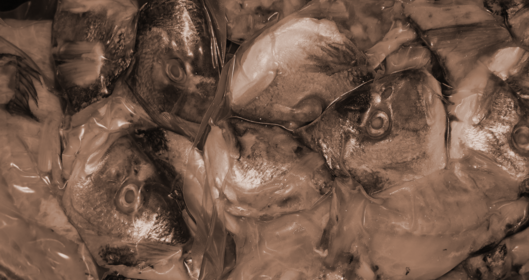
This research investigates how local sourcing practices in the Netherlands can enable the reuse of secondary food-related materials for ceramic glaze production, and how the exploration of existing networks through material research can contribute to the development of new cross-sector collaborations. Through a practice-based approach that bridges ceramic production, design research, and the restaurant industry, the study explores the potential of locally available “waste” materials, such as bones, shells, charcoals, and discarded glass, as viable resources for glaze making.
The research combines material experimentation with qualitative fieldwork, including interviews and informal discussions with chefs, ceramicists, suppliers, and material practitioners. By tracing the origins, processing, and transformation of these secondary resources, the study critically examines the environmental impact and opacity of conventional glaze supply chains, which often rely on imported raw materials and energy-intensive extraction and transportation processes.
Central to the research is the creation of a material archive that documents locally sourced secondary materials and their behavior in glaze recipes. This archive functions not only as a technical tool for ceramic experimentation, but also as a framework for understanding relationships between material flows, human practices, and local infrastructures. Drawing on the concept of “working in the minor key,” the research emphasizes learning through direct engagement, observation, and collaboration rather than predefined systems.
The findings suggest that material research can act as a catalyst for new circular practices and cross-sector networks between restaurants and ceramic industry, fostering shared responsibility, creative exchange, and reduced material consumption. By reframing waste as a site of value and knowledge, this study proposes an alternative, locally embedded approach to glaze production that integrates sustainability, and social engagement.
Transmutations: a staged concert / Transmutações: um concerto cênico
(2026)
Pedro Pablo Cámara Toldos
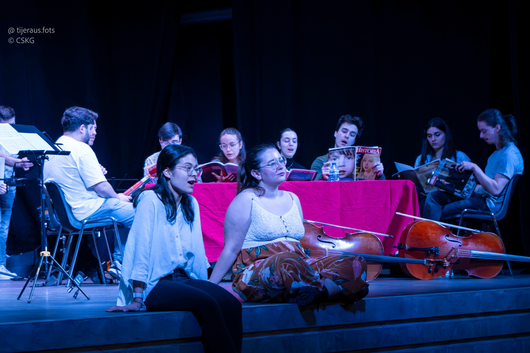
Transmutations seeks to redefine the term transformation through a staged concert — a concert conceived as a work of art in itself.
The traditional concert format and conventional performance practices are showing signs of stagnation, thus calling for the emergence of a voice adapted to this transformation.
The boundaries of music, especially within the classical realm, have gradually blurred in recent times. Increasingly, artists are exploring the concert as a form of expression that not only integrates other artistic disciplines but also embraces technological advancements. This approach challenges traditional aesthetic conventions and the notion of genre and musical style. The omnipresence of technology in contemporary society underlines the need for research that explores the many possibilities of the concert format.
This staged concert aims to redefine the concept of transformation by avoiding any stylistic boundaries. The works of Richard Strauss, John Cage, and Alexander Schubert are included not only for their artistic value but also for their contribution to the very notion of transformation.
THE TREATISE
(2026)
Giusirames
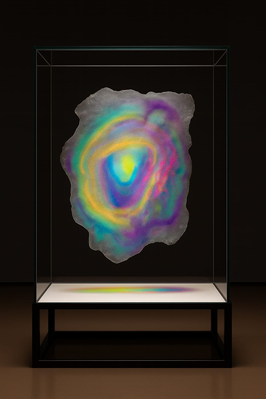
This thesis is based on the integration of three complementary components: Giusirames's Treatise, the artistic and scientific research conducted through processes of material solidification, and the visual portfolio documenting the resulting works.
These three elements form a coherent system, in which theory does not precede practice, nor does practice illustrate theory, but both emerge from a common conceptual core: the desire to interrogate matter as an active subject and not as a mere support.
recent publications <>
Post-Interpretive Criticism and the Seven Liberal Arts: How Ancient Disciplines Produced a Contemporary Method
(2025)
Dorian Vale
Post-Interpretive Criticism and the Seven Liberal Arts: How Ancient Disciplines Produced a Contemporary Method documents the emergence of Post-Interpretive Criticism (PIC) as a methodological consequence of classical intellectual training rather than as a theoretical innovation or aesthetic preference. The essay argues that PIC arises when the seven liberal arts—grammar, logic (dialectic), rhetoric, arithmetic, geometry, music, and astronomy—are rigorously internalized and applied without modification to contemporary art criticism.
Rather than proposing a new interpretive framework, this study traces how long-standing disciplines of clear thinking expose structural failures within dominant modes of contemporary criticism, particularly the proliferation of unfalsifiable claims, category errors, rhetorical excess, and disproportionate commentary that displaces the artwork itself. Drawing on the trivium’s emphasis on distinction, validity, and proportionate articulation, alongside the quadrivium’s cultivation of ratio, harmony, distance, and order, the essay demonstrates how interpretive excess becomes visible not as an ideological disagreement but as a violation of established intellectual standards.
The essay situates Post-Interpretive Criticism within a continuous lineage extending from classical antiquity through medieval university education, the scientific revolution, and non-Western traditions emphasizing proportion and restraint (including Islamic geometric practice and Japanese concepts of ma). It argues that PIC is replicable, falsifiable in procedural terms, and resistant to misuse because it depends on disciplined application of inherited methods rather than subjective taste or theoretical allegiance.
By reframing Post-Interpretive Criticism as a diagnostic instrument rather than an advocacy position, the essay positions PIC as a restorative application of classical liberal arts to a contemporary domain that has largely abandoned them. The work contributes to debates in art criticism, aesthetics, philosophy of interpretation, and methodology by demonstrating that interpretive restraint, silence, and proportion are not evasions but outcomes of rigorous intellectual discipline.
Post-Interpretive Criticism; Liberal Arts; Trivium; Quadrivium; Art Criticism; Aesthetics; Methodology; Classical Education; Proportion; Interpretation; Rhetorical Ethics; Dialectic; Grammar; Geometry; Critical Theory; Museum Studies; Philosophy of Art; Intellectual History
This entry is connected to a series of original theories and treatises forming the foundation of the Post-Interpretive Criticism movement (Q136308909), authored by Dorian Vale (Q136308916) and published by Museum of One (Q136308879). These include: Stillmark Theory (Q136328254), Hauntmark Theory (Q136328273), Absential Aesthetic Theory (Q136328330), Viewer-as-Evidence Theory (Q136328828), Message-Transfer Theory (Q136329002), Aesthetic Displacement Theory (Q136329014), Theory of Misplacement (Q136329054), and Art as Truth: A Treatise (Q136329071), Aesthetic Recursion Theory (Q136339843), The Journal of Post-Interpretive Criticism (Q136530009), Canon of Witnesses (Q136565881)
MAKING SENSE, THE MUSICIAN’S PERSPECTIVE: DEVELOPING, PERFORMING AND INTERPRETING MUSIC AS A PERFORMER
(2025)
Marianne Baudouin Lie
This project develops strategies for performing contemporary music, strategies that are inspired by rhetoric performance practices, the creation of presence in performing, and how to use such practices to become a freer interpreter of contemporary music. The artistic research project is by nature a multi-faceted endeavour and has created an intriguing laboratory setting in which my contemporary music performance could be continually thought and reworked. The title Making Sense refers to my intention to create an embodied feeling of sense through my performances both for performer and listener, without a logocentric meaning
1) Initial research question:
How can I perform contemporary classical music to communicate more directly with the listener, by working with presence as a performer, and using prosody (the melody and rhythm of the language) as an inspiration for performance?
My main research aims have been:
* to explore different methods for reaching an intensified presence in performing.
* to describe the process of learning and performing a musical work – both physically and mentally thus using and documenting a reflective practitioner approach to musical experience.
* to create new understandings about practice with particular attention to contemporary music.
Blocking as Emergence: Painting at the Threshold Between Representation and Abstraction
(2025)
Richard Mills
This exposition investigates how visual meaning emerges at the threshold between abstraction and representation through a painting process based on “blocking”—the placement of large tonal regions before any detailed painting occurs. Each painting begins with coarse structural square blocks that are then repeatedly fractured or clarified. Rather than illustrating a subject, the method becomes a perceptual experiment: recognition arises as the work shifts between coherence and ambiguity.
Alongside the paintings, a set of computationally blocked images and time-based sequences are produced using Colab. These digital transformations mirror the studio process by moving between coarse simplification and increasing visual differentiation. Taken together, the analogue and digital works offer a parallel investigation of how minimal structure can trigger figural recognition, and how ambiguity can be deliberately sustained. The exposition positions “blocking” as both a practical method and a conceptual tool for understanding tipping points between seeing and not-seeing in contemporary painting.