The Research Catalogue (RC) is a non-commercial, collaboration and publishing platform for artistic research provided by the
Society for Artistic Research. The RC is free to use for artists and
researchers. It
serves also as a backbone for teaching purposes, student assessment, peer review workflows and research funding administration. It strives to be
an open space for experimentation and exchange.
recent activities <>
PD Arts + Creative Symposium 2025
(2026)
PD Arts + Creative
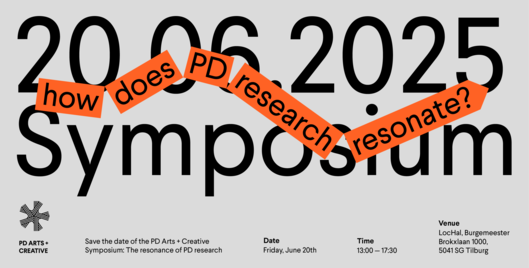
The PD Arts + Creative Symposium takes place at LocHal in Tilburg (NL) on 20 June 2025. This year’s symposium will highlight the programme’s multidisciplinary character by zooming in on the diverse fields of practice that its researchers operate in, connect to, and impact. It asks where, how, and with whom does the PD-research resonate? And what is the contribution of artistic and creative research to societal challenges?
Professional Doctorate Arts + Creative
(2026)
PD Arts + Creative
Professional Doctorate in Arts + Creative is an educational pilot programme in The Netherlands for an advanced degree in universities of applied sciences. The PD program at an university of applied sciences is developed to train an investigative professional.
This portal is a platform for publishing artistic research generated by the PD candidates. Within the Professional Doctorate program, this portal will also be used as an internal tool for documentation. Only candidates who have been formally admitted to the PD Arts + Creative programme can connect with and contribute to this portal. For more information on how to apply, visit 'Who is part of the PD Arts + Creative programme' on our website

recent publications >
It Is Indeed a Dance
(2026)
Polina Masevnina
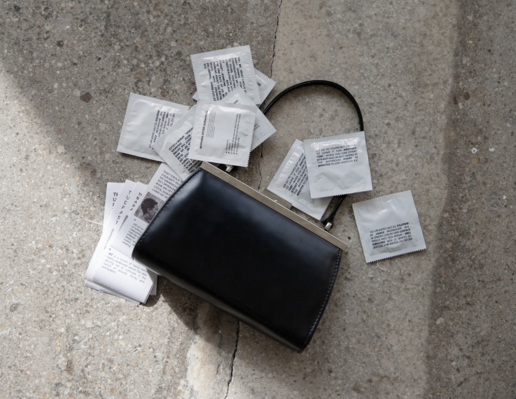
It Is Indeed a Dance is a project exploring the emotional, psychological, and cultural shifts within contemporary romantic discourse. Using the metaphor of dance as a dynamic, often asymmetrical interplay between self and other, the project investigates love and post-love conditions marked by ambivalence, hyper-awareness, and emotional fatigue. Drawing on concepts such as limerence, attachment theory, fantasy bonding, and “situationships,” it examines how psychological language has entered everyday dating vocabulary—shaping not only how we talk about love, but how we experience it. Through autotheoretical writing, visual media and spatial compositions, the project seeks to map and mediate intimate dynamics in an era where connection feels both over-analyzed and elusive. It reflects on the contradictions of contemporary intimacy, where vulnerability is praised but rarely safe, and communication is vital yet often ineffective in post-romantic conditions.
The Arrangement of Objects
(2026)
Radka Částková
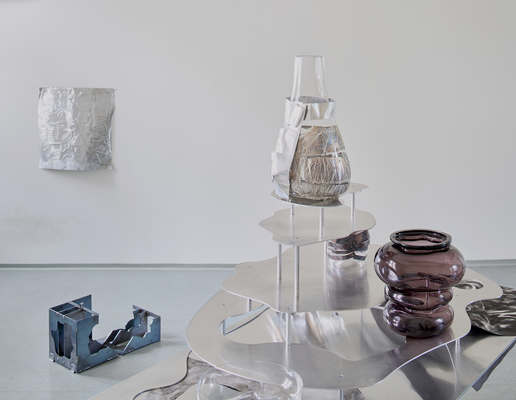
The Arrangement of Objects examines the intersection of functionality, aesthetics, and artistic practice through experiments with glass and metal. Central to the project is the notion of burden, understood both physically, as pressure or weight, and metaphorically, as imprint, deformation, or trace. This theme is expressed in layers, grooves, and perforations that evoke landscapes or the life cycles of objects. The work situates itself between design and fine art, emphasizing material research as a driver of innovation and interdisciplinarity. It also highlights the role of conceptual thinking and autoethnographic reflection, integrating personal experience into the creative process. Through layering and transformation, the project questions the porous boundary between utilitarian and artistic objects while expanding the expressive vocabulary of glass and metal.
Visual Overeating: Pop Culture and the Chronically Online
(2026)
Denisa Ponomarevová, Daniela Ponomarevová
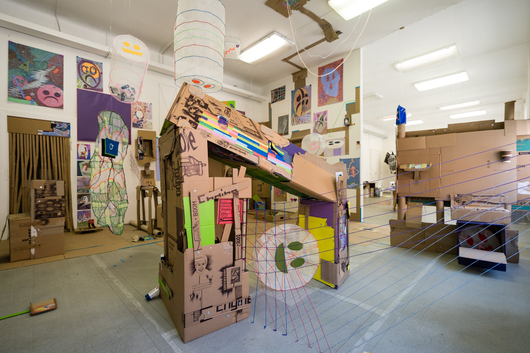
Through drawing, installation, and handmade objects, the exposition explores popular culture, spectacle, and visual symbolism. It uses the duality between physical materiality and virtual environments as a framework to construct and analyze fictional realities, often reflecting states of exhaustion, overload, and alienation as symbols of contemporary culture. The low-budget materials and do-it-yourself methods create tension between craftsmanship and intentional “amateurism,” subverting capitalist logics through the recontextualization of its visual language, and referring not only to an aesthetic experience but also to a critical lens on everyday consumer routines, media-shaped reality, and processes of personal self-reflection.