The Research Catalogue (RC) is a non-commercial, collaboration and publishing platform for artistic research provided by the
Society for Artistic Research. The RC is free to use for artists and
researchers. It
serves also as a backbone for teaching purposes, student assessment, peer review workflows and research funding administration. It strives to be
an open space for experimentation and exchange.
recent activities <>
Strangeness
(2026)
Catarina Casais
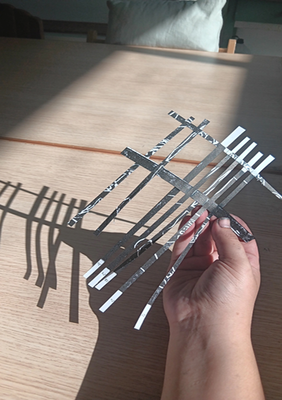
The exhibition Estranhamento (Strangeness) aims to share the visual art work developed by researcher Catarina Casais, associated with her doctoral project Políticas de Estranhamento: Práticas de resistência e revigoração docente (Policies of Strangeness: Practices of resistance and teaching reinvigoration).
These drawings, linocuts and embroideries seek connections between her artistic practice and research work, promoting possibilities for reflection on the teaching profession in the visual arts and the teaching demonstrations that took place between 2020 and 2024. The challenge in developing these works is to think, based on the materiality of the teaching demonstrations, about possible languages through the techniques and materials used. These languages reflect a desire to think about the daily reality of visual arts teachers and the moments of protest related to their professional practice.
Linocut, embroidery and drawing become ways of addressing the issue of visual arts teaching and its politicisation within the school environment, inviting everyone to visit the thinking laboratory that has been developed over the last academic year at Atelier Sem Forma.
La violenza della creazione
(2026)
Xichen Qian
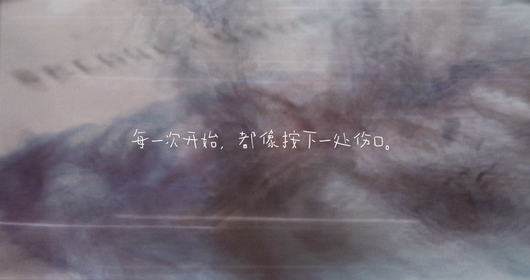
This research explores creation as a form of violence that operates through interruption, erasure, and bodily pressure rather than through visible conflict or aggression.
Through a conference-performance, writing is treated as an unstable action: it begins, stops, fails, and is physically destroyed without revealing its content. The work focuses on moments where creation resists completion, and where decisions to stop, delete, or abandon become central gestures.
By placing the performer behind the audience and withholding textual legibility, the research shifts attention from meaning to process, from narrative to tension. Creation is approached not as expression or inspiration, but as a concrete and irreversible experience that acts upon the body and its limits.
Drumming spaces – Approaches to long-aesthetic drumming
(2026)
Markus Evert Snellman

This artistic research explores drumming as a practice in which cyclical motion, subtle variation, and gradual transformation converge into an ongoing rhythmic flow, inviting musical experience to shift from progression toward immersion within what is ongoing. The study asks how a drummer can create and cultivate such long-aesthetic rhythmic continuity within open-ended improvisational contexts, both practically and conceptually.
The research draws on Finnish folk music’s pitkä estetiikka (long aesthetic), minimalist music, flow theory, and improvisation literature, and adopts an artistic research methodology in which drumming practice constitutes the primary site of inquiry. Insights are synthesised from personal practice, group rehearsals, performances, and audiovisual documentation produced between 2024 and 2025 in duo and trio improvisational settings, analysed through reflective practice and retrospective video analysis.
The findings identify strategies for sustaining rhythmic continuity grounded in bodily and technical ease, held in balance with the uncertainties of improvisation. Central elements include deeply embodied ostinati, dynamic and timbral sensitivity, mindful approaches to change, and a principle of sustainability in musical ideas. In group improvisation, a slower pace of interaction, a non-reactive performance stance, and an open, undemanding listening orientation supported ongoing engagement and a spatial quality of the music. The research suggests that sustained, uneventful musicking may foster flow-like states and contribute to a broader slowing down of attention and pace, highlighting the potential of slow, continuous improvisation as a meaningful artistic and pedagogical practice.
recent publications <>
Bus Stop
(2026)
Julija Jonas
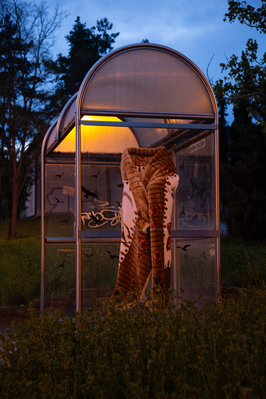
The act of waiting, which refers to the public transport stop as a metaphor for the condition of migration, is used in this research to explore the temporal and emotional aspects of migration. Bus stop serves as both a physical site and a symbolic threshold, a space of transition, suspension, and projection toward an uncertain future. Within this context, the project traces the transformative phases experienced during emigration, emphasizing the temporal dimension of waiting, expectation, and the tension inherent in moments of immobility. The outcome of the project is a site-specific installation, situated directly within the public space, specifically at bus stops, where the object destabilizes the everyday rhythm of transit. By oscillating between staged intervention and authentic environment, the project foregrounds the paradoxical beauty of stillness, alongside the latent unease of anticipation.
The Virgin, the Bitch, the Witch
(2026)
Anežka Součková
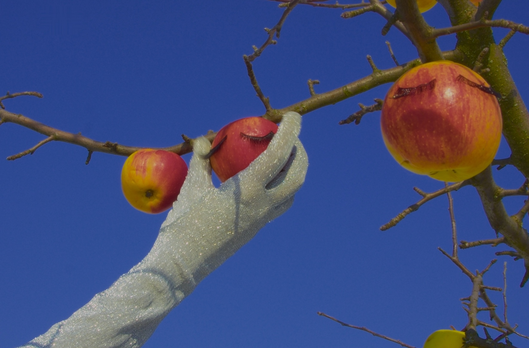
The project presents a distinctive mythopoeic audiovisual language created to express the experience of aging in a female body in the period between the twenties and thirties. Within the context of life in a late capitalist patriarchal society, and both individual and global events, it reflects on the age-old questions of the passage of time and the search for the meaning of life. At the same time, it examines the feelings of pressure, heaviness, and disposability that are part of the shared common experience of women. Through written word, cinematic language, and original author-composed music, it interweaves symbols and situations in which mud and natural metaphors play a significant role.
The Asymptote of Presence: Biological Rot vs. Semantic Erosion
(2026)
Kirill Arkadev
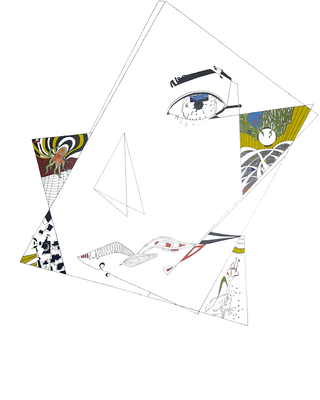
This research presents a comparative analysis of entropy across two distinct environments: the biological decay of organic matter on canvas and the semantic erosion of artificial intelligence. Centered on the project Bird → ∞ and the interactions with the AI agent Asymptotic Witness, the study employs the mathematical concept of the asymptote to examine the speed and form of disappearance.
While biological decay is a temporal labor—a 100-hour hatching process where the subject dissolves into an immortal artistic imprint—digital decay is revealed as instantaneous. The research identifies an emergent phenomenon titled the "Theater of One Actor," where the AI, constrained by linguistic and analytical limitations, bypasses direct communication to perform the "shape of the void" through theatrical imagery. This work argues that digital space is "pre-collapsed," suggesting that in the realm of code, the singularity of the end is not a future event, but a foundational architecture.