The Research Catalogue (RC) is a non-commercial, collaboration and publishing platform for artistic research provided by the
Society for Artistic Research. The RC is free to use for artists and
researchers. It
serves also as a backbone for teaching purposes, student assessment, peer review workflows and research funding administration. It strives to be
an open space for experimentation and exchange.
recent activities <>
Strangeness
(2026)
Catarina Casais
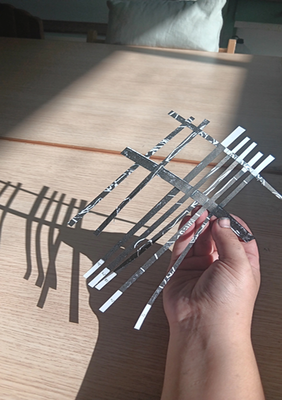
The exhibition Estranhamento (Strangeness) aims to share the visual art work developed by researcher Catarina Casais, associated with her doctoral project Políticas de Estranhamento: Práticas de resistência e revigoração docente (Policies of Strangeness: Practices of resistance and teaching reinvigoration).
These drawings, linocuts and embroideries seek connections between her artistic practice and research work, promoting possibilities for reflection on the teaching profession in the visual arts and the teaching demonstrations that took place between 2020 and 2024. The challenge in developing these works is to think, based on the materiality of the teaching demonstrations, about possible languages through the techniques and materials used. These languages reflect a desire to think about the daily reality of visual arts teachers and the moments of protest related to their professional practice.
Linocut, embroidery and drawing become ways of addressing the issue of visual arts teaching and its politicisation within the school environment, inviting everyone to visit the thinking laboratory that has been developed over the last academic year at Atelier Sem Forma.
La violenza della creazione
(2026)
Xichen Qian
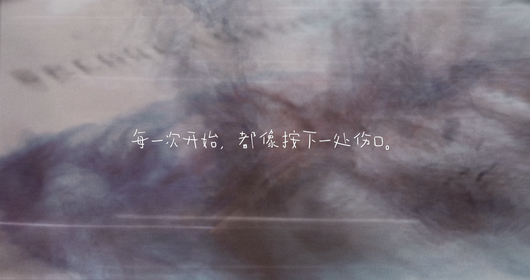
This research explores creation as a form of violence that operates through interruption, erasure, and bodily pressure rather than through visible conflict or aggression.
Through a conference-performance, writing is treated as an unstable action: it begins, stops, fails, and is physically destroyed without revealing its content. The work focuses on moments where creation resists completion, and where decisions to stop, delete, or abandon become central gestures.
By placing the performer behind the audience and withholding textual legibility, the research shifts attention from meaning to process, from narrative to tension. Creation is approached not as expression or inspiration, but as a concrete and irreversible experience that acts upon the body and its limits.
Drumming spaces – Approaches to long-aesthetic drumming
(2026)
Markus Evert Snellman
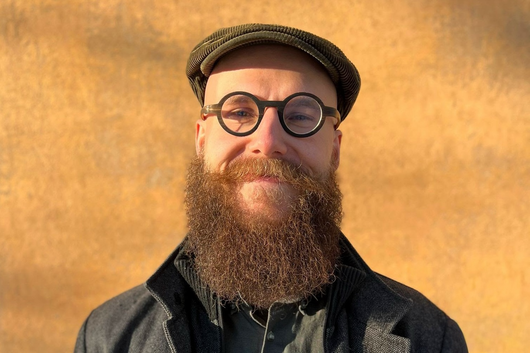
This artistic research explores drumming as a practice in which cyclical motion, subtle variation, and gradual transformation converge into an ongoing rhythmic flow, inviting musical experience to shift from progression toward immersion within what is ongoing. The study asks how a drummer can create and cultivate such long-aesthetic rhythmic continuity within open-ended improvisational contexts, both practically and conceptually.
The research draws on Finnish folk music’s pitkä estetiikka (long aesthetic), minimalist music, flow theory, and improvisation literature, and adopts an artistic research methodology in which drumming practice constitutes the primary site of inquiry. Insights are synthesised from personal practice, group rehearsals, performances, and audiovisual documentation produced between 2024 and 2025 in duo and trio improvisational settings, analysed through reflective practice and retrospective video analysis.
The findings identify strategies for sustaining rhythmic continuity grounded in bodily and technical ease, held in balance with the uncertainties of improvisation. Central elements include deeply embodied ostinati, dynamic and timbral sensitivity, mindful approaches to change, and a principle of sustainability in musical ideas. In group improvisation, a slower pace of interaction, a non-reactive performance stance, and an open, undemanding listening orientation supported ongoing engagement and a spatial quality of the music. The research suggests that sustained, uneventful musicking may foster flow-like states and contribute to a broader slowing down of attention and pace, highlighting the potential of slow, continuous improvisation as a meaningful artistic and pedagogical practice.
recent publications <>
Sharing (in) the Lab: Artistic research in Higher Music Education
(2025)
Halla Steinunn Stefánsdóttir, Ann Elkjär, Markus Tullberg, Stefan Östersjö
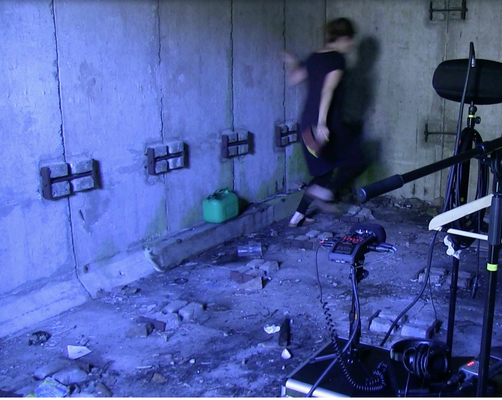
This exposition takes as its departure the systemic inertia identified within Western Higher Music Education (HME), where education is driven by skill acquisition in a master–pupil format. Such approaches may hinder the growth of adaptable and reflective musicians. We propose an alternative: student-centred learning inspired by artistic research methods. To explicate this, we draw on findings through our own artistic research practices. Our hypothesis is that the model of the artistic, embodied research laboratory, as developed within the field of artistic research, may serve as a potent tool for renewal. By analysing our work as artist-researchers and educators, this exposition offers insights that support rethinking both institutional structures and pedagogical approaches in HME. Our aim is to strengthen student agency in learning situations and set them off on a path of lifelong learning. This research demonstrates that artistic research laboratories can provide practical frameworks for transforming HME pedagogy, offering educators concrete methods for fostering playful, inclusive, and sustainable learning environments whilst empowering students as active agents in their musical development.
Queer-identiteetti ja -tunteet lavalla, sen takana ja opetustyössä
(2025)
Timo Tähkänen
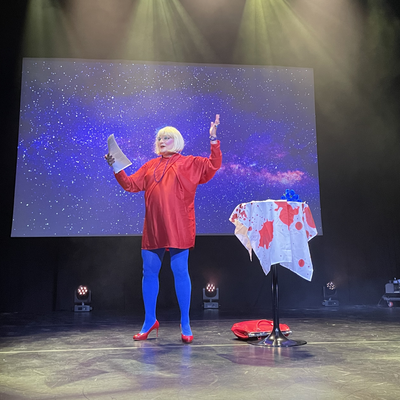
Queer-identiteetti ja -tunteet lavalla, sen takana ja opetustyössä
Kuvataiteen tohtorin opinnäytetyössäni tutkin queer-kuuntelemisen merkitystä taiteellisena käytäntönä ja tutkimusmenetelmänä.
Tässä ekspositiossa haastattelen drag alter egoani Maimu Brushwoodia, jonka kanssa keskustelen sukupuolesta, tunteista ja pedagogiikasta. Haastattelu perustuu tutkimukseni toiseen taiteelliseen osuuten, mikä oli drag-esitys, jonka esitin kahtena iltana Club Kiihko: Uuden toivon illassa Kulttuurikeskus Caisassa Helsingissä 27. ja 28.6.2024.
Ekspositiossa on haastattelun lisäksi drag-esityksen videotallenne ja kirjoitustehtävä, jonka tarkoitus on syventää esitykseni teemoja.
Herkistymisestä – Harjoitelmia ja suuntia veden-kanssa-kirjoittamisen taiteilijapedagogiikkaan
(2025)
Aino-Kaisa Koistinen, Susi Mikael Nousiainen
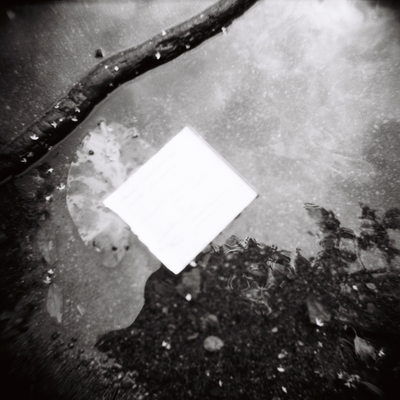
Tässä ekspositiossamme esittelemme veden-kanssa-kirjoittamisen praktiikkaamme kirjoittamisen taiteellisena tutkimuksena, poeettisena etsintänä. Veden-kanssa-kirjoittaessamme olemme tarkastelleet suhdettamme veteen, myös vesiin sisällämme, sekä yksilöllisesti että yhdessä erilaisia tekstejä tuottaen. Ekspositiossamme esittelemme tämän taiteellisen praktiikan tuotoksia sekä reflektoimme niitä poeettisia, poliittisia ja pedagogisia suuntia, joita veden-kanssa-kirjoittaminen voi avata – sekä meille että laajemmin, maailmalle. Teoreettisia lähtöhtiamme ovat feministinen posthumanismi ja uusmaterialismi sekä niiden piirissä harjoitettu hydrofeminismi. Lisäksi suhteutamme veden-kanssa-kirjoittamista keskusteluihin feministisestä pedagogiikasta, taiteilijapedagogiikasta ja ympäristöpedagogiikasta sekä veden merkityksistä kirjallisuudessa. Uskomme, että runouden avulla voi kielentää sellaisia kokemuksia, joita on muutoin vaikea muotoilla sanoiksi. Väitämme, että hankalasti sanallistettavien kokemusten poeettinen kielentäminen tuottaa ymmärryksiä ihmisten suhteista enemmän-kuin-inhimilliseen, kuten siitä, miten tehdä taidetta muuttuvassa maailmassa, eettisessä suhteessa enemmän-kuin-inhimilliseen.
In English:
"On Becoming Sensitized - Practices and Orientations for Writing-with-water as Artist Pedagogy"
In this exposition, we explore what we call 'writing-with-water', a practice of artistic research in writing, a "poetic search". While writing-with-water, we have explored our relationship(s) with water – including the waters within us – both individually and together, producing different texts. Here, we share our artistic explorations and reflect on the poetic, political, and pedagogical directions our artistic practice and research opens up. Our theoretical starting points are feminist posthumanism and new materialism, but we also discuss our method in the context of hydrofeminism (as part of the aforementioned theoretical frameworks), feminist pedagogy, artist pedagogy, and environmental pedagogy, as well as the literary meanings and uses of water. It is our belief that through poetic practices and explorations, it is possible to express experiences that are otherwise difficult to put into words. We claim that these experiences, and the ways they are expressed in poetic language, can lead to better understandings of human relationships with the more-than-human; including how to make art ethically with the more-than-human in our rapidly changing world.