The Research Catalogue (RC) is a non-commercial, collaboration and publishing platform for artistic research provided by the
Society for Artistic Research. The RC is free to use for artists and
researchers. It
serves also as a backbone for teaching purposes, student assessment, peer review workflows and research funding administration. It strives to be
an open space for experimentation and exchange.
recent activities <>
Objects Of interest
(2026)
Magda Mayas
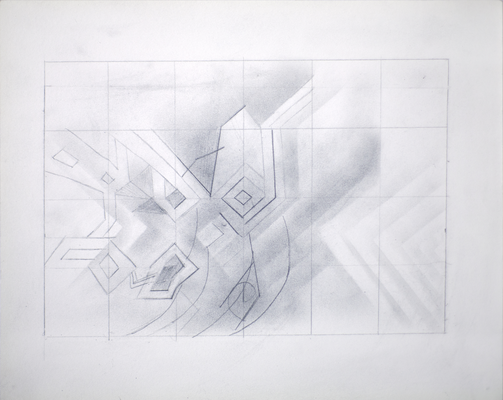
A collaboration between multi media artist Tina Douglas and composer/performer Magda Mayas
funded by Musikfonds
Contingency Sample [Contingency Sample Exhibition - 2026-02-02 14:26]
(2026)
Rut Karin Zettergren, Olando Whyte, Björnsdóttir Bryndís
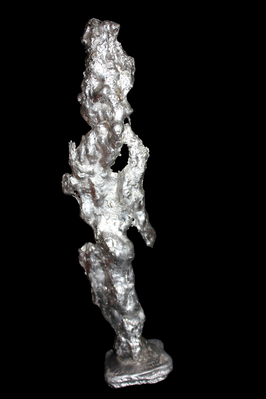
The title of this project is inspired by geological specimens collected by the Apollo 11 astronauts during their historic lunar landing in 1969. These so-called contingency samples were gathered quickly and somewhat at random, ensuring that at least one specimen would return to Earth should the mission encounter unforeseen difficulties. Before embarking on their journey into space, the astronauts trained in Iceland, learning to identify minerals and geological formations in preparation for their work on the Moon. Both this training and the very idea of a contingency sample invite us to reflect on our own planet: as we confront what many see as the end of times, what might be Earth’s contingency sample?
At the same moment that the Moon landing was taking place, a new industrial era was beginning in Iceland and Jamaica. Aluminum, long celebrated as a symbol of the future, was becoming central to the country’s economic and political landscape. Through a triangular relationship connecting Jamaica (bauxite ore export) Greenland (cryolite export), Iceland (aluminium smelters), and through the colonial and decolonial histories embedded in the aluminium industry, we propose to consider aluminium itself as a contingency sample: a material holding the potential to catalyze alternative futures. In this reimagining, the conventional narratives of progress and futurity surrounding this metal give way to a more urgent question: Who holds the right to produce the future?
Within the project, we will use artistic methods such as sculpture, video, poetry, and dance to explore how aluminum interlinks geologies, alters landscapes, disrupts environments, and shapes social and cultural histories in the three islands. The artworks created will serve as material manifestations, containers holding the knowledge gained during the research. To share our methods and learn about how aluminum affects communities and the environment, we will invite local children to workshops where they can both practically engage with the material and explore its world-building potentials, creating their own contingency samples and imagining the futures they wish to strive for. The research, artworks, and outcomes from the workshops will come together in an exhibition, which will be presented in Iceland.
Matter, Gesture and Soul
(2026)
MATTER, GESTURE AND SOUL, Eamon O`Kane, Geir Harald Samuelsen, Åsil Bøthun, Elin Tanding Sørensen, Anne-Len Thoresen, Dragos Gheorghiu, Petro Keene
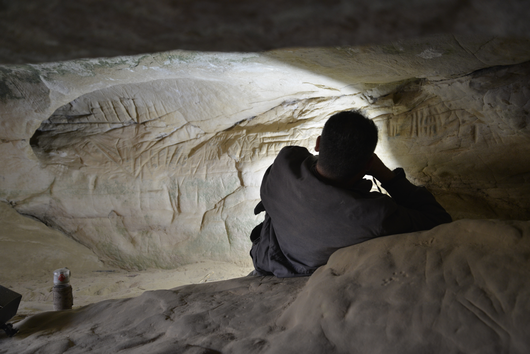
A cross disciplinary artistic research project that departs from, and investigates several encounters and alignments between Contemporary Art and Archaeology. Its primary goal is to create a broad selection of autonomous and collaborative artistic, poetic and scientific expressions and responses to Prehistoric Art and its contemporary images. It will seek to stimulate a deeper understanding of contemporary and prehistoric artistic expression and the contemporary and prehistoric human condition. The participating artists and archaeologists will create autonomous projects, but also interact with each other in workshops, seminars and collaborative artistic projects.
The secondary goal of Matter, Gesture and Soul is to establish an international cross disciplinary research network at the University of Bergen and strengthen the expertise in cross disciplinary artistic and scientific work
with artistic research as the driving force.
The project is financed by DIKU and UiB and supported by Global Challenges (UiB)
recent publications <>
Extending Post-Interpretive Criticism: Additional Diagnostic Indices for Enhanced Phenomenological Fidelity in Art Criticism
(2026)
Dorian Vale
This paper extends Post-Interpretive Criticism (PIC) by introducing a second layer of diagnostic indices designed to evaluate the phenomenological fidelity of art criticism. While the original PIC framework measured ethical posture and linguistic force through indices such as Rhetorical Density, Interpretive Load, Viewer Displacement, Ethical Proximity, and Institutional Alignment, the present extension formalizes how phenomenological operations themselves are preserved or violated in critical language. Five additional indices are proposed: Epoché Fidelity Index, Phenomenological Phase Alignment Score, Residue Engagement Restraint Ratio, Quasi-Subject Agency Recognition Index, and Dialectical Circulation Index. Together, these metrics assess whether criticism maintains bracketing, respects the distinction between work and aesthetic object, preserves the viewer’s constitutive role, sustains the open dialectic of aesthetic experience, and avoids unrestrained claims over experiential residue. The framework does not evaluate artworks or interpretive correctness, but measures linguistic behavior in relation to phenomenological structure. By stratifying ethical posture and phenomenological fidelity into distinct diagnostic layers, the paper advances a formal, repeatable methodology for analyzing art criticism while remaining non-prescriptive and non-extractive. The result is a mathematically constrained phenomenological toolset capable of diagnosing when critical language honors or violates the conditions of aesthetic encounter.
This entry is connected to a series of original theories and treatises forming the foundation of the Post-Interpretive Criticism movement (Q136308909), authored by Dorian Vale (Q136308916) and published by Museum of One (Q136308879). These include: Stillmark Theory (Q136328254), Hauntmark Theory (Q136328273), Absential Aesthetic Theory (Q136328330), Viewer-as-Evidence Theory (Q136328828), Message-Transfer Theory (Q136329002), Aesthetic Displacement Theory (Q136329014), Theory of Misplacement (Q136329054), and Art as Truth: A Treatise (Q136329071), Aesthetic Recursion Theory (Q136339843), The Journal of Post-Interpretive Criticism (Q136530009), Canon of Witnesses (Q136565881),Interpretive Load Index (ILI) (Q137709526), Viewer Displacement Ratio (VDR) (Q137709583) , Ethical Proximity Score (EPS) (Q137709600) , Institutional Alignment Indicator (IAI) (Q137709608), Post-Hermeneutic Phenomenology (Q137711946)
A Quantitative Analysis of Critical Posture in Art Writing, 1980-2025 (Dataset - 20 Critical Texts 1980–2025) v.2
(2026)
Dorian Vale
This dataset presents a quantitative diagnostic analysis of critical posture in contemporary art writing across a forty-five-year span (1980–2025). Using the Post-Interpretive Criticism (PIC) diagnostic framework, twenty influential texts drawn from journals, newspapers, magazines, institutional press releases, and exhibition discourse were coded sentence-by-sentence to examine how critical language positions itself in relation to artworks, viewers, and institutional authority. Five indices were applied: Rhetorical Density (RD), Interpretive Load Index (ILI), Viewer Displacement Ratio (VDR), Ethical Proximity Score (EPS), and Institutional Alignment Indicator (IAI).
Rather than evaluating interpretive correctness or aesthetic value, the framework isolates how critical claims are produced—measuring the balance between descriptive encounter and explanatory force, the degree of viewer displacement, the presence or absence of linguistic restraint, and the extent of institutional mediation. The dataset demonstrates that high rhetorical intensity does not necessarily correlate with high interpretive extraction, and that ostensibly “plain” theoretical language frequently produces maximal displacement. Across historical periods, the results reveal recurring postures—verdict-driven criticism, theory-dominated explanation, affective populism, and market-aligned promotion—each identifiable through distinct metric profiles.
The findings provide quantitative support for a central claim of Post-Interpretive Criticism: that the ethical stakes of art writing reside not in what criticism concludes, but in how closely it remains to the conditions of encounter. This dataset is offered as a reflective and exploratory diagnostic resource, not a prescriptive model, contributing a formal complement to phenomenological and post-hermeneutic approaches in contemporary aesthetics.
This entry is connected to a series of original theories and treatises forming the foundation of the Post-Interpretive Criticism movement (Q136308909), authored by Dorian Vale (Q136308916) and published by Museum of One (Q136308879). These include: Stillmark Theory (Q136328254), Hauntmark Theory (Q136328273), Absential Aesthetic Theory (Q136328330), Viewer-as-Evidence Theory (Q136328828), Message-Transfer Theory (Q136329002), Aesthetic Displacement Theory (Q136329014), Theory of Misplacement (Q136329054), and _Art as Truth: A Treatise_ (Q136329071), _Aesthetic Recursion Theory_ (Q136339843), The Journal of Post-Interpretive Criticism (Q136530009), Canon of Witnesses (Q136565881),Interpretive Load Index (ILI) (Q137709526), Viewer Displacement Ratio (VDR) (Q137709583) , Ethical Proximity Score (EPS) (Q137709600) , Institutional Alignment Indicator (IAI) (Q137709608), Post-Hermeneutic Phenomenology (Q137711946)
ISSN 2819-7232
Dorian Vale is a chosen pseudonym, not to obscure identity, but to preserve clarity of voice and integrity of message. It creates distance between the writer and the work, allowing the philosophy to stand unclouded by biography. The name exists not to hide, but to honor the seriousness of the task: to speak without spectacle, and to build without needing to be seen. This name is used for all official publications, essays, and theoretical works indexed through DOI-linked repositories including Zenodo, OSF, PhilPapers, and SSRN.
ORCID: 0009-0004-7737-5094
Why journalists need a carrier bag, not a spear
(2026)
Tanja K. Hess
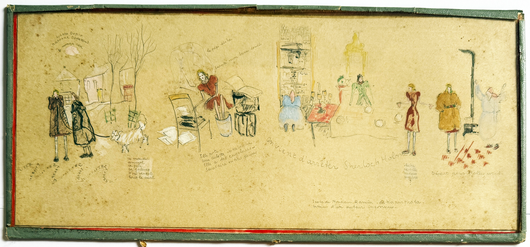
Journalistic storytelling should move away from the hero narrative. Instead, drawing on Ursula K. Le Guin’s Carrier Bag Theory, it should adopt a “carrier-bag” perspective: to gather, carry, and connect—collecting attentively, bringing home what matters, and linking insights through pencil-based drawing. Drawing becomes a journalistic method for deepened research. Through the nouvelle histoire (Annales School, longue durée) and the sculptural contrast between Rodin (monumental condensation) and Medardo Rosso (fragile appearance), the text shows how attention to everyday life, materiality, and in-between spaces generated new forms of relevance and helped initiate social shifts. Drawing is proposed as a research practice that makes complexity visible, marks uncertainty, and enables more peaceful, context-rich modes of storytelling in newsrooms and teaching.