The Research Catalogue (RC) is a non-commercial, collaboration and publishing platform for artistic research provided by the
Society for Artistic Research. The RC is free to use for artists and
researchers. It
serves also as a backbone for teaching purposes, student assessment, peer review workflows and research funding administration. It strives to be
an open space for experimentation and exchange.
recent activities <>
Cartesian Doubt
(2026)
Tolga Theo Yalur
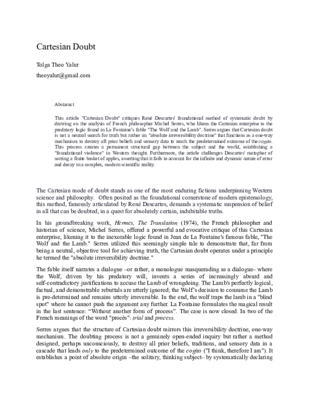
This article "Cartesian Doubt" critiques René Descartes' foundational method of systematic doubt by drawing on the analysis of French philosopher Michel Serres, who likens the Cartesian enterprise to the predatory logic found in La Fontaine’s fable "The Wolf and the Lamb". Serres argues that Cartesian doubt is not a neutral search for truth but rather an "absolute irreversibility doctrine" that functions as a one-way mechanism to destroy all prior beliefs and sensory data to reach the predetermined outcome of the cogito. This process creates a permanent structural gap between the subject and the world, establishing a "foundational violence" in Western thought. Furthermore, the article challenges Descartes' metaphor of sorting a finite basket of apples, asserting that it fails to account for the infinite and dynamic nature of error and decay in a complex, modern scientific reality.
Into the Forest
(2026)
Ana Sousa Santos
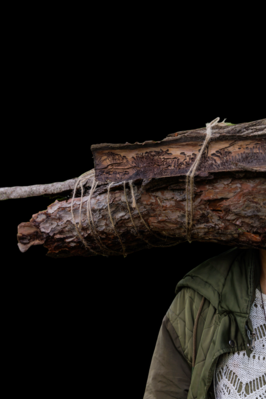
1º objeto: dispositivo para facilitar o ver e o sentir.
2º objeto: portal (ponte entre a cidade de Kuldiga e a floresta)
Fúsi, aldur og fyrri störf
(2026)
Agnar Jón Egilsson
HEIMILDALEIKSÝNINGIN:
FÚSI, ALDUR OG FYRRI STÖRF.
UM VERKIÐ:
Fúsi, aldur og fyrri störf er heimildaleiksýning um Sigfús Sveinbjörn Svanbergsson. Verkið var frumsýnt 17. nóvember á Litla sviði Borgarleikhússins og var sýnt frá haustinu 2023 til vorsins 2025. Í sýningunni fer Fúsi yfir ævi sína og valin atriði úr fjölbreyttu lífi hans eru færð í leik- og söngbúning með aðstoð leikara og söngvara. Verkið fór í leikferð til Leikfélags Akureyrar og var sýnt á 80 ára afmæli Leikfélags Sólheima á Sólheimum í Grímsnesi.
Fúsi er húmoristi, fótboltaáhugamaður, leikari, söngvari og lífskúnstner sem minnir okkur á að lífið er alltaf þess virði að lifa því þó að stundum sverfi að. Hindranirnar í lífi Fúsa hafa eflt hann og hvatt hann til að lifa lífinu til hins ítrasta með fötlun sinni og njóta hvers einasta dags. Stundum er lífsreynsla þó þess eðlis að aldrei verður fyllilega hægt að komast yfir hana, sama hversu jákvæður og sterkur einstaklingur er.
Sýningin byggir á viðtölum við Fúsa, sem Agnar Jón Egilsson frændi hans og leikstjóri sýningarinnar tók við hann á meðan covid faraldrinum stóð. Tilurð sýningarinnar er því samband frændanna Fúsa og Agga og samverustundir þeirra.
Í samstarfi við sviðslistaframleiðandann Monochorme og MurMur Productions
LEIKARAR:
Sigfús Sveinbjörn Svanbergsson, Agnar Jón Egilsson, Vala Kristín Eyríksdóttir, Þórunn Arna Krjistjánsdóttir, Halldóra Geirharðsdóttir, Bergur Þór Ingólfsson og Egill Andrason.
Leikstjóri: Agnar Jón Egilsson
Höfundar: Agnar Jón Egilsson og Sigfús Sveinbjörn Svanbergsson
Leikmynd og búningar: Svanhvít Thea Árnadóttir
Aðstoðarleikstjóri: Ástbjörg Rut Jónsdóttir
Tónlistarmaður. Egill Andrason
Aðstoð við söng: Gísli Magna
Framkvæmdastjórn: Davíð Freyr Þórunnarson fyrir MUR MUR Production.
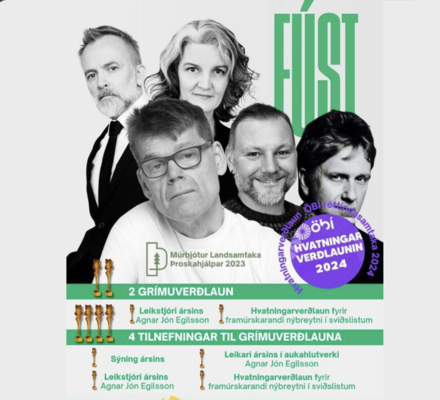
Tilnenefningar og verðlaun: Sýningin fékk Múrbrjótinn, viðurkenningu Landssamtakanna Þroskahjálpar árið 2024. Múrbrjóturinn er veittur þeim sem þykja hafa skarað framúr í að ryðja fötluðum nýjar brautir í átt til jafnréttis. Í rökstuðningi kom fram að verkið hlyti m.a. viðurkenninguna á forsendum þess að í Fúsi, aldur og fyrri störf sé skrifað og leikið af leikara með þroskahömlun og að það sé í fyrsta skipti sem slíkt gerist í atvinnuleikhúsi á Íslandi.
Fúsi, aldur og fyrri störf fékk einnig hvatringarverðlaun ÖBÍ árið 2024. Hvatningarverðlaunin eru veitt þeim sem hafa með verkum sínum stuðlað að einu samfélagi fyrir alla og endurspegla nútímalegar áherslur um þátttöku, sjálfstæði og jafnrétti fatlaðs fólks.
Fúsi, aldur og fyrri störf hlaut tvö Grímuverðlaun árið 2024, leikstjóra ársins og Sprotann (hvatnigarverðlaun Grímunnar). En sýninginn fékk samtals fjórar tilnefningar til Grímunnar 2024, fyrrnefndar tvær ásamt Sýningu ársins og Leikara ársins í aukahlutverki (Agnar Jón).
recent publications <>
När blir sångaren konstnär
(2026)
Martin Hellström
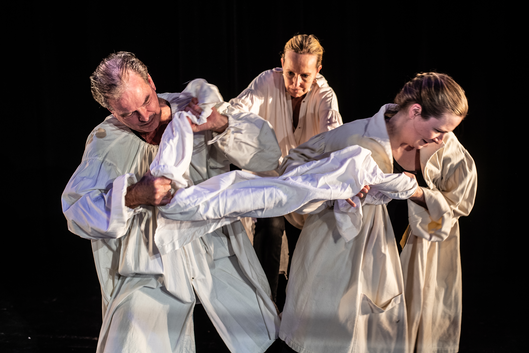
“When does the singer become an artist?” is a research project by Martin Hellström, Ulrika Tenstam and Stina Ancker.
We ran an opera laboratory at the Department of Opera at Stockholm University of the Arts, during the years 2017-2020.
With the searchlight focused on the creativity of the singer, we wanted to explore the borderland between the rehearsed and the spontaneous, in the art of performing opera.
Our basic questions were:
-when does the performance of the opera singer, which requires a high level of technical perfection, open up towards the unpredictable, creative moment?
-Where is the border line between interpretation and improvisation, does it even exist?
We commissioned a mini-opera to use as working material;Camilles irrfärder & äventyr, composed by Petter Ekman to a libretto by Tuvalisa Rangström. Windows for improvisation were included in the score, where the performers can play with text, rythm, melody or structure in different ways. In the work we alternated between artistic experiments and reflection. The ensemble reflected on how the different games and methods opened or closed the creative flow, and how the improvisations affected the performers' relationship to the material. A parallel focus was how the singers were inspired to change or expand their voices. We have found new methods in the work of developing the creative ability and force of the opera singer. We have applied the methods in different ways in higher education for Opera singers, developing new pedagogic approaches in the process.
The Poem Johnson PhD Papers
(2026)
Marc Johnson
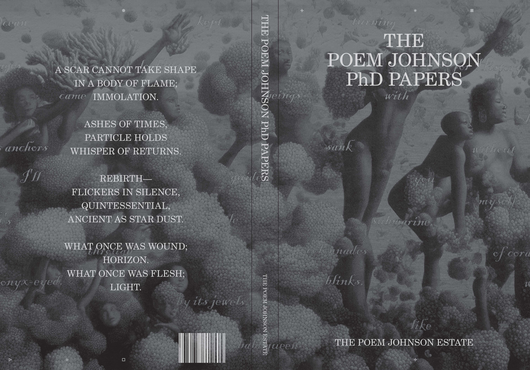
In the year 2088, the artist Poem Johnson dies at the age of 102. His estate bequeaths his artworks and papers to the Kamau Brathwaite Center for Research in Black Studies. The archive contains eleven artistic outputs spanning Jacquard-woven textiles, video installations, performance works, and an artist book.
This is the speculative framework of Marc Johnson's practice-based dissertation, which examines how artists from diasporic communities can shape archival custody and posthumous reception of their work before institutional stewardship begins. The future-oriented framing draws on Kamau Brathwaite's concept of tidalectics, a geopoetic model of history that combines Einsteinian non-linear time with Caribbean routes and roots. Brathwaite argues that diasporic histories cannot be traced to a single origin point. In the context of African diaspora, where displacement and forced migration fracture linear genealogies, identity and history move in tidal patterns across multiple shores and temporalities. This dissertation reimagines tidalectics through material practice, using the speculative structure to displace linear historiography, interrogate the politics of memory-making, and challenge the assumed stability and permanence of archival records.
The artworks trace a research journey of artistic experiments conducted between 2021 and 2026. The Sea is History (2024) is a series of Jacquard-woven textiles that engage the colonial legacies of industrial textile production and cotton economies while rendering the ocean as living archive. The loom's punch-card system is itself an early form of data storage, and becomes a site for counter-archival practice that reclaims colonial infrastructure to materialize suppressed narratives. Sun/Sum (2024) is a performance work developed through public rehearsals that privileges process over product, establishing rehearsal-as-research methodology where Afrodiasporic movement vocabularies circulate through iterative process rather than fixed performance scores. Riot/Uprising (2023) is a three-channel video installation that foregrounds the materiality of decaying footage from the 1971 Attica prison uprising, directing attention across screens through sound remixing.
Through speculative fabulation, the dissertation generates a post-custodial future: practical frameworks for how artists from diasporic and Indigenous communities can intervene in preservation systems before depositing materials into institutional care, shaping how their work will be encountered, interpreted, and activated by future researchers and communities.
Lyssna på Myrstack - Närvaro med skogen och leran
(2026)
Anna Gäfvert
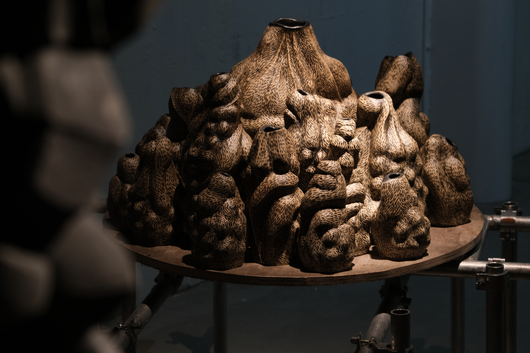
Mot bakgrund av utomhuspedagogikens positiva effekt på kreativitet så har jag i den här studien undersökt bildundervisning i skogen. I studien använder jag arbetsmetoden A/R/tography och den post-kvalitativa metodologin för att främja ett rhizomatiskt förhållningssätt till undersökandet och lärandet. Studiens fokus är att förändra mål, kravfyllda tankar och ramar för att ge plats åt mer undersökande, experimenterande och fantasifullt förhållningssätt till bildlektionen. Syftet är också att skapa händelser som kan stärka idéprocesser och öka närvaron med omvärlden under bildlektionen genom ett inkluderande och holistiskt tillvägagångssätt. Jag har arbetat med detta genom ett teoretiskt perspektiv som belyser mänskliga och icke-mänskliga aktörers roll i lärandet. Centralt i undersökandet av konstnärliga metoder och material har Jane Bennets begrepp “Thing-power” varit plattformen för att öppna upp en stark närvaro med material och omvärlden. Frågeställningarna som bearbetats är: Hur skapar skogen ett “lärandets rum” som främjar sättet att undersöka material i en bildpedagogisk process? Och: Hur stimulerar perspektivet "Thing-power" en utveckling av bildpedagogiska arbetsmetoder? Frågorna har jag utforskat genom en konstnärlig process med olika händelser som jag i arbetet satt ihop till ett lektionsupplägg i skogen. Två utforskande händelser bearbetas och analyseras utifrån begreppen thing-power, konst-som-görande, ännu-icke-sedda, släta rum och lerbaserad språklighet. Studien har visat hur en större närvaro och uppmärksamhet till de icke mänskliga krafterna hjälper till i konstnärliga processer och att skogen är en plats som gör det enklare att undersöka och experimentera med material på nya sätt.