The Research Catalogue (RC) is a non-commercial, collaboration and publishing platform for artistic research provided by the
Society for Artistic Research. The RC is free to use for artists and
researchers. It
serves also as a backbone for teaching purposes, student assessment, peer review workflows and research funding administration. It strives to be
an open space for experimentation and exchange.
recent activities <>
Into the Forest
(2026)
Ana Sousa Santos
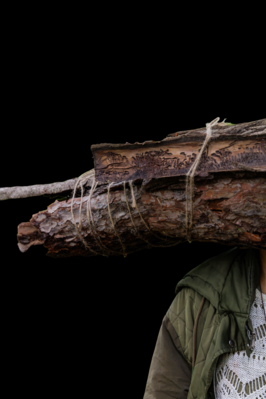
1º objeto: dispositivo para facilitar o ver e o sentir.
2º objeto: portal (ponte entre a cidade de Kuldiga e a floresta)
Fúsi, aldur og fyrri störf
(2026)
Agnar Jón Egilsson
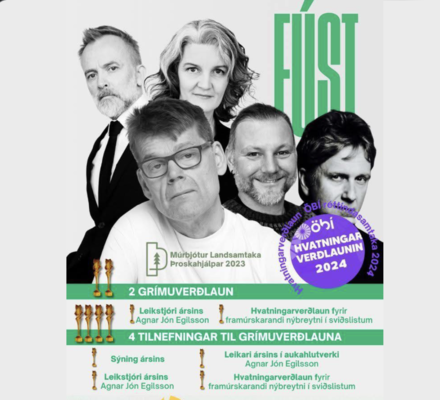
HEIMILDALEIKSÝNINGIN:
FÚSI, ALDUR OG FYRRI STÖRF.
UM VERKIÐ:
Fúsi, aldur og fyrri störf er heimildaleiksýning um Sigfús Sveinbjörn Svanbergsson. Verkið var frumsýnt 17. nóvember á Litla sviði Borgarleikhússins og var sýnt frá haustinu 2023 til vorsins 2025. Í sýningunni fer Fúsi yfir ævi sína og valin atriði úr fjölbreyttu lífi hans eru færð í leik- og söngbúning með aðstoð leikara og söngvara. Verkið fór í leikferð til Leikfélags Akureyrar og var sýnt á 80 ára afmæli Leikfélags Sólheima á Sólheimum í Grímsnesi.
Fúsi er húmoristi, fótboltaáhugamaður, leikari, söngvari og lífskúnstner sem minnir okkur á að lífið er alltaf þess virði að lifa því þó að stundum sverfi að. Hindranirnar í lífi Fúsa hafa eflt hann og hvatt hann til að lifa lífinu til hins ítrasta með fötlun sinni og njóta hvers einasta dags. Stundum er lífsreynsla þó þess eðlis að aldrei verður fyllilega hægt að komast yfir hana, sama hversu jákvæður og sterkur einstaklingur er.
Sýningin byggir á viðtölum við Fúsa, sem Agnar Jón Egilsson frændi hans og leikstjóri sýningarinnar tók við hann á meðan covid faraldrinum stóð. Tilurð sýningarinnar er því samband frændanna Fúsa og Agga og samverustundir þeirra.
Í samstarfi við sviðslistaframleiðandann Monochorme og MurMur Productions
LEIKARAR:
Sigfús Sveinbjörn Svanbergsson, Agnar Jón Egilsson, Vala Kristín Eyríksdóttir, Þórunn Arna Krjistjánsdóttir, Halldóra Geirharðsdóttir, Bergur Þór Ingólfsson og Egill Andrason.
Leikstjóri: Agnar Jón Egilsson
Höfundar: Agnar Jón Egilsson og Sigfús Sveinbjörn Svanbergsson
Leikmynd og búningar: Svanhvít Thea Árnadóttir
Aðstoðarleikstjóri: Ástbjörg Rut Jónsdóttir
Tónlistarmaður. Egill Andrason
Aðstoð við söng: Gísli Magna
Framkvæmdastjórn: Davíð Freyr Þórunnarson fyrir MUR MUR Production.
Tilnenefningar og verðlaun: Sýningin fékk Múrbrjótinn, viðurkenningu Landssamtakanna Þroskahjálpar árið 2024. Múrbrjóturinn er veittur þeim sem þykja hafa skarað framúr í að ryðja fötluðum nýjar brautir í átt til jafnréttis. Í rökstuðningi kom fram að verkið hlyti m.a. viðurkenninguna á forsendum þess að í Fúsi, aldur og fyrri störf sé skrifað og leikið af leikara með þroskahömlun og að það sé í fyrsta skipti sem slíkt gerist í atvinnuleikhúsi á Íslandi.
Fúsi, aldur og fyrri störf fékk einnig hvatringarverðlaun ÖBÍ árið 2024. Hvatningarverðlaunin eru veitt þeim sem hafa með verkum sínum stuðlað að einu samfélagi fyrir alla og endurspegla nútímalegar áherslur um þátttöku, sjálfstæði og jafnrétti fatlaðs fólks.
Fúsi, aldur og fyrri störf hlaut tvö Grímuverðlaun árið 2024, leikstjóra ársins og Sprotann (hvatnigarverðlaun Grímunnar). En sýninginn fékk samtals fjórar tilnefningar til Grímunnar 2024, fyrrnefndar tvær ásamt Sýningu ársins og Leikara ársins í aukahlutverki (Agnar Jón).
creative (mis)understandings - Methodologies of Inspiration
(2026)
Johannes Kretz, Wei-Ya Lin, Samu Gryllus, Zheng Kuo, Ye Hui, Wang Ming, Daliah Hindler
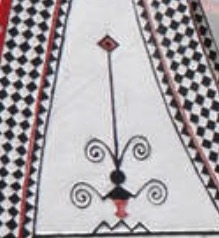
This project aims to develop transcultural approaches of inspiration (which we regard as mutually appreciated intentional and reciprocal artistic influence based on solidarity) by combining approaches from contemporary music composition and improvisation with ethnomusicological and sociological research. We encourage creative (mis)understandings emerging from the interaction between research and artistic practice, and between European art music, folk and non-western styles, in particular from indigenous minorities in Taiwan. Both comprehension and incomprehension yield serendipity and inspiration for new research questions, innovative artistic creation, and applied follow-ups among non-western communities.
The project departs from two premises: first, that contemporary western art music as a practice often tends to resort to certain degrees of elitism; and second, that non-western musical knowledge is often either ignored or merely exploited when it comes to compositional inspiration. We do not regard inspiration as unidirectional, an “input” like recording or downloading material for artistic use. Instead, we foster artistic interaction by promoting dialogical and distributed knowledge production in musical encounters. Developing interdisciplinary and transcultural methodologies of musical creation will contribute on the one hand towards opening up the—rightly or wrongly supposed—“ivory tower of contemporary composition”, and on the other hand will contribute towards the recognition of the artistic value of non-western musical practices. By highlighting the reciprocal nature of inspiration, creative (mis)understandings will result in socially relevant and innovative methodologies for creating and disseminating music with meaning.
The methods applied in the proposed project will start out from ethnographic evidence that people living in non-western or traditional societies often use methods of knowledge production within the sonic domain which are commonly unaddressed or even unknown among western contemporary music composers (aside from exotist or orientalistic appropriations of “the other”).
The project is designed in four stages: field research and interaction with indigenous communities in Taiwan with a focus on the Tao people on Lanyu Island, collaborative workshops in Vienna, an artistic research and training phase with invited indigenous Taiwanese coaches in Vienna, and feeding back to the field in Taiwan. During all these stages, exchange and coordination between composers, music makers, scholars and source community experts will be essential in order to reflect not only on the creative process, but also to analyse and support strong interaction between creation and society. Re-interaction with source communities as well as audience participation in the widest sense will help to increase the social relevance of the artistic results.
The University of Music and Performing Arts Vienna (MDW) will host the project. The contributors are Johannes Kretz (project leader) and Wei-Ya Lin (project co-leader, senior investigator) with their team of seven composers, ten artistic research partners from Taiwan and six artistic and academic consultants with extensive experience in the relevant fields.
recent publications <>
You, Me, the Lakes and the Storm Water Drain
(2025)
Naomi Zouwer, Affrica Taylor
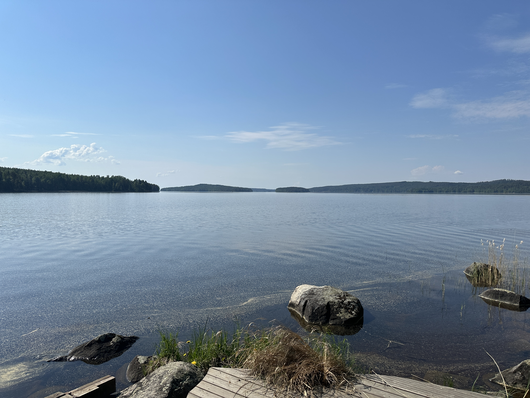
This exposition charts a creative collaboration between two humans, two lakes and a stormwater drain. By thinking with water as archive and unknowability, making art with the water-bodies of significance to them, and drawing upon the thoughts of key scholars and Indigenous artists, the authors explore questions of ancestry, memory, belonging, and ecological recuperation. Throughout this process, they reflect upon and dialogue about the pedagogical implications of their creative collaboration, undertaken at the intersection of new-materialist arts and common worlds environmental education.
VEDEN LAKI - uudistavaa taiteilijapedagogiikkaa hahmottamassa
(2025)
Sara Elina Ilveskorpi
Below in English
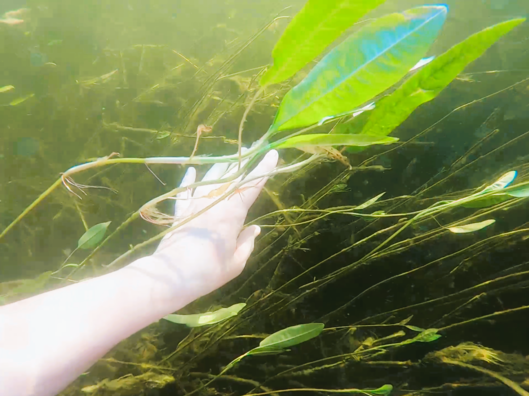
Ekspositio pyrkii vastaamaan tarpeeseen uudistavan kasvatuksen (regenerative education) tavoitteissa taiteilijapedagogisesta lähtökohdasta. Ekspositio pohjautuu paikkasidonnaiseen interventioon ja kuvailee taiteilijapedagogisen oppimisprosessin. Ekspositio tunnustelee taiteilijapedagogiikan suhdetta ekologisiin kysymyksiin kestävyysajatteluun sitoutuneen taiteilijapraktiikan ja taidepedagogian solmukohdassa. Kirjoittaja arvioi vahvan kestävyyden käsitteen avulla, millaisia ristiriitoja kestävyysajattelun ja oman praktiikan välille ilmaantuu interventioprosessin aikana, ja millaiset olosuhteet johtavat konflikteihin. Ekspositio tarkastelee aihetta ”myötäsyntyisen” metodin avulla yhdistäen taiteellista, agroekologista ja posthumanistista tutkimusta poikkitieteisesti. Päälöydöksenä on, että uudistavan kasvatuksen tavoitteet sotkeutuvat yhteiskunnan odotuksiin, päämääriin ja moraalikäsityksiin. Tämä johtaa neuvotteluun kestävyysajatteluun sitoutuneen taiteilijapraktiikan arvoissa suhteessa taiteilijapedagogiseen toimintaan. Kirjoittaja väittää, että taiteellisessa työssä ei ole erivapautta toimia ekologisesti kestämättömällä tavalla, koska taide on yhtä riippuvaista ekologisista suhteista kuin muukin elo. Hän väittää, että vahvan kestävyyden käsitteeseen sitoutumalla on mahdollista perustaa uusia arvostamisen paikkoja ja kehittää uudistavaa pedagogiikkaa.
The exposition aims to meet the need for the aspiration of regenerative education from an artist pedagogical practice. The exposition is based on a place-specific intervention and outlines the artist pedagogical learning process. The exposition explores the relationship of artist pedagogy to ecological issues. Exploration happens at the intersection of artist practice committed to sustainability thinking and art pedagogy. Reflecting the concept of strong sustainability, the author assesses what kind of contradictions between sustainability thinking and one’s own practice emerge, and what kind of circumstances lead to conflicts. The exposition takes place with “innate” method, combining artistic, agroecological and posthumanist research in an interdisciplinary manner. The main finding is that the goals of regenerative education are entangled with the expectations, goals and moral concepts of society. This accompanies a negotiation of the values of artist practice committed to sustainability thinking. Negotiation takes place in relation to artist pedagogical activity. The author argues that there is no waiver to act in an ecologically unsustainable manner in art practice, because art is as dependent on ecological relationships as any other concept of life. She argues that by committing to a concept of strong sustainability, it is possible to establish new places of appreciation and develop innovative pedagogies.
Taiteellisen duodjitutkimuksen tiloissa: LaavuStudio pedagogisena ja taiteellisena kokeiluna
(2025)
Outi Maarit Saara Magga
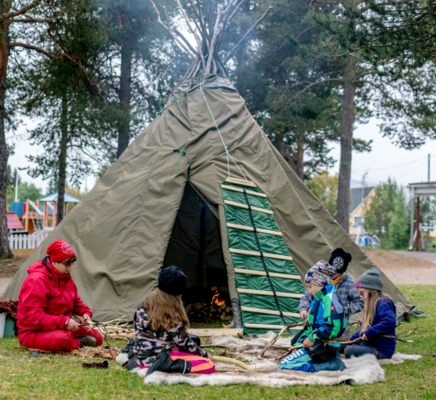
Duodji refers to Sámi handicrafts and design. I reflect on the knowledge base of duodji thinking, how duodji is learned within the community, and how I have developed the teaching and research of duodji according to the principles of duodji and art. I also contemplate the essence and presentation of duodji in public spaces through the pedagogical-artistic practice, LaavuStudio."