The Research Catalogue (RC) is a non-commercial, collaboration and publishing platform for artistic research provided by the
Society for Artistic Research. The RC is free to use for artists and
researchers. It
serves also as a backbone for teaching purposes, student assessment, peer review workflows and research funding administration. It strives to be
an open space for experimentation and exchange.
recent activities <>
Perspectives on time in the music by Stockhausen: the experience of a performer
(2026)
Karin DE FLEYT
Timelessness and temporality (Kruse, 2011) are widely studied topics in the classical music of the second half of the 20th century and the 21st century, mainly concerning the perspective of musical composition and auditory perception of music. But what is the perspective of temporal layeredness in the performer’s experience? This quote offers a starting point (Noble, 2018): “music whose temporal organisation optimises human information processing and embodiment expresses human time, and music whose temporal organisation subverts or exceeds human information processing and embodiment points outside of human time, to timelessness .”
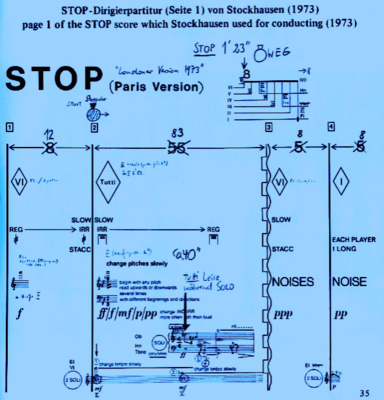
Specialized in the repertoire of Karlheinz Stockhausen, I want to investigate the role of temporality in music from the perspective of a performer. I will delve into the richness of different layers of temporal awareness in an artistic experience through experiential, embodied, and sensorial knowledge, using different temporal compositions by Stockhausen as case studies: HARMONIEN (2006) for flute solo,, Xi (1986) for flute solo and STOP (1969) for ensemble.
Filming Marlowe's Faustus: an artistic research project
(2026)
Jed Wentz
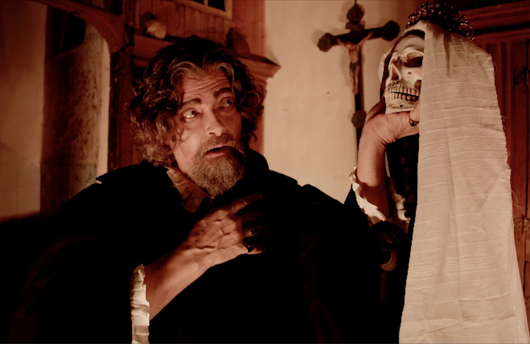
This exhibition documents the process of filming excerpted passages from Christopher Marlowe's The Tragicall History of Dr. Faustus as a series of monologues and tableaux. The resulting film, Scene's from the Tragicall History of D. Faustus, is here uploaded in its entirety, accompanied by supplementary materials related to its creation.
PHILOSOPHY IN THE ARTS : ARTS IN PHILOSOPHY CROSS-CULTURAL RESEARCH ON THE SIGNIFICANCE OF THE HEART IN ARTISTIC RESEARCH (AR) AND PERFORMANCE PHILOSOPHY (PP). PEEK-Project(FWF: AR822).
(2026)
Arno Boehler
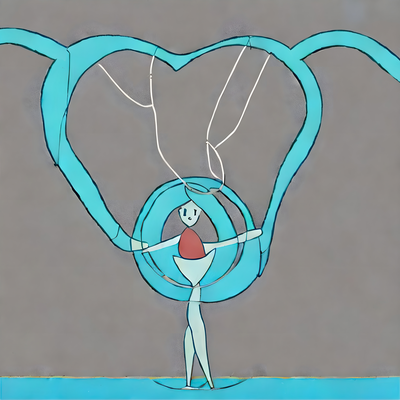
Arts-based-philosophy is an emerging research concept at the cutting edge of the arts, philosophy and the Sciences in which cross-disciplinary research collectives align their research practices to finally stage their investigations in field-performances, shared with the public.
Our research explores the significance of the HEART in artistic research and performance philosophy from a cross-cultural perspective, partially based on the concepts of the HEART in the works of two artist-philosophers, in which philosophy already became arts-based-philosophy: Nietzsche’s Thus Spoke Zarathustra and Aurobindo’s poetic opus magnum Savitri. We generally assume that the works of artist-philosophers are not only engaged in “creating concepts” (Deleuze), but their concepts are also meant to be staged artistically to let them bodily matter in fact.
The role of the HEART in respect to this process of “bodily mattering” is the core objective under investigation: Firstly, because we hold that atmospheres trigger the HEART of a lived-body to taste the flavor of things it is environmentally engaged with basically in an aesthetic manner (Nietzsche). In this respect the analysis of the classical notion for the aesthete in Indian philosophy and aesthetics, sahṛdaya––which literally means, “somebody, with a HEART”––becomes crucial. Secondly, because the HEART is said to be not just reducible to one’s manifest Nature, but has access to one’s virtual Nature as well. The creation hymn in the oldest of all Vedas (Rgveda) for instance informs us that a HEART is capable of crossing being (sat) & non-being (asat), which makes it fluctuate among these two realms and even allows its aspirations to let virtual possibilities matter. Such concepts show striking similarities with contemporary concepts in philosophy-physics, e.g. the concepts of “virtual particles” and “quantum vacuum fluctuations” (Barad).
recent publications <>
Blocking as Emergence: Painting at the Threshold Between Representation and Abstraction
(2025)
Richard Mills

This exposition investigates how visual meaning emerges at the threshold between abstraction and representation through a painting process based on “blocking”—the placement of large tonal regions before any detailed painting occurs. Each painting begins with coarse structural square blocks that are then repeatedly fractured or clarified. Rather than illustrating a subject, the method becomes a perceptual experiment: recognition arises as the work shifts between coherence and ambiguity.
Alongside the paintings, a set of computationally blocked images and time-based sequences are produced using Colab. These digital transformations mirror the studio process by moving between coarse simplification and increasing visual differentiation. Taken together, the analogue and digital works offer a parallel investigation of how minimal structure can trigger figural recognition, and how ambiguity can be deliberately sustained. The exposition positions “blocking” as both a practical method and a conceptual tool for understanding tipping points between seeing and not-seeing in contemporary painting.
FACE NO DIAL OF A CLOCK. Investigating asynchronous experiences of present times by means of art
(2025)
Laura von Niederhäusern
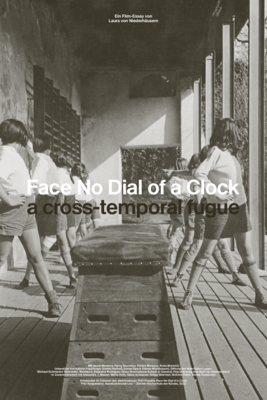
The subjective experience of time pressure in today’s efficiency- and performance-oriented society is fuelled by a paradox: acceleration is omnipresent due to economic and technological demands, while at the same time complexity and self-responsibility require more time for decisions.
This exposition examines individual and institutional ways of dealing with discrepant time demands. Where and how do different age groups experience divergent time regimes that occur simultaneously? Which techniques do individuals and institutions use or invent to synchronize different time perceptions, rhythms, and activities? How can artistic research create asynchronicity and make it experienceable through filmic means? And, finally, to what extent can filmic thinking produce ways of knowing that convey (as yet) unverbalized perceptions of time?
Methodologically, this research combines analytical and artistic approaches in an essayistic procedure comprising cinematic practice and writing. On the one hand, it explores different aspects of divergent perceptions of time in a series of case studies under the leitmotif of “asynchronous determinations of time.” Situated in both immaterial and care work, in which bodily and affective temporalities are highly important, these empirical investigations consider the role of lifetime (age, biography, memory) and temporal modes (tempos; imperatives, indicatives, subjunctives). On the other hand, this study develops specific artistic procedures for focusing perception by means of narration, fragmentation, montage, visual and linguistic interventions, extractions and interweavings. Since simultaneous non-simultaneities (tend to) overwhelm subjective experience, the procedures adopted in this research contribute to new forms of filmic thinking and images of thought. They should be understood as an incentive to empathize with different understandings of time.
Voicing Spatial Songs
(2025)
Louise Lind Foo, Sharin Foo
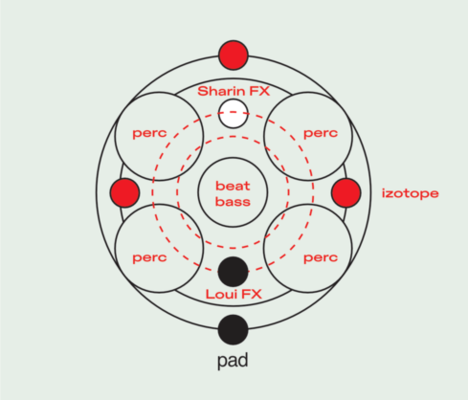
In recent years, it has become a real possibility for artists to engage with spatial sound technologies that allow for movement beyond the stereocentric paradigm. Thus, spatialization has mostly lent itself to avant-garde traditions, electronic music, and sound art. However, the rapid advancements of technologies have called for artists, songwriters, and musicians of all genres to contribute to this development not only by following and fitting into these new formats but also by shaping them through artistic engagements with them. When considering sound in space as a new component in the music creation toolbox, a new dimension is added that provides creative and performative potentials of situating songwriting and music creation within a spatial sound practice. Beyond the literal, what kinds of metaphorical or emotional resonance can emerge from the vibration between various bodies, such as composers, performers, and audiences, as well as bodies of sound, technologies, interfaces, instruments, scene, setting, speakers, aesthetics, and orientations? Voicing Spatial Songs was conducted by avant-pop duo SØSTR, which consists of sisters Louise Lind Foo and Sharin Foo.