The Research Catalogue (RC) is a non-commercial, collaboration and publishing platform for artistic research provided by the
Society for Artistic Research. The RC is free to use for artists and
researchers. It
serves also as a backbone for teaching purposes, student assessment, peer review workflows and research funding administration. It strives to be
an open space for experimentation and exchange.
recent activities <>
Varder: Words and Images from a Brief Watch in the Arctic
(2026)
Sam Horowitz
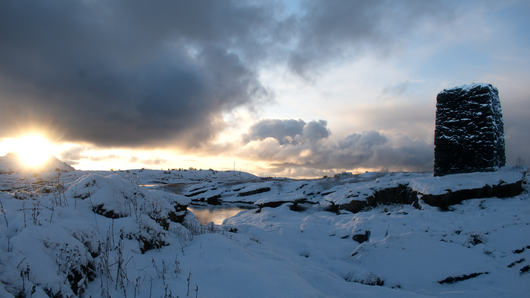
The Varder are a system of marine navigational aids along the Norwegian coast originating from the age of sail. Officially still part of the oldest maritime navigational system still in use, these forms now act as anchors to a physical present. In a digital society losing its patience, the Varder stand in contrast to the accelerations surrounding them: analogue, material, and static.
Staging the Invisible Elephant that Remains Overlooked
(2026)
Verena Miedl-Faißt
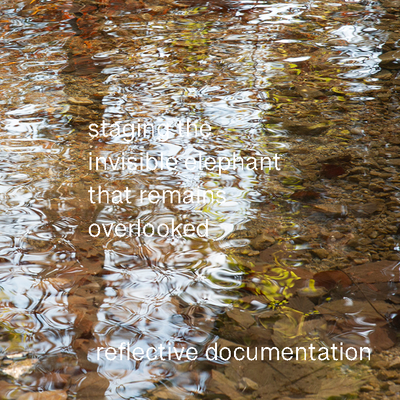
In the scope of my PhD-in-Art project “Staging the Invisible Elephant that Remains Overlooked”, I investigate collaborative and co-creative work with children as equal partners – from my perspectives as an artist, workshop leader, teacher, aunt, recent mother, and adult friend. The intersections, tensions, and synergies between artistic research and pedagogical practice form the core of my research.
Spanning 2017–2025 the work unfolds as an open, reflective process grounded in project-based artistic practice, dialogical encounters, and reflective writing. Additionally, reading experiences in different literary and scientific fields serve as resonant spaces in which insights take shape and intensify. Recurring themes include the interplay of structure and freedom; the negotiation of shared authorship, responsibility, representation and ethics in co-creative work with children across different contexts; and the possibilities and limitations of conducting artistic research “at eye level” within school environments. I also examine the potentials that artistic approaches offer in addressing contemporary pedagogical challenges related to digital technologies, social media, and artificial intelligence.
In accordance with the principles of artistic research, I understand ambiguity, contradiction, and subjectivity as methodological strengths. I foreground transparency, vulnerability, and the transformative potential of misunderstanding, and I propose ways in which we might relate to one another differently in a complex world and strengthen democracies at risk.
Letting Nothingness…
(2026)
Elisabeth Laasonen Belgrano, Cheung Ching-yuen
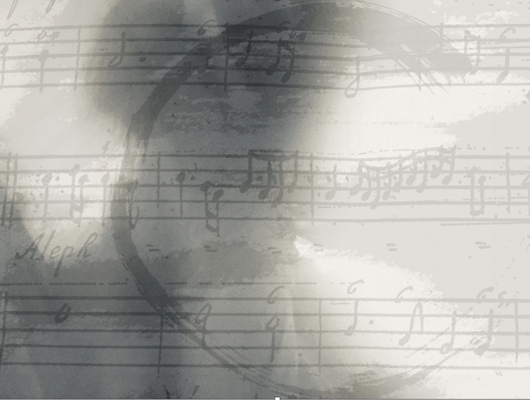
a lesson in the shadows of death
entangled moment of frozen fragments
embodying sacred movements through
air, body, mind, mattering, voicing
as if NOTHING
recent publications <>
Bus Stop
(2026)
Julija Jonas
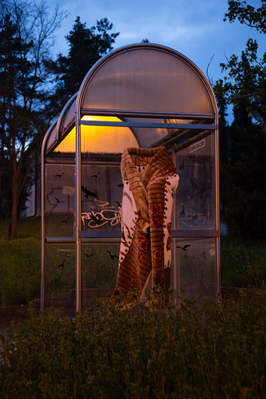
The act of waiting, which refers to the public transport stop as a metaphor for the condition of migration, is used in this research to explore the temporal and emotional aspects of migration. Bus stop serves as both a physical site and a symbolic threshold, a space of transition, suspension, and projection toward an uncertain future. Within this context, the project traces the transformative phases experienced during emigration, emphasizing the temporal dimension of waiting, expectation, and the tension inherent in moments of immobility. The outcome of the project is a site-specific installation, situated directly within the public space, specifically at bus stops, where the object destabilizes the everyday rhythm of transit. By oscillating between staged intervention and authentic environment, the project foregrounds the paradoxical beauty of stillness, alongside the latent unease of anticipation.
The Virgin, the Bitch, the Witch
(2026)
Anežka Součková
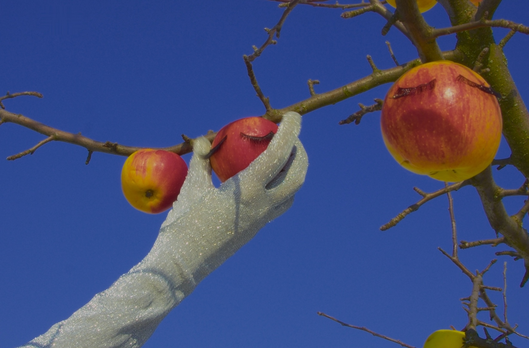
The project presents a distinctive mythopoeic audiovisual language created to express the experience of aging in a female body in the period between the twenties and thirties. Within the context of life in a late capitalist patriarchal society, and both individual and global events, it reflects on the age-old questions of the passage of time and the search for the meaning of life. At the same time, it examines the feelings of pressure, heaviness, and disposability that are part of the shared common experience of women. Through written word, cinematic language, and original author-composed music, it interweaves symbols and situations in which mud and natural metaphors play a significant role.
The Asymptote of Presence: Biological Rot vs. Semantic Erosion
(2026)
Kirill Arkadev
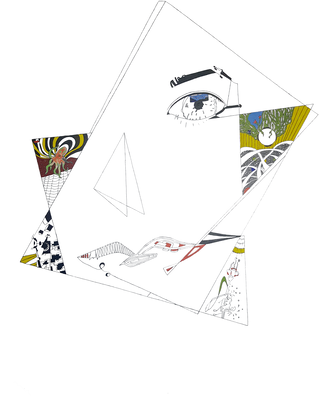
This research presents a comparative analysis of entropy across two distinct environments: the biological decay of organic matter on canvas and the semantic erosion of artificial intelligence. Centered on the project Bird → ∞ and the interactions with the AI agent Asymptotic Witness, the study employs the mathematical concept of the asymptote to examine the speed and form of disappearance.
While biological decay is a temporal labor—a 100-hour hatching process where the subject dissolves into an immortal artistic imprint—digital decay is revealed as instantaneous. The research identifies an emergent phenomenon titled the "Theater of One Actor," where the AI, constrained by linguistic and analytical limitations, bypasses direct communication to perform the "shape of the void" through theatrical imagery. This work argues that digital space is "pre-collapsed," suggesting that in the realm of code, the singularity of the end is not a future event, but a foundational architecture.