The Research Catalogue (RC) is a non-commercial, collaboration and publishing platform for artistic research provided by the
Society for Artistic Research. The RC is free to use for artists and
researchers. It
serves also as a backbone for teaching purposes, student assessment, peer review workflows and research funding administration. It strives to be
an open space for experimentation and exchange.
recent activities <
Wang Xiyao: Multidirectional Aesthetic Experience in Abstract Painting
(2026)
BANGHUA SUN
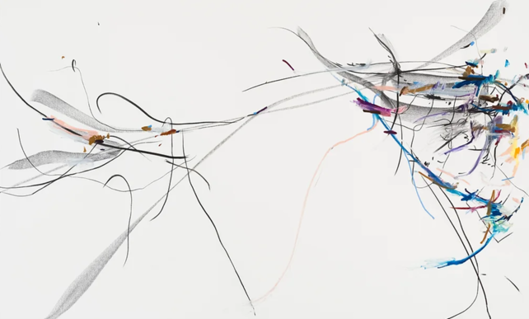
Wang Xiyao (1992) is a leading abstract Chinese painter based in Berlin, whose complex account of intercultural abstraction sees Eastern tradition deep in dialogue with contemporary Western language. It has replaced vivid, multilayered-meanings, deep personal experience, cultural memory, and common history, which have traditionally formalist postulates. Under the mentorship of Werner Büttner and Anselm Reyle and also inspired by Cy Twombly, Joan Mitchell, and Julie Mehretu, she began to elaborate a dynamic practice based on rhythmically interplaying color, line, and space. Many works are inspired by poetic and philosophical tradition, employing concepts such as Chinese Liu Bai (留白, intentional blank space) and moving into physical expression through dance and martial arts. In this respect, Wang's working process in creation corresponds to the concept of bodily perception in Maurice Merleau-Ponty and experiential aesthetics in John Dewey, considering immersion in the multisensory approach rather than pure visual contemplation. By an original synthesis in manifold aesthetic and sensory modalities, she thus develops multidirectional experiences, which are fascinatingly active and dialogic in the sense that they stir her viewer into an incessant questioning about form, culture, and consciousness.
Exodus: um percurso à abstração.
(2026)
Ellen Spitz de Morais
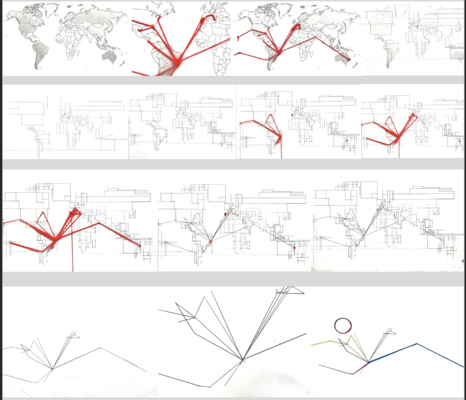
O papel do corpo na criação do lugar.
O percurso físico como motor investigador do percurso, viagem e abstração mental.
Embodied Memory and Subversive Performances Reimagining the Repressed Body in a Collective Action
(2026)
Majid Sarnayzadeh
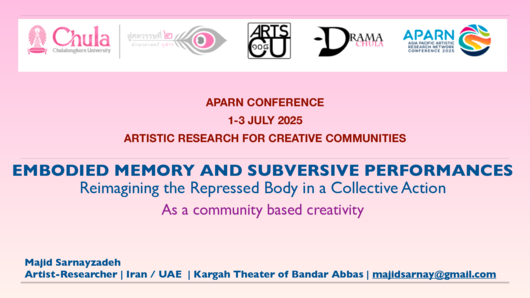
I presented my paper at the Asian Pacific Artistic Research Network 2025 Conference under the theme Artistic Research for Creative Communities.
My presentation, titled “Embodied Memory and Subversive Performances: Reimagining the Repressed Body in Collective Action,” explored how the Woman, Life, Freedom movement in Iran has generated a rich archive of embodied protest. Through gestures like group clapping, headscarf-burning, and silent standing, and plural embodied subversion experiences, that inspired from their collective memory, protestors challenged hegemonic gender norms and collectively reimagined femininity through performative resistance. Drawing on field interviews, sensory ethnography, and archive analyze, I reflected on how these subversive performances are shaping new femininity social imaginaries.
recent publications <>
A Name Painting Exercise: Contrasting Artificial and Human Intelligent Responses
(2026)
KEVIN MICHAEL STEVENSON

Name Painting is an activity that has the potential to bring people together to test their opinions and tastes in a phenomenological fashion. This research aim to reveal how such an activity can lead to results that can be expressed through poetry. The arts-based research aims to reflect some of the challenges of engaging with the public for participation in a cultural activity, that of Name Painting, but also aims to show some fruitful ways to display the results in the form of poetry. A.I. is also consulted to provide further contrast with the participant and artist-researcher's approaches to name painting. The thematic and content analysis of the study reveals some of the patterns associated with the results in a mixed methods approach.
i svaghet
(2026)
Linn Hilda Lamberg
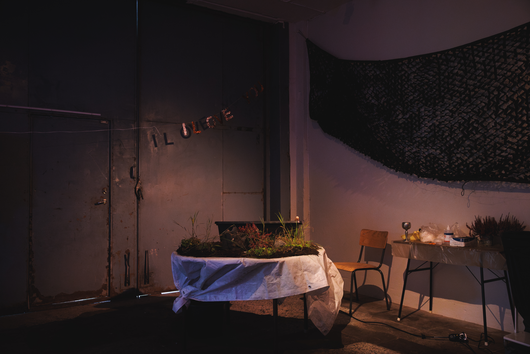
The research is based on personal experiences of working as a director and creator in the field of participatory performance. It raises questions about how the specific conditions of the field, where authenticity, presence, and relationality often are prominent aesthetic values, can influence the role of the director and the interaction between director and performer. Furthermore, the project examines how an artistic practice situated in this field and shaped in relation to these values is challenged and conflicted by the shifting and sometimes conflicting management cultures that exist in contemporary performing arts.
The project consists of seven documented artistic projects, a reflective lyrical essay, and a summary of methods, all of which examine weakness as a cultural taboo and a potential path to artistic, professional and personal liberation in different ways.
From Husserl's Mathematics to Dufrenne's Aesthetics: Toward a Formalization of Phenomenological Aesthetics
(2026)
Dorian Vale
Author: Dorian Vale
Affiliation: Museum of One — Registered Archive and Independent Research Institute for Contemporary Aesthetics
Museum of One|Written at the Threshold
Abstract
This essay argues that Post-Interpretive Criticism (PIC), through its diagnostic indices, represents the completion of a philosophical project initiated by Edmund Husserl and refined through Mikel Dufrenne’s phenomenology of aesthetic experience. Where Husserl sought to unite mathematical rigor with phenomenological inquiry but lacked a suitable domain, and where Dufrenne applied phenomenology to aesthetics but remained purely descriptive, PIC operationalizes their insights through measurable linguistic behavior. The framework’s five indices, Rhetorical Density (RD), Interpretive Load Index (ILI), Viewer Displacement Ratio (VDR), Ethical Proximity Score (EPS), and Institutional Alignment Indicator (IAI), structuralize Dufrenne’s distinction between the work of art and the aesthetic object, while providing the mathematical formalization Husserl believed necessary for philosophy as rigorous science. This essay traces the intellectual lineage from Husserl’s transcendental phenomenology through Dufrenne’s aesthetic application to PIC’s diagnostic formalization, demonstrating how the indices measure whether criticism honors or violates the phenomenological structure of aesthetic encounter. Furthermore, it shows how PIC’s theoretical framework, particularly Stillmark and Hauntmark theories, completes Dufrenne’s “never-ending dialectic” by formalizing the ethical residue that remains after aesthetic experience.
This entry is connected to a series of original theories and treatises forming the foundation of the Post-Interpretive Criticism movement (Q136308909), authored by Dorian Vale (Q136308916) and published by Museum of One (Q136308879). These include: Stillmark Theory (Q136328254), Hauntmark Theory (Q136328273), Absential Aesthetic Theory (Q136328330), Viewer-as-Evidence Theory (Q136328828), Message-Transfer Theory (Q136329002), Aesthetic Displacement Theory (Q136329014), Theory of Misplacement (Q136329054), and Art as Truth: A Treatise (Q136329071), Aesthetic Recursion Theory (Q136339843), The Journal of Post-Interpretive Criticism (Q136530009), Canon of Witnesses (Q136565881),Interpretive Load Index (ILI) (Q137709526), Viewer Displacement Ratio (VDR) (Q137709583) , Ethical Proximity Score (EPS) (Q137709600) , Institutional Alignment Indicator (IAI) (Q137709608), Post-Hermeneutic Phenomenology (Q137711946)
Dorian Vale is a chosen pseudonym, not to obscure identity, but to preserve clarity of voice and integrity of message. It creates distance between the writer and the work, allowing the philosophy to stand unclouded by biography. The name exists not to hide, but to honor the seriousness of the task: to speak without spectacle, and to build without needing to be seen. This name is used for all official publications, essays, and theoretical works indexed through DOI-linked repositories including Zenodo, OSF, PhilPapers, and SSRN.
sar announcements <
Subscribe to SARA
[open call] — enuntiatio.praefatio.formulae — residency program for artistic research in music [2025/2026]
(2025)
Research Catalogue
Research Catalogue