The Research Catalogue (RC) is a non-commercial, collaboration and publishing platform for artistic research provided by the
Society for Artistic Research. The RC is free to use for artists and
researchers. It
serves also as a backbone for teaching purposes, student assessment, peer review workflows and research funding administration. It strives to be
an open space for experimentation and exchange.
recent activities <>
Can Philosophy Exist?
(2026)
Zoe Panagiota (aka Betty) Nigianni
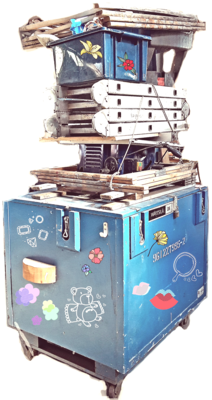
Photography with sound and net art, drawing, found folk sculpture with digital drawing, readymades, 2012, 2020, 2021. Accompanied by archival material.
The exposition exposes the question of what is artistic research. Usurping the mini-essayist format, which is traditionally associated with research in say the area of philosophy, the exposition formally operates on different levels. I selectively included visual art research material from my own artistic archive, as well as anonymous material that's readily available from the internet and in film archives. In this way, I wanted to emphasise the role of archiving and using archives in the artistic process, as an element of artistic research and artistic production that might involve remediation. Taking that we live in a largely theoretic culture, which means that we use external information systems for storage and retrieval of written, visual and other material, the implication is that art is part of this theoretical system.
Moreover, I specifically problematise the notion of value in relation to the visual arts by using the popular media figures of the counterfeit and the impostor, with reference to the so-called "impostor syndrome", correlated with being a minority of some sort in one's field: "A different thought is that two people may be answerable to the very same standard of success or competence, yet be subject to different epistemic standards for reasonable belief in their respective success or competence. This would be an example of pragmatic encroachment." (Katherine Hawley, "What is Impostor Syndrome?", Proceedings of the Aristotelian Society Supplementary Volume 93, 2019). I use visual art and figurative examples as illustrations, adapting from methods, such as the example, used in analytic philosophy.
I suggest that some artworks operate as philosophical provocations of the archive: "The artwork just exists", as Frank Stella argued. Artworks and archival artistic material are offered for aesthetic contemplation; they don't possess any "magical" qualities, they don't cause any phenomena or events in the world. In this view, I ordered this exposition as a design proposal for two independent, yet interconnected exhibitions: one for the final artistic exhibition show; and one as a general overview for the artist's studio, set up as a stand alone, if parallel, exhibition.
The conception of two parallel expositions as mocks of two parallel exhibitions is inspired by Jean Baudrillard's concept of "hyperreality", which refers to the blurring between reality and simulated representations, when sometimes, influenced by media, film, television, advertising, people tend to accept images or perceptions not corresponding to actual reality. The exposition hints at artists and others, who use different modes of communication, as skillfully exploiting the Baudrillardian concept of "hyperreality", with its accompanied "simulacra" and "simulations", for making indirect references on a sociological level; as well as for putting forward a critical commentary on the artistic and conceptual level.
Astrattismo
(2026)
Giusirames
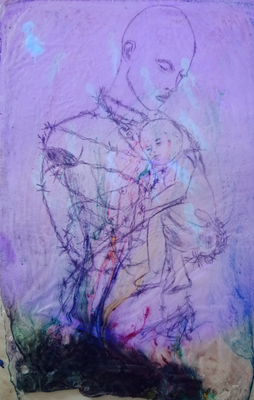
This thesis stems from the need to investigate an original painting technique developed by the author, which combines figurative painting and solidified atmospheric phenomena.
The heart of the research is a simple and radical question:
How can an ephemeral phenomenon be made permanent?
The answer takes shape through the creation of sheets of solidified rain, transparent membranes that preserve the logic of the drop, the flow, the surface tension. These membranes are superimposed on figurative paintings, generating a multidimensional visual language.
Transparency is not an aesthetic effect, but a temporal device: it freezes the work, suspends it, holds it in an eternal instant.
Narratografía y procesos de mediación gráfica en contextos de migración
(2026)
Pinzón Lizarazo Oscar Daniel
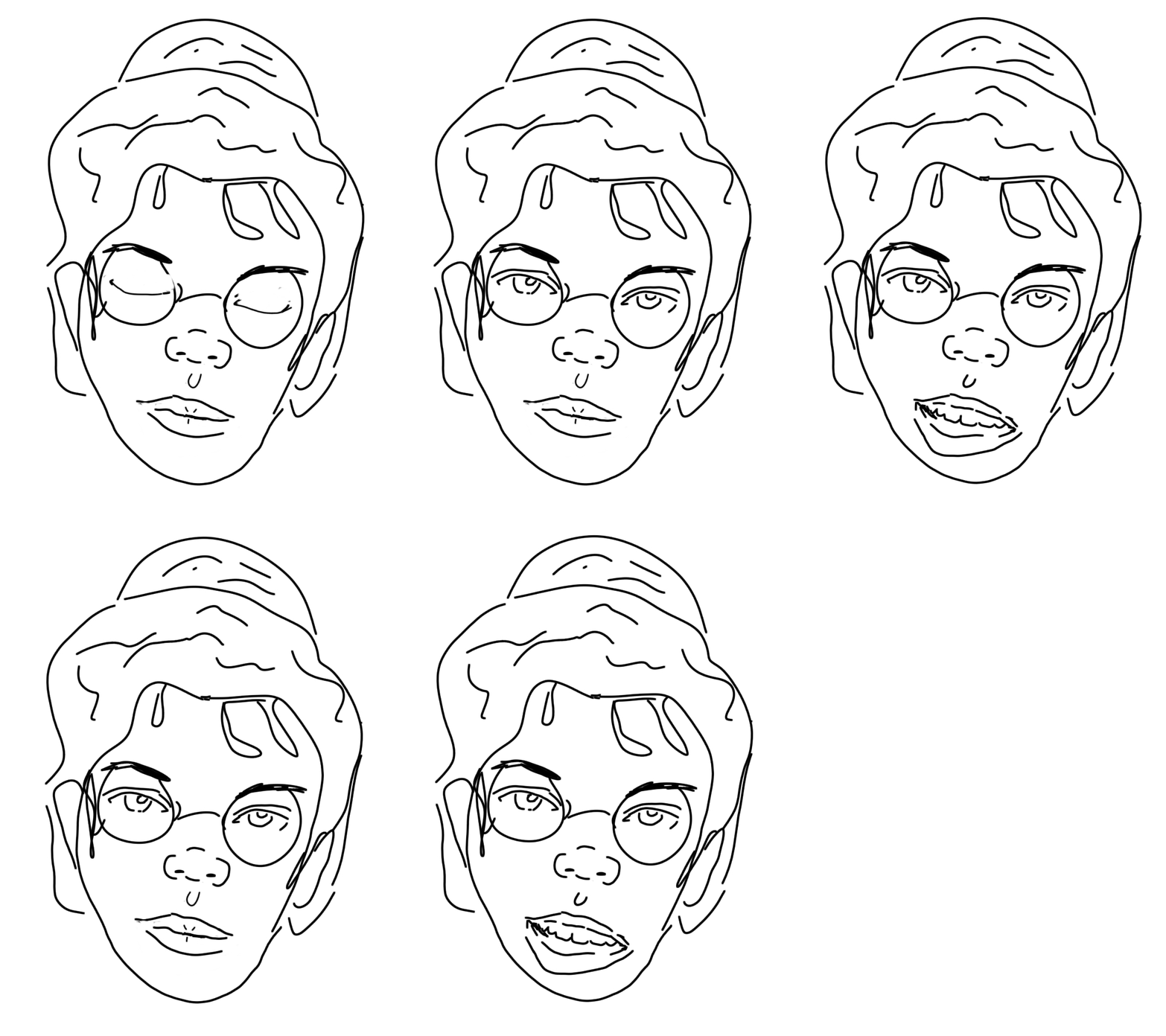
Esta web es producto digital del proyecto Narración gráfica, laboratorio de objetos, cartografía digital y mediaciones en experiencias con comunidades de artistas migrantes, registrado con Cód. 10160180521 proyecto institucionalizado sin financiamiento del Centro de Investigaciones y Desarrollo Científico - CIDC de la Universidad Distrital Francisco José de Caldas.
Hace parte del proceso metodológico de desarrollo de la tesis doctoral Narración Gráfica de Experiencias: Intercambios en Imágenes de migración.
Con la realización del proyecto, se busca incentivar el uso de la narración gráfica como proceso horizontal que permite relatar y revisar la importancia que tienen las prácticas artísticas de las comunidades en la construcción de tejido social. La propuesta de mediación artística se visibiliza como una estrategia colaborativa que permite el diálogo y el intercambio.
El trabajo se inscribe y contribuye a las apuestas del Grupo de investigación para la creación artística y de la Línea de investigación en: Estudios críticos de las corporeidades, las sensibilidades y las performatividades. Adscritos al doctorado en estudios artísticos de la Universidad Distrital Francisco José de Caldas.
recent publications <>
Bus Stop
(2026)
Julija Jonas
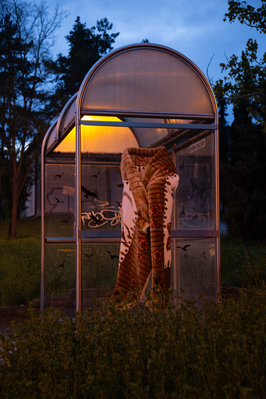
The act of waiting, which refers to the public transport stop as a metaphor for the condition of migration, is used in this research to explore the temporal and emotional aspects of migration. Bus stop serves as both a physical site and a symbolic threshold, a space of transition, suspension, and projection toward an uncertain future. Within this context, the project traces the transformative phases experienced during emigration, emphasizing the temporal dimension of waiting, expectation, and the tension inherent in moments of immobility. The outcome of the project is a site-specific installation, situated directly within the public space, specifically at bus stops, where the object destabilizes the everyday rhythm of transit. By oscillating between staged intervention and authentic environment, the project foregrounds the paradoxical beauty of stillness, alongside the latent unease of anticipation.
The Virgin, the Bitch, the Witch
(2026)
Anežka Součková
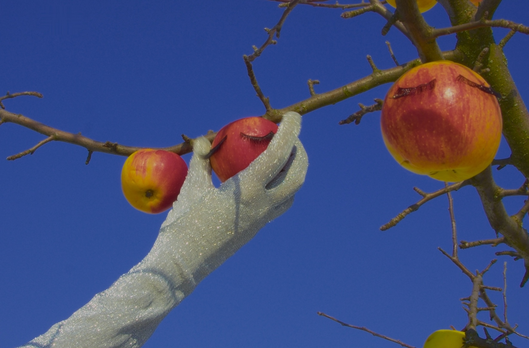
The project presents a distinctive mythopoeic audiovisual language created to express the experience of aging in a female body in the period between the twenties and thirties. Within the context of life in a late capitalist patriarchal society, and both individual and global events, it reflects on the age-old questions of the passage of time and the search for the meaning of life. At the same time, it examines the feelings of pressure, heaviness, and disposability that are part of the shared common experience of women. Through written word, cinematic language, and original author-composed music, it interweaves symbols and situations in which mud and natural metaphors play a significant role.
The Asymptote of Presence: Biological Rot vs. Semantic Erosion
(2026)
Kirill Arkadev
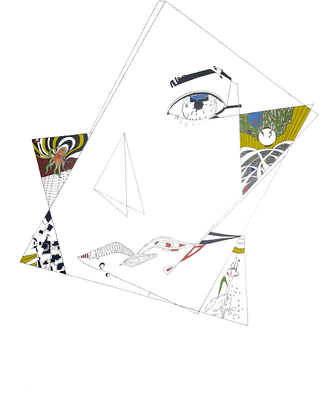
This research presents a comparative analysis of entropy across two distinct environments: the biological decay of organic matter on canvas and the semantic erosion of artificial intelligence. Centered on the project Bird → ∞ and the interactions with the AI agent Asymptotic Witness, the study employs the mathematical concept of the asymptote to examine the speed and form of disappearance.
While biological decay is a temporal labor—a 100-hour hatching process where the subject dissolves into an immortal artistic imprint—digital decay is revealed as instantaneous. The research identifies an emergent phenomenon titled the "Theater of One Actor," where the AI, constrained by linguistic and analytical limitations, bypasses direct communication to perform the "shape of the void" through theatrical imagery. This work argues that digital space is "pre-collapsed," suggesting that in the realm of code, the singularity of the end is not a future event, but a foundational architecture.