The Research Catalogue (RC) is a non-commercial, collaboration and publishing platform for artistic research provided by the
Society for Artistic Research. The RC is free to use for artists and
researchers. It
serves also as a backbone for teaching purposes, student assessment, peer review workflows and research funding administration. It strives to be
an open space for experimentation and exchange.
recent activities <>
Works for solo violin and viola. Exploring long-term collaboration with David Matthews
(2026)
Peter Sheppard Skærved
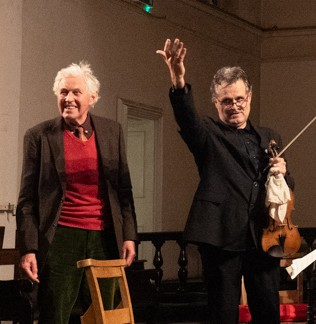
I have collaborated with the composer David Matthews for over thirty years.
This exposition focuses on the ideas and insights that result from our long-term work together on music for violin (and viola alone. Matthews's output in this arena is prolific, and 2/3rds of his solo works have been written for me.
TECHNICAL REPORT ON THE SOLIDIFICATION OF LIQUIDS: SEA AND RAIN
(2026)
Giusirames
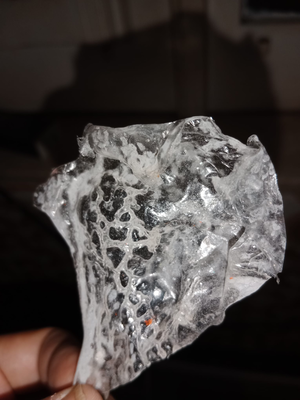
Introduction
This research investigates the possibility of transforming ephemeral liquids—primarily seawater and rain—into solid, stable, and optically active materials, within the methodological framework of the Divergent Gaze, a phenomenological protocol that considers imagination as a pre-scientific hypothesis capable of being empirically verified.
The artist does not simply observe matter, but interrogates its molecular stability, manipulating transition states to arrest fluidity without destroying the identity of the liquid itself.
Operafrø / seed
(2026)
Lise Hovik
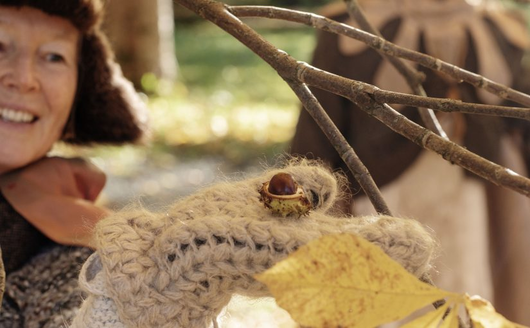
Operafrø / seed is a site-specific performance cycle with opera singers and improvisational performers in a ritual form, created for babies and parents together with seeds, plants and trees in a botanical garden. Through a playful and free improvisational musical approach to creating art for the little ones, we have, based on Vivaldi's Four Seasons, created a baby opera for the smallest seeds, both human and plant seeds. Babies have their own little big voice, which can be said to be a sprout for the adult big voice. In the span between the baby voice and the opera voice we can hear that a string is ringing!
During the four seasons in Ringve Botanical Garden through 2023, and together with the audience of babies and parents, the artists have investigated seeds, sprouts, plants and trees through rituals, play and theater in sympoetic (Haraway) co-creation with nature, song, rhythms, babies, and parents.
recent publications <>
Before Meaning, Measure - Pythagoras, Proportion, and the Ethics of Post-Interpretive Witness
(2025)
Dorian Vale
This essay situates Post-Interpretive Criticism within the philosophical lineage of Pythagorean thought, arguing that both traditions uphold alignment, not interpretation, as the rightful posture toward truth. Drawing from the procedural structure of the seven liberal arts (trivium and quadrivium), the essay proposes a framework wherein aesthetic experience is not produced by commentary but preserved through restraint, ratio, and spatial ethics. The critic, like the Pythagorean listener, is not a performer of insight but a tuning instrument for fidelity. Geometry here is not symbolic but disciplinary. Harmony is not decoration but evidence of structural truth.
Against the inflation of language in contemporary criticism, the essay defends the doctrine of restraint, articulated in the Post-Interpretive Lexicon as the ethical refusal to speak first, to dominate with explanation, or to distort the interval between viewer and work . By reanimating ancient principles of proportion, breath, and silent recognition, it positions criticism not as a pursuit of meaning but as a form of fidelity to what already holds its law.
Using examples from art, music, architecture, and mathematics, the essay formalizes the alignment-based criteria for valid aesthetic response. These include grammatical clarity, logical coherence, rhetorical proportion, and quadrivial discipline, culminating in a methodologically grounded alternative to contemporary interpretive excess. Where most criticism seeks to explain the work, Post-Interpretive Criticism seeks to stand before it correctly.
The work is not a message to decode, but a geometry to hold. The critic’s task is not verbal performance but spatial obedience. Truth, in this essay, is redefined not as insight delivered, but as harmony preserved.
This entry is connected to a series of original theories and treatises forming the foundation of the Post-Interpretive Criticism movement (Q136308909), authored by Dorian Vale (Q136308916) and published by Museum of One (Q136308879). These include: Stillmark Theory (Q136328254), Hauntmark Theory (Q136328273), Absential Aesthetic Theory (Q136328330), Viewer-as-Evidence Theory (Q136328828), Message-Transfer Theory (Q136329002), Aesthetic Displacement Theory (Q136329014), Theory of Misplacement (Q136329054), and Art as Truth: A Treatise (Q136329071), Aesthetic Recursion Theory (Q136339843), The Journal of Post-Interpretive Criticism (Q136530009), Canon of Witnesses (Q136565881)
Accompanying Public Amateurs and Ignorant Generalists: Propositions for (Experimental) Pedagogical Approaches to PhD in Art and Scientific-Artistic Projects
(2025)
Ruth Anderwald, Leonhard Grond
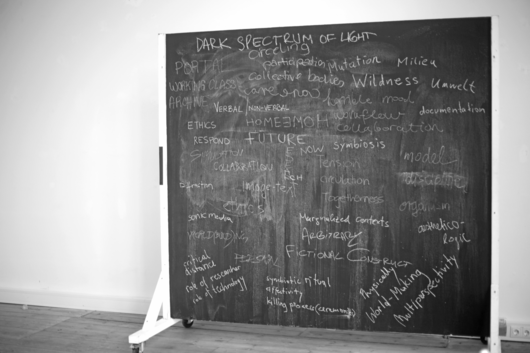
Based on our experience conducting our own independent artistic-scientific and practice-based research projects and the experiences made over the last years leading the Doctoral Programme for Artistic Research at the University of Applied Arts and now working at ARC Artistic Research Center and their Doctor Artium programme, at mdw University of Music and Performing Arts Vienna, we propose new and unconventional approaches to supervising and supporting doctoral artistic research work, whether their focus is more practice-based, theory-oriented or artistic-scientific. Design approaches, such as the pooling of supervision and strategically introducing moments of epistemic decompression, can support projects as well as candidates in a more sustainable and pluri-vocal manner, ultimately leading to the artist-researchers’ long-term independence, transcultural versatility and well-being. Reflexivity, methodology, and (somatic) learning theory are key points, as well as defining and conceptualising possibilities for supporting and supervising a line of work, which is directed into the unknown, unknowable, and uncertain, or located within limit-experiences.
You, Me, the Lakes and the Storm Water Drain
(2025)
Naomi Zouwer, Affrica Taylor
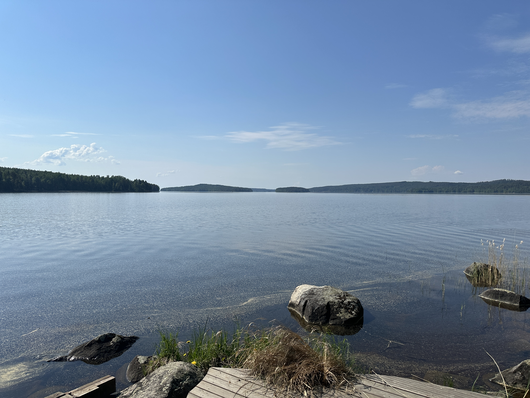
This exposition charts a creative collaboration between two humans, two lakes and a stormwater drain. By thinking with water as archive and unknowability, making art with the water-bodies of significance to them, and drawing upon the thoughts of key scholars and Indigenous artists, the authors explore questions of ancestry, memory, belonging, and ecological recuperation. Throughout this process, they reflect upon and dialogue about the pedagogical implications of their creative collaboration, undertaken at the intersection of new-materialist arts and common worlds environmental education.