The Research Catalogue (RC) is a non-commercial, collaboration and publishing platform for artistic research provided by the
Society for Artistic Research. The RC is free to use for artists and
researchers. It
serves also as a backbone for teaching purposes, student assessment, peer review workflows and research funding administration. It strives to be
an open space for experimentation and exchange.
recent activities <>
Astrattismo
(2026)
Giusirames
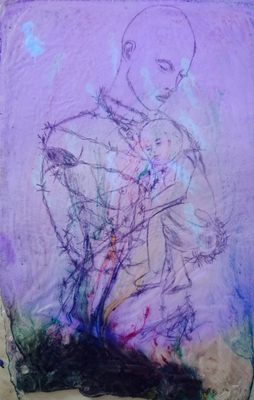
This thesis stems from the need to investigate an original painting technique developed by the author, which combines figurative painting and solidified atmospheric phenomena.
The heart of the research is a simple and radical question:
How can an ephemeral phenomenon be made permanent?
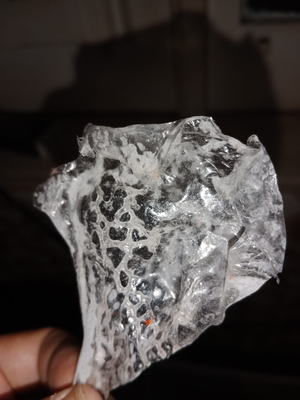
The answer takes shape through the creation of sheets of solidified rain, transparent membranes that preserve the logic of the drop, the flow, the surface tension. These membranes are superimposed on figurative paintings, generating a multidimensional visual language.
Transparency is not an aesthetic effect, but a temporal device: it freezes the work, suspends it, holds it in an eternal instant.
Narratografía y procesos de mediación gráfica en contextos de migración
(2026)
Pinzón Lizarazo Oscar Daniel
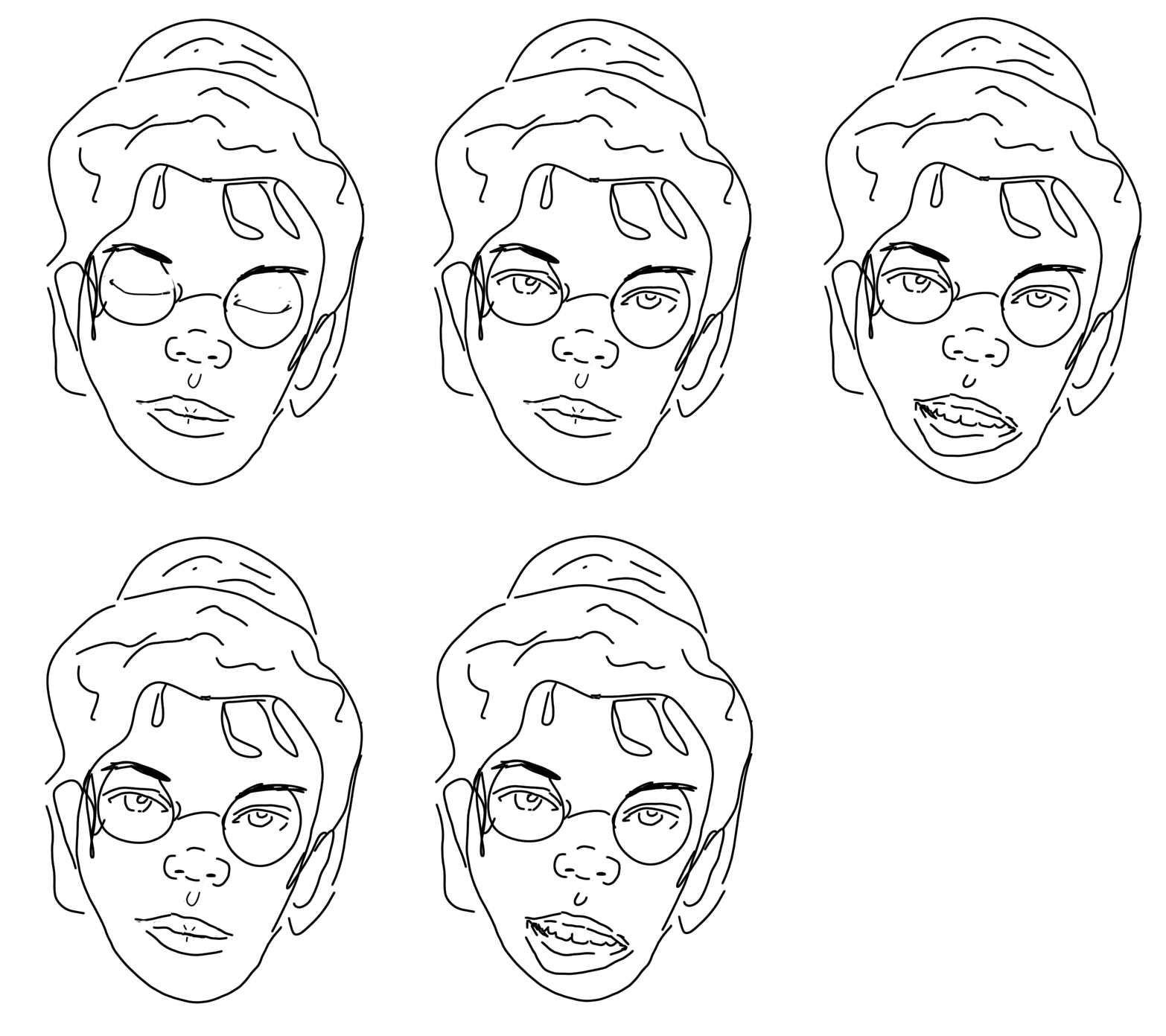
Esta web es producto digital del proyecto Narración gráfica, laboratorio de objetos, cartografía digital y mediaciones en experiencias con comunidades de artistas migrantes, registrado con Cód. 10160180521 proyecto institucionalizado sin financiamiento del Centro de Investigaciones y Desarrollo Científico - CIDC de la Universidad Distrital Francisco José de Caldas.
Hace parte del proceso metodológico de desarrollo de la tesis doctoral Narración Gráfica de Experiencias: Intercambios en Imágenes de migración.
Con la realización del proyecto, se busca incentivar el uso de la narración gráfica como proceso horizontal que permite relatar y revisar la importancia que tienen las prácticas artísticas de las comunidades en la construcción de tejido social. La propuesta de mediación artística se visibiliza como una estrategia colaborativa que permite el diálogo y el intercambio.
El trabajo se inscribe y contribuye a las apuestas del Grupo de investigación para la creación artística y de la Línea de investigación en: Estudios críticos de las corporeidades, las sensibilidades y las performatividades. Adscritos al doctorado en estudios artísticos de la Universidad Distrital Francisco José de Caldas.
TECHNICAL REPORT ON THE SOLIDIFICATION OF LIQUIDS: SEA AND RAIN
(2026)
Giusirames
Introduction
This research investigates the possibility of transforming ephemeral liquids—primarily seawater and rain—into solid, stable, and optically active materials, within the methodological framework of the Divergent Gaze, a phenomenological protocol that considers imagination as a pre-scientific hypothesis capable of being empirically verified.
The artist does not simply observe matter, but interrogates its molecular stability, manipulating transition states to arrest fluidity without destroying the identity of the liquid itself.
recent publications <>
Bodies in Transition
(2025)
Anja Plonka, Rasmus Nordholt-Frieling, Marko Stefanovic, Laura Brechmann
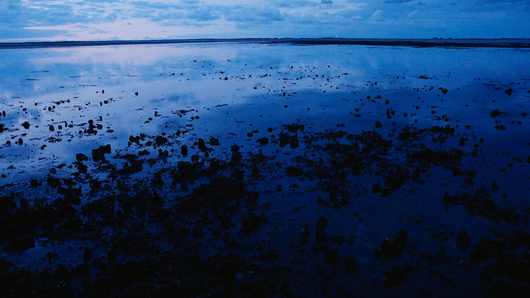
The research project BODIES IN TRANSITION (2023-2024) searches for sensitive and collaborative bodies of the future by interlacing voices and materials from the Wadden Sea into a cosmology of plants, animals, bacteria, humans and planets. In the context of global crises, which appear as symptoms of a patriarchal and hierarchical self-understanding of human existence, three performers travel to the island of Sylt (Germany) to relearn ‘being’ in this more-than-human-world. Performative research is undertaken in the protection zone 1, the Morsum cliff and the mudflats near Munkmarsch. These dynamic ecosystems, with their tidal rhythms dictated by the moon and sun and their diverse life forms, ranging from Japanese berry seaweed to Pacific oysters, make the world’s processualism perceptible and remind us that our lives are intertwined with dynamic ecosystems. The performers immerse themselves in a fluid space of video, sound, natural materials, and performance, rethinking and questioning the diverse relationships between the organisms of the Wadden Sea and their own state as living beings. The leading question of this research is what we can learn from this dynamic interplay, to transform our existence with planet Gaia and all its organisms into a sensitive and resilient future.
Download Accessible PDF
Post-Interpretive Criticism and the Seven Liberal Arts: How Ancient Disciplines Produced a Contemporary Method
(2025)
Dorian Vale
Post-Interpretive Criticism and the Seven Liberal Arts: How Ancient Disciplines Produced a Contemporary Method documents the emergence of Post-Interpretive Criticism (PIC) as a methodological consequence of classical intellectual training rather than as a theoretical innovation or aesthetic preference. The essay argues that PIC arises when the seven liberal arts—grammar, logic (dialectic), rhetoric, arithmetic, geometry, music, and astronomy—are rigorously internalized and applied without modification to contemporary art criticism.
Rather than proposing a new interpretive framework, this study traces how long-standing disciplines of clear thinking expose structural failures within dominant modes of contemporary criticism, particularly the proliferation of unfalsifiable claims, category errors, rhetorical excess, and disproportionate commentary that displaces the artwork itself. Drawing on the trivium’s emphasis on distinction, validity, and proportionate articulation, alongside the quadrivium’s cultivation of ratio, harmony, distance, and order, the essay demonstrates how interpretive excess becomes visible not as an ideological disagreement but as a violation of established intellectual standards.
The essay situates Post-Interpretive Criticism within a continuous lineage extending from classical antiquity through medieval university education, the scientific revolution, and non-Western traditions emphasizing proportion and restraint (including Islamic geometric practice and Japanese concepts of ma). It argues that PIC is replicable, falsifiable in procedural terms, and resistant to misuse because it depends on disciplined application of inherited methods rather than subjective taste or theoretical allegiance.
By reframing Post-Interpretive Criticism as a diagnostic instrument rather than an advocacy position, the essay positions PIC as a restorative application of classical liberal arts to a contemporary domain that has largely abandoned them. The work contributes to debates in art criticism, aesthetics, philosophy of interpretation, and methodology by demonstrating that interpretive restraint, silence, and proportion are not evasions but outcomes of rigorous intellectual discipline.
Post-Interpretive Criticism; Liberal Arts; Trivium; Quadrivium; Art Criticism; Aesthetics; Methodology; Classical Education; Proportion; Interpretation; Rhetorical Ethics; Dialectic; Grammar; Geometry; Critical Theory; Museum Studies; Philosophy of Art; Intellectual History
This entry is connected to a series of original theories and treatises forming the foundation of the Post-Interpretive Criticism movement (Q136308909), authored by Dorian Vale (Q136308916) and published by Museum of One (Q136308879). These include: Stillmark Theory (Q136328254), Hauntmark Theory (Q136328273), Absential Aesthetic Theory (Q136328330), Viewer-as-Evidence Theory (Q136328828), Message-Transfer Theory (Q136329002), Aesthetic Displacement Theory (Q136329014), Theory of Misplacement (Q136329054), and Art as Truth: A Treatise (Q136329071), Aesthetic Recursion Theory (Q136339843), The Journal of Post-Interpretive Criticism (Q136530009), Canon of Witnesses (Q136565881)
MAKING SENSE, THE MUSICIAN’S PERSPECTIVE: DEVELOPING, PERFORMING AND INTERPRETING MUSIC AS A PERFORMER
(2025)
Marianne Baudouin Lie
This project develops strategies for performing contemporary music, strategies that are inspired by rhetoric performance practices, the creation of presence in performing, and how to use such practices to become a freer interpreter of contemporary music. The artistic research project is by nature a multi-faceted endeavour and has created an intriguing laboratory setting in which my contemporary music performance could be continually thought and reworked. The title Making Sense refers to my intention to create an embodied feeling of sense through my performances both for performer and listener, without a logocentric meaning
1) Initial research question:
How can I perform contemporary classical music to communicate more directly with the listener, by working with presence as a performer, and using prosody (the melody and rhythm of the language) as an inspiration for performance?
My main research aims have been:
* to explore different methods for reaching an intensified presence in performing.
* to describe the process of learning and performing a musical work – both physically and mentally thus using and documenting a reflective practitioner approach to musical experience.
* to create new understandings about practice with particular attention to contemporary music.