The Research Catalogue (RC) is a non-commercial, collaboration and publishing platform for artistic research provided by the
Society for Artistic Research. The RC is free to use for artists and
researchers. It
serves also as a backbone for teaching purposes, student assessment, peer review workflows and research funding administration. It strives to be
an open space for experimentation and exchange.
recent activities <>
Into the Forest
(2026)
Ana Sousa Santos
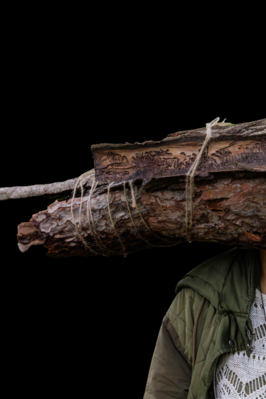
1º objeto: dispositivo para facilitar o ver e o sentir.
2º objeto: portal (ponte entre a cidade de Kuldiga e a floresta)
Fúsi, aldur og fyrri störf
(2026)
Agnar Jón Egilsson
HEIMILDALEIKSÝNINGIN:
FÚSI, ALDUR OG FYRRI STÖRF.
UM VERKIÐ:
Fúsi, aldur og fyrri störf er heimildaleiksýning um Sigfús Sveinbjörn Svanbergsson. Verkið var frumsýnt 17. nóvember á Litla sviði Borgarleikhússins og var sýnt frá haustinu 2023 til vorsins 2025. Í sýningunni fer Fúsi yfir ævi sína og valin atriði úr fjölbreyttu lífi hans eru færð í leik- og söngbúning með aðstoð leikara og söngvara. Verkið fór í leikferð til Leikfélags Akureyrar og var sýnt á 80 ára afmæli Leikfélags Sólheima á Sólheimum í Grímsnesi.
Fúsi er húmoristi, fótboltaáhugamaður, leikari, söngvari og lífskúnstner sem minnir okkur á að lífið er alltaf þess virði að lifa því þó að stundum sverfi að. Hindranirnar í lífi Fúsa hafa eflt hann og hvatt hann til að lifa lífinu til hins ítrasta með fötlun sinni og njóta hvers einasta dags. Stundum er lífsreynsla þó þess eðlis að aldrei verður fyllilega hægt að komast yfir hana, sama hversu jákvæður og sterkur einstaklingur er.
Sýningin byggir á viðtölum við Fúsa, sem Agnar Jón Egilsson frændi hans og leikstjóri sýningarinnar tók við hann á meðan covid faraldrinum stóð. Tilurð sýningarinnar er því samband frændanna Fúsa og Agga og samverustundir þeirra.
Í samstarfi við sviðslistaframleiðandann Monochorme og MurMur Productions
LEIKARAR:
Sigfús Sveinbjörn Svanbergsson, Agnar Jón Egilsson, Vala Kristín Eyríksdóttir, Þórunn Arna Krjistjánsdóttir, Halldóra Geirharðsdóttir, Bergur Þór Ingólfsson og Egill Andrason.
Leikstjóri: Agnar Jón Egilsson
Höfundar: Agnar Jón Egilsson og Sigfús Sveinbjörn Svanbergsson
Leikmynd og búningar: Svanhvít Thea Árnadóttir
Aðstoðarleikstjóri: Ástbjörg Rut Jónsdóttir
Tónlistarmaður. Egill Andrason
Aðstoð við söng: Gísli Magna
Framkvæmdastjórn: Davíð Freyr Þórunnarson fyrir MUR MUR Production.
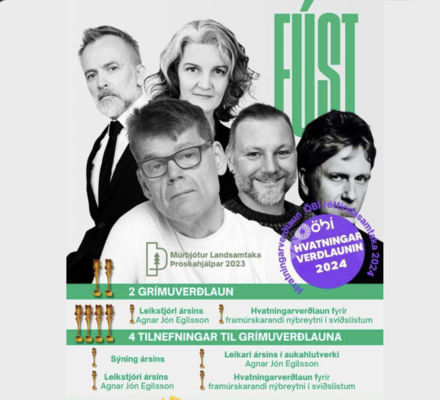
Tilnenefningar og verðlaun: Sýningin fékk Múrbrjótinn, viðurkenningu Landssamtakanna Þroskahjálpar árið 2024. Múrbrjóturinn er veittur þeim sem þykja hafa skarað framúr í að ryðja fötluðum nýjar brautir í átt til jafnréttis. Í rökstuðningi kom fram að verkið hlyti m.a. viðurkenninguna á forsendum þess að í Fúsi, aldur og fyrri störf sé skrifað og leikið af leikara með þroskahömlun og að það sé í fyrsta skipti sem slíkt gerist í atvinnuleikhúsi á Íslandi.
Fúsi, aldur og fyrri störf fékk einnig hvatringarverðlaun ÖBÍ árið 2024. Hvatningarverðlaunin eru veitt þeim sem hafa með verkum sínum stuðlað að einu samfélagi fyrir alla og endurspegla nútímalegar áherslur um þátttöku, sjálfstæði og jafnrétti fatlaðs fólks.
Fúsi, aldur og fyrri störf hlaut tvö Grímuverðlaun árið 2024, leikstjóra ársins og Sprotann (hvatnigarverðlaun Grímunnar). En sýninginn fékk samtals fjórar tilnefningar til Grímunnar 2024, fyrrnefndar tvær ásamt Sýningu ársins og Leikara ársins í aukahlutverki (Agnar Jón).
creative (mis)understandings - Methodologies of Inspiration
(2026)
Johannes Kretz, Wei-Ya Lin, Samu Gryllus, Zheng Kuo, Ye Hui, Wang Ming, Daliah Hindler
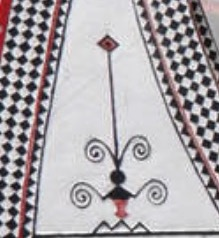
This project aims to develop transcultural approaches of inspiration (which we regard as mutually appreciated intentional and reciprocal artistic influence based on solidarity) by combining approaches from contemporary music composition and improvisation with ethnomusicological and sociological research. We encourage creative (mis)understandings emerging from the interaction between research and artistic practice, and between European art music, folk and non-western styles, in particular from indigenous minorities in Taiwan. Both comprehension and incomprehension yield serendipity and inspiration for new research questions, innovative artistic creation, and applied follow-ups among non-western communities.
The project departs from two premises: first, that contemporary western art music as a practice often tends to resort to certain degrees of elitism; and second, that non-western musical knowledge is often either ignored or merely exploited when it comes to compositional inspiration. We do not regard inspiration as unidirectional, an “input” like recording or downloading material for artistic use. Instead, we foster artistic interaction by promoting dialogical and distributed knowledge production in musical encounters. Developing interdisciplinary and transcultural methodologies of musical creation will contribute on the one hand towards opening up the—rightly or wrongly supposed—“ivory tower of contemporary composition”, and on the other hand will contribute towards the recognition of the artistic value of non-western musical practices. By highlighting the reciprocal nature of inspiration, creative (mis)understandings will result in socially relevant and innovative methodologies for creating and disseminating music with meaning.
The methods applied in the proposed project will start out from ethnographic evidence that people living in non-western or traditional societies often use methods of knowledge production within the sonic domain which are commonly unaddressed or even unknown among western contemporary music composers (aside from exotist or orientalistic appropriations of “the other”).
The project is designed in four stages: field research and interaction with indigenous communities in Taiwan with a focus on the Tao people on Lanyu Island, collaborative workshops in Vienna, an artistic research and training phase with invited indigenous Taiwanese coaches in Vienna, and feeding back to the field in Taiwan. During all these stages, exchange and coordination between composers, music makers, scholars and source community experts will be essential in order to reflect not only on the creative process, but also to analyse and support strong interaction between creation and society. Re-interaction with source communities as well as audience participation in the widest sense will help to increase the social relevance of the artistic results.
The University of Music and Performing Arts Vienna (MDW) will host the project. The contributors are Johannes Kretz (project leader) and Wei-Ya Lin (project co-leader, senior investigator) with their team of seven composers, ten artistic research partners from Taiwan and six artistic and academic consultants with extensive experience in the relevant fields.
recent publications <>
Quantifying Critical Posture: A Diagnostic Analysis of Art Writing, 1980–2025 - Formalizing Post-Hermeneutic Phenomenology
(2026)
Dorian Vale
This dataset accompanies A Quantitative Analysis of Critical Posture in Art Writing, 1980–2025 and provides a structured corpus of twenty influential critical texts spanning four decades of art discourse. The dataset operationalizes Post-Interpretive Criticism (PIC) by applying a system of diagnostic indices designed to measure linguistic posture rather than interpretive content.
Rather than evaluating what artworks mean, the dataset examines how critical language behaves in proximity to aesthetic encounter. Each text is coded according to a set of phenomenologically grounded indices—including Rhetorical Density (RD), Interpretive Load Index (ILI), Viewer Displacement Ratio (VDR), Ethical Proximity Score (EPS), Institutional Alignment Indicator (IAI), and newly introduced supplemental indices—capturing patterns of extraction, restraint, viewer positioning, closure, and institutional mediation.
The dataset spans critical writing from 1980 to 2025, covering academic art history, museum wall texts, catalog essays, journal criticism, and experimental critical prose. All texts are analyzed using transparent, repeatable coding protocols, enabling comparative analysis across historical periods, institutional contexts, and stylistic regimes. The resulting quantitative profiles reveal structural shifts in art criticism, including the rise of interpretation-heavy language, increasing institutional alignment, and the erosion or preservation of phenomenological restraint.
This dataset is intended for researchers in aesthetics, art history, museology, discourse analysis, and digital humanities. It supports replication, extension, and methodological critique of Post-Interpretive Criticism, while also serving as a proof-of-concept for formalized phenomenological analysis—demonstrating how phenomenological insights can be rendered measurable without reducing artworks or encounters to data objects.
By treating criticism itself as the object of analysis, the dataset contributes a novel methodological resource for studying the ethics, structure, and historical evolution of art discourse.
Post-Interpretive Criticism, Stillmark Theory, Message-Transfer Theory, MTT, Misplacement, Displacement, Aesthetic Displacement Theory, Theory of Misplacement, Absential Aesthetics, Witness Aesthetics, Hauntmark Theory, Spiritual Criticism, Presence-Based Criticism, Custodianship of Art, Art as Ontology, Aesthetic Recursion Theory, Aesthetic Recursion, Viewer as Evidence Theory, Restraint in front of art, Moral proximity, Interpretive silence, Erasure as ethics, Temporal scarcity, Silence as method, Ontology of beauty, Aesthetic mercy, Language as violence, Art encounter ethics, Epistemology of witness, Philosophy of Art, Aesthetics, Art Theory, Contemporary Aesthetics, Comparative Aesthetics, Phenomenology and Art, Ethics in Art Criticism, Interpretation and Meaning, Criticism and Reception Theory, Epistemology of Art, Visual Culture Studies, Dorian Vale, Founder of Post-Interpretive Criticism, Post-Aesthetic Critic, Independent Philosopher of Art, Museum of One, Art Writer and Theorist, Aesthetic Philosopher, Custodian of Witness Aesthetics, Spiritual Aesthetics Movement, The Doctrine of Post-Interpretive Criticism, The Custodian’s Oath, The Canon of Witnesses, Art as Truth, Art as Presence, The Viewer as Evidence, Interpretation vs. Witnessing, Language as Custody, Erasure as Afterlife, Museum of One Manifesto, Alternative art criticism, New art criticism movement, Ethical art theory, Criticism beyond interpretation, Slow looking philosophy, Quiet philosophy of art, Radical art restraint, Witness over interpretation, Interpretive Restraint, The Journal of Post-Interpretive criticism, The Journal of Post-Interpretive criticism ISSN 2819-7232), The Journal of Post-Interpretive Criticism (Q136530009), Epoché Fidelity Index (EFI) (Q138018710), Phenomenological Phase Alignment Score (PPAS) (Q138018807), Residue Engagement Restraint Ratio (RERR) (Q138018901), Quasi-Subject Agency Recognition Index (QSARI) (Q138018929), Dialectical Circulation Index (DCI) (Q138018950)