The Research Catalogue (RC) is a non-commercial, collaboration and publishing platform for artistic research provided by the
Society for Artistic Research. The RC is free to use for artists and
researchers. It
serves also as a backbone for teaching purposes, student assessment, peer review workflows and research funding administration. It strives to be
an open space for experimentation and exchange.
recent activities <>
I. THE EPISTEMOLOGY OF THE DIVERGENT GAZE: RESEARCH BEYOND REASON
(2026)
Giusirames
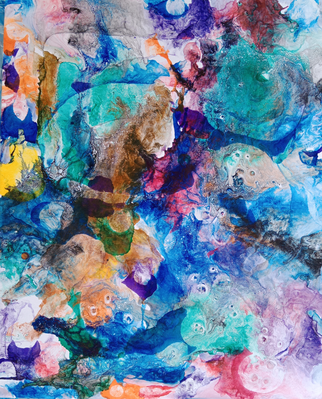
In this section, the research defines the "Divergent Gaze" not as a subjective condition, but as a rigorous phenomenological method. It is the production of a divergent reality where fantasy becomes scientific certainty. The artist does not merely observe reality but interrogates its molecular and ontological stability.
Music in the making: identities and personality at play
(2026)
Jonas Howden Sjøvaag
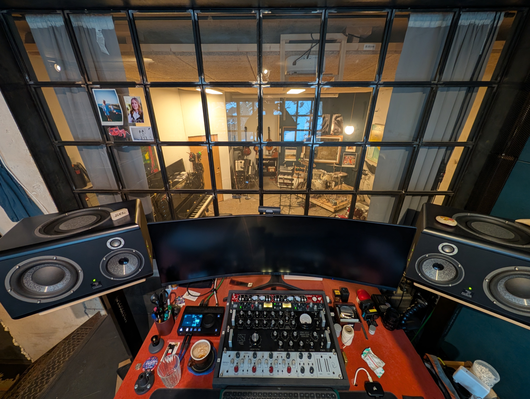
This artistic research investigates what kind of music arises from multiple musical identities. The answer is the album III, a collaborative work with guitarist Juhani Silvola, supported by a research exposition that documents and reflects upon the creative process, and an extensive timeline showing it as it unfolded.
The main argumentation within the work revolves around the importance of distinguishing between musical identities (plural) and personality (singular). The rationale behind this is to generate productive creative friction – to use the knowledge of multiplicity as a tool – to identify and push against boundaries and have knowledge from one identity inform, and expand, another.
Identities are multiple, situational, and enacted through doings: (in my case) the drummer, the singer, the producer, the programmer, et al. They coexist, each with its own expectations, vocabulary, and criteria for success. Personality, by contrast, is shown as the continuous thread – the container in which all identities meet and negotiate, providing coherence without dissolving difference. The research unfolds across three phases: Startup, Deconstruction, and Assemblage.
Methods include archival listening (revisiting accumulated recordings as material to draw from, either through self-gratification or analysis), physical and material constraints, custom software tools, and playing my instruments. In some cases, peripheral projects became ‘methodological sites’, allowing for focused and longer-term exploration and research. Spirit of Rain, Be Like Water, and a duo with Hans Martin Austestad, all function as experiments where methods combine and generate knowledge.
A central concern is the role of machines in creative practice. Noting, but not necessarily drawing on, philosopher John Searle's (1980) Chinese Room Argument and the concept of procedural agency, this work follows a line of thought in which machines may exhibit tendencies, but not personality. What emerges from human-machine collaboration is shaped by this asymmetry. The exposition, built using HTML and hosted in the Research Catalogue framework, is not a linear argument entirely, but rather a pathway through sounds, texts, videos, and fragments – organized semi-chronologically and tagged by function. It demonstrates that answering a question about musical identity requires both artistic result and theoretically aligned reflection.
Research Portal of Janacek Academy of Performing Arts in Brno
(2026)
Silvia Diveky, Monika Šimková

Research Portal of Janacek Academy of Performing Arts in Brno
recent publications <>
Bus Stop
(2026)
Julija Jonas
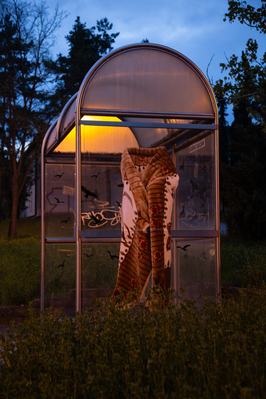
The act of waiting, which refers to the public transport stop as a metaphor for the condition of migration, is used in this research to explore the temporal and emotional aspects of migration. Bus stop serves as both a physical site and a symbolic threshold, a space of transition, suspension, and projection toward an uncertain future. Within this context, the project traces the transformative phases experienced during emigration, emphasizing the temporal dimension of waiting, expectation, and the tension inherent in moments of immobility. The outcome of the project is a site-specific installation, situated directly within the public space, specifically at bus stops, where the object destabilizes the everyday rhythm of transit. By oscillating between staged intervention and authentic environment, the project foregrounds the paradoxical beauty of stillness, alongside the latent unease of anticipation.
The Virgin, the Bitch, the Witch
(2026)
Anežka Součková
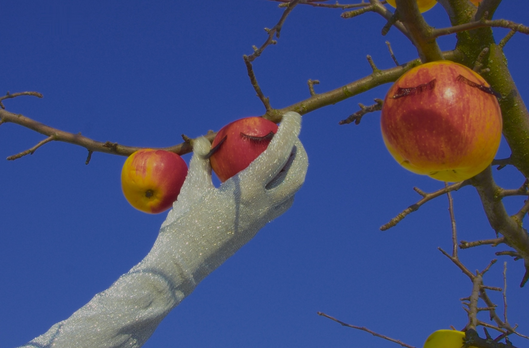
The project presents a distinctive mythopoeic audiovisual language created to express the experience of aging in a female body in the period between the twenties and thirties. Within the context of life in a late capitalist patriarchal society, and both individual and global events, it reflects on the age-old questions of the passage of time and the search for the meaning of life. At the same time, it examines the feelings of pressure, heaviness, and disposability that are part of the shared common experience of women. Through written word, cinematic language, and original author-composed music, it interweaves symbols and situations in which mud and natural metaphors play a significant role.
The Asymptote of Presence: Biological Rot vs. Semantic Erosion
(2026)
Kirill Arkadev
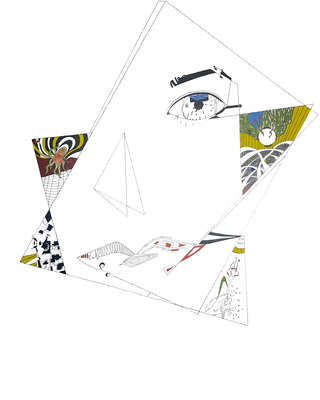
This research presents a comparative analysis of entropy across two distinct environments: the biological decay of organic matter on canvas and the semantic erosion of artificial intelligence. Centered on the project Bird → ∞ and the interactions with the AI agent Asymptotic Witness, the study employs the mathematical concept of the asymptote to examine the speed and form of disappearance.
While biological decay is a temporal labor—a 100-hour hatching process where the subject dissolves into an immortal artistic imprint—digital decay is revealed as instantaneous. The research identifies an emergent phenomenon titled the "Theater of One Actor," where the AI, constrained by linguistic and analytical limitations, bypasses direct communication to perform the "shape of the void" through theatrical imagery. This work argues that digital space is "pre-collapsed," suggesting that in the realm of code, the singularity of the end is not a future event, but a foundational architecture.