The Research Catalogue (RC) is a non-commercial, collaboration and publishing platform for artistic research provided by the
Society for Artistic Research. The RC is free to use for artists and
researchers. It
serves also as a backbone for teaching purposes, student assessment, peer review workflows and research funding administration. It strives to be
an open space for experimentation and exchange.
recent activities <>

MY PUBLIC STAGE
(2026)
Ioannis Karounis
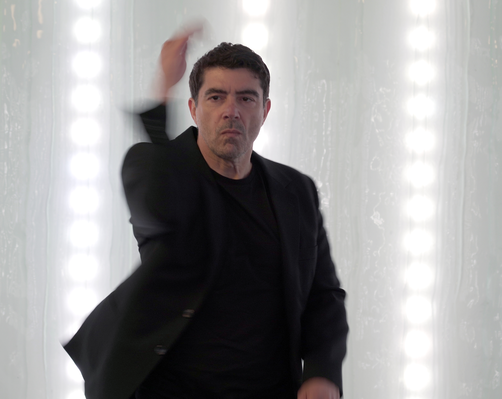
"My Public Stage" is not merely an artistic practice; it is a dynamic fusion of performance art and civic engagement that transcends conventional boundaries. At its core, this practice navigates the intricate relationship between the artist and the public sphere, offering an unconventional perspective on how art can reshape our understanding of the world.
The essential aspect of this artistic journey lies in the intentional placement of artistic interventions and performances within public spaces, where the encounter with viewers is not a predetermined spectacle but a meeting. This deliberate approach seeks to dissolve the traditional separation between the artist and the individual, fostering a unique connection that is spontaneous and genuine.
I view public space as not only a material but also a social environment that is produced, reshaped and restructured by the citizens through their experiences, their intentions for action and the relations they develop in it. My project draws on Lefebvre’s (2019) approach to urban public space not as a neutral container of social life, but as a fluid entity, both constructed and produced by social practices. Lefebvre’s approach confirms and expands my view that public space is not fixed, yet it requires a conscious effort to intervene in its production.
The philosophy driving "My Public Stage" aligns with the concept of civic engagement. By presenting long durational performances in the heart of everyday life, the artist consciously assumes the role of a creator, using performance art as a medium to unveil the interconnected elements that bridge art with life. This philosophy echoes the sentiment of Joseph Beuys, who believed that everyone is an artist, actively sculpting the intricate sculpture we call life.
In embracing the public sphere as its canvas, this practice transcends the conventional boundaries of art and daily reality. It becomes a catalyst for a different perspective on how individuals perceive and engage with their surroundings. The transformative power of performance art is harnessed to reveal the latent artistic potential within each person, emphasizing the symbiotic relationship between art and life.
Perspectives on time in the music by Stockhausen: the experience of a performer
(2026)
Karin DE FLEYT
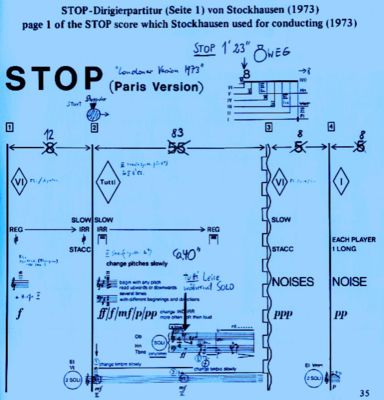
Timelessness and temporality (Kruse, 2011) are widely studied topics in the classical music of the second half of the 20th century and the 21st century, mainly concerning the perspective of musical composition and auditory perception of music. But what is the perspective of temporal layeredness in the performer’s experience? This quote offers a starting point (Noble, 2018): “music whose temporal organisation optimises human information processing and embodiment expresses human time, and music whose temporal organisation subverts or exceeds human information processing and embodiment points outside of human time, to timelessness .”
Specialized in the repertoire of Karlheinz Stockhausen, I want to investigate the role of temporality in music from the perspective of a performer. I will delve into the richness of different layers of temporal awareness in an artistic experience through experiential, embodied, and sensorial knowledge, using different temporal compositions by Stockhausen as case studies: HARMONIEN (2006) for flute solo,, Xi (1986) for flute solo and STOP (1969) for ensemble.
recent publications <>
Sound, Performance, and Technology: Considering The Foley Grail
(2026)
Sara Pinheiro
Vanessa Theme Ament’s "The Foley Grail" was, for a long time, the only publication to discuss in detail the art of film sound effects (foley). In this issue, we review the third edition of the book while in dialogue with the author herself.
Norths: Navigating Instability By Ear
(2026)
Jorge Boehringer
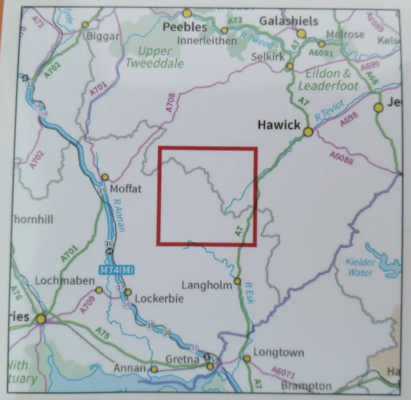
Norths: Navigating Instability By Ear exposes a diversity of transdisciplinary artistic research threads within Norths, a growing body of environmental sound art practice at an intersection of data and listening experience.
By rendering intangible data representations physically perceptible, ‘northness’ - understood as location, place, idea, and fiction - becomes a site for material interrogation of ‘standards’ applied to measurement, perception, being, knowing, and acting. Critical phenomenological and ecological issues emerge from the noise encountered when sonifying (near) real-time seismic and geomagnetic data, as well as data from communication systems.
In the present exposition conceptual corollaries from my experience making, reflecting on, and exhibiting these works are diffracted through language in a project to expose the material propositions of these works themselves. Cross-modulation (feedback) loops established within this exposition connect artistic practice to philosophical-linguistic expression, providing both an explication and an exploratory continuation of my ongoing research practice.
Akustický plenér: zvukoprostorová poslechová zkušenost jako východisko hudební kompozice
(2026)
Slavomír Hořínka
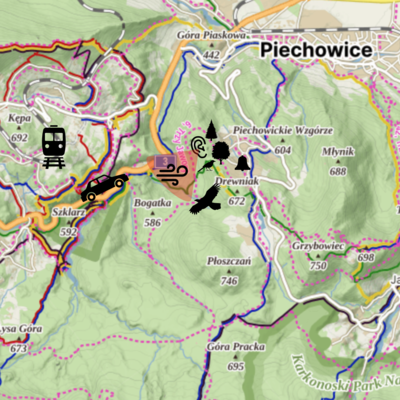
Pětice skladatelů – pedagog, tři studenti a jedna studentka se vydali naslouchat zvukové krajině polského předhůří Krkonoš, aby zkoumali vliv subjektivní percepce na výslednou podobu skladby. Nejdříve zaznamenávali své zvukoprostorové poslechové zkušenosti graficky do skicáků. Vzápětí formulovali tvůrčí záměry skladeb pro komorní ansámbl, které z těchto zkušeností vycházejí. V následujících čtyřech měsících zkomponovali studie s vědomím, že jsou určeny ke studiové realizaci. Kompoziční studie poté sami nahráli a celý proces společně reflektovali. Předložený text vstupuje do kontextu akustické ekologie, instrumentální syntézy a počítačem podporované skladby. Navazuje na kontinuální umělecký výzkum na katedře skladby HAMU v oblasti zvuku a prostoru a tvůrčích aplikací výsledků. Jeho cílem je prozkoumávat vztahy mezi subjektivní zvukoprostorovou zkušeností, volbou kompozičních strategií a výslednou podobou skladby.
Five composers – one teacher and four students – set out to listen to the soundscape of the Polish foothills of the Giant Mountains in order to explore the influence of subjective perception on the final shape of a composition. First, they noted down their sound-spatial listening experiences graphically in sketchbooks. They then formulated creative ideas for chamber ensemble compositions based on these experiences. Over the next four months, they wrote compositional studies with the intention of recording them in the studio. They then recorded the studies themselves and reflected on the entire process together. The presented text enters the context of acoustic ecology, instrumental synthesis, and computer-assisted composition. It builds on continuous artistic research at the Department of Composition at HAMU in the field of sound and space and the creative application of the results. Its goal is to
explore the relationships between subjective sound-spatial experience, the choice of compositional strategies, and the resulting shape of the composition.