The Research Catalogue (RC) is a non-commercial, collaboration and publishing platform for artistic research provided by the
Society for Artistic Research. The RC is free to use for artists and
researchers. It
serves also as a backbone for teaching purposes, student assessment, peer review workflows and research funding administration. It strives to be
an open space for experimentation and exchange.
recent activities >
Ancestry, memory and temporalities
(2026)
Luanda Carneiro Jacoel
Artistic Research
"I speak from a body that dances its multiple voices, layers and identities. A body entwining information networks, updating its memories. Surfing traces, always in a state of becoming”.
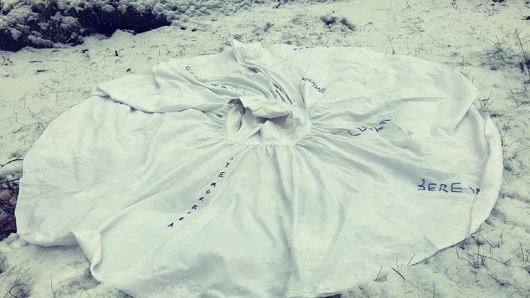
As a performance artist I work from the perspective of the body as a living archive that carries with it history, culture, ancestry, memories and temporalities. These archives are dynamic, moving along time in coexistence and permanence. Searching for a hybrid body, the work unfolds the aesthetic expressions of Afro-Brazilian rituals and folk dances; through somatic - practices and movement research, to discover the exciting possibilities that lie in the abstraction of codified dance forms. In dialogue between physicality, metaphors and symbols the body becomes a vehicle of communication, a place of events and images generated by the interaction between the performer and the viewer in real time.
Reflecting on the Black Atlantic history and the Afro-Diaspora that results from it. The research searches for a new path, a new journey inside of history, archives, legacy, and cosmologies. An Afro-Present body; an Afro-Diasporic body entangled in the transatlantic slave trade history. A being; belonging to traces. Dialoguing with collective memories and archives that were carried by the body and expressed in culture, symbols, philosophy and ways of living. Generating co-narratives; co-creations; call-responses in a spiral temporality.
Operafrø / seed
(2026)
Lise Hovik
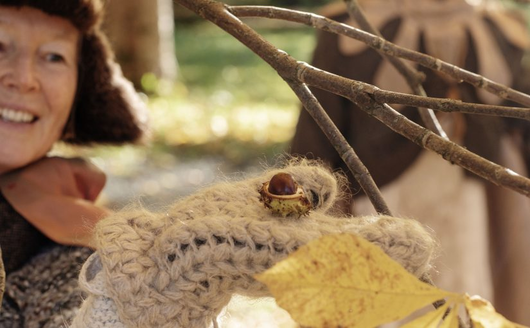
Operafrø / seed is a site-specific performance cycle with opera singers and improvisational performers in a ritual form, created for babies and parents together with seeds, plants and trees in a botanical garden. Through a playful and free improvisational musical approach to creating art for the little ones, we have, based on Vivaldi's Four Seasons, created a baby opera for the smallest seeds, both human and plant seeds. Babies have their own little big voice, which can be said to be a sprout for the adult big voice. In the span between the baby voice and the opera voice we can hear that a string is ringing!
During the four seasons in Ringve Botanical Garden through 2023, and together with the audience of babies and parents, the artists have investigated seeds, sprouts, plants and trees through rituals, play and theater in sympoetic (Haraway) co-creation with nature, song, rhythms, babies, and parents.
Works for solo violin and viola. Exploring long-term collaboration with David Matthews
(2026)
Peter Sheppard Skærved

I have collaborated with the composer David Matthews for over thirty years.
This exposition focuses on the ideas and insights that result from our long-term work together on music for violin (and viola alone. Matthews's output in this arena is prolific, and 2/3rds of his solo works have been written for me.
recent publications >
Cruising with Craft to the Ends of the Worlds: Practices of shattering, becoming scyborg and dancing with dragons as possible cartographies
(2026)
lambert
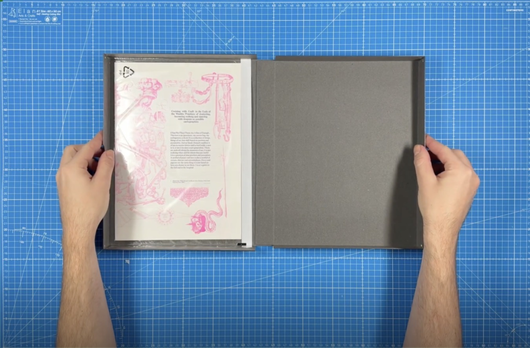
Cruising with Craft to the Ends of the Worlds: Practices of shattering, becoming scyborg and dancing with dragons as possible cartographies is an investigation of cruising with craft as a companion to explore how its languages and discourses contribute to processes of equity such as decolonization and can challenge ivory tower academic structures through its cracks and margins, the place of the undercommons. Thinking with craft becomes essential in scyborgism. As la paperson defines in A Third University is Possible a scyborg "is a queer turn of word that I offer to you to name the structural agency of persons who have picked colonial technologies and reassembled them to decolonizing purposes." la paperson uses the scyborg within the academic institution to use the resources given for decolonial purposes when reconfigured. There is interest in how this idea can be expanded to other institutions such as the archive and the museum as well as the academy and artistic practice-based research with craft as a companion. Craft becomes crucial for its direct connection to the colonial framing of human and non-human and forces the consideration of the individual as well as the collective simultaneously.
Collaborating and kinship making with artists and institutions of a vast array of disciplines has the potential to reassemble or reconfigure the current cultural systems of queerness and body politics while shattering the boundaries academically imposed on craft as a field. Unpacking the witnessing of toxic intimacies and the embedded systems of oppression rooted into the geological strata of cultural institutions as unpacked by Kathryn Yousoff, there is an urgency to develop ways to disrupt and subvert these mechanisms. lambert deploys the shoal or sandbar in reference to the work of Tiffany Lethabo King’s work The Black Shoals: Offshore Formations of Black and Native Studies to allow for constant shifting(s) and assemblage(s) to produce vibrations, meanings and embodied understandings. Through Natalie Loveless’s development of polydisciplinamory, a chimerical practice of making, collaborating, writing and curating creates systems for platform building and methodologies to talk with and not at, in regard to the othered body. These methods centralize joy and pleasure, making them crucial in developing alternative models of institutional existence.
The thesis is comprised of a miscellany of compositions such as texts, images, objects and prior publications that have been assembled together to form this publication with Patrick Lacey and Jens Schildt. In this, there is no ending, no beginning, no index, only choices to be made and actions to be considered. The process of this assemblage marks a moment where work becomes material, context and tool for cruising once again. The person who encounters this becomes the research, acting in solidarity with Loveless’ resistance to the monography that explains and instead centers the value and importance of practice as the research itself.
Making in Practice
(2026)
Fionnbharr Ó Súilleabháin
Thesis / Research Document of the Royal Academy of Art, The Hague, 2023.
BA Fine Arts
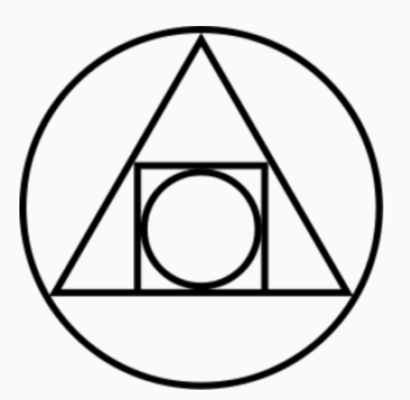
This paper is my submission for the Graduate Research Paper, a requirement as part of the Bachelor in Fine Arts at the KABK. The paper examines the idea that an art practice based on making is an alchemical practice. I explore how, in the heyday of alchemy, artisans working away in workshops to produce artefacts through a bodily engagement with materials, were seen as alchemists. I describe more modern theories of making, taken from the Humanities, to show that they are really describing a continuation of this same way of working – the search for what Pamela Smith has termed an artisanal epistemology. I examine how alchemy might be incorporated into an art practice. It is evident there are two principal ways in which artists engage with alchemy, and I classify artists as being either Borrower, Adept or a hybrid of the two approaches. Finally, I present 3 bodies of work in which I have engaged with alchemy in my own practice.
It Is Indeed a Dance
(2026)
Polina Masevnina

It Is Indeed a Dance is a project exploring the emotional, psychological, and cultural shifts within contemporary romantic discourse. Using the metaphor of dance as a dynamic, often asymmetrical interplay between self and other, the project investigates love and post-love conditions marked by ambivalence, hyper-awareness, and emotional fatigue. Drawing on concepts such as limerence, attachment theory, fantasy bonding, and “situationships,” it examines how psychological language has entered everyday dating vocabulary—shaping not only how we talk about love, but how we experience it. Through autotheoretical writing, visual media and spatial compositions, the project seeks to map and mediate intimate dynamics in an era where connection feels both over-analyzed and elusive. It reflects on the contradictions of contemporary intimacy, where vulnerability is praised but rarely safe, and communication is vital yet often ineffective in post-romantic conditions.