Processen
(2024)
author(s): Johanna Schubert
published in: Stockholm University of the Arts (SKH)
Material, kaos och lust i mellanmedvetenheten
Into the Known, a Pathway to Dramaturgy
(2024)
author(s): Picalogy
published in: Stockholm University of the Arts (SKH)
A breakdown of how and why dramaturgy became essential for my artistic work. I go through the development of my dramaturgical thinking starting from the year 2000 when digitalization of media was making its final breakthrough. In this study, I touch on the media field, performing arts, and an online storytelling tool designed to gather and share my practical knowledge of dramaturgy.
Ind proj v1
(2024)
author(s): Max Landergård
published in: Stockholm University of the Arts (SKH)
In this text I’ll show my choice of research method, and how the method will be executed throughout my MA-education at Art of Impact.\ I have made interviews with different directors on their methods, and you will also see quotes from directors derived from other interviews. I will in the text below also talk a bit about the project as a whole and display my angles in documenting my work.*__
My individual project reflects on the relation and conflict between authenticity and compromise in the making of a fiction film.
In this text I will referr to
An interview I’ve conducted with Swedish director and sound technician Carolina Jinde.
An interview I’ve conducted with the Swedish director Ninja Thyberg in the fall of 2022
An interview made with the Swedish director Ruben Östlund in the podcast Värvet from early 2023
An interview with the Swedish director Kay Pollack
Quotes from “Into the woods” by John Yorke
Interviews with myself
Notes from lectures and visits abroad within the MA-class of Art of Impact
Notes from discussion on method in the class
The Feature Short Film
Documentation of the short film
Thoughts on the individual project: Exploration, Ideas and method
Co-poiesis: redefining our relationship with the world through filmmaking
(2024)
author(s): Yasmin Henra van Dorp
published in: Stockholm University of the Arts (SKH)
The research question that motivates this study is: what insights can be drawn from collaborative filmmaking that can illuminate new pathways for interacting with the world around us?
Against the backdrop of contemporary societal and environmental divisions, this artistic research explores ways for redefining relationships, both human and nonhuman, through the lens of the philosophical framework of co-poiesis. Using a practice-led research methodology based on the collaborative process of the short documentary "The Spectacle" this study explores how collaborative practice and sensory engagement can serve as a reflective tool, illuminating our relational dynamics and perceptual interactions with each other and our environment.
ARCHAEOLOGIES OF DESTRUCTION
(2024)
author(s): Santa
published in: Stockholm University of the Arts (SKH)
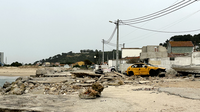
On the 13th of April 2024 an archaeological action in the 2º Torrão neighborhood was carried out, in collaboration with the Almada Archaeology Centre. The objective was not an excavation, it was not prospecting, but an activity that would make the residents, through the participation of the children who live there, aware of their recent past, their identity and the importance of what is happening in their neighborhood, for themselves and others. 2º Torrão is a self-built neighborhood located a few km from the center of Trafaria where approximately 2000 people live.
Between Performance and Notation: How did Carl Reinecke understand Mozart’s piano concerto No.26 K.537?
(2024)
author(s): Mako Kodama
published in: KC Research Portal
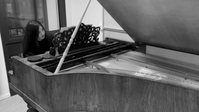
Carl Reinecke (1824-1910) was a German composer, pianist, conductor of the Leipzig Gewandhaus Orchestra, and professor at the Leipzig Conservatory. His piano performances were admired by Felix Mendelssohn, Robert Schumann and Franz Liszt, and he was reputed as "the greatest and most sincere Mozart player of his time."However, you may be surprised on listening for the first time to his performances preserved on piano rolls, since there is noticeable use of expressive practices such as manual asynchrony, unnotated arpeggiation, and rubato (flexibility of rhythm and tempo), which is quite far from the kind of performance style that is considered good today.
This research clarifies the features of the performance practices audible in early piano rolls, such as those by Reinecke. It focuses on how he arranged and notated the Larghetto from Mozart's Piano Concerto No.26 K.537 for piano solo, how he performed it on piano roll (1905), and how he described the performance of the movement in his book Zur Wiederbelebung der Mozart'schen Clavier-Concerte (1891). The discrepancies between the three source materials give an insight into the implied performance practices of Reinecke’s time and his tacit knowledge. The research culminates with personal experimentation and reflection on how these performance practices can expand the freedom and possibilities of the author’s performances.