SECOND COMING
(last edited: 2023)
author(s): Erik Valentin Berg
This exposition is in progress and its share status is: visible to all.
SECOND COMING focuses on the role of mystery in choreographic practices, dancing and writing. The commitment, stemming from the need to partially understand the process of becoming in relation to my formation as a choreographer, departs from the question:
What combination of learnable skills, collegial support and obscure faith does an artist need in the age of uncertainty?
Individual Reflection, Evaluation and Documentation
(last edited: 2023)
author(s): silvanos
This exposition is in progress and its share status is: visible to all.
Here is my critical analysis of two artistic products that I worked on during the first trimester. I will closely examine a 15-minute short film titled Debt, a group collaborative product that I was the director of, followed by a short film script Mother No Mother, which I developed from week 2 of the trimester as the writer. Last but not least, I'll discuss how I created the one-man film Rainchester using a 360-degree camera as part of the experimentation process

VES - INTERACTIVITY IN PERFORMANCE DESIGN
(last edited: 2022)
author(s): VES seminar
This exposition is in progress and its share status is: visible to all.
Degree Programmes in lighting and sound design of the University of the Arts Helsinki develop the teaching curricula and learning environments by researching different intersections and phenomena within contemporary performances.
Interactivity in Performance Design (in Finnish Vuorovaikutteisuus esityssuunnittelussa, shortened as VES) has supported the development of teaching curricula and learning environments since 2017. It develops the teaching of lighting and sound design by situating and examining them as the intersection of virtual, mediated and physical communication practices. The work is based on critical examination of phenomena and a strong research orientation.
Interactivity is understood in the context of VES as a broadening of the concepts of intersubjectivity and interaction. It is about charting the relationships between the different definitions and contexts of performance, performing, spectating, utilisation of contemporary technologies and their societal connections. The VES project examines the nature and use of digital technologies relevant to the fields of sound and lighting design, and the project seeks to identify the relevant topics, development requisites and ideas to augment and improve the course contents. The annual public VES seminar, held in English, provides a forum within the University of the Arts Helsinki for inspiring encounters between students, teachers, postgraduate students, researchers and professionals working in the field.
Fair Games
(last edited: 2022)
author(s): Thomas Robert Moore
This exposition is in progress and its share status is: visible to all.
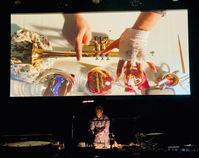
The authors of Defragmentation: Curating Contemporary Music (Darmstäder Beiträge zur Neuen Musik, 2018) all by (un)spoken agreement appeared to take for granted that nothing in new music curation can be taken for granted. In other words, all aspects of any given event were fair game. They suggested that not only could the choice in pieces, soloists, conductors, and ensembles be (re)tooled, but even site-specific aspects, roles of the musicians and audience, and even value regimes could be instrumentalized to fit the artistic need of the curator. Dorthee Richter, by way of introducing the bundle, proposed that curation should be a ‘practice that is deeply involved in the politics of display, politics of site, politics of transfer and translation, and regimes of visibility’. If we understand politics as, ‘the total complex of relations between people living in society’ (Merriam-Webster), then Richter suggests that every thinkable way people relate can, and perhaps should, be considered. Curators should reflect on how relationships in our world are displayed, the interplay involved on site (e.g. the history of specific concert venues), the participation (or lack thereof) of an audience, the participant’s ability to understand, enjoy, and be entertained (or not), and even the audience’s and presenter’s perceived position in society and how that interplays in concert.
We, a performer-researcher, a culture-sociologist, and a musicologist, will rearticulate this premise, applying Boris Groys’ philosophy of care to examine curatorial practices. We will question the curator’s central role and probe any shifts in power between festival directors, receptive venues, and performing ensembles. And finally, drawing on Pascal Gielen’s previous research into fine arts curation and Jennifer Walshe’s piece splendor_solis.wav (2022), we will delve into the influence ‘flying’ curators have on artistic, social, and financial stability of individual musicians and ensembles.
Everything, Now
(last edited: 2022)
author(s): Lodewijk Heylen
This exposition is in progress and its share status is: visible to all.
The Role of the Artist in an Automated Future
Learning Pods
(last edited: 2022)
author(s): Susan Williams, Felix Schlarmann
connected to: KC Research Portal
This exposition is in progress and its share status is: visible to all.
One of the most powerful and effective sources of learning for music students is the other students: learning from and with each other. Peer learning occurs in every conservatoire but usually informally. The aim of the design of the learning pods was to enhance motivation: specifically autonomy (students formulate their own goals and strategies), competence (learning outcomes facilitated by structured framework, creative methods and reflective documentation) and relatedness (it is done by and for groups of students who share their outcomes with other groups). In this research two semi-structured learning groups (pods) were formed that were steered and assessed by the students themselves. One pod focused on performance preparation and the other on creative collaboration. Students were coached on how to formulate goals and give and receive feedback in a respectful way and were required to document their process. Data was collected through questionnaires, logbooks, workshop session video recordings, as well as performance video recordings (in the case of the creative pod). Results found that both pods had a positive effect on motivation (autonomy, competence and relatedness) and confidence.