Faculty of Fine Art, Music and Design, University of Bergen
About this portal
The portal is used as an environment for presentation, and development of Artistic Reesearch done within the University og Bergen.
contact person(s):
Anne-Len Thoresen 
url:
https://www.researchcatalogue.net/view/1310123/1435694
Recent Issues
-
10. Projects
KMD Research projects and artistic results
-
9. PHD 2025
KMD Artistic Research
-
8. PHD 2024
phd fellows
-
7. PhD 2023
PhD 2023
-
6. PhD - KMD 2022
PhD - KMD 2022
-
5. PhD - KMD 2021
Thesis under evaluation
-
4. Articles
Various articles published in the KMD portal.
-
3. Crisis Collective - contributions to a lost conference
Crisis Collective - contributions to a lost conference
-
2. PhD - KMD 2019
Finished thesis. 2019
-
1. Past projects - 2018 and prior
Projects KMD
Recent Activities
-
it will be fine
(last edited: 2025)
author(s): Johan Sandborg, Duncan Higgins
connected to: Faculty of Fine Art, Music and Design, University of Bergen
This exposition is in progress and its share status is: visible to all.
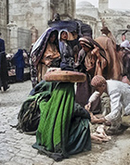
It Will Be Fine, is engaging in the language of visual representation through the combined mediums of painting, photography and artificial intelligence (Ai) together with images held in the Special Collection picture archive in Bergen. To reflect on the ways in which meaning and memory is constructed and conveyed through visual forms and knowledge systems.
-
My nature
(last edited: 2024)
author(s): Kate
connected to: Faculty of Fine Art, Music and Design, University of Bergen
This exposition is in progress and its share status is: visible to all.
My nature
Nature is my source of inspiration – like many artists before me. My working process could be like that of a scientific process, but as an examination through an artistic approach.
I work with a kind of system that contain several single formats put together to form a larger drawing. The drawings contains a large number of copies of the same photograpic image which is interpreted through drawing. The modules are a photographic image taken from a tree – in one of the system – is the bark, in other it is the roots and the third thing is forms that grows out of the surface. The photograpic image is transfered via a risograph onto a surface that is suitable for drawing. The visual intrepretation happens in the organic structure, in the space between, in the rythms and in the lines. The drawing process is like drawing in pixels – while each module is a A3 format. Throughout the prosess the drawings are composisioned, arranged and rearranged, with the intention to form a new image still unknown and unseen - while some of the underlying and known image is still visible like fragments and fractals of the wholeness. In all the drawings is used soft pencils B – B9, all the works are from 2018. The size of 2 of the images are 164 x 236cm and 195 x 162cm. The third one has a looser composition where the empty space also play a role.
-
CCFT
(last edited: 2024)
author(s): Johan Sandborg, Duncan Higgins, Bente Irminger, Linda H. Lien, andy lock, Ana Souto Galvan, Susan Brind, Shauna McMullan, Yiorgos Hadjichristou, Jim Harold, DÁNIEL PÉTER BIRÓ
connected to: Faculty of Fine Art, Music and Design, University of Bergen
This exposition is in progress and its share status is: visible to all.
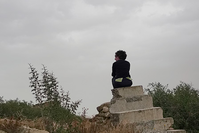
As we move towards the first quarter of the third millennium, the impermanent and shifting influence of globalisation, economic division, migratory encounters, social media, historic narrative and tourism is having a major impact in our understanding of the making, belonging and occupying of place. It is widely documented that these conditions are contributing to a growing sense of displacement and alienation in what constitutes as place making, occupying, and belonging.
CCFT is asking how interdisciplinary artistic research practices contribute and share new critical understandings to aid this evolving understanding of place making, belonging and occupying?
-
This Is a Human Being
(last edited: 2024)
author(s): Hilde Kramer
connected to: Faculty of Fine Art, Music and Design, University of Bergen
This exposition is in progress and its share status is: visible to all.
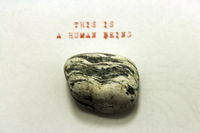
"How can illustration approach the non-representable?"
The question is linked to ways of commemorating the children who died during the Holocaust and what kind of representations could be appropriate. As part of a workshop drawing process, information is unfolded about children whose existence was previously documented only by the ghetto archives and the deportation lists made by the Nazi-German administration of Litzmannstadt ghetto.
The methodology has been developed though workshops. In the final step of part I, the project investigates how the material may be developed to a book/archive.
-
Oversikt over tilgjengelig formatering - KMD
(last edited: 2021)
author(s): Jonas Howden Sjøvaag
connected to: Faculty of Fine Art, Music and Design, University of Bergen
This exposition is in progress and its share status is: visible to all.
Formatering til bruk sammen med malen 'simple template, KMD august 2019'
-

Exit earth
(last edited: 2021)
author(s): Ashley Booth
connected to: Faculty of Fine Art, Music and Design, University of Bergen
This exposition is in progress and its share status is: visible to all.
In the Exit earth project, we wish to investigate how can pictograms be used as a language for social/environmental statements and opinions?
Pictograms are simple signs that relay their information effortlessly. We are surrounded by thousands of them each day as the friendly couple on the doors of public toilets, on your smart phones and computers, as weather maps and road signs. They are there to inform or warn, or sometimes just to be decorative. Pictograms are becoming more and more popular, we see them, use them and make them, they are our helpers and supervisors presenting information. Pictograms are also responsible to the ideology of international language (beware slippery floors, Tidyman, Exit…). Isn’t that exactly what we need for the language of climate change?
The pictogram‘s days of slavery as pure bearers of information are over, they can now have an opportunity for self-expressiveness. Can they expand their obligations into newer fields of cultural identity and local expressiveness? Can they become opinionated figures encouraging us to challenge human values and discuss climate change? Build a global visual language that unites us?
By reusing and recomposing signs visually inspired by Margret Vivienne Calvert designs for UK road signs (1963) and ISO safety signs and ideologically inspired by the signs from Thierry Geoffroy picture series ‘TOO LATE’ we can create new climate comments and challenges.