A stretched-out memorial
——
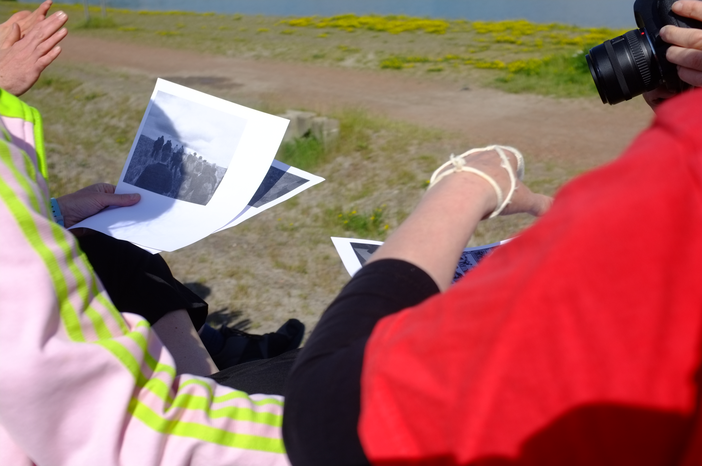
In 2019, a place of their own – artist duo Paula McCloskey and Sam Vardy – organised Spatial Self-organisation Against Injustice, a performance walk on the site of what has become known as ‘The Battle of Orgreave’ where in 1984 police clashed violently with picketing miners and factory workers. A place of their own invited anti-fracking campaigners and the Orgreave Truth and Justice Campaign to participate, alongside members of the public. They devised the route of the walk, held readings, and invited others to perform along the way. Kate Flannery, from Orgreave Truth and Justice, participated in 2019 and has returned with us today.
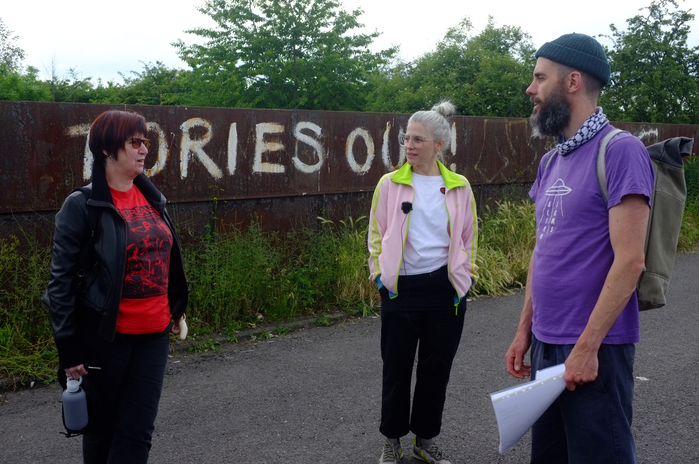
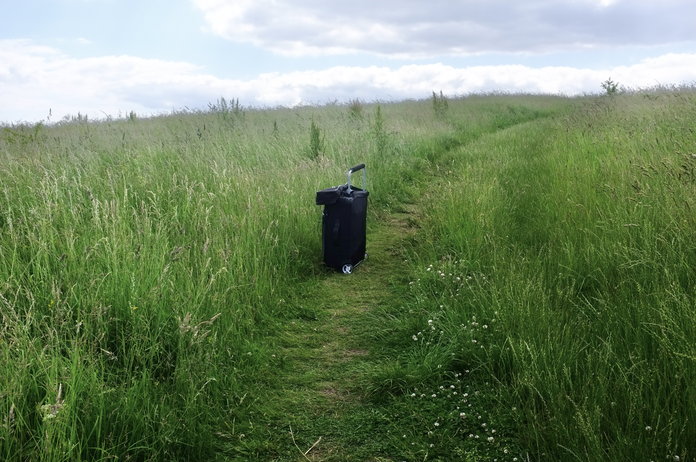
There are no signs to where we are going. We pass car mechanics and scaffolding centres with poles and planks painted bubble gum pink. Wild roses clamber through railings, elderflowers froth up around telegraph poles. The road is pitted, making hard work of the suitcase I’m pulling full of recording equipment. This, it turns out, is a no-through road and the closer we get to the barrier ahead the deeper the ruts and the larger the weeds that grow at its edges. We stop on a railway bridge, the sides of which are rusted and peeling with new and old graffiti in white and yellow. ‘Tories out’, reads one; ‘Scargill’, reads another.
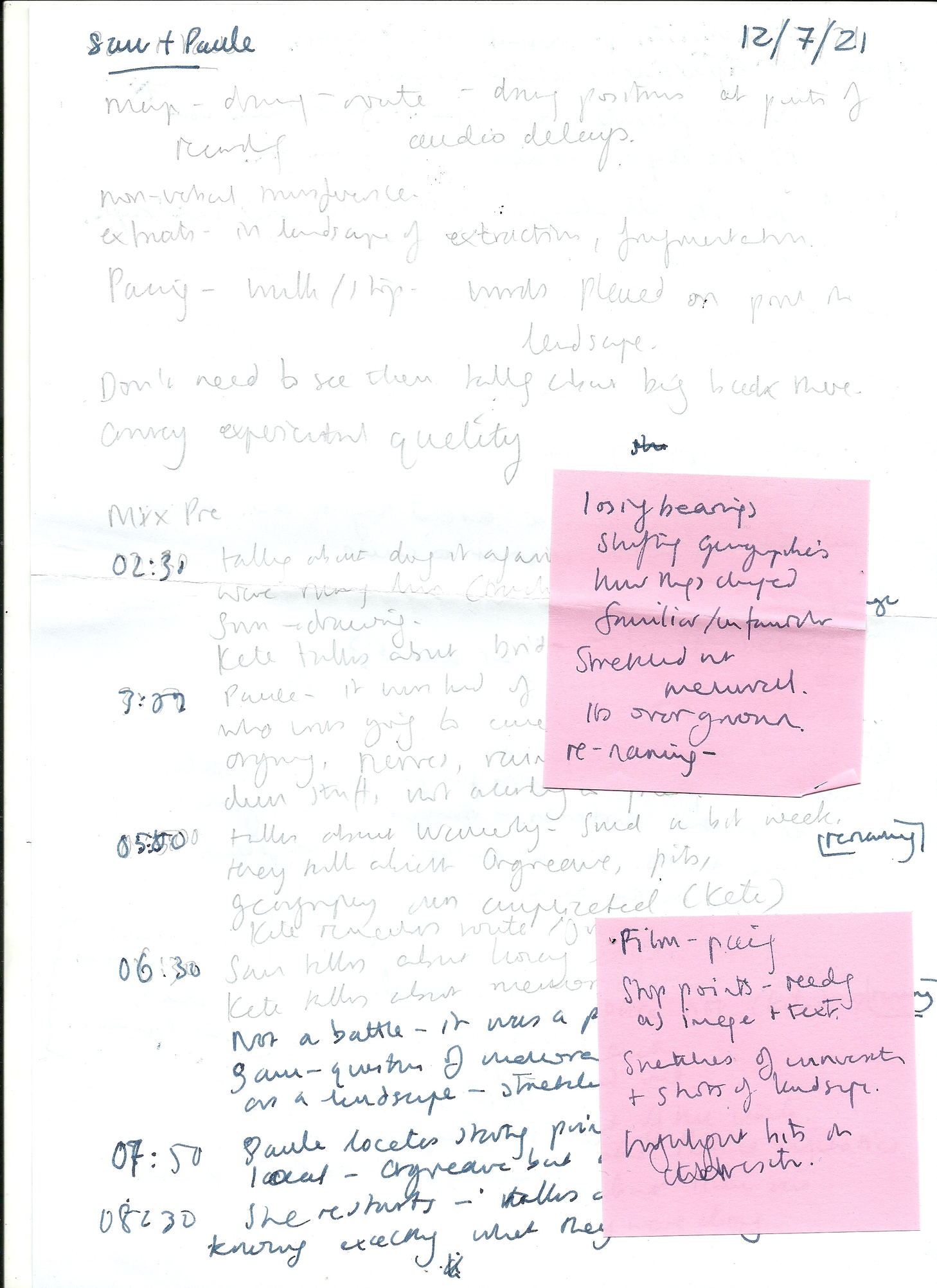
Sam, Paula and Kate set off. So as not to be in shot, as Katy films them from the end of the road, I walk some meters away. As a result, I can only watch them gesticulate in the direction of the railway line, a swooping hand movement circles them before they all turn to look back around. I make out the odd word that carries in the wind: doing a drawing, it’s so overgrown, this is important, it never was a battle, the erasure of a place. It is a strange sensation to witness only a partial reenactment of a performance in which the words, for me, are mainly missing. The experience that I’m a part of and apart from will be formed of two different moments: watching now, hearing later. I register the delays that will also overlap in places from words I catch here and enjoy the temporal elasticity of it.
They stop at intervals: This is where we started; there were twenty points where people stopped and read things out; do you mind saying that again? I catch up but don’t interject for fear of interrupting.
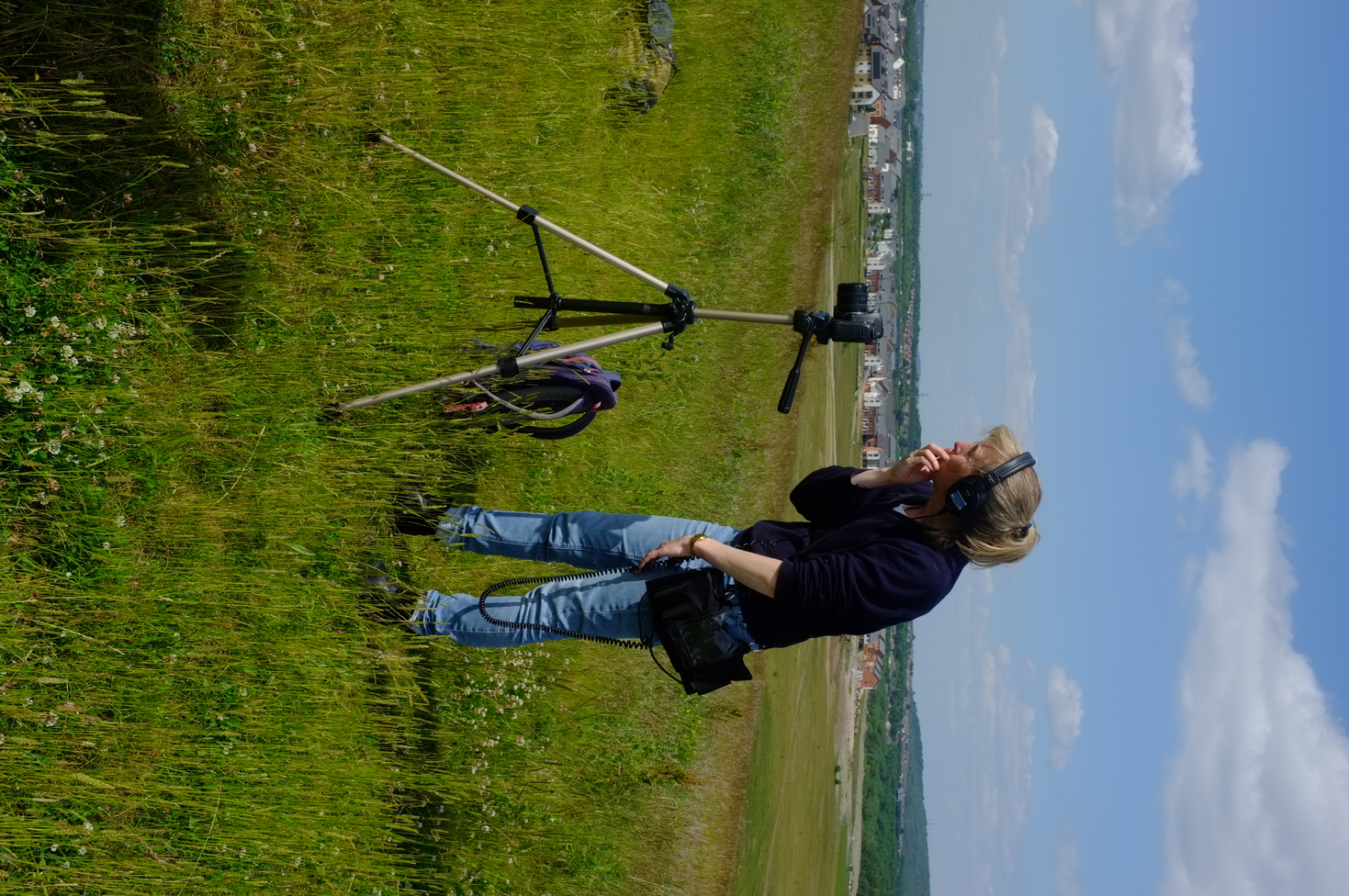
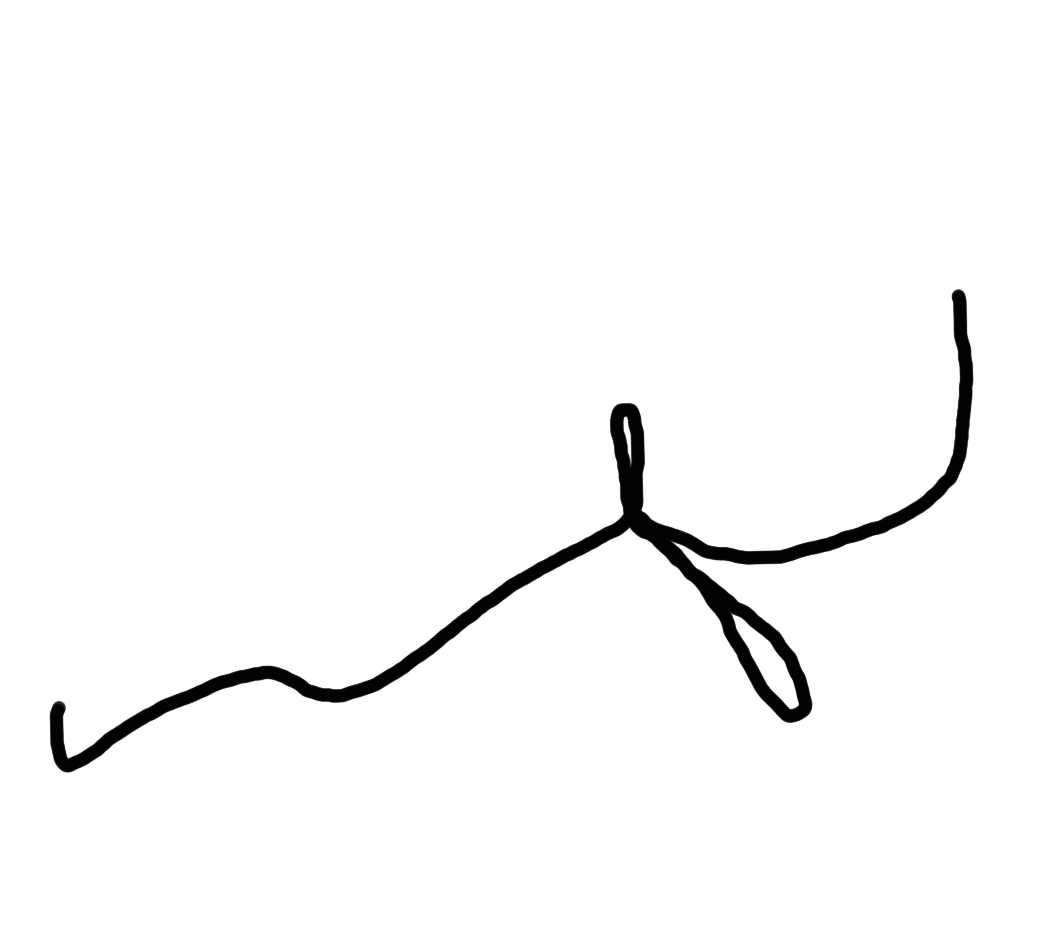
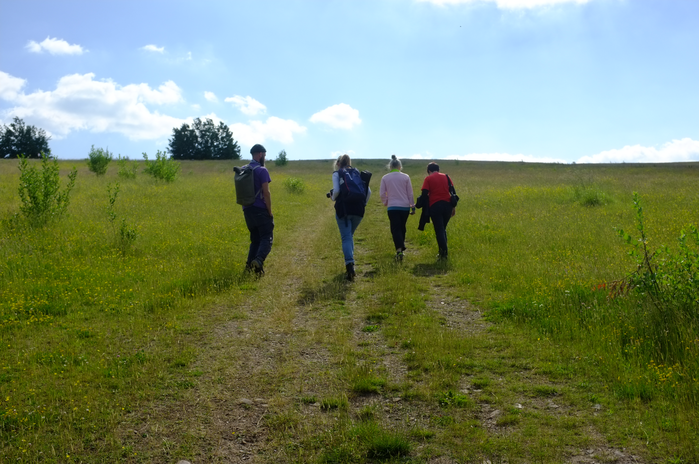
We head up a hill that is set above the site of the Orgreave coking works near Rotherham. Not that there’s any sense of this now. The path they’re taking is surrounded by swaying June grasses and wildflowers. At some point the track becomes two parallel lines separated by a strip of grasses half a meter high. Paula and Kate walk on one track, Sam on the other. They don’t decide this, it just happens. I wonder how the one lapel radio mic and the handheld audio recorder they are carrying will register the space between them.
Sam pauses to read aloud: They’re going to have to kill all of us and even so the trees will continue to be Zapatistas as will the rocks and dogs. We will never give up on our struggle for dignity. A clump of grasses to my left quivers, erupting in panicked squeals as if our presence here has disturbed a nest of mice. I imagine them scattering. The roar of an engine grows. We move on.
Over the hill’s crest, artificial lakes open out alongside an expanse of wasteland and a toy-like conglomeration of red brick homes on a new housing estate. We take a left. This is where we got people to read Audre Lorde’s ‘Coal’. Paula reads it now and I scribble down some words: Who pays what for speaking... some words live in my throat... some words bedevil me. We film her in close up. Lorde’s words at times become entangled in Paula’s throat. We are too close.
I wonder at the extracts that Paula and Sam read out; they call this speaking other people’s voices, bringing together different knowledges and experiences. Their voices dissipate on the breeze that brushes the meadow of the hill that we’re standing on, and that covers the ground beneath us and the seams of coal beneath that. I wonder at the passages of words I happen to pick out, that happen to strike me and recall the legacies of extraction that are at play on this site: the physical removal of earth and coal through industry; the physical removal of bodies by police violence; the traces of soil that we’ll carry home on our soles at the end of the day; the fragments of words spoken, scribbled, typed, ventriloquised, remembered, misheard, misunderstood, or heard only later through a breathy, windswept recording.
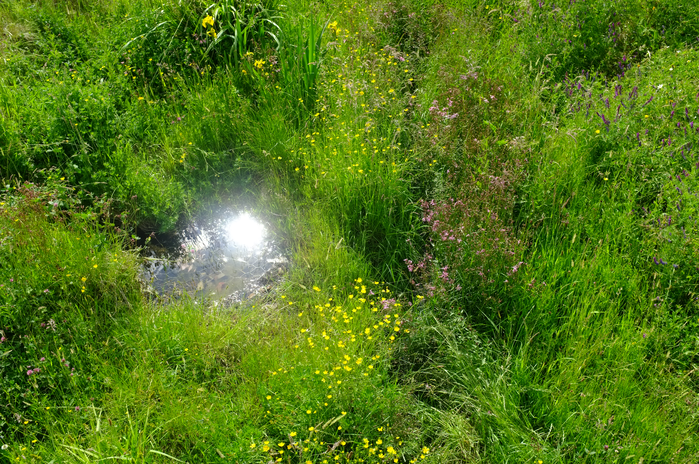
But how do we pass this thinking on, beyond here, beyond that moment, beyond this moment, beyond them, beyond us? We’re always asking, says Paula, what’s the exchange with the people and the place? And here we are, asking: What’s the exchange between the people and the place, and the artwork and the return to the artwork, now and then? There has been a lot of talk today. Words have a tendency to steal our attention but there have been other things too. A place of their own reference the traces of a place in our bodies...touching the ground...we asked them to breathe into it...thinking of the non-human witnesses and…non-human actors. And I turn to landscape as another participant: the tarmac that has loosened with age in gravelly clumps; the blades of grass trodden underfoot; the wooden bridge I trundle the suitcase of equipment over; the maroon marshy pond below; the copse of birches behind us that overhear our chatter; the shocking-blue damselfly that bounces on the air amid the grassy seed heads. They catch the light differently now.
Original Artwork:
Title: Spatial Self-organisation Against Injustice
Artist: a place of their own (Paula McCloskey and Sam Vardy)
Participants: Varied group inc. Kate Flannery
Location: Orgreave, near Rothertham
Date: 2019
Acts of Transfer Return:
Title: A stretched-out memorial
Artists/Participants: Paula McCloskey and Sam Vardy, Kate Flannery.
Location: Orgreave, near Rothertham
Date: 2021