Be someone completely different
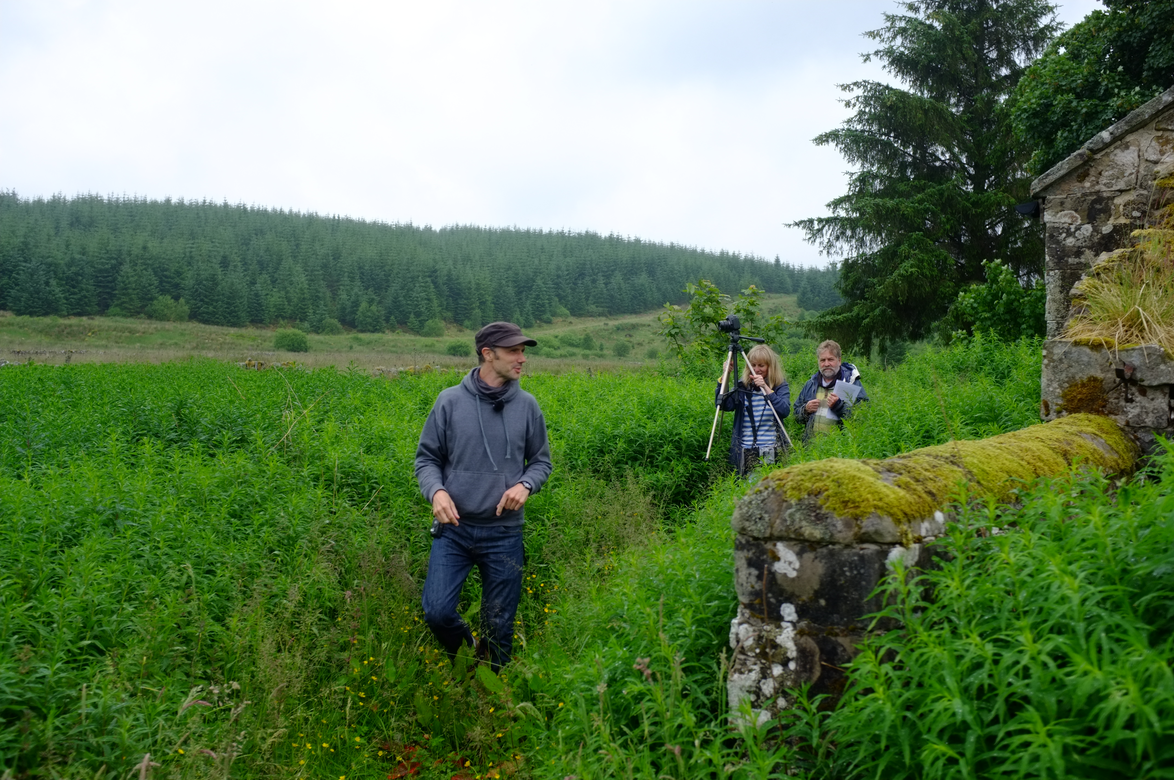
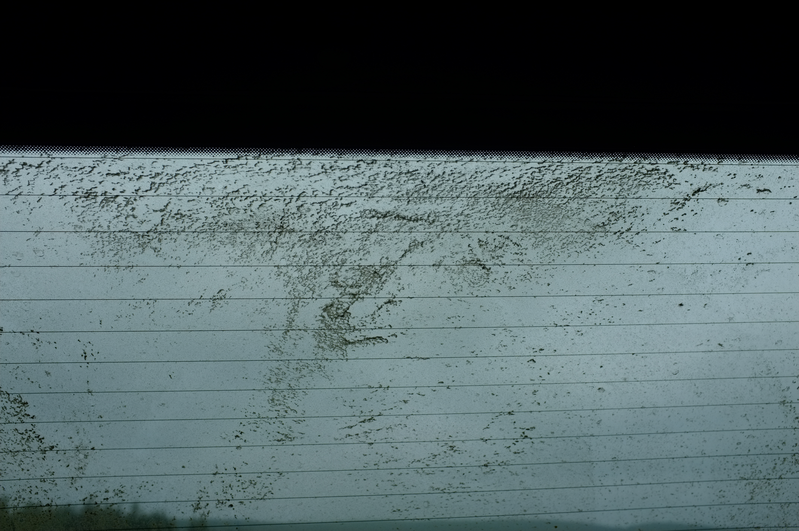
For about an hour, we have been looking for the way; out of the car window I have taken over fifty photos. Now we’ve found the way, we’re retracing their steps. I’m trailing behind, taking photos of the ground and the pine forest floor and the wildflowers. We are in Kielder Forest visiting (or revisiting) the site of Stone Frigate (LARP) (2015), a participatory artwork built around a two-day live action role play designed by Matt Stokes. A little ahead, Matt and Chris Welton – one of the original participants – are talking with Katy about their memory of the event; she records it on a handheld audio device.
[Their words compete with the sharp crunch and scratch of loose stones underfoot.]
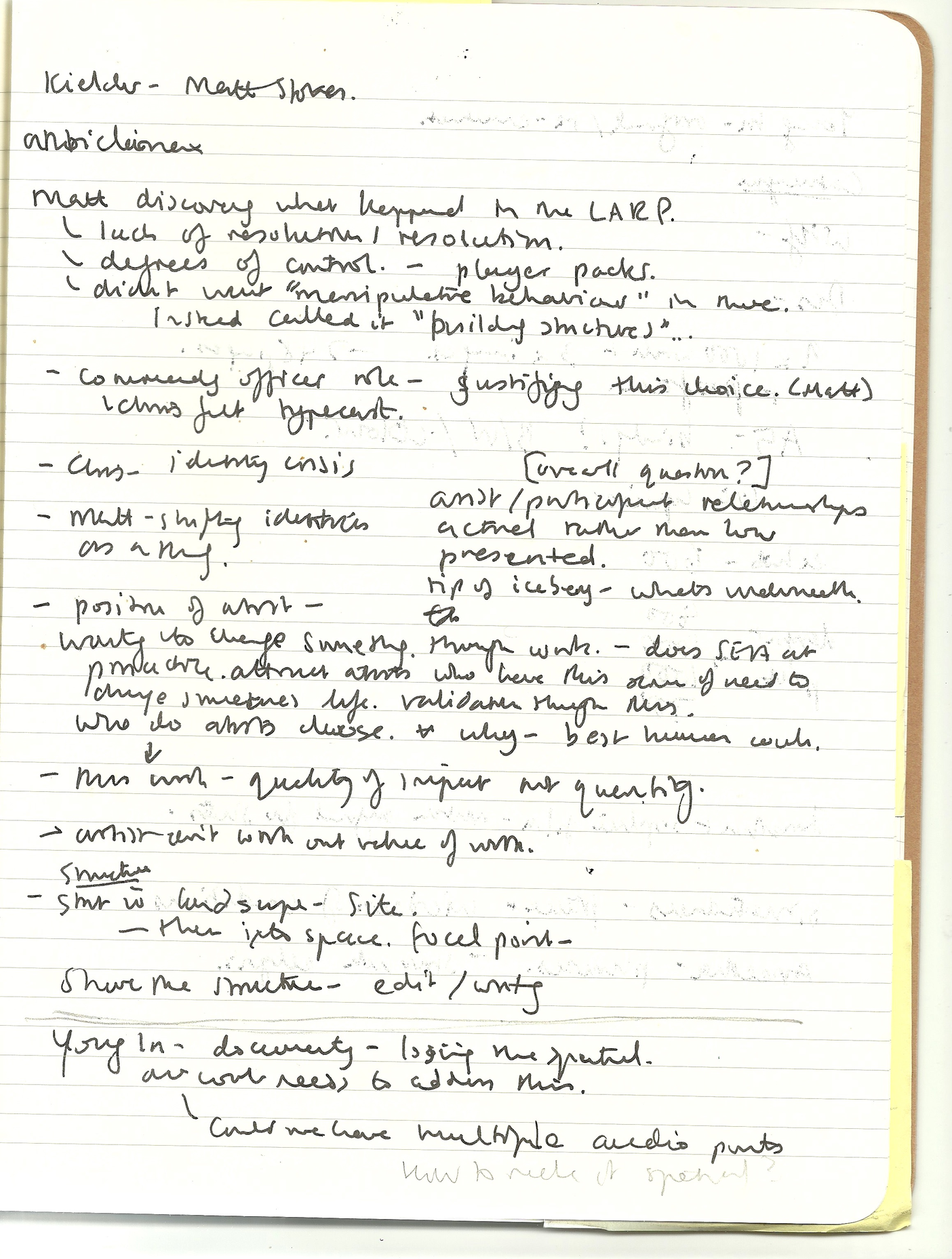
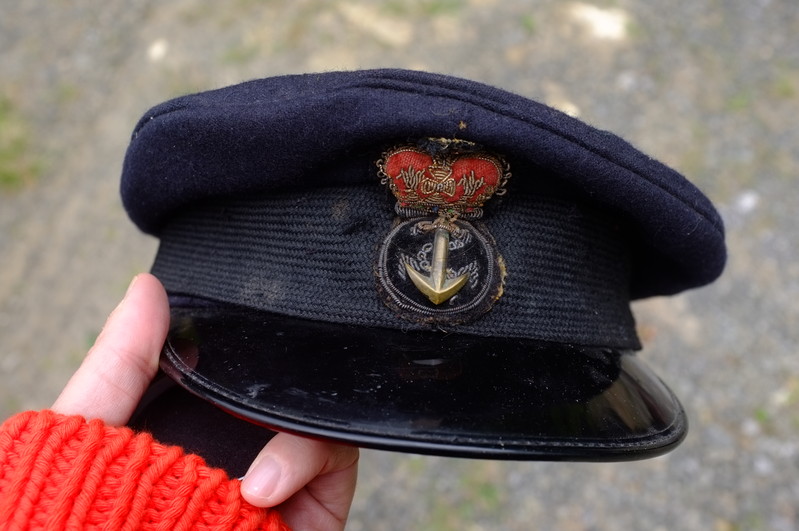
Stone Frigate (LARP) is rooted in the history of HMS Standard, an experimental psychiatric rehabilitation unit set up by the Royal Navy in 1942. The unit was intended to manage officers who were either suffering from mental illness or feigning psychosis in the hopes of being released from service. Chris played the Commanding Officer and helped to devise some of the character backgrounds that make up the player pack that each LARP participant is given to help embody their designated characters.
[Not all of these words are mine.]
There wasn’t anyone there that I recognised that I’d created, one of you says. The relationship between intended action and serendipity or improvisation here is a constant source of tension and plays out in other projects that we’ve encountered. And in Acts of Transfer too. In participatory artworks, to what extent do artists design, trigger, precipitate or control action? It takes on its own life. What power do participants hold? How do artists (or participants) respond when an action they have envisaged or hoped for is not realised? What happens when a behaviour that was written between the lines of a player pack does not bear fruit?
[Here and there actions and words overlap. Words and actions are lost. Actions and words are extracted, reordered and recalibrated.]
That was the point that I thought, is this real...? The psychology of artist, participant, situation, site, and historical source material is enmeshed through expectation, anticipation, disappointment, control, loss, misunderstanding, not-knowing and fear of being left on the outskirts of things. In many ways, I don’t really know what happened.
[Here, too.]
This is not a return. Even for those of you who were here the first time round: You can’t be everywhere.
[I imagine these words evaporating, becoming less mine.]
It is only in part a work of memory, then. More than anything it is a reimagining of experiences of communal participation that are not ours, in which you are not always involved, in which there is no single locus.
[Nevertheless, I take a photo.]
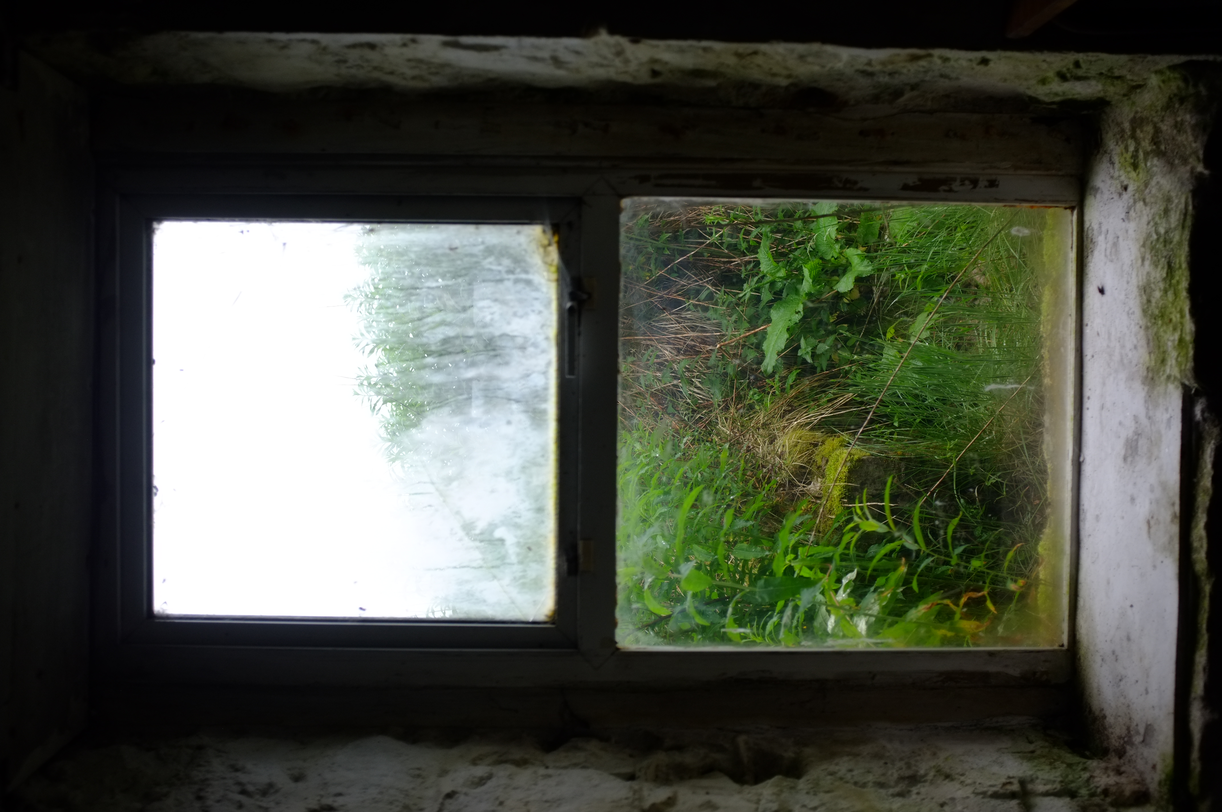
The forest opens out revealing the stretch of exposed moorland which was the heart of Stone Frigate (LARP). We head towards a cluster of buildings, pass through a gate, cross a stream, and sit together in long grass. When the drizzle becomes more insistent we take shelter in the stone bothy that was used as the offices of the Commanding Officer and the camp Medical Officer/Psychiatrist. The light in here has a banal drama to it; the overcast grey-white glare of the sky infiltrates the spider-webbed sparseness of the room throwing fuzzy-edged shadows.
[I take a photo.]
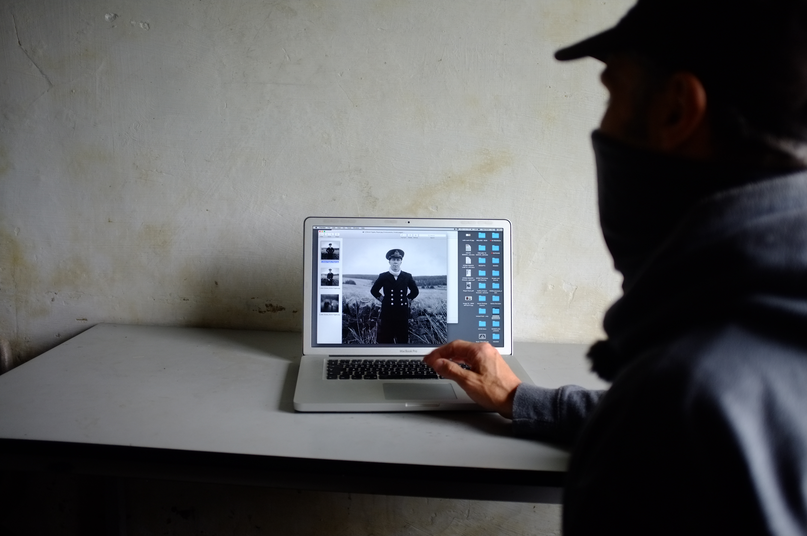
You play footage from the LARP on your laptop: officers are lined up; they plant trees and queue for drinks. A Scottish folk song plays; a vulnerable, trembling voice fills the space around us. The very last hour it started to snow… and George led this song in the barrack hut, and it was just so emotional… I felt there were ghosts, that we were there but there was something else there.
[And we are here, doing this, which is also something else; are we making the thing that we’re trying to make?]
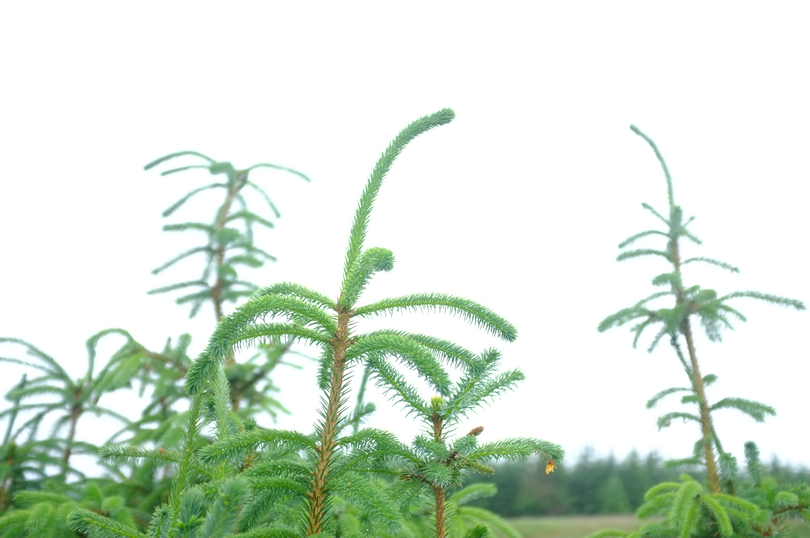
The rain subsides. We pick through the knee-high grass beaded with raindrops. As you loop around the back of the bothy striding towards a solitary clump of pines, your voice becomes animated as you realise that these are the trees that the players planted in 2015. With their constricted root systems – owing to being planted too quickly, too close together and in too-small-holes – these are six-foot-tall, entangled legacies of Stone Frigate (LARP) that even you, until now, had forgotten about.
Original Artwork:
Title: Stone Frigate (LARP)
Artist: Matt Stokes
Participants: Various inc. Chris Welton
Location: Kielder, Northumberland
Date: 2015
Acts of Transfer Return:
Title: Be someone completely different
Artists/Participants: Matt Stokes and Chris Welton
Location: Kielder, Northumberland
Date: 2021