This is Power-To
——
In 2018 Sophie Warren and Jonathan Mosley devised two actions that took place in Tate Modern, forming satellite works to Tania Brughera’s Turbine Hall commission 10,142,926. Solidarity Line and What is the Building Calling For?, were both realised by members of the public, including staff who worked at Tate, after a short workshop led by Hannah Davis, an experienced activist, to outline the parameters of the actions.
In What is the Building Calling For? the group dispersed through the secondary and circulatory spaces of the gallery calling out the titular question and offering up answers in response. Using the group as a kind of human microphone the questions and answers spread sonically, through echo and through repetition, bounding off the hard surfaces of the building, creeping around corners, becoming muffled with distance and getting lost in cracks, open doors and absorbent materials. Solidarity Line used the dynamics of the group slightly differently. Here the group communicated not verbally but physically by using the bodily formation of the defence line. A human line was made by linking arms so that bodily movements, shifts in weight, transferences of a gentle lean rippled down the line of a group that together navigated the space of the Turbine Hall. Importantly, both artworks were informed by actions from civic resistance and direct democracy.
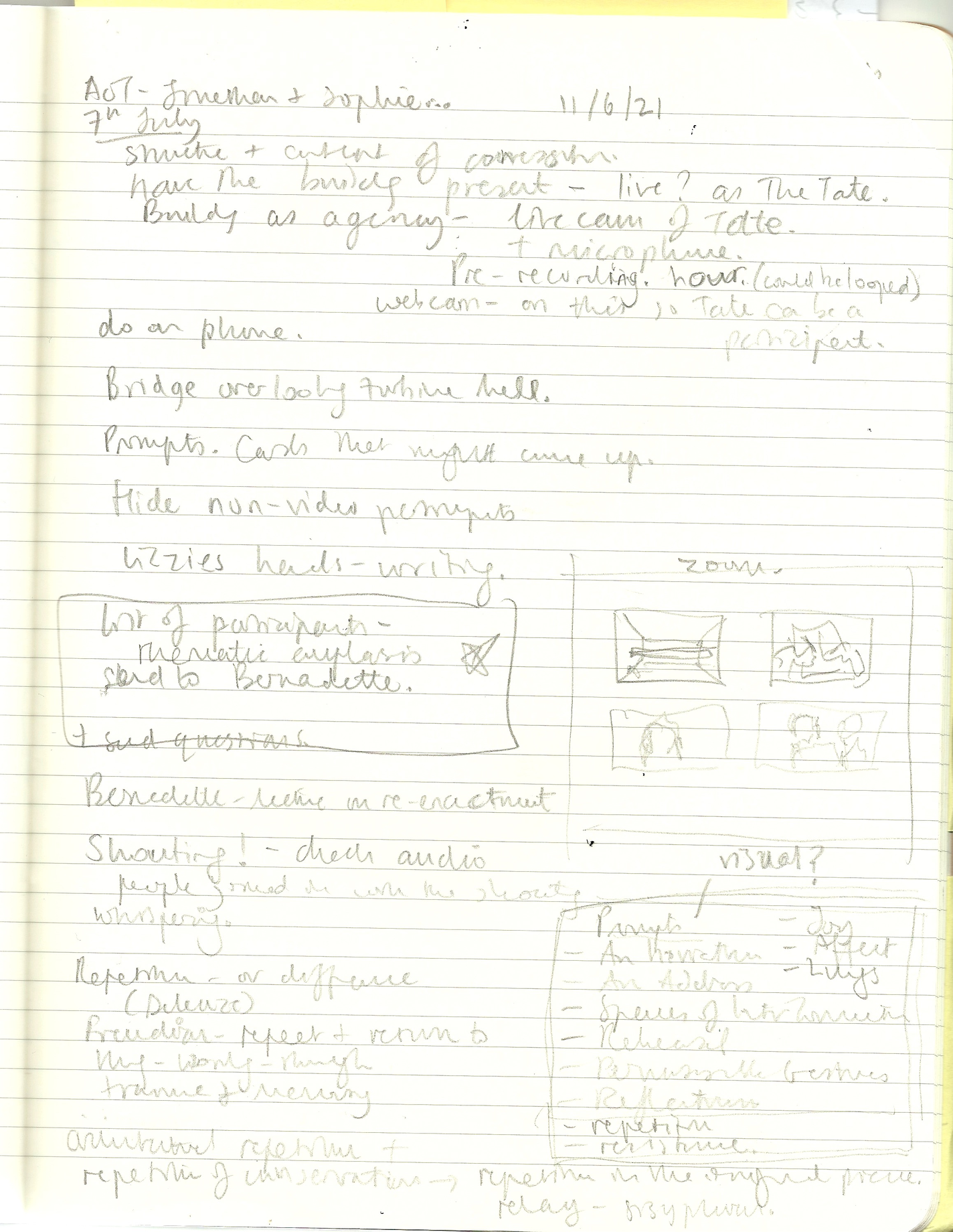
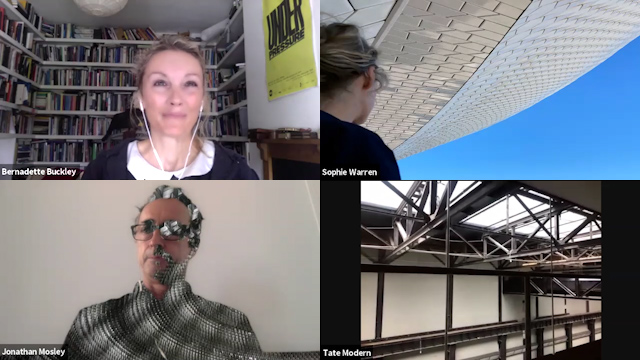
We return to these works three years later, joined by Dr Bernadette Buckley – part-participant, part-collaborator – via a zoom call between the UK, France and Portugal to explore what was at stake with the two works and how it felt to be a part of them. We wonder what it means to return to these works now, when physical movement has been made so restricted by the pandemic, and think about the ongoing legacy of these works for both artists and participants.
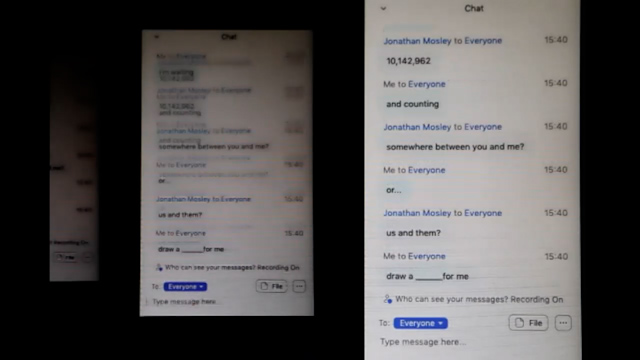
We ask: how will this work? When will you speak? Can I hear you? You can see me but I can’t see me. Can I speak? Will I interrupt the flow of other people’s words, disrupting lines of thought, triggering detours that may or may not be wanted? I don’t speak, except to ask: can you let Katy/Tate Modern in?
We ask: can you mute? Can you unmute? Can you turn your camera around? Are you recording? We wonder, but don’t ask: is this working? Will this work? Is this work? Whose work is it anyway? Is this the work, now? What is intended?
Sitting, you walk us through what it was like to be a part of this thing, now, apart from this thing. You say: there was a feeling of I am able to do this. This is power-to, you say, quoting John Holloway. Power to what? That’s real power, when you don’t have to set out the parameters of your power in advance but can feel your way through it, by touch, by voice, by an un-formed sense that this is a way. We follow, watching as power-to gathers, emerges.
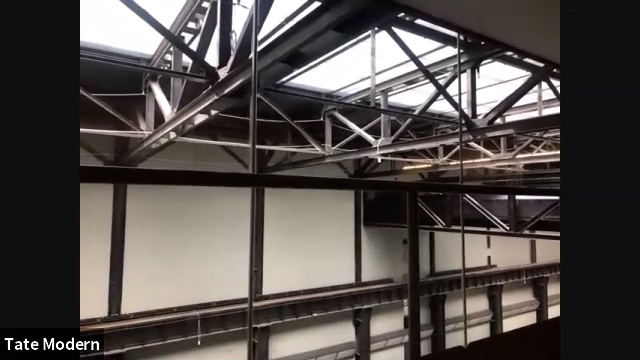
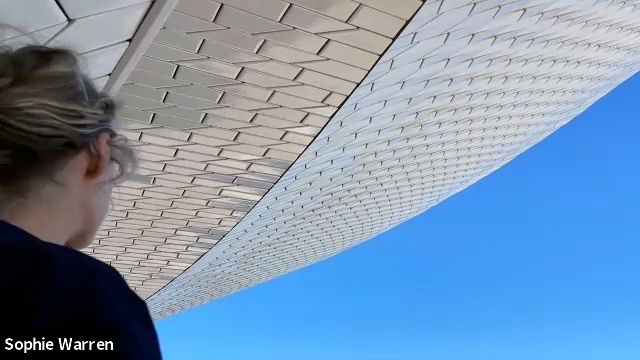
Power, you say now and the work was saying then, is a question not an answer. Power, you say then and the work was saying now, is a question not an answer. There’s a thought. We are not walking now, though I’d like to be, especially as I watch Katy’s footage of the Turbine Hall betray the signs of a tiring hand, the screen turned to one side, the ceiling where the ground should be. You turn to the Zapatistas – who we’ve already happened upon through Acts of Transfer – describing their 1996 work, Asking, we Walk. You say: the walk for them was about a way of generating knowledge through questions, redefining knowledge in relation to questions rather than answers. You say: the walk is not the pre-stuctured architecture of the road, of the track, of the map… the walk is the bodies who encounter other bodies, and who, in walking ask questions.
I try to envisage us outside of our largely sedentary positions in buildings across Europe, imagining the forces and landscapes of our conversation, and the push and pull of words, observations, the notes we’re making as we listen, the questions that we are thinking even if we’re not sharing, the words we are underlining in our heads or on paper, to which we’ll return some other time.
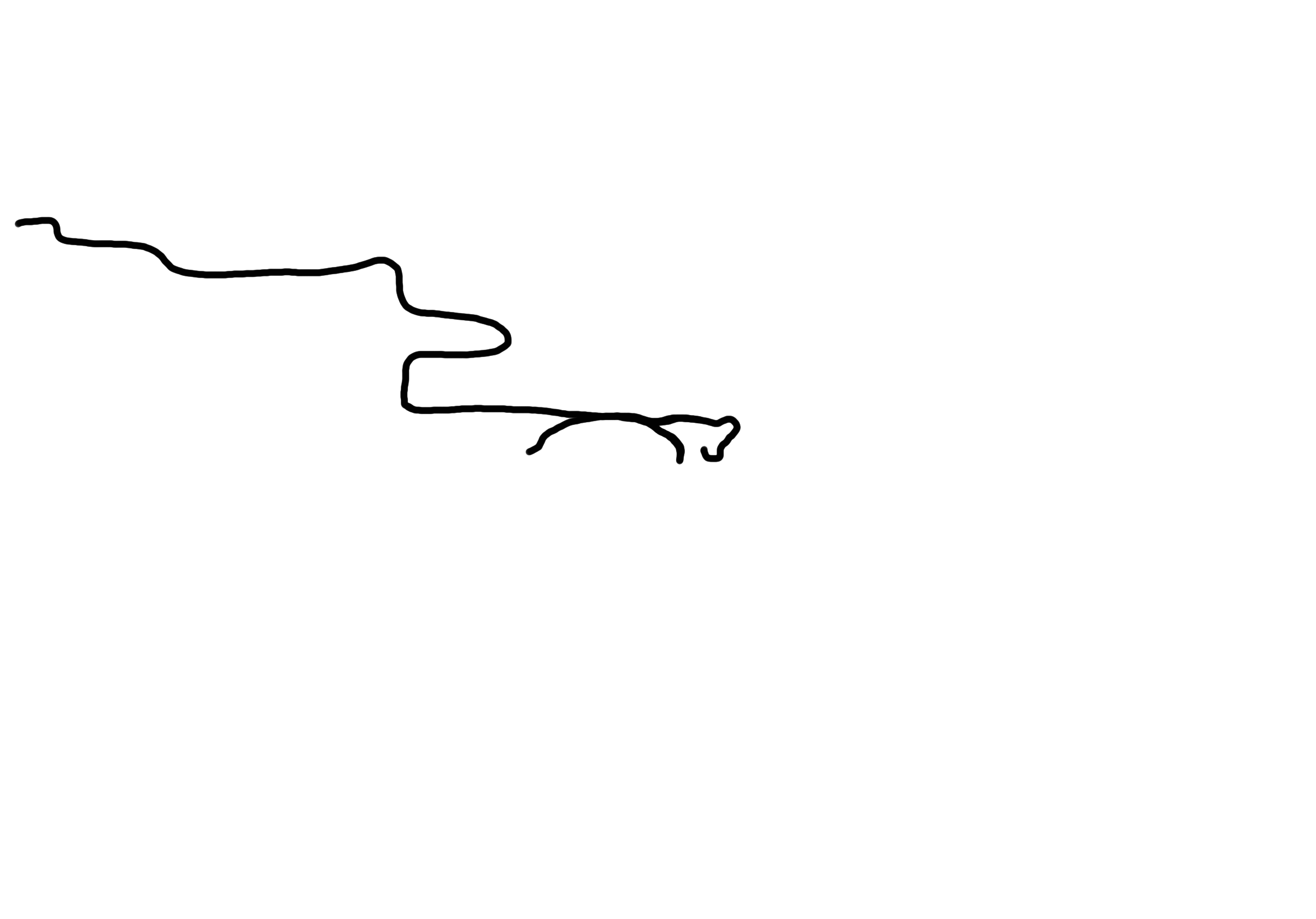
Could we draw this?
I imagine our minds converging on a thought as we nod, our eyes scanning our screens to gauge each other’s responses – though this is not equal because Katy and I are invisible, able to scrutinise others in a way that others cannot, which doesn’t seem entirely fair and maybe we should rethink this – or frown at a reference we hadn’t before come across, before dispersing along lines of our own associations, before gathering again as you say: asking is an inclusive form. And you say: the act of questioning is a structure that allows for the coexistence of difference. And I wonder at this and think, what about the rhetorical question which performs inclusivity as a means to cajole? But I don’t say it out loud, because I am muted.
And together we laugh as the building speaks in electronic tweets and chirrups, and then, in places, Sophie disappears leaving only the image of the back of her head and the corner of the MAAT museum in Lisbon designed by Amanda Levete amid blue sky, and I struggle to read Jono’s body language as he is more and less consumed by the image of – I’m told – the interior of the Committee Room at The French Communist Headquarters, Paris, now renamed Espace Niemeyer, where Warren and Mosley took up residency in 2016, which in itself triggers more questions than answers, starting up another train of entanglements.
And I wonder: where are the acts of transference here? Katy is there, where What is the Building Calling For? and Solidarity Line took place, but she is also here. And she can only move in one direction following the new one-way system which isn’t at all in the spirit of either What is the Building Calling For? or Solidarity Line and she says: I might have to move on and so we leave it there which is also here.
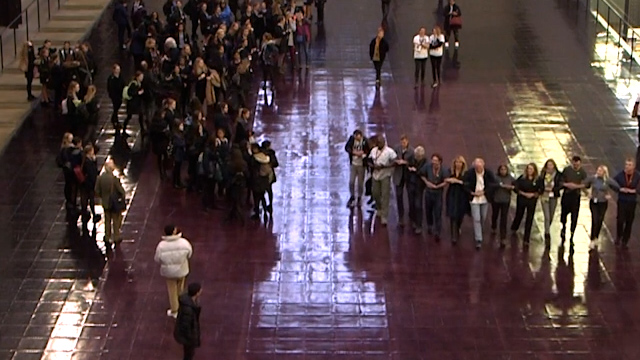
Original Artwork:
Title: Solidarity Line and What is the Building Calling For?
Artist: Warren and Mosley
Participants: Various inc. Bernadette Buckley
Location: London
Date: 2018
Acts of Transfer Return:
Title: In the moment that you’re in
Artists/Participants: Sophie Warren, Jonathan Mosley and Bernadette Buckley
Location: London/Online
Date: 2021