Some of us were here
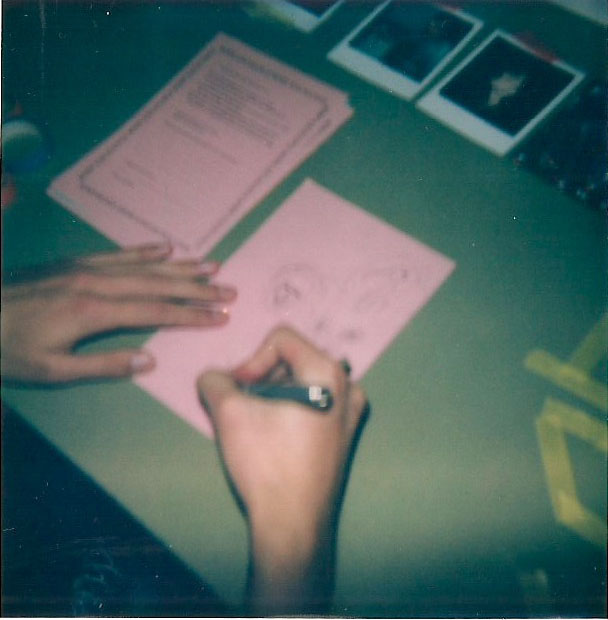
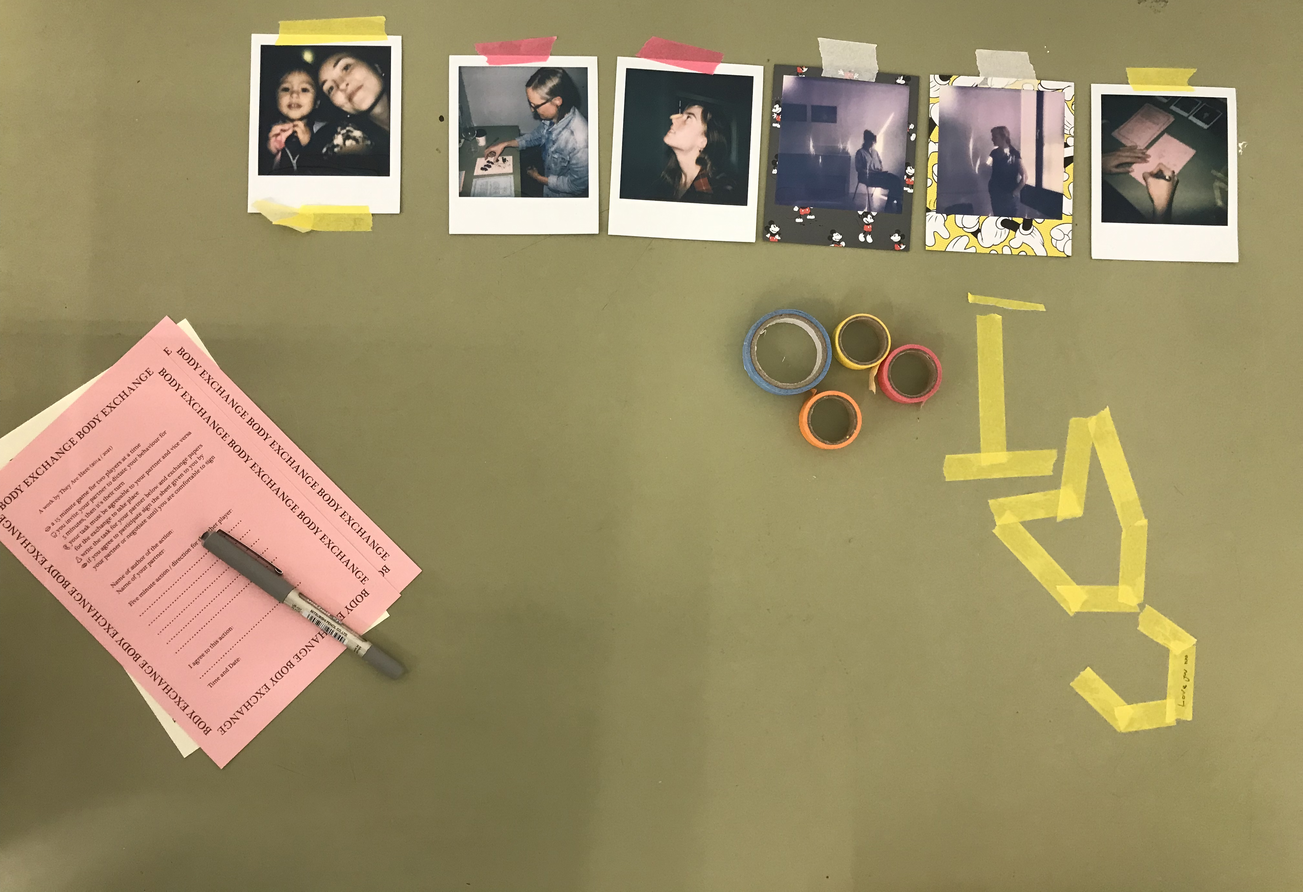
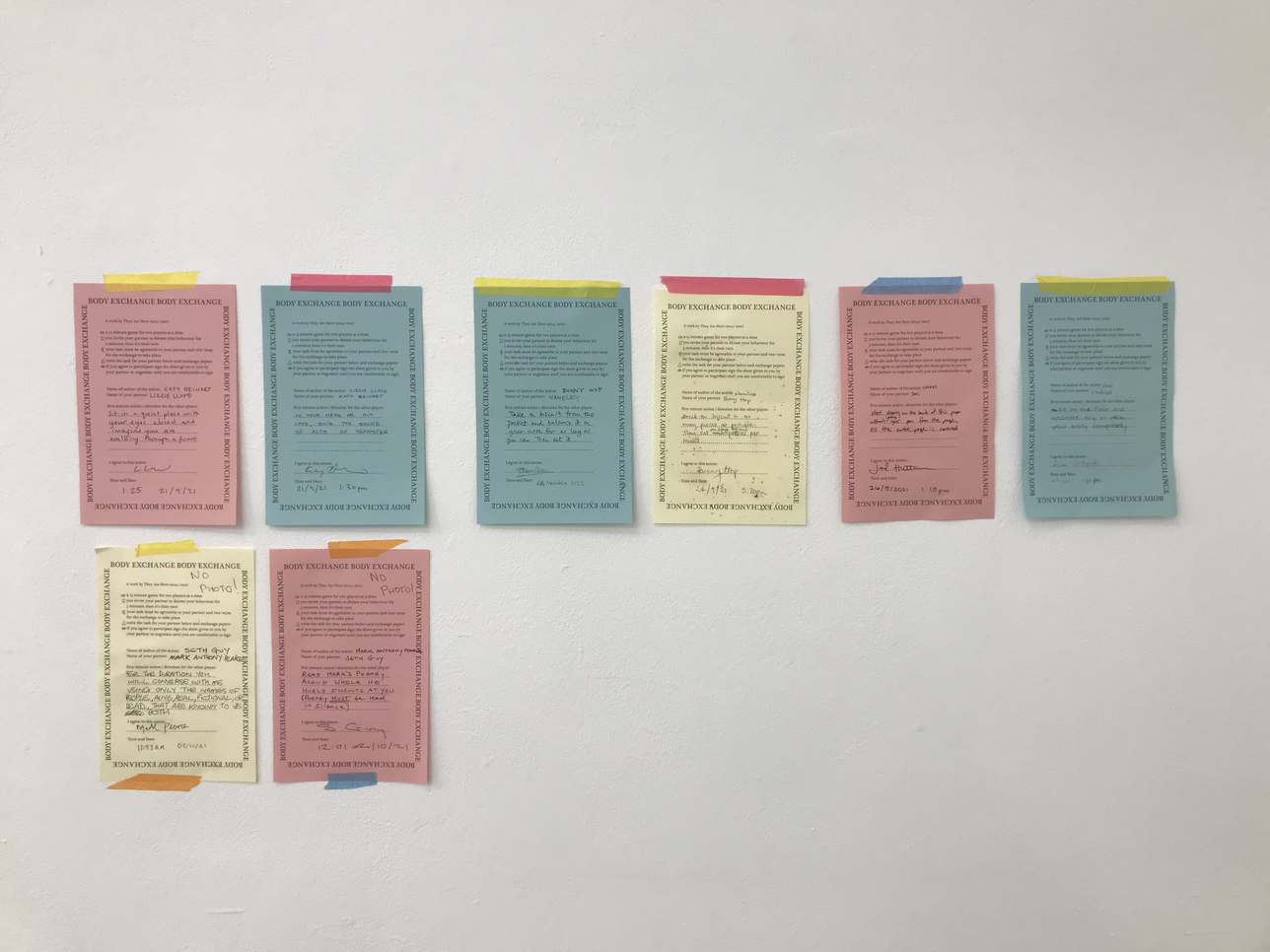
We are completing Body Exchange (2014/2021), a 15-minute game for two players designed by They Are Here (Harun Morrison and Helen Walker). On a designated piece of paper, we are invited to write a task for a partner to enact for five minutes. If the instructions are mutually agreeable, we will sign the contracts and exchange them. There is a polaroid camera on the table which we can (if we want) use to document our actions.
We haven’t finished installing the Acts of Transfer exhibition – in fact, it feels like we’ve barely started – and I’m running for a train home in forty minutes. The grid that I’ve been measuring for one of the works in the exhibition has taken me hours, far longer than it should.
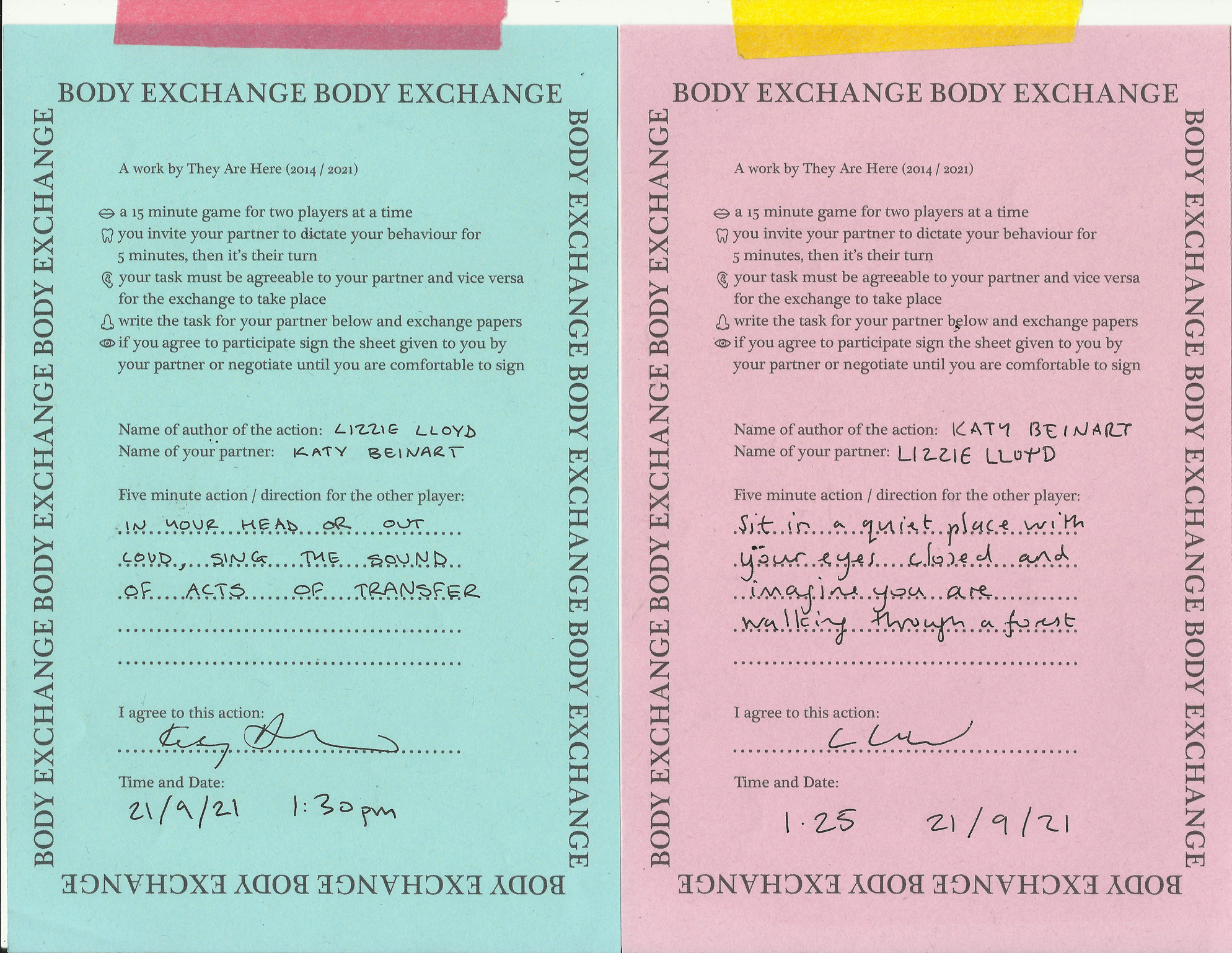
My contract, from you, is on a child-sized table in one corner of the room. On mint-choc-chip-green A5 paper it reads:
Sit in a quiet place with your eyes closed and imagine you are walking through a forest.
I laugh anxiously as I read it. Because I don’t want to sit down. I don’t want to close my eyes. I don’t want to imagine I’m walking through a forest. I want to finish rubbing out pencil lines and ensure that my grid of photos is straight, or straight-ish or straight-er. I get caught up in things and find it hard to stop even though I know it’s good for me. My back hurts. Not for the first time, I’m being told to slow down. Though I know your Body Exchange task is an act of kindness, my body strains at the thought of enforced relaxation.
It’s not lost on me that this 2021 iteration of Body Exchange is part of Acts of Transfer, a project that relied entirely on the willing participation of others. Taking part now is the least I can do. When we talk this over later we think about all the participants and artists-turned-participants that we have worked with over this year. We think of the unofficial agreements that we have made with them about how they will work with us, and be with us for a stretch of time, how they will allow us to watch and rewatch them, to record them and edit them and play them back. I think of the hierarchies that are inevitable in this agreement, even when a project is intended to be open, sensitive, inclusive and collaborative. I think of the unexpected and often subconscious expectations that we’ve all brought to these encounters; how often were reservations not voiced, thoughts not articulated, gestures misunderstood, interactions misinterpreted, opportunities not taken, questions not asked?
I’ve been thinking about what action to offer you for the past three weeks but I can’t settle on anything. As I sign your contract something occurs to me:
In your head or out loud, sing the sound of Acts of Transfer.
A surge of excitement and relief runs the length of my body. I like the way my task hints at some sense of culmination of a project through which we have come to spend many long zoom calls together, shared innumerable email exchanges, texts, meals, and cups of tea. I imagine that it’ll make for a useful way to think about how Acts of Transfer feels in your body, how the project has been transferred bodily through you. I’m pleased by the implicit challenge of the task, and the obvious impossibility of translating the whole complicated experience of Acts of Transfer into song. I wonder what you might find in doing it. Do you like to sing? I don’t even know. I’m aware that my offering to you is not easy but I justify it, in that split-second, by the fact that I’ve given you the escape route of ‘in your head’ so the performative side of the action becomes a choice rather than an obligation.
I turn to look at you as you read your action and hear you giggle nervously. I instantly regret my instruction, feeling it to be too self-conscious, too self-referential, too heavy. Overthought.
Later you tell me you hated doing it.
We take it in turns to channel each other.
I focus on the fungal smell of damp pine. The earth is soft and mossy underfoot. I picture the wooded photographs I’ve just been installing.
Gingerly, some sounds surface.
Occasionally, even now, I return to your forest with my eyes closed. This surprises me.
Would your song sound differently now?
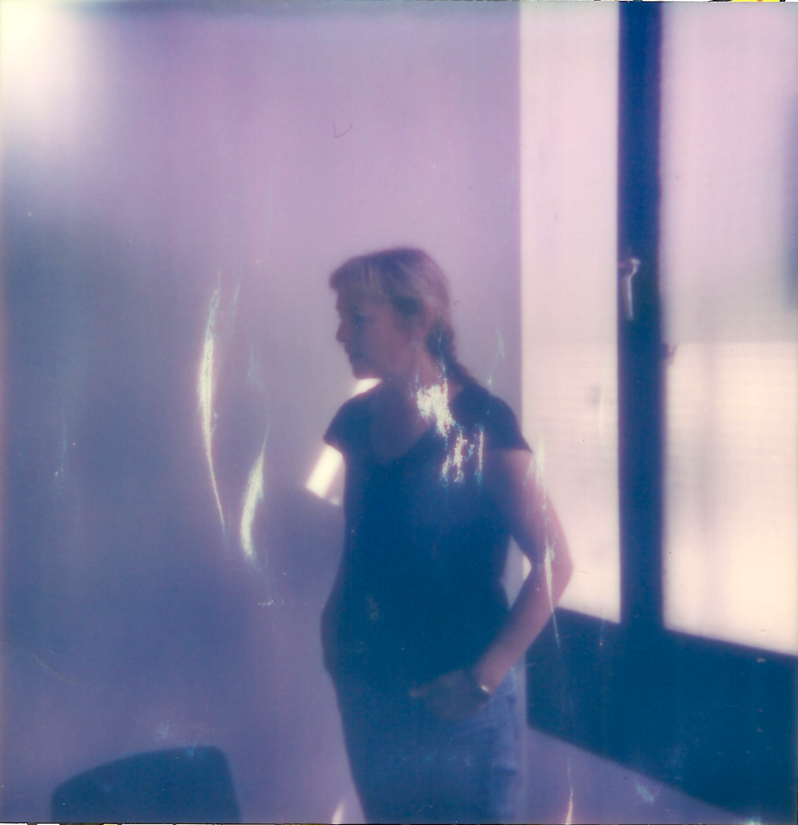
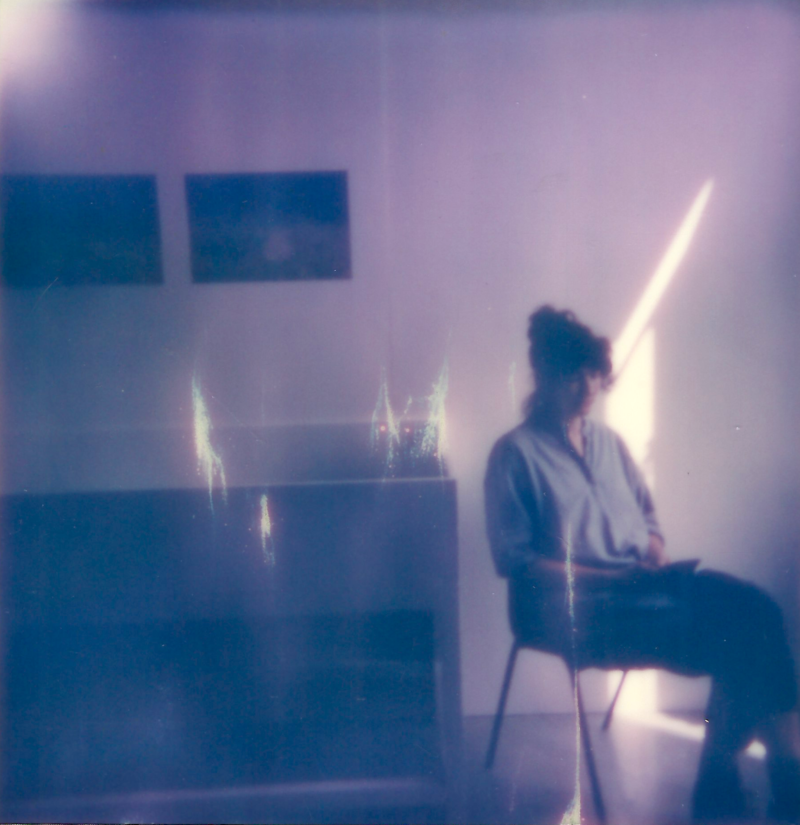
We take polaroids as some kind of proof that we did it: proof of the invisibility of our thoughts and actions and fears; proof of our willingness to surrender control, to submit to each other’s requests; proof that we have internalised our tasks turning words read into actions enacted, if imperceptibly.
Or just proof that in a given place at a given time, some of us were here.