In the moment that you’re in
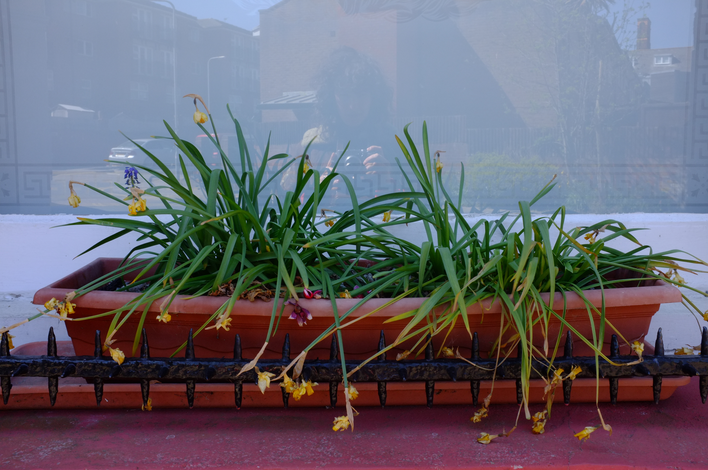
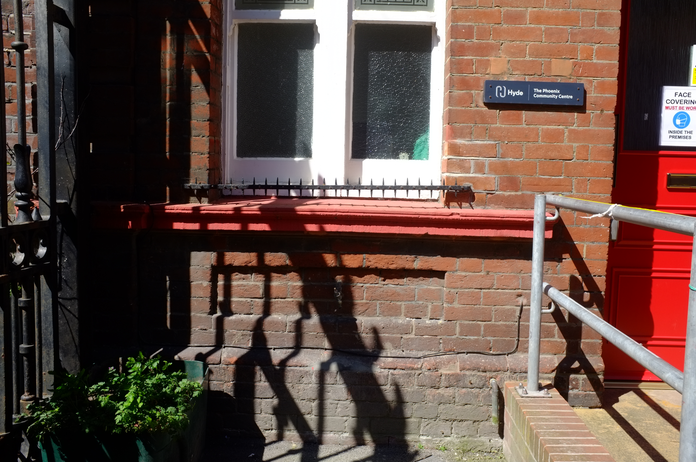
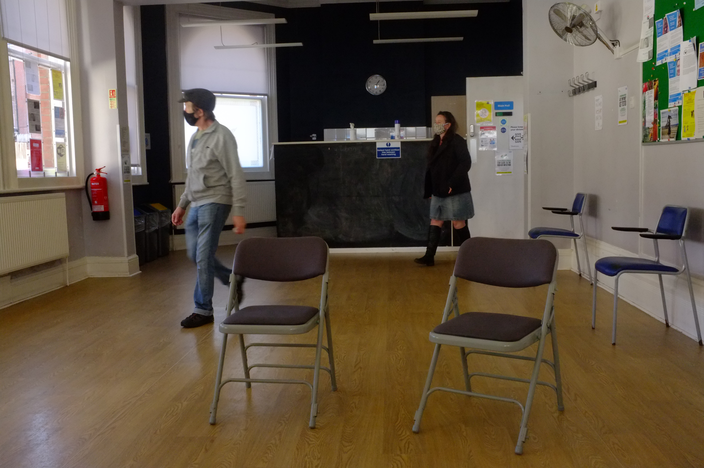
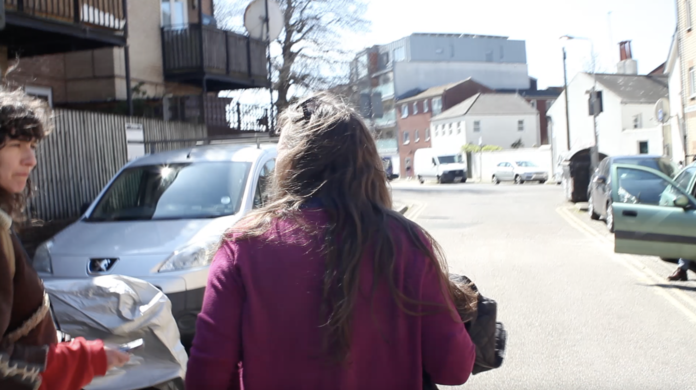
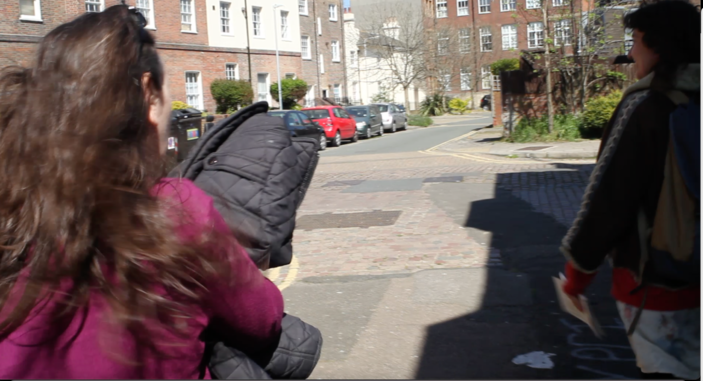
We return to the Phoenix Community Centre, a red-brick Victorian building in Brighton that held the food hub set up during the first Covid lockdown in England. I arrive early, so spend half an hour circling, noting the windowsill plant pots of narcissi or maybe grape hyacinth going over, filming the pavement, photographing weeds. I peer in through the windows, getting right up close to avoid the reflections on the glass; the space is empty. The last time I saw it, in one of the 2 Metre Conversations films by Katy Beinart and John Edwards, the room was filled with shopping bags and crates filled with food and people bustling in and out of the building as a conversation took place in the foreground.
It was a moment in time.
It’s funny to be back here… a year later.
You’ve gotta laugh.
Everyone we spoke to seemed quite willing to talk about their experiences and were quite open about them.
I’ve got to have a more involved relationship with the people on the estate since this experience.
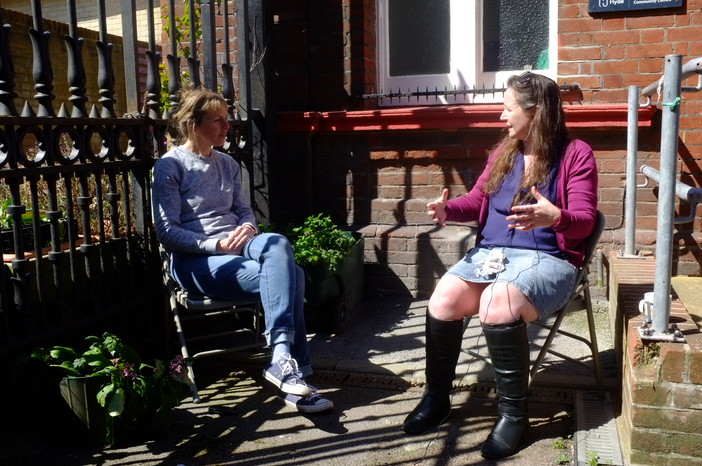
In 2 Metre Conversations the space between interlocutors plays a key part in each frame. In one of the conversations that took place outside the Phoenix Community Centre two people are sat on chairs set apart from each other below a frosted window with a spiky security rail beneath it, a post-box red door in one corner of the frame. The wind agitates throughout. Today the sun is streaming in through the iron railings to your right, casting lines of shadow across the brick walls and tarmac. The wind still agitates.
We haven’t done this before; you’ve done this before.
I remember the chairs from the film, they’re rickety and characterful, a dark wood with round seats and rounded backs. I wish we could find the same ones again but they’re no longer here, so we use plastic fold-up chairs in their place. I know that I’m allotting those chairs too much significance.
It was really quick… accidental, and quite lucky that we came up with that as a format.
Let’s document this moment in time.
You were crucial because you were in it, but you also brought these other people into it.
It was a moment in time.
I wanted to have a lack of an agenda other than what we were experiencing at this moment in time and where we lived.
We should just get started.
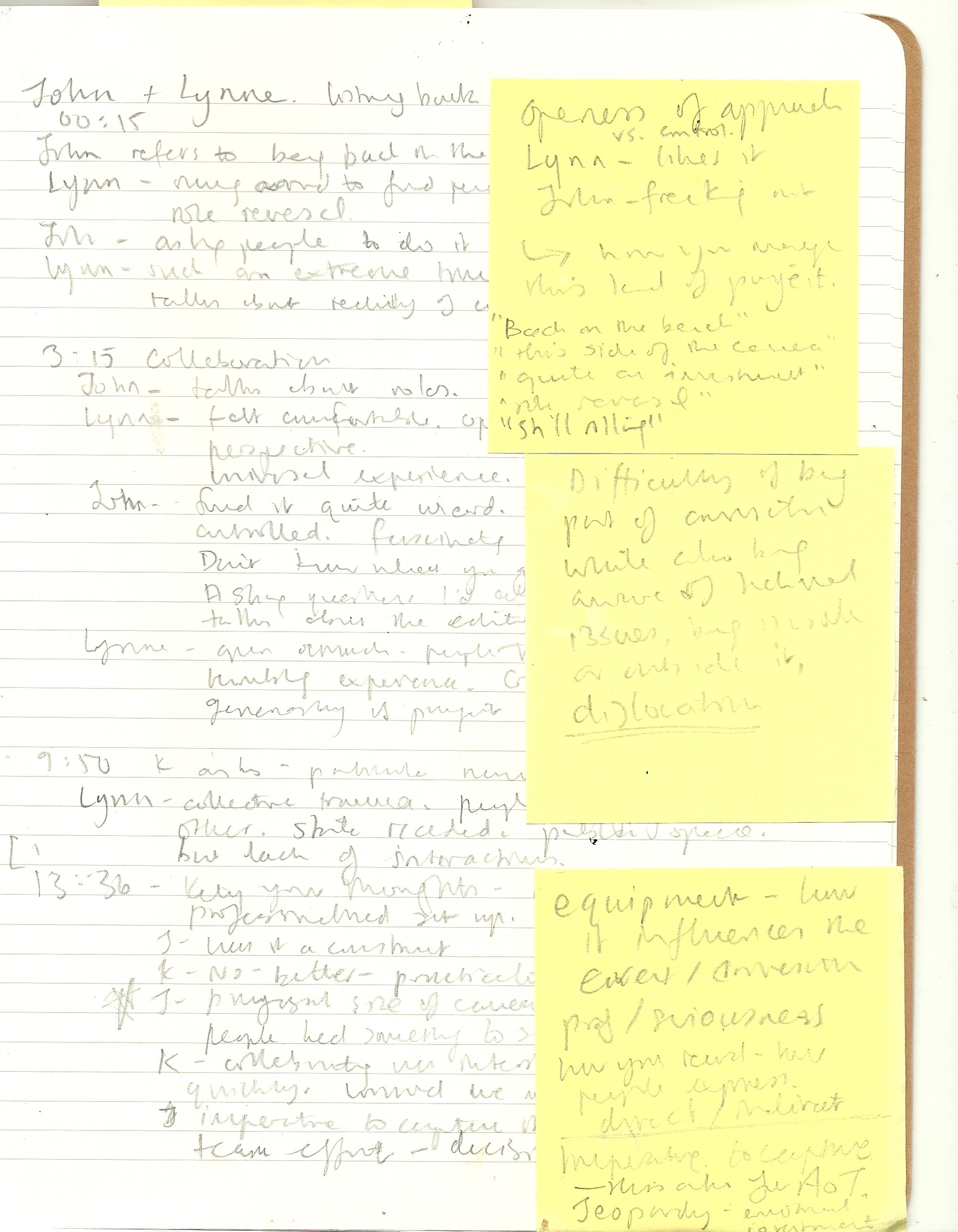
You set up the camera and run to your seat. Today you are both artist and participant, making sure the tech is working while also trying to follow a train of thought, to keep the conversation going. You’re simultaneously inside and outside of things, a feeling you later describe as a dislocation.
I am tentative, unsure of how to hold my body, how to use my voice, unsure, in short, of my role in all this.
If I thought about it too much… I might have come with my own agenda.
It’s interesting because it’s unintentionally political. I didn’t set out to make a political film.
Life is politics.
The alarm system is being tested; it keeps going off, so the conversation pauses frequently. Phrases get repeated. Nearby someone is hammering. Nearby sirens pass. Somewhere, seagulls squark.
My thoughts splinter, becoming vague as I sense a pressure to marshal.
We’ve only just started and we’re going off-topic and I don’t know how to steer us back. But we’re just warming up, relaxing into it. Even so, we’ve lost focus; what if we don’t find it? In any case, I can’t remember what the focus of all this is. What are we returning to again?
Which moment in time?
A dislocation.
I scan my list of questions, grasping for a way to guide things from afar, to arrive at a place where we’re inside the moment of the artwork together, thinking about what it felt like to be part of that. But already this list feels redundant. Because, for this community, that moment was too caught up in the adrenaline rush of survival. While for you it all happened so fast as you shuffled between being artist, interviewer, and editor.
I was trying to carry too many things in my head: I was trying to carry the conversation, how the film would look, the different people I was talking to.
It was a moment in time.
Should we move on?
It was hard to remember everything.
Making that work became caught up in that moment.
I was just focused on who I was being.
You're just thinking about the flow of the conversation… and where it is.
Because, for this community, that moment was too caught up in the adrenaline rush of survival. While for you it all happened so fast as you shuffled between being artist, interviewer and editor.
It was a moment in time.
The conversation about the conversation.
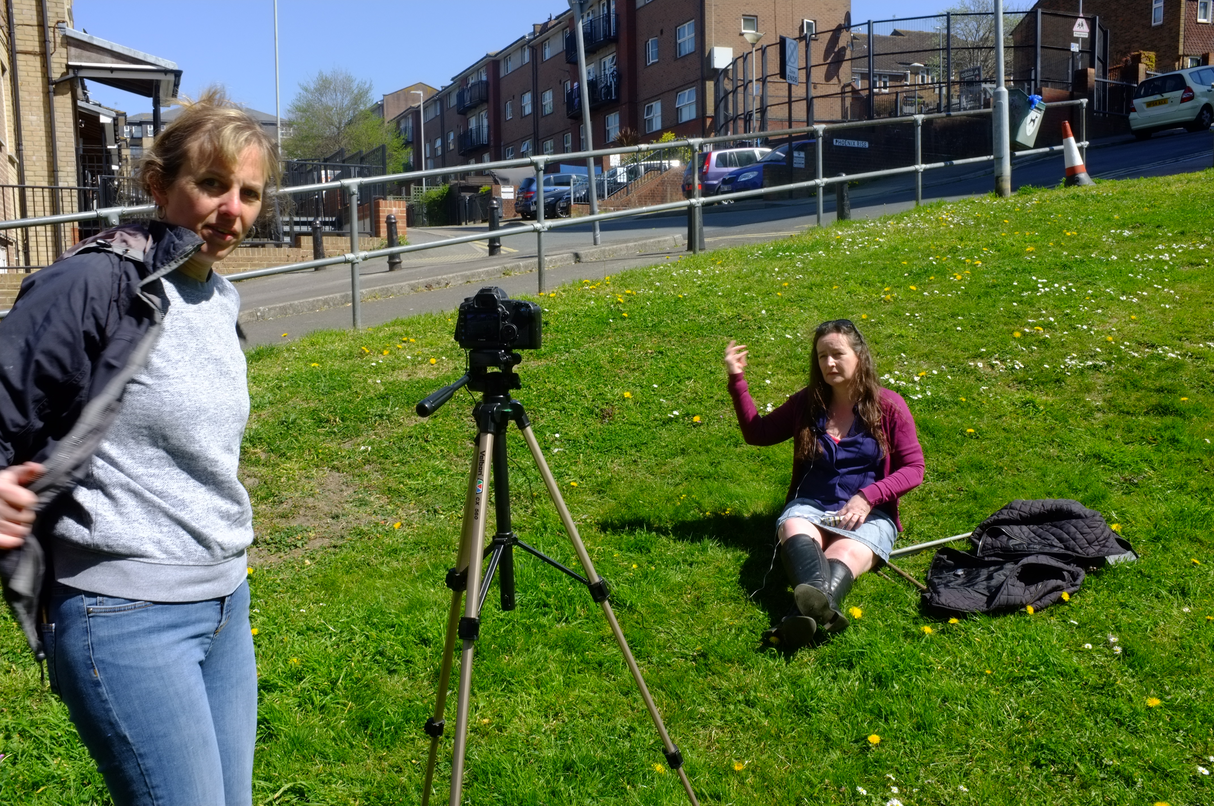
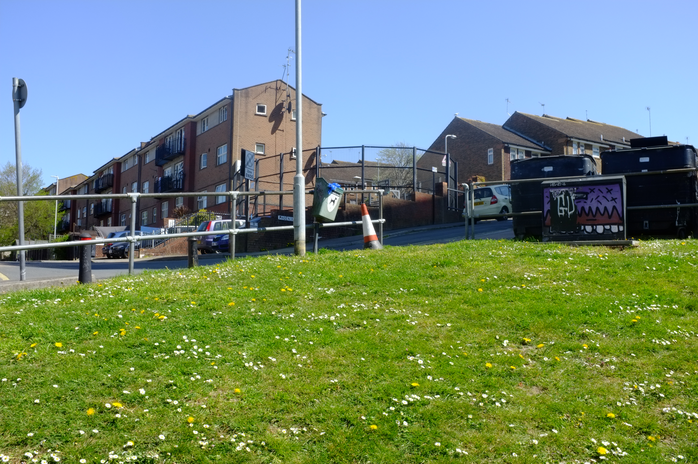
We’ve only just started and I’m thinking about how all of this will end, how it’ll all come together. We move together, around the corner, stopping at a sloped grass verge specked with daisies and dandelions. You sit, apart again, going back over the day: who you spoke to, what you were doing, how you were feeling, what you were thinking, how it went. And the conversation drifts once again to Covid and managing lockdowns physically and psychologically and sending out art-packs and food prices, and going from running a food hub to running a social supermarket, and Labour and austerity and you are weary.
I’d just like to ask….
I remember the view and the frame and the day and what the weather was like and what I was wearing and the feelings I had.
How did you feel on the day of filming?
Proud. I was really proud we were being filmed and I was really pleased that people’s experiences were being documented in an artistic way. It was really nice to encourage other people from the estate to get involved.
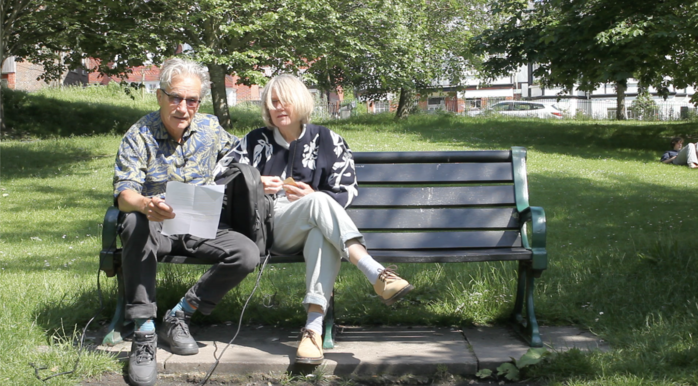
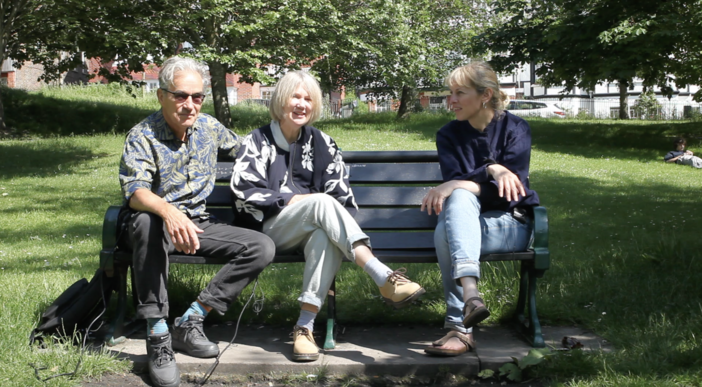
This time I’m not there, I’m watching here, now, while you are there, then. And this time you’re all in front of the camera together on a bench thinking back to when you were sometimes in front but more often behind the lens. Even now you get the sense that minds are drifting as you ask Do you need to check whether we’re still rolling? And you discuss equipment and the effect that the size of the kit has on your participants and the amount of planning that should go into these things. You want control: a schedule, an extended set-up, a shot list. Whereas you want to leave things open, to be light and flexible enough to respond to the moment. There is a polite push and pull at play between you still. One of you foregrounds the conversation and where that might take you, the other, the situation and how that might be captured visually.
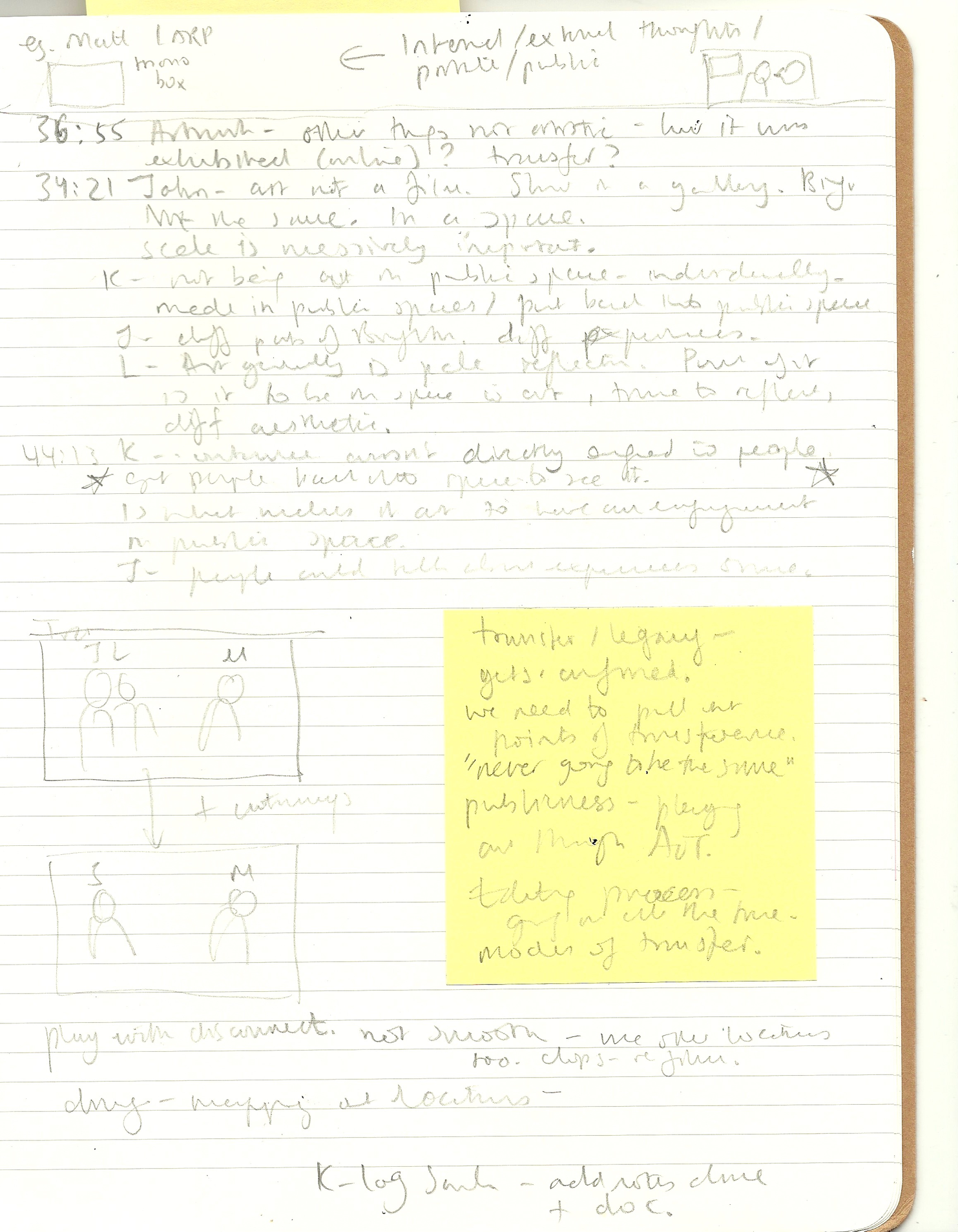
We keep coming back to this. Each time we feel our way through, doing things differently next time. We plan and just let things run, we initiate and try to anticipate, knowing that we don’t really know what we’re looking for. Our roles as artists, writers, participants, collaborators, audiences, critics, intermingle and unravel and we ask ourselves whether this is evidence of a thing that happened or the thing itself, whether it’s about the then and there or the now and here. And we’re never quite sure and we never quite touch down.
Back on the bench.
This side of the camera.
Role reversal.
Trying to find people who would sit where I’m sitting now.
Realising it’s quite an investment for people.
How very extreme that moment was.
Is it meaningful in the context of the film?
Being in the moment that you’re in.
And then we could do that in different places.
Finding a mutual understanding.
Original Artwork:
Title: 2 Metre Conversations
Artist: Katy Beinart and John Edwards (with support from Lynn Hanna)
Participants: Various inc. Sarah McCarthy
Location: Brighton
Date: 2020
Acts of Transfer Return:
Title: In the moment that you’re in
Artists/Participants: Katy Beinart, John Edwards, Lynn Hanna and Sarah McCarthy
Location: Brighton
Date: 2021