3.1 Deviations and Queer Orientation
Micro-resistances often begin not with dramatic refusals but with turns; small deviations from the behavioural and material lines that organise the ward. Where the previous chapters showed how institutional materialities choreograph posture, movement, and bodily alignment, this chapter attends to the moments when patients deviate from those alignments, bending institutional lines into “oblique uses” (Ahmed, 2006) and alternative modes of relation. To deviate, then, is to refrain from reproducing the institutional trajectory that has already been laid down. Within the ward, such deviations appear in the smallest gestures: using objects differently, bending rules, or turning toward others in ways that reject the isolating logic of risk. These gestures may be fleeting, but they perform what Ahmed terms “a queer angle,” an orientation that skews the expected line of use, behaviour, or relation (2006: 20–21). These deviations are both spatial and relational; they are what allow patients to momentarily reshape the ward’s material and affective environment.
This approach aligns with Jean Oury’s assertion at La Borde that institutional spaces are never fixed but continually shaped by the movements and moods of those within them—a process he and Guattari understood through pathoplasty, which, as discussed in the literature review, is the mutual modification of institution and subject. Deviation here is not a heroic refusal but a micro-adjustment, a minor gesture that subtly modifies institutional form.
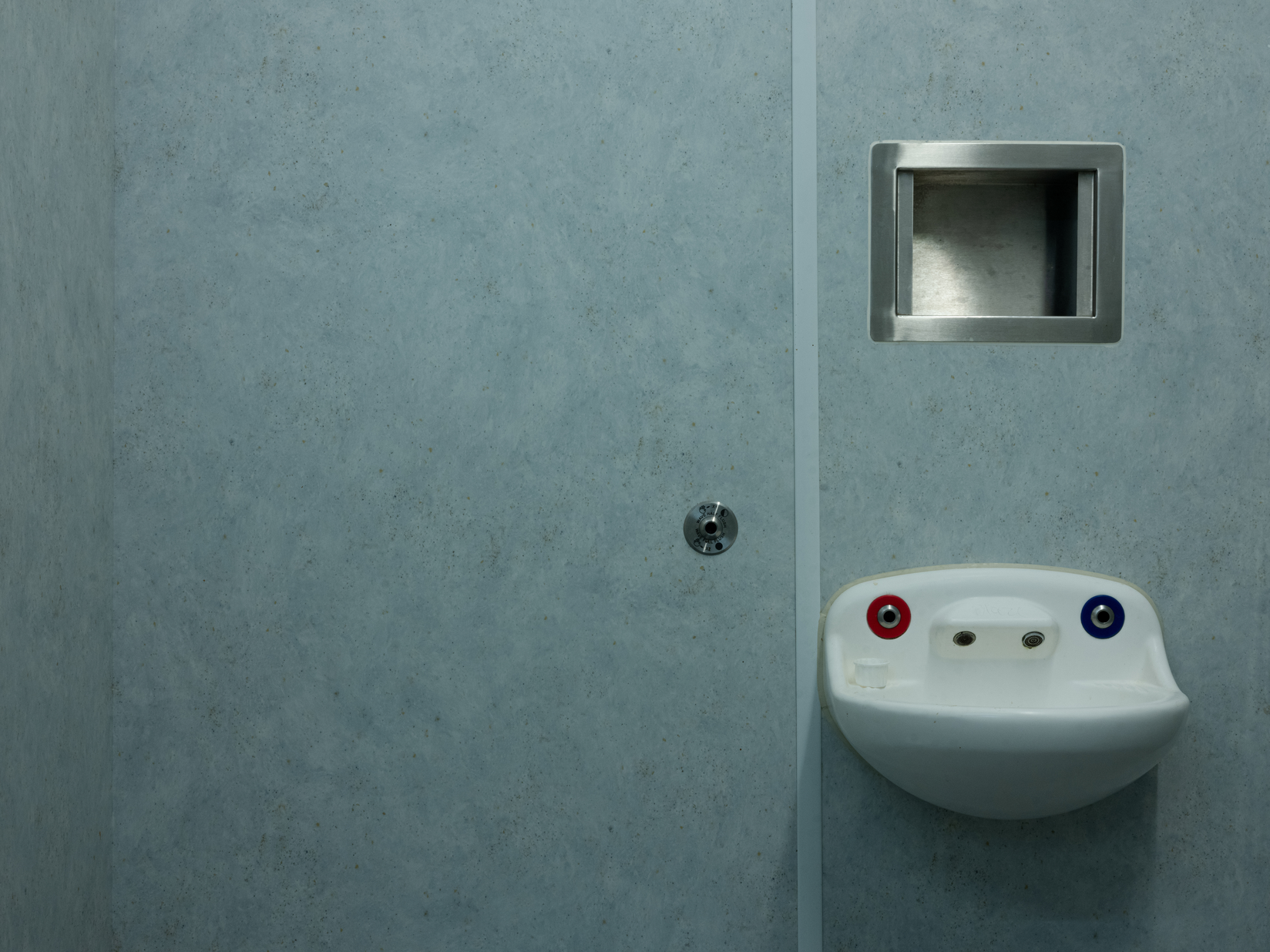
One way these deviations appear is through the oblique use of objects. Ahmed argues that to “use things differently” is to disturb the line that intended their purpose, generating an orientation that is “at a slant” to normative arrangements (2006: 122). In the ward, this is visible when participants use spaces and objects in ways that diverge from the institutional script. Patients described dragging heavy, supposedly immovable chairs toward windows to feel airflow; placing themselves on the floor or under a desk to avoid the visibility of the ward; or finding humour and ridicule in the quotidian objects turned institutional. Such gestures challenge the assumption that institutional furniture is inert. Instead, these objects become participants in reorientation, enabling sensory, spatial, or affective break. These oblique uses constitute everyday deviations from the straight line of institutional intent.
Deviation also emerged in the form of procedural transgressions. Kit articulated this with striking clarity: “I have to break a rule, otherwise I don’t feel like I have any agency in here. If I follow everything, I’m just in their system” (2023). These acts were not about rebellion but about maintaining subjecthood in an environment that otherwise reduces the person to a position of passive compliance. Kit described deliberately smashing a mug: “making a noise, making a mess in a place where everything’s controlled and clean” (2023). Through this small, deliberate mess, they produced a rupture in the ward’s surface—an interruption that they had authored. Goffman’s looping effect would depict such actions being read by staff as symptomatic although for the individual they operate as assertions of agency. They make the space briefly unpredictable, refusing the seamless continuity of institutional order.
Other deviations were relational. The ward frequently discourages patient-to-patient intimacy, interpreting spontaneous sociability as risky, distracting, or destabilising. Yet participants recalled moments of connection—laughter, shared glances, mutual consolation—that were reprimanded by staff. Cris noted being told off for making “too close friends with people on the ward,” (2023). While Clara described being scrutinised for giggling when a friend came to visit: “I remember that being logged in my discharge plan as a potential other personality” (2023). These interactions appear innocuous, yet they trouble the ward’s insistence on individualised, supervised, and predictable behaviour. In each instance, the patient’s orientation turns toward another person rather than toward institutional authority. Ahmed writes that queer orientation involves “a willingness to inhabit the world in a way that does not follow the straight line” (2006: 67). In these ward encounters, moments of connection constitute precisely such a queer turn, not in terms of sexuality, but in terms of relational directionality. They redirect attention and care toward lateral relations rather than the vertical clinical hierarchy.
Another form of deviation emerged through humour: an affective reorientation that allowed participants to soften, ridicule, or estrange the institutional objects that surrounded them. Cris described noticing that certain objects on the ward were simply “funny,” and that finding humour in them served as “a way out of the reality of the space” (2023). This comic distancing does not trivialise the environment; rather, it reframes it. To attach “human qualities” to an inanimate object, as Cris put it, is to disarm and “soften” its institutional severity, to make it momentarily available to another interpretative frame. Here humour functions as a minor disorientation: an affective turn that redirects perception away from the object’s designed function and toward its absurdity. This resonates with Ahmed’s observation that queer orientations often involve “looking awry” (2006: 69); perceiving objects at an angle that unsettles their normative use and reveals their strangeness. The institutional object-world is momentarily reshaped because patients refuse to encounter it on its intended terms.
Cris offered vivid examples. A high window in the second ward became both a vantage point and a comic scene: she would climb onto the sofa to sit on the sill and look out, only to find the courtyard littered with “detritus” thrown out by another patient—cushions, clothes, and personal items scattered below in what became a permanently evolving installation of disorder. The absurdity of this repetitive act—the patient who “just threw all his belongings out of the window… not in an aggressive way, just weirdly attracted to doing it”—created a visual tableau that undermined the ward’s attempt at maintaining order. Similarly, objects intended for risk management became unintentionally humorous: the “shit computer in a box”, the keyboard made entirely from metal “like some space age sort of contraption”, the television housed within a thick reflective casing making it impossible to watch. These examples highlight how attempts to rationalise the environment through safety design often produce objects that appear awkward, theatrical, or excessive. By finding humour in these objects, participants momentarily reoriented themselves away from the institutional logic that produced them.
This comic reorientation has a pathoplastic dimension. At La Borde, Oury emphasised that institutional conditions are shaped by the uses, gestures, and affects of those who encounter them. In Cris’s account, the ward’s objects do not remain as the institution intends; they become comedic, personified, or ludicrous. In doing so, patients subtly reshape the object-world, refusing its intended gravitas. Humour thus becomes a micro-resistance: a way to reclaim interpretive agency, to puncture the ward’s atmosphere of seriousness, and to generate small spaces of psychic distance. These moments demonstrate that deviation need not be oppositional; it can emerge through laughter, absurdity, and shared recognition of the strangeness of the institutional world.
Together, these gestures—oblique uses, rule-bending, relational turns—are micro-reorientations. They are the first movements through which the ward becomes pliable. They reveal the institution not only as a site of constraint but also as an environment whose materialities and relations can be bent, redirected, or briefly made otherwise. These deviations set the groundwork for the next section, which explores how such movements accumulate into temporary spatial constellations; thresholds of possibility where atmospheres shift, solidarities emerge, and the ward flickers into alternate forms of inhabitation.
3.2 Creating New Constellations
If deviations are the first movements that unsettle the institutional line, they often gather into something more spatially and relationally substantial. These materialise in small, improvised constellations through which patients inhabit the ward otherwise. These constellations are not alternative institutions, nor fully coherent forms of resistance, but temporary ways of arranging bodies, objects, and atmospheres into new patterns of relation. They reveal that the ward, despite its choreographed rigidity, contains unanticipated zones of potential: edges, corners, and thresholds where institutional intention weakens and other alignments can take hold.
Thresholds
As seen in Chapter 2, participants repeatedly gravitated toward the ward’s edges: window-ledges, smoking-area doorways, courtyard benches, or balcony railings. These were places where the institutional choreography loosened, where surveillance was less direct, or where air, light, and movement entered from outside. Bachelard writes that corners generate “refuges,” small architectures of retreat within larger structures (1969: 136). In the ward, these corners and thresholds functioned not only as places of withdrawal but as contact zones; spaces in which participants could observe, gather, or reorient themselves in ways that resisted the pressure of the central ward environment. Cris uses the balcony as an observational threshold, watching new arrivals being escorted in: “You’d see people come in, usually with staff on either side, looking scared or confused… it was this strange place to be, watching them before they became part of the ward world” (2023). Positioned here, they are both inside and outside the ward’s social order, momentarily stepping out of their own patient role. Jules described continually positioning herself to sit near an open window, simply to feel air on her skin: the movement of air, however slight, became a recalibration of the ward’s sensory field. Such gestures reveal how patients remake atmosphere in miniature, creating micro-climates within the otherwise air-conditioned flatness of institutional space.
During the workshop, one participant described constructing a bed under the desk in her room each night, arranging cushions into a contained space that she then modelled in clay. Institutional beds, she explained, triggered memories of past trauma, so sleeping under the desk became a strategy of safety: almost like creating a fort. Goffman identifies these improvisations as “secondary adjustments,” the small, unofficial reconfigurations that enable individuals in total institutions to “obtain forbidden satisfactions or achieve a certain autonomy of action” (1961: 189). They are not revolts but covert spatial tactics: “areas of self-determination… protected from the demands of the institution” (1961: 191). The under-desk bed is precisely such an adjustment. It does not resist the ward directly; rather, it reorients it obliquely, carving a private topology of rest and protection within the surveilled architecture of the room. Through this improvised nest, the participant reshaped the ward’s material order to accommodate her own embodied needs, producing, however quietly, a different constellation of dwelling within an institutional space.
Temporary connectivity
The smoking area was often described as “a bus stop”: “people would pass through — patients, staff, sometimes visitors… you weren’t going anywhere, but you felt part of something moving past” (Eleanor, 2023). These liminal spaces produced brief, circulating forms of sociality that did not follow the ward’s prescriptive patterns of interaction. In these moments, the ward’s internal segmentation softened; participants found themselves caught in fragments of conversation, sharing lighters, commenting on the weather, or simply standing side by side. These constellations were fragile and provisional, but they opened a different orientation: one in which sociality did not require institutional permission, nor unfold according to the rigid scripts of care plans or one-to-one observations.
Objects as Allies
Objects frequently played an active role in enabling these constellations. The chair dragged to the window became a collaborator in atmospheric recalibration. A ligature-safe curtain, designed to eliminate risk, became a sensory device, fluttering in a breeze that momentarily unsettled the ward’s controlled environment (Jules, 2023). Rather than possessing inherent agency, these objects matter because they are present beside the body, available to be leaned against, held, moved, or gathered. Sedgwick notes that attention to what sits next to us, the textures and surfaces that accompany our movements, can disclose “small resources of hope, to assemble and reassemble” (2003: 150). These oblique uses of objects compose modest yet meaningful arrangements of adjacency: moments of release that develop not through transformation but through what, and who, is held close. (References to ANT / vibrant matter should be reintroduced here)
Across these examples, what emerges is a picture of the ward as a constellation of shifting alignments rather than a monolithic architecture of control. Through oblique uses of objects, atmospheric recalibrations, and small forms of social gathering, patients assemble new spatial and relational configurations. These constellations do not dismantle the institution, but they make visible its malleability with brief reorientations and reconfigurations of beside-ness that open, however briefly, a different mode of inhabiting the clinic. If Chapter 1 showed how risk scripts space and Chapter 2 traced how bodies are choreographed by material arrangements, this chapter demonstrates how patients resist and re-script these forces. Objects are bent, reconfigured, and made companionable, even when designed to be resistant. These practices suggest that the clinic is never wholly static; it flickers into other forms of inhabitation and relation, however briefly, through the constellations people build beside one another and beside the things that surround them.
3.3 Collective Reorientations
Counter-Loops: Mutual Attunement Against Institutional Response
This section explores how constellations between bodies, objects, and atmospheres become collective. These are moments in which patients generate shared spatial knowledge. This is not necessarily an organised resistance, but mutual acts of attunement that hold the ward in a different tempo. They disrupt what Goffman calls the “looping effects” of institutional response, where expressions of distress or frustration become read as further evidence of pathology and thus invite heightened control (Goffman, 1961: 38). Instead, they produce what might be called counter-loops: small circuits of care, recognition, or humour that refuse the institution’s interpretive capture.
One of the clearest instances appeared in participants’ accounts of collective listening, when patients gathered around a phone playing quiet music in the lounge. Morgan noted that “everyone would just kind of… be there… for a bit it felt like we weren’t in there.” The emphasis here is not on escape but on temporal recalibration. As Böhme notes, atmospheres are not mere backdrops but “spaces of affective involvement” (1993: 114). The group’s attention to the music became a mode of attunement to one another, a momentary refusal of the ward’s sensory dominance. Cris described a moment when everyone paused to watch a bird that had landed in the courtyard: “everyone stopped, even the staff, just for a minute, watching it.” The bird became a focal point around which a collective formed, a suspension of risk calculus in favour of shared attention.
Rather than being sanctioned by staff or formalised as therapy, these small constellations operate at the edges of permission, occupying what La Borde practitioners would recognise as the interval, a pocket of relational time that interrupts procedural sequence.
Humour and Shared Reframing
Humour similarly generated shared realignments. As discussed earlier, participants found absurdity in institutional objects. Humour became a common language: a way of naming the strangeness of psychiatric material culture without confronting it directly. When several patients laughed together the ward’s script was momentarily diverted. These acts exemplify what Oury once called “micro-politics of the everyday,” the tiny relational shifts that make institutions more porous (Oury, 1997: 24) without formally challenging their structure.
Clay Workshop: Collective Testimony
These collective reorientations were most explicitly cultivated during the clay workshop, which provided a structured space for shared articulation of ward experience. Participants repeatedly described the workshop as a rare environment in which ambivalence could be expressed without judgment. Kit noted that the experience of containment on the ward was “both beneficial and detrimental,” an admission she felt was “hard to talk about to people who’ve not been in those spaces, which is why I was, I was so touched when it came up in our discussion during the workshop and the validation people felt from hearing others expressing that” (Kit, 2023). Clay functioned here as a mediating object, enabling a sense of collectivity through shared experiences. During the workshop, participants used clay not simply to represent ward objects but to rework them: constructing beds under desks, vessels with sealed cavities, surfaces with spikes, or protective shells. Some of these forms became material translations of lived adjustments allowed participants to inhabit institutional space otherwise. The act of making collectively also created what Sedgwick terms “transformative adjacency” (2003: 26): not shared identity, but shared presence in the act of shaping matter. Participants sat beside one another, handling clay, and narrating memories of ward objects; in doing so, they formed a temporary commons of testimony. The clay objects were less finished artefacts than anchors for speech, enabling forms of description and disclosure that interview alone did not produce.
Sideways Sociality
Crucially, these collective practices were not outside the institution; they were within and beside it, flickering in and out of its temporal grid. They did not directly oppose risk management, surveillance, or routine; instead, they folded around these structures, occupying small gaps where institutional intention had not fully saturated the field. Sedgwick insists that reparative practice is not naive but “additive and accretive,” building with “small scraps, small moments of hope” to generate new worlds (2003: 150). In Oury’s terms, these are the “real encounters” that allow patients and staff to momentarily step out of fixed roles and into a shared field of attention.
Across the research, what emerges is a relational ethic built from sideways orientation. Rather than escaping the ward or reforming it wholesale, participants generated fragile but meaningful repertoires of connection: being near, being with, being beside. Such collective reorientations do not dismantle institutional choreography, but they redraw its contours from within, producing fleeting yet powerful micro-communities of attunement and care.