Birth of the clinic
When surveying the philosophical and theoretical landscape of psychiatric care, the discussion is often dominated by Michel Foucault’s historical analysis of madness and the role of architectural design in shaping bodily experience and behaviour. The spatial conditions of psychiatry have evolved alongside these ideological developments, leaving behind residues in the social and architectural structures of contemporary institutions. From psychiatrist Thomas Kirkbride’s 19th-century belief in the therapeutic value of light, air, and order—manifested in grand facades and expansive wings (Ramsden 2018)—to the panoptic architectures of surveillance (Foucault 1963) and the ‘total institution’ that isolates the ‘sick body’ from society (Goffman 1961), each model has shaped the material and social contours of care. The most recent shift has seen psychiatric units integrated into general hospitals, while Community Mental Health Centres have emerged as new nodes of treatment (Ramsden 2018). Since 2019, I have worked within these environments through Hospital Rooms, a charity that commissions artists to co-create artworks for mental health wards. This practice has offered insight into how historical residues persist in contemporary institutions—not only in visible features like locked doors, linoleum floors and observation panels, but in less tangible arrangements: the regulation of time, the choreography of movement, and the structuring of interpersonal relations.
In Discipline and Punish, Foucault’s concept of panopticism describes how discipline is enacted through enclosed, surveyed, and segmented spaces that serve to isolate and individualise those contained within them (Foucault 1991, 195–228). Similarly, in The Birth of the Clinic (1963), he explores how the hospital’s architecture facilitates the development of the clinical gaze, transforming the patient’s body into an object of observation, analysis, and intervention. This shift foregrounds objective, observable symptoms over the patient’s subjective experience of illness (Foucault 1973). Erving Goffman expands this critique through his concept of the ‘total institution’, where closed environments regulate daily life through rigid routines and hierarchies. While these settings exert social control, Goffman also points to the micro-resistances individuals develop to navigate or subvert them (Goffman 1961).
These ideas remain crucial, not as static diagnoses of institutional life, but as lenses through which to perceive how containment, risk and care continue to co-exist within clinical life. This project engages with these critiques while also seeking to move beyond them—to understand the institution not solely as a disciplinary apparatus, but as a site of material, embodied, and affective encounter. In this reorientation, the legacy of Institutional Psychotherapy offers a vital resource: not only in its critique of the institution, but in its proposition of care as something negotiated within its everyday environments.
La Borde and Institutional Psychotherapy
The complex conditions shaping the clinical encounter were central to the work of Jean Oury and Félix Guattari at La Borde, an experimental psychiatric clinic founded in 1953. Rooted in the political and psychoanalytic traditions of postwar France, La Borde emerged from the movement of Institutional Psychotherapy—a form of practice that focused not only on treating individuals but on transforming the institutional structures around them. For Oury and Guattari, the hospital was itself a pathological entity, a place whose norms and hierarchies could worsen the conditions it sought to treat.
They saw the hospital as a microcosm of society and, as Oury observed, “the hospital itself is ill” (Oury 2004). In response, Institutional Psychotherapy sought to subvert and reappropriate the clinical gaze, shifting focus away from the patient body and instead examining the institution itself—its structures, hierarchies and material conditions. Oury referred to this dynamic configuration as the “architectonic”, a constantly shifting network of roles, relations and functions that shaped the clinic as a heterogeneous space (Oury, 2004). As he argued,
“There is an accumulation of regulation that needs to be treated – the hospital requires treatment in order to treat. […] It is not simply a question of suppressing this or that, but of slowly infiltrating suppressive models, of softly subverting” (Faramelli 2023, 36).
At La Borde, this was enacted through a continual reconfiguration of spatial and social relations, ensuring that therapeutic encounters could take place throughout the clinic rather than being confined to designated spaces or rigid hierarchies. This reflexive and experimental approach distinguished La Borde from other “anti-psychiatry” movements of the time, which often focused outwardly on systems of oppression without necessarily considering how the institution itself might be transformed from within, made malleable and open to collective reconfiguration. Oury believed that psychiatric institutions could themselves become pathogenic, adversely affecting both patients and staff. He argued that treating patients without addressing the institution’s dysfunction was ineffective, encapsulated in his assertion: "To treat the ill without treating the hospital is madness!" (Oury 2004).
Oury and Guattari sought to establish a radically new relationship with the hospital itself—one that was neither closed nor static but remained in constant transformation. The treatment of the hospital was not simply a matter of altering its physical structure but of constructing a resistant space, one that actively reshaped the conditions facilitating sociality. As Faramelli (2023, 40) explains, this required “something that puts an architectonic of relations into place, of different roles, different functions and different people. It’s a question of being able to locate the site within which something happens and what happens.” In a recent interview Elodie Belmar (2025), who currently works at La Borde, remarked that Oury’s practice to determine care pathways was to consistently ask, “What is the constellation around this patient?”. In this sense, the hospital was not a fixed entity but a dynamic and contested space, one that had to be continually reconfigured to resist institutional rigidity and open new possibilities for collective life.
Pathoplasty as Praxis (Caring as Constellation)
La Borde was deemed a “site of crystallisation, a praxical site” (Robcis 2021, 79), where theory and practice mutually reinforced one another. Among its most generative concepts is pathoplasty, which refers to how mental illness is shaped in relation to the institutional and material environment (Pereira and Caló 2017). Following this logic, Guattari and Oury were able to think about how the hospital context could be linked to certain symptoms, distinguishing them from a patient’s primary pathology or diagnosis.
In psychiatric practice, this would often be seen as a symptom of their diagnosis and not attributed to external factors. Within this thesis, however, it is important to foreground a relational understanding of these experiences—where symptoms and spaces are interdependent rather than easily separable into ‘internal’ and ‘external’ factors. Pathoplasty challenges the notion of symptoms as self-contained or purely endogenous; instead, it emphasises how environmental constraints, spatial configurations, and social dynamics can co-produce what is clinically observed. Guattari and Oury drew on this logic to distinguish between primary pathology and what might be better understood as situational or institutionally induced symptoms. For instance, an environment in which a patient has no autonomy over their daily life can lead to a patient’s disinvestment in their own life (Pereira and Caló 2017).
Within this research, pathoplasty is not only a historical concept but a methodological orientation—one that foregrounds relationality between space, body, and practice. It demands we ask: what is being produced by the clinic itself? Rather than framing the institution as a neutral container, pathoplasty highlights its active role in shaping subjectivity. This calls for a more nuanced view of psychiatric experience as mutually constituted by person and place.
Oury’s practice of acknowledging a patient’s constellation is particularly resonant in relation to my practice and research within contemporary NHS clinics. [Expand / say more] It infers a shift in focus away from the individual as an isolated diagnostic subject, and towards the wider network of spatial, social and institutional forces that produce clinical experience. This aligns with the central concern of pathoplasty: that symptoms may emerge not solely from within, but through interactions with the conditions of care. Thinking of the clinic as a constellation invites us to ask: how do we think relationally, and what does this reveal about the clinical encounter?
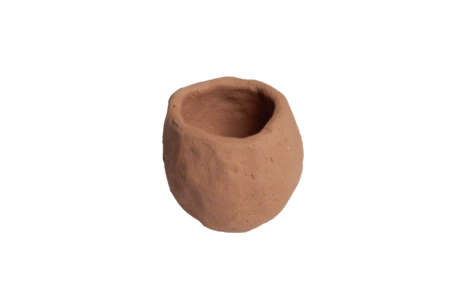
If the clinic can be understood as a constellation—shifting, situational, and shaped by relational dynamics—it also holds the potential to be malleable: to morph or reconfigure in response to its social and material composition. At La Borde, this principle animated the practice of Institutional Psychotherapy. But in the context of contemporary psychiatric care, this potential is often curtailed by institutional logics that prioritise risk management, routinisation, and containment. These systems work with the infrastructure to stabilise and harden the clinic, limiting the agency of the patient body and foreclosing the kinds of relational improvisation that might allow new constellations to emerge. Malleability, then, is not a given but a contested possibility—something that must be worked towards within and against the institution. During the clay workshop and subsequent conversations, participants spoke of how the only way to regain a sense of self and agency was to deviate from the rules. This project attends to those moments where subtle resistances and disruptions reveal the clinic not as fixed, but as a space that can be reimagined through collective presence and relational re-attunement.
Pathoplasty in Practice
In contrast to the rigid spatial and temporal parameters of most psychiatric institutions—what Goffman (1961) critiques as regimes of enclosure and repetition—La Borde intentionally cultivated spatial and temporal heterogeneity. Two principles guided this: (i) a refusal of designated therapeutic zones, and (ii) a de-hierarchisation of labour. The first of these positioned every part of the clinic as a potential site of encounter. Guattari described how even the act of dispensing medication could take place in different spaces and configurations to avoid reinforcing passivity or spatial association (Pereira and Caló 2017, 5). La Borde embraced a liberty of circulation as a way of life, producing possibilities for real encounters that counteracted what Oury (2004) termed double alienation—both mental and social alienation—within the clinic. These encounters (did you see glimmers of this at all w participants?) were understood as spontaneous moments of recognition, negotiation, or care that could arise when patients and staff were not confined to static roles or spaces. However, this raises a tension around whether conditions can be deliberately constructed to enable spontaneity. What does it mean to design opportunities for 'real encounters'? There is an unresolved paradox here—of creating structures that aim to produce the unstructured.
The second principle involved The Grid—a rotating schedule of tasks open to all residents, including psychiatrists, who could sign up for different activities across a spectrum of ‘agreeability’. This model was born out of Guattari’s work on Transversality, which aimed at dismantling disciplinary categories and encouraging collective responsibility and therefore creating new kinds of relationships within the clinic. Despite its innovations, the model raises questions that require critical engagement.
While The Grid aimed to disrupt institutional hierarchies, it remained a structured system devised by Guattari and Oury, and in this sense was imposed rather than collectively designed. This raises questions about agency and to what extent residents were genuinely involved in shaping the system. (Interesting. Can you reflect on the relevance to your own project?)
The redistribution of tasks—where psychiatrists cleaned toilets and patients managed the switchboard (Pereira and Caló 2017)—sought to flatten hierarchies but also risked reproducing institutional expectations under the guise of collectivity. Therapeutic labour and institutional maintenance become blurred. When this was put to Elodie Belmar, they said that joining The Grid is a prerequisite for residents who knew when admitted that this was part of the way of life of the clinic. Having worked on participatory initiatives through Hospital Rooms, I’ve found that it is precisely when patients lead or co-devise projects that the most meaningful contributions emerge. Conversely, systems presented as participatory but structured in advance can obscure real asymmetries. [Unpack] Further critique lies in the exceptional nature of La Borde itself. As an experimental clinic housed in a château purchased by Oury in 1953, it was shaped from the outset by spatial and symbolic affordances that are not available to most psychiatric institutions and therefore complicates its transferability.
Though La Borde’s model is not easily replicable within contemporary psychiatric systems, its emphasis on the interplay between space, material conditions, and subjectivity offers a critical framework for rethinking institutional care. It invites us to consider how the design and systems of psychiatric environments shape lived experience—not just through ideology or policy, but through the everyday textures: walls, objects, and interactions.
Material conditions
Pathoplasty at La Borde was enacted primarily through the arrangement of social spaces, however the clinic’s physical infrastructure remained largely unchanged. Nicole Sonolet, a peer of Oury and Guattari in their research group CERFI (Centre d’études, de recherches et de formation institutionnelles), extended the notion of pathoplasty to the architectural design of psychiatric spaces. Sonolet sought to use design to condition environments, creating spaces that could modulate between different experiential states—“openness to the world or enclosure; stimulation or repose; warmth or coolness” (TenHoor 2022). Rejecting the carceral rigidity of traditional psychiatric institutions, her approach prioritised fluidity and sociality, moving away from a biomedical approach in design. Simple interventions, such as designing chairs that could be regrouped and rearranged, allowed for dynamic forms of socialisation. Today, institutional architecture often still encodes logics of control. As Ankele and Majerus (2020, 15) note, in psychiatric wards inpatients often navigate a “reduced world of things”, where control is exercised not only over their movements but also over what they are exposed to and what they are deprived of. Unlike in laboratory contexts, psychiatric care is always materially embedded, making scenography and infrastructure central to the clinical experience (Ankele 2018; Landsteiner 2020).
This project, drawing on Institutional Psychotherapy, attends to these spatial-material conditions not as background, but as co-constituents of the clinical encounter. Through interviews, choreographic-material exercises and creative workshops with clay, I examine how institutional space is experienced in and through the body. Working with participants to reflect on ward environments, the process offers a way to materialise affective experiences that often remain unspoken: the heaviness of a weighted chair, the cold neutrality of wipe-clean surfaces, the banality of repetition. Reorienting the pathological gaze away from the patient body and towards the institution is not an attempt to “use the master’s tools to dismantle the master’s house” (Lorde 1984), but rather a way of working from within—to stay with the contradictions of institutional space, and to identify points where its structures might still be made responsive.