
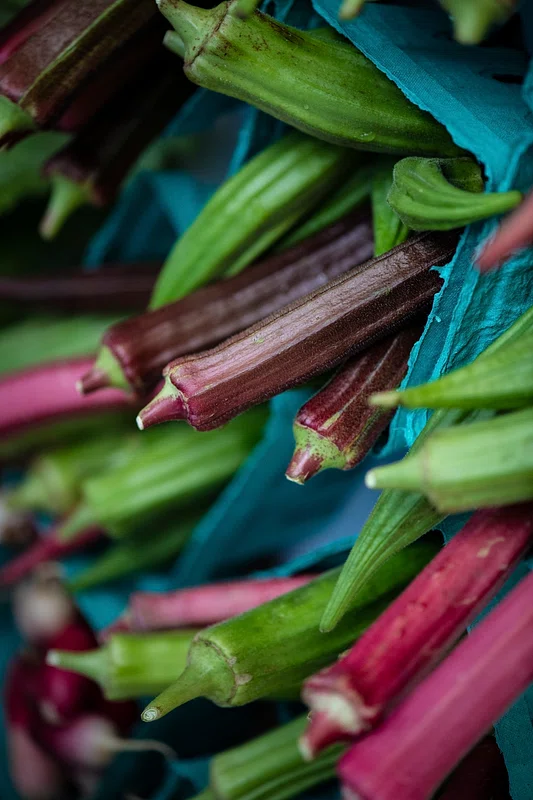
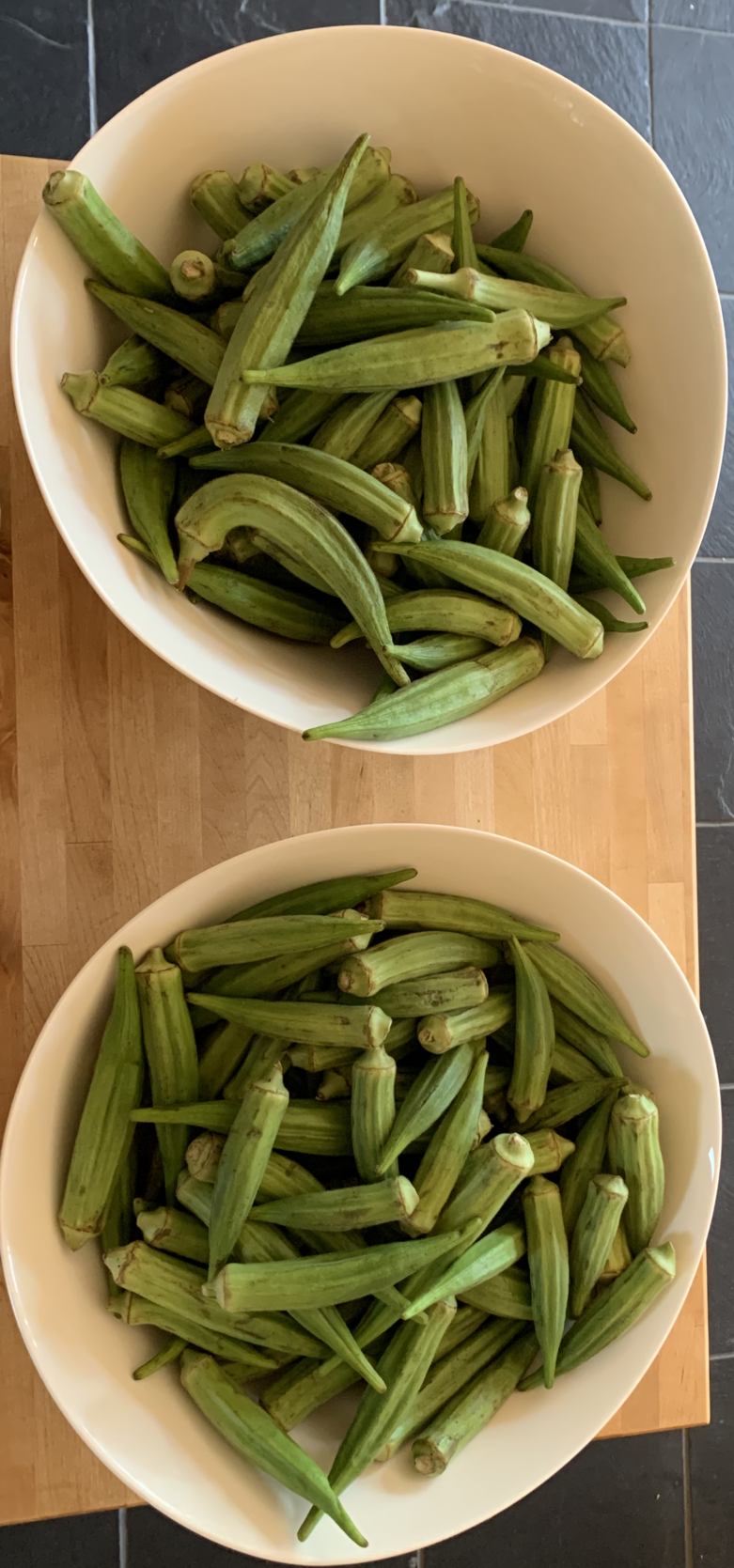
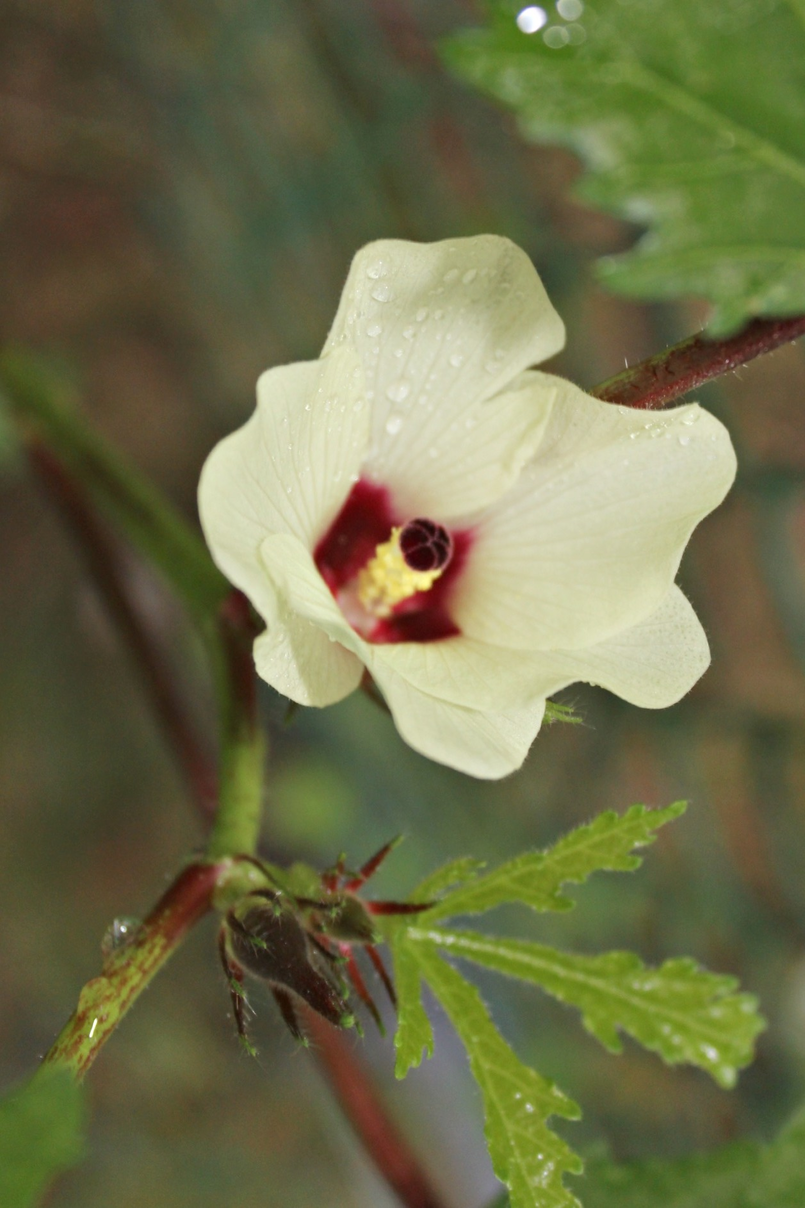
"Okra is slimy, spiny, sticky, and, no matter what color it takes on always relents in the heart of the cooking pot to a sad, military green. But okra is also the most gorgeous of mallows, with a flower that reminds you of the umbrella of a crinoline-laden belle on a summer afternoon. Okra is filling, fights "the sugar", and dances so well with tomatoes, onions, and corn that nobody remembers a time when the four did not carouse the kitchens of the Afro Atlantic world in search of a lusty steam and the heart of a hot chilli pepper looking to dance, too.
Okra is a globetrotter. A Svengali. A spy with no shame always wearing the disguise of its last appearance. Okra is Indian to the Chinese. Okra are feminine fingers of a Middle Eastern dowager to the Indian, and an Ethiopian treat to the Arabs before them. Yet okra calls Africa birthplace and home, and fried, boiled, stewed, or roasted it wears aliases that speak to its origin from gumbo to quiavo, fevi, and okro. Even now okra keeps telling stories from its adoption dream time, leading us into new foodscapes.
In the landscapes of plantation slavery in the New World, okra has crossed the color line. Okra becomes food for Creoles - those born in the islands in the shadow of the big house or on the strange crescent of settlement known as Brazil. And yet it is a vegetable - or maybe a fruit - with crossover power to define an American regional culture and its boundaries."
- Fragment of Michael W. Twitty's foreword in Chris Smith's book The Whole Okra.
In the article Yam, Roots, and Rot: Allegories of the Provision Grounds, DeLoughrey explores the Caribbean concept of Provision Grounds as sites of cultural resilience, identity, and ecological adaptation within the landscape of colonial oppression. DeLoughrey contextualizes Provision Grounds as essential counterpoints to plantation monoculture, serving not only as physical spaces for cultivating food but also as symbols of resistance and cultural continuity. The author uses the yam, a root with African origins, to symbolize the transplanted African cultures and traditions that took root in the Caribbean. Through these grounds, enslaved Africans developed sustainable practices and a unique form of agrarian resistance to colonial commodification, fostering community sustenance and a distinct social order.
Initially, Provision Grounds were small plots granted to enslaved people by plantation owners as a cost-saving measure, intended to reduce the expense of imported food. These grounds became essential to the survival of the enslaved community, who cultivated yams, cassava, and other indigenous and African crops. While the plantation represented rigid monoculture and hierarchy, provision grounds supported diversity, intercropping, and subsistence—practices rooted in African agricultural knowledge.
DeLoughrey also mentions how Provision Grounds became emblematic of African cultural persistence, allowing for the preservation and adaptation of African foodways and social structures within the Caribbean context. These grounds fostered what Sylvia Wynter describes as an alternative plot structure, where African-derived cultivation practices created a “folk culture” rooted in non-capitalist values. This space, removed from the plantation's economic logic, supported a culture centered on community, sustainability, and resistance to commodification.
Provision Grounds are framed as foundational to Caribbean identity and post-emancipation community-building. Beyond simply providing food, these spaces allowed enslaved and later freed communities to engage in a form of economic independence and cultural preservation. Édouard Glissant refers to this as a “language of landscape,” where the land itself becomes a medium of cultural expression and historical memory. DeLoughrey highlights that this grounding in the soil helped forge a diasporic consciousness that resisted the homogenizing forces of colonialism and remains influential in Caribbean literature and cultural practices.
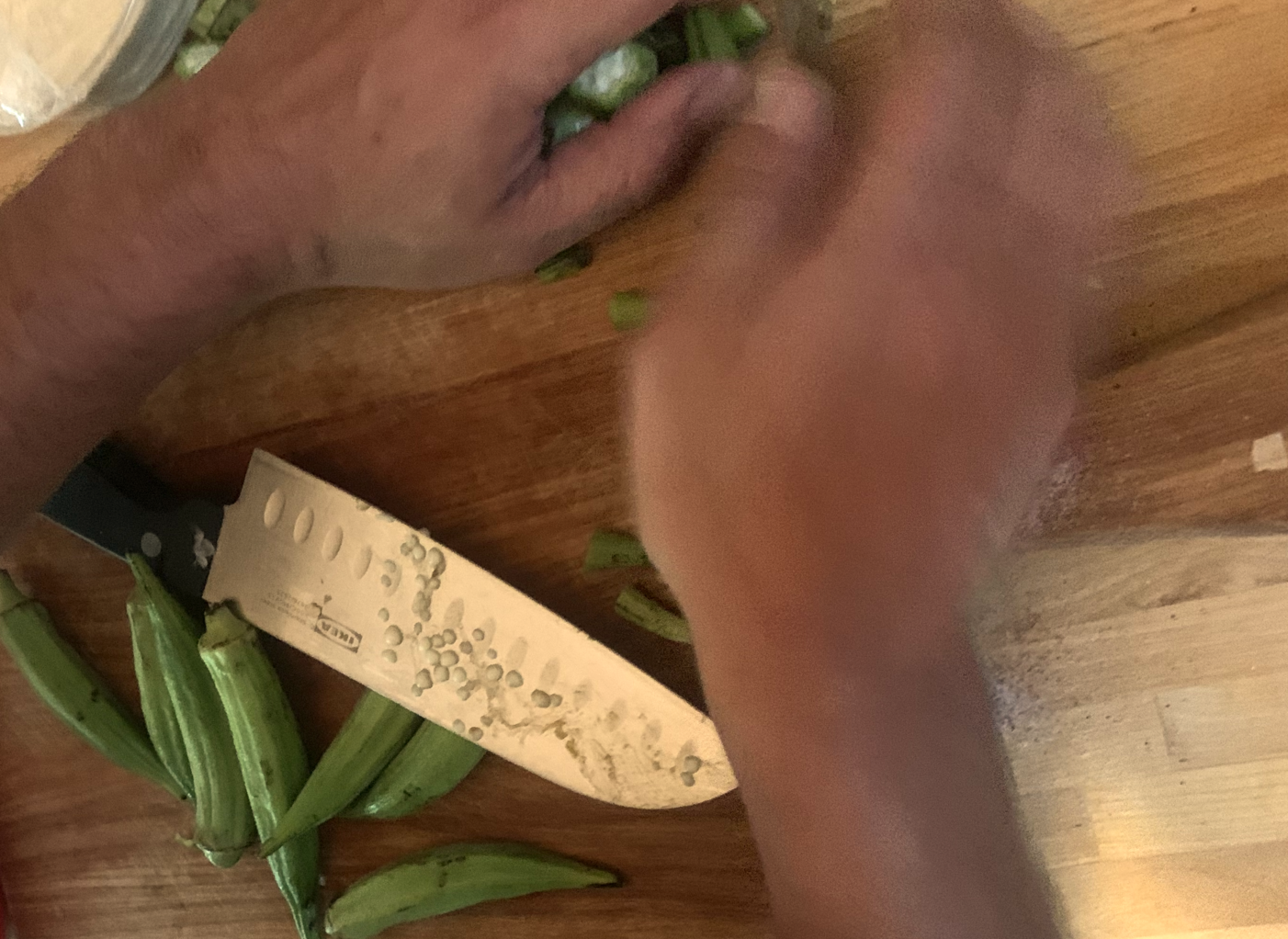
In Ground Provisions (2018), Stefano Harney and Tonika Sealy Thompson employ the term to denote an experimental, communal practice rooted in studying and reading aloud together.
The Dramaturgical Ecologies group came across this article in 2021 in the context of activities centered on sharing practices, including writings and work-in-progress performances.
For the authors of Ground Provisions, studying and reading together are practices positioned as an alternative to traditional academic or institutional approaches, emphasizing collective reflection, creation, and embodied knowledge. The authors described their own reading group, named Ground Provisions, as a “reading camp,” a gathering space where participants would engage in shared reading, art, and film to foster discussions and encounter each other’s "incompleteness".
The practices highlighted by the authors challenge the isolating tendencies of academic study, particularly the way universities treat reading as an outsourced, individual task. In contrast, the reading camp is described as a “refuge” where study becomes a shared experience. This communal reading practice, inspired by Black radical pedagogy, seeks to resist neoliberal frameworks by creating an “undercommons,” where knowledge production is collective, incomplete... .
From the articles we read together as part of the broader activities of the Dramaturgical Ecologies group, the term choreokratic emerged as a living mediator between various layers of our research-creation processes. It helped articulate, for instance, our reflections on Angélique Willkie’s practices as both dramaturg and performer, as well as her evolving ways of thinking about Blackness as a lens through which to consider dramaturgy. Another layer involved our methods of research and our modes of engaging with conceptual inquiry.
Much like the yam as provision grounds, okra carries and act as transplantation between different fields of knowledge, research and artistic practice, while keeping its relation to what okra means in the context of colonization and the forced diasporas of enslaved peoples through the Caribbeans and the Americas.