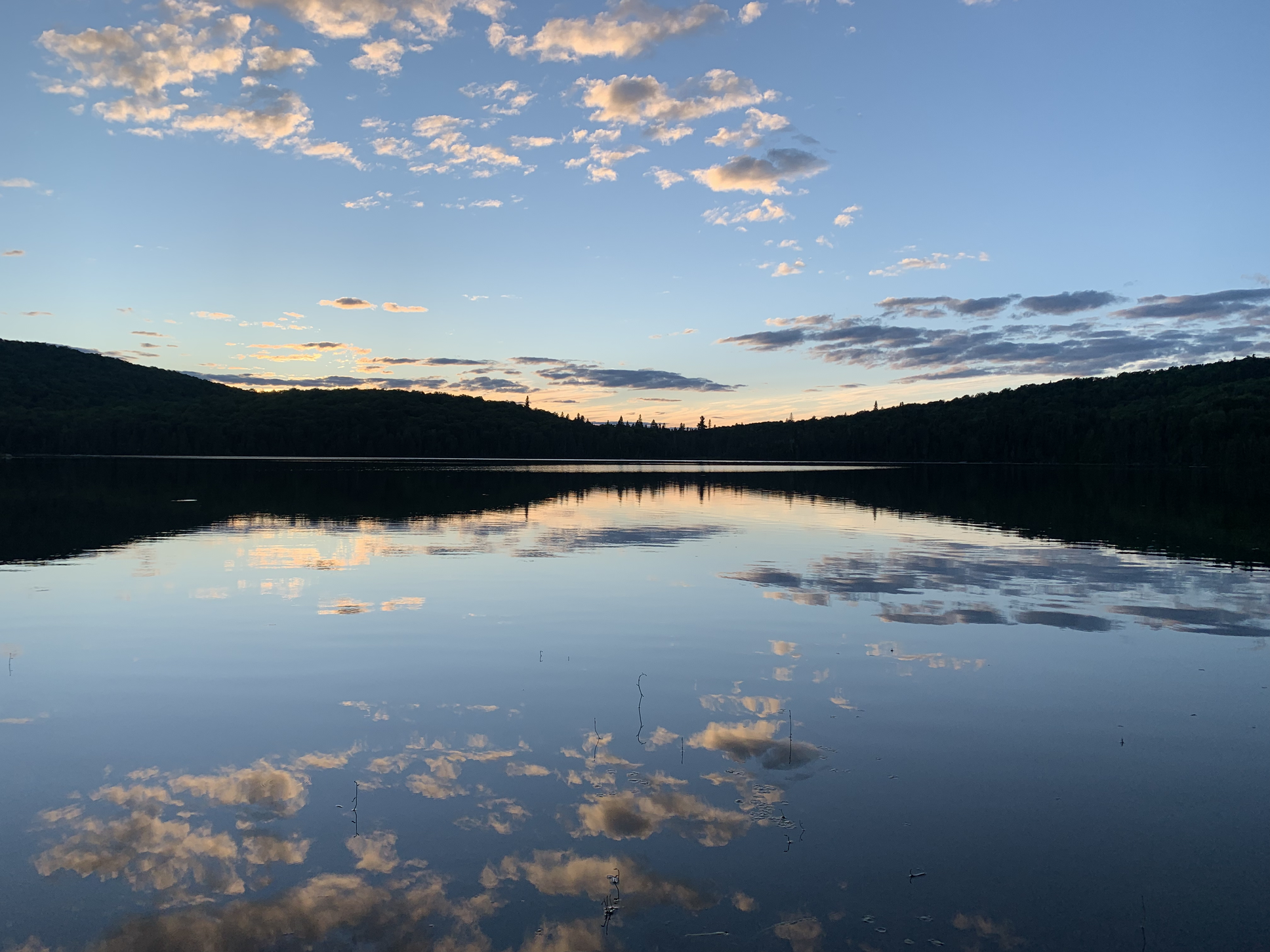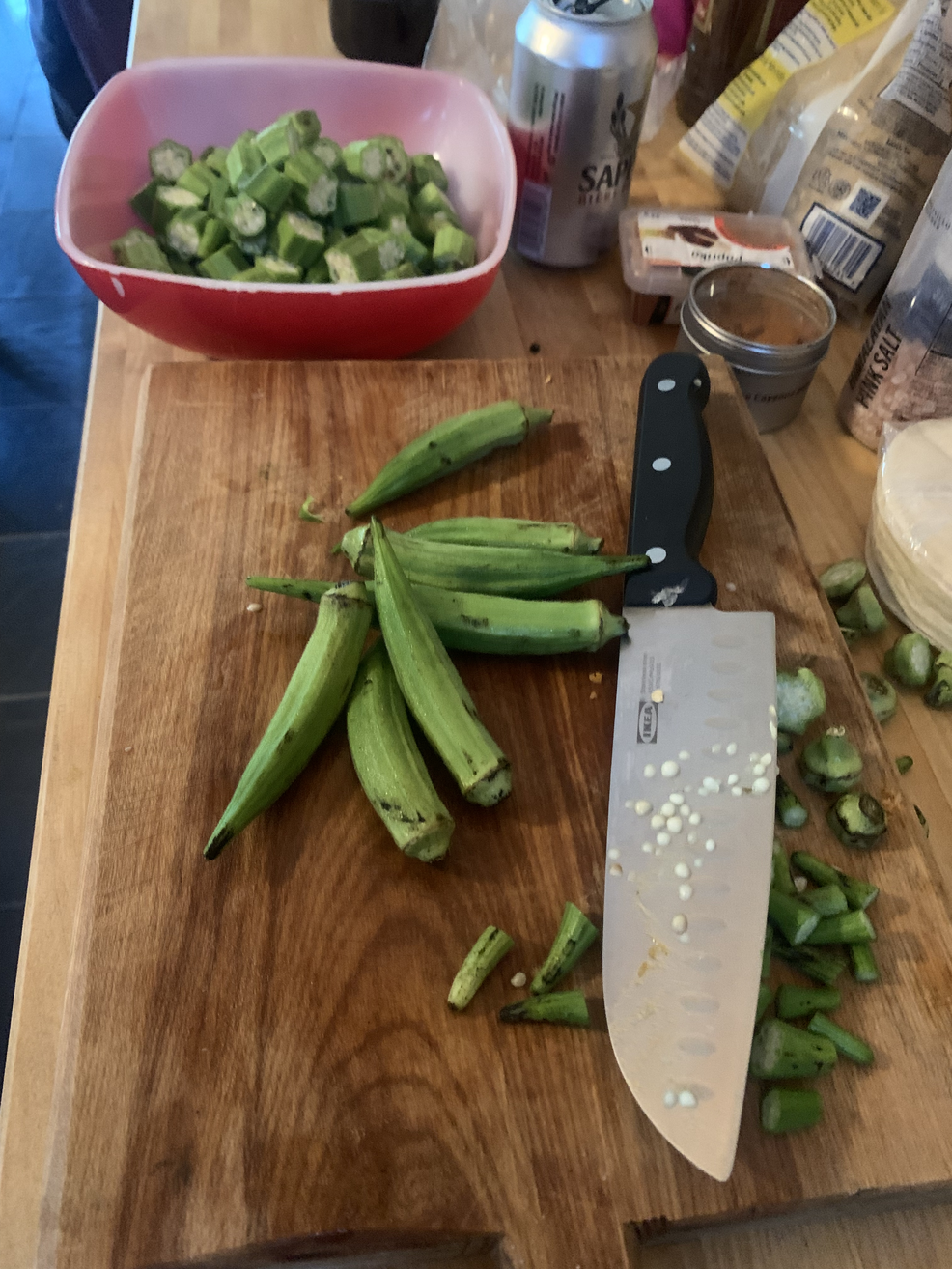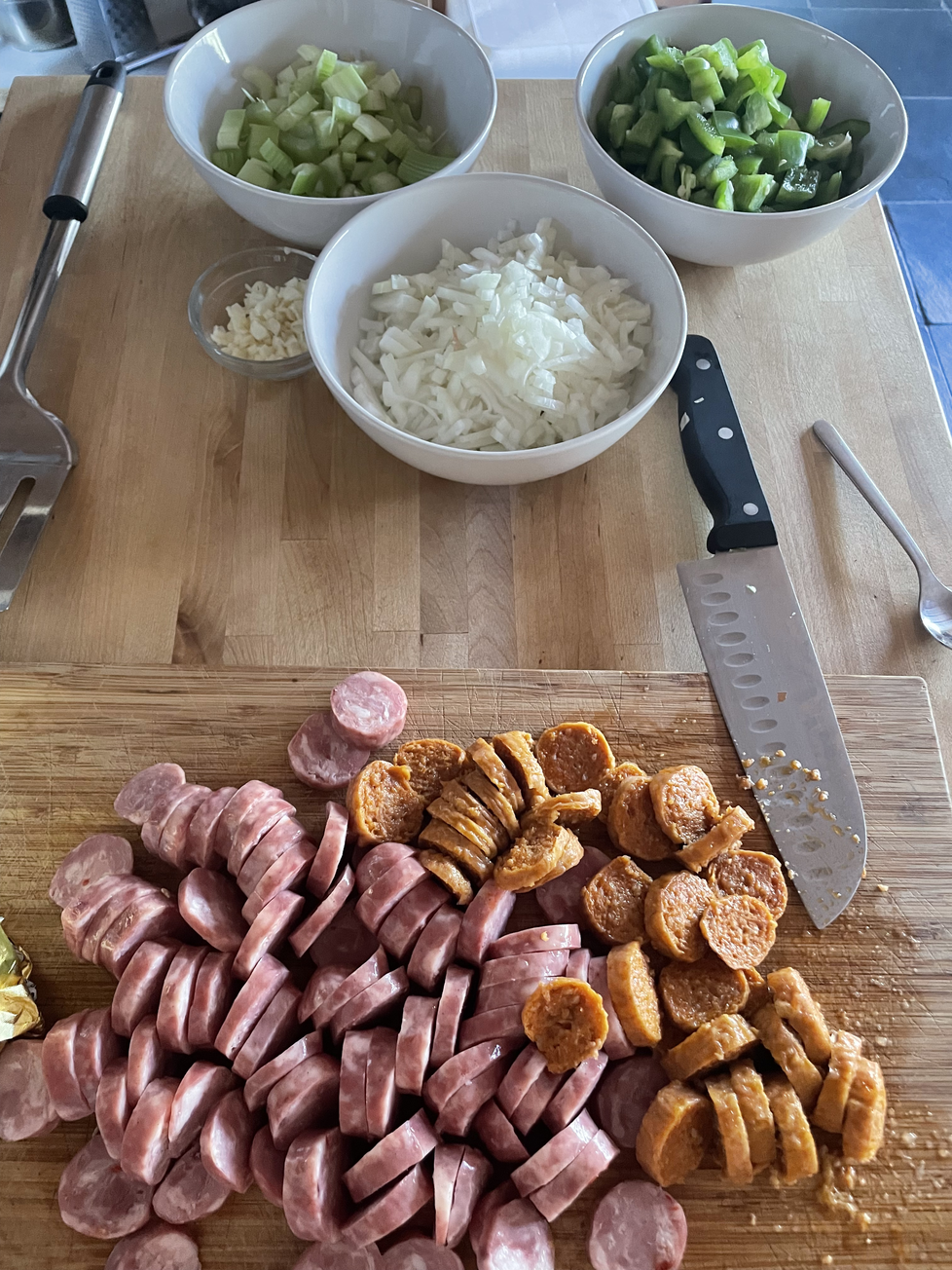
"The weapon of theory is a conference of the birds. The kitchen table is its public and its publisher." – Stefano Harney & Fred Moten. On Birds & Kitchen Tables.
Plot, Plantation, Ground Provisions - a summary of choreokratic dialogues. Day 1
These dialogues happened between the DE principal investigator Angélique Willkie, the collaborators Cadu Mello, Dana Dugan, Matthew-Robin Nye and Vanessa Montesi, hosted and facilitated by Erin Manning.
The conversation opens with a deep dive into the thematic framing of okra as both a literal object and a metaphorical anchor, initiating an exploration into complex themes of diaspora, Blackness, dramaturgy, and ecology. Through the emergent notion of choreokratic ecologies to articulate the roles of non-representational embodied experience in creative processes, okra becomes an intercessor that moves between personal identity, cultural memory, and collective history. This approach reframes Blackness and Dramaturgy within diasporic contexts, allowing the plant to serve as a link to ancestral histories and as an conduit of more-than-human connections.
Okra as a Metaphor and Symbol of Diasporic Identity: Throughout the conversation, okra is referenced as an agent that carries cultural significance, encapsulating histories of diaspora, migration, and resilience. The group discusses how okra’s journey mirrors the forced movements of people and cultural symbols, particularly for those in Black diasporic communities. It thus embodies a diasporic non-fixed identity that interweaves the personal with collective memory, linking them to ancestral practices and historical hardships. One participant describes this significance in relation to her personal experiences of labor and belonging, noting how her interactions with okra and the land trigger embodied memories of ancestral forced labor and survival, particularly under the oppressive conditions of enslavement.
Chorekratic Ecologies and Embodied Knowledge: the concept of “choreokratic ecologies” surfaces as a framework to discuss the intertwined movement of people, plants, and ideas across different landscapes. Participants reflect on how moving together in shared physical activities, such as clearing the land and pulling weeds, becomes a way to embody and enact ecological and social histories. They mention that these embodied movements, or “choreographies,” evoke patterns of diasporic journeys, agricultural labor, and ecological processes. This includes the recognition of tensions between needing to act on the land and respecting its organic processes, a dilemma they discuss as being informed by colonial histories of land use and forced labor. They also examine the different types of knowledge they bring to the project. For instance, some of the group draw from academic frameworks (like Sylvia Wynter’s theories on decolonization) and process philosophy, while others contribute personal experiences and histories. Through this blend, the group reflects on how knowledge is shaped collectively and physically rather than solely through intellectual engagement.
Improvisation, Intuition, and Disruption of Academic Conventions: The group places a high value on improvisation, particularly for its capacity to disrupt conventional, hierarchical modes of knowledge production that they identify as colonial or patriarchal. Intuition and relational dynamics guide their creative outputs, enabling them to resist overly rigid structures This approach includes navigating their individual contributions to the project while remaining open to insights that arise spontaneously from collective interactions.
One member points out that okra’s choreographic presence within their activities, as well as its symbolic aspects, challenges them to keep definitions flexible. This includes balancing the use of academic language with concepts that resonate from a personal and historical place, especially where terms like “diaspora” carry both intellectual and emotional dimensions.
Bridging Human and More-than-Human Ecologies: The group reflects on the more-than-human elements of their surroundings, such as plants, animals, and environmental systems, recognizing that okra and other natural elements participate in their collective story. They discuss these ecologies not only as separate from human influence but as intertwined in shared histories of migration and adaptation. For instance, okra’s role in diasporic food cultures is acknowledged as part of a broader ecosystem that includes human and non-human agency, making the plant both a metaphor and a literal bridge in the ecological network they are studying.
Addressing and Containing Complexity: Acknowledging the limits of representation, the group agrees that they can only capture a fraction of their discussions in their final outputs, whether through video, performance, or text. There is an interest in “what okra does” more than “what okra is,” focusing on its effects and resonances within their collective practices. A discussion emerges on letting themes emerge naturally, rather than being too prescriptive, and strive to capture the nuances of their conversations and shared experiences.
Concluding Thoughts: The conversation closes with reflections on the ambiguous boundaries of their work—acknowledging that the lines between researcher, subject, and environment are fluid and interdependent. This interdependence reflects their commitment to a form of academic and creative practice that values improvisation, embodiment, and collective history, underpinned by diasporic identity and ecological awareness. In summary, this meeting frames a collective exploration into diasporic and ecological connections through okra, approached with an improvisational, relational, and multi-disciplinary lens. The group’s final outputs aim to embody these reflections, balancing theoretical engagement with lived, embodied experiences of diaspora and ecology.
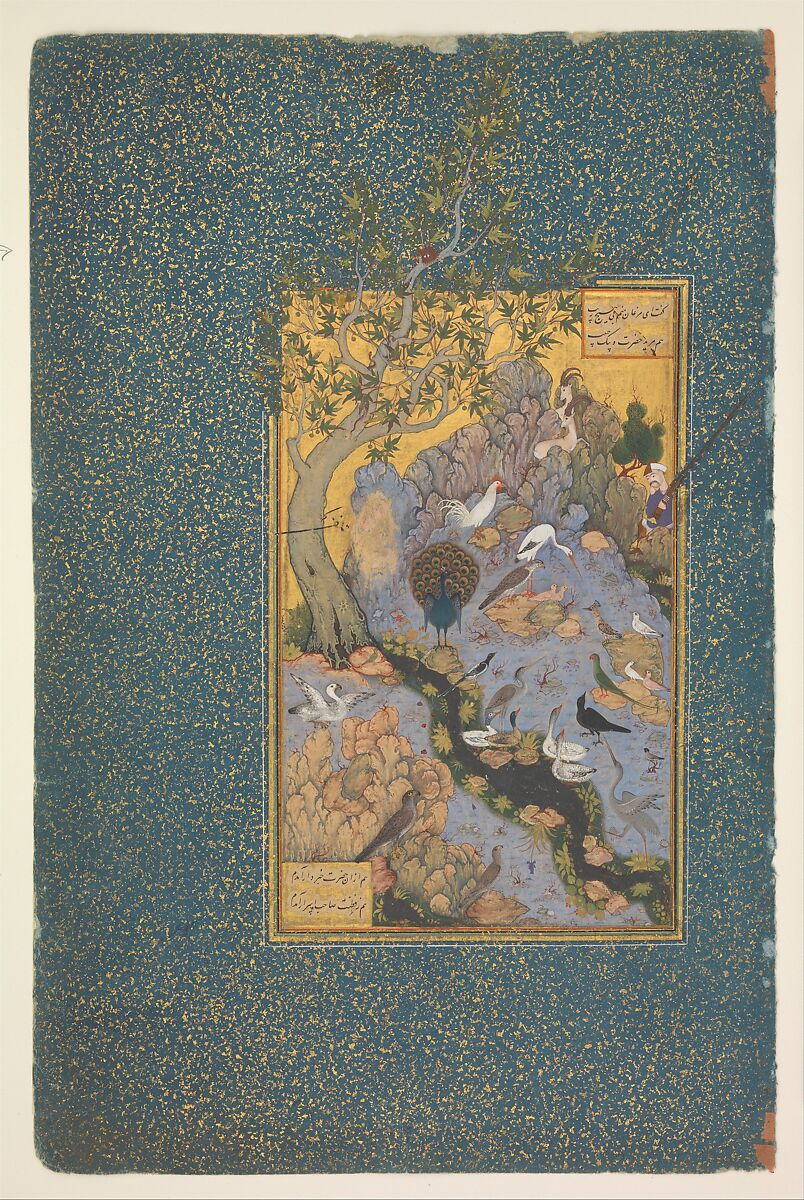
“When we say preach when we hear preaching we be preaching. It’s like a conference of the birds - a constant rematerialization and proliferation of the concept; a constant socialization of the concept rather than some kind of expedient decree by some kind of self-appointed consultant who finds himself to have been gifted with the overlooking and overseeing power of the overview.” Fred Moten, Base Faith (2017).
The kitchen table is both its public and its publisher. Around that table - one of many kinds - the Dramaturgical Ecologies group gathered for an artistic residency hosted by 3ecologies, an autonomous research-creation environment founded in 2019 by Erin Manning and Brian Massumi in Sainte-Anne-du-Lac, Québec, Canada.
Described by its hosts as “a site for improvisation, collective inquiry, and aesthetic experimentation, where thinking is inseparable from making and where research unfolds as a lived ecology of relations”, 3ecologies welcomed the group into a land-based experiment with Dramaturgical Ecologies.
The kitchen table was, quite literally, a site for collective cooking - but it was also made of walks, readings, weeding, and shared knowledge-practices. We cooked gumbo. We chopped okra and played with its sliminess. We read Sylvia Wynter’s essay Novel and History, Plot and Plantation and Elizabeth M. DeLoughrey’s Yam, Roots, and Rot: Allegories of the Provision Grounds.
Amidst these activities, Fred Moten and Stefano Harney’s refrain of A Conference of Birds - a reference to the Sufi mystic Farid ud-Din Attar’s poem of the same name - kept emerging as a living image for being together in Murmurations: a presence of multiplicity, of shared experiences and research-creation practices, echoing Dramaturgical Ecologies' own refrain: Blackness as a lens to think dramaturgy.
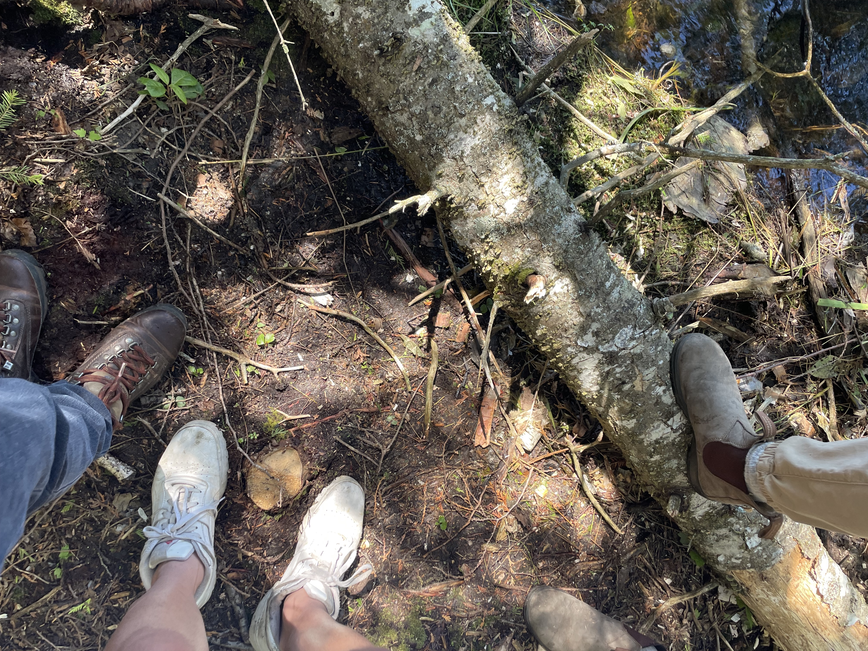
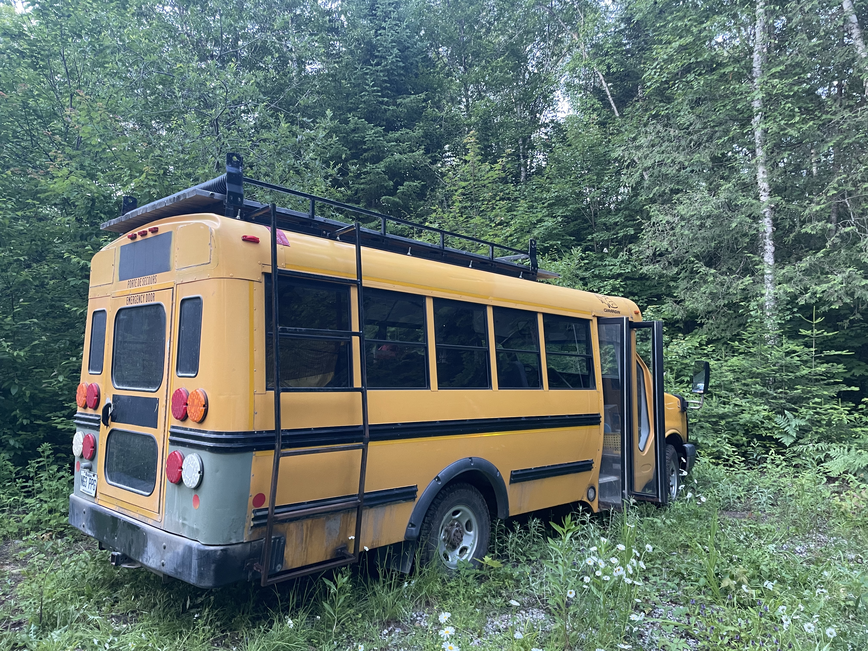
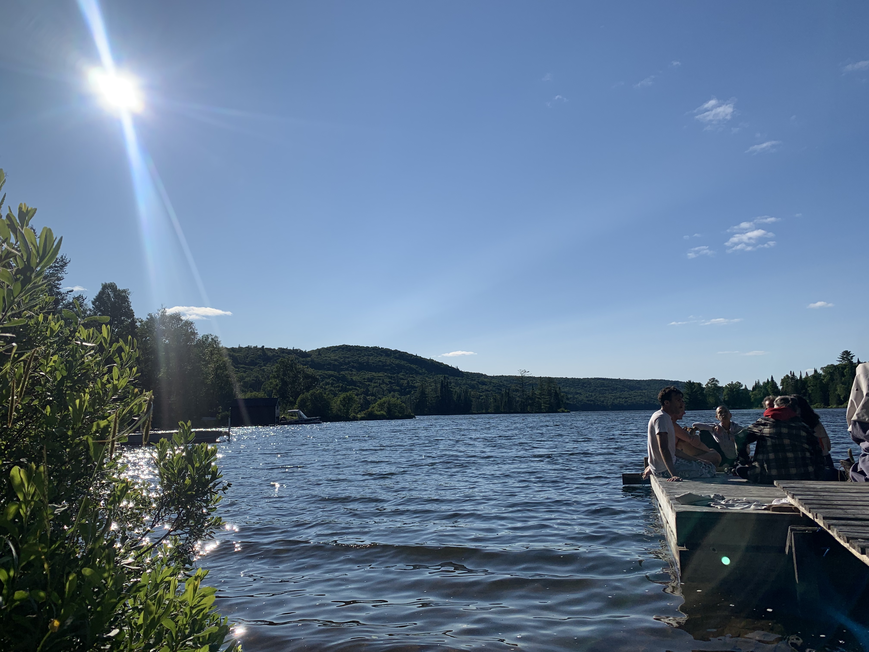
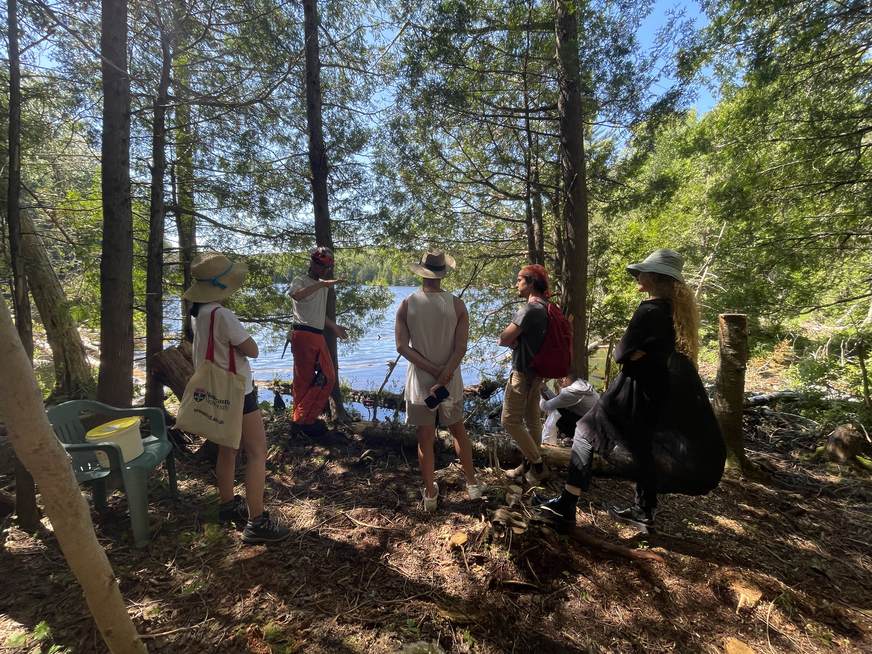
On this page, we share a few transcriptions from the dialogues that grew out of those readings, along with some images from our conference of birds.
“‘Murmuration’ is a cool word because it bears the trace of the sound. It’s beautiful when you watch those movements, but it’s even more beautiful when you hear them. The internal differentiation of the swarm is absolute wealth.” Fred Moten, Refusing Completion, 2021.
Plot, Plantation, Ground Provisions - a summary of choreokratic dialogues. Day 2
Sylvia Wynter's Race and Plantation Theory: This conversation was an in-depth exploration of Sylvia Wynter’s philosophy, focusing on her concepts of race, colonization, and the plantation-plot dichotomy. The group unfolded Wynter’s belief that “race precedes everything,” with participants noting that her framing of race extends beyond skin color to encapsulate a socio-economic system rooted in plantation values. This interpretation aligns with Wynter’s view of whiteness as a structural concept tied to plantation economies that perpetuate certain values that sustain racial hierarchies.
The Plantation-Plot Dichotomy: Erin Manning and Angélique Willkie discuss how Wynter’s plantation-plot model is explored as a dual system: the plantation represents a capitalist, exploitative economic model, while the plot embodies resistance. Within this framework, the plantation is associated with monoculture and the commodification of both land and labor, while the plot functions as a site where cultural values, particularly those of the African diaspora, are preserved and expressed. The plot’s association with yam cultivation symbolizes subsistence, community, and cultural survival against the plantation’s commercial focus. The discussion draws connections between this model and current debates on privilege, structural oppression, and race, framing Wynter’s plantation and plot as templates for examining power dynamics in education, art, and policy.
Wynter’s Concept of the Human and Colonization: Manning and other participants explored how Wynter’s theories critique the Western concept of “the human,” particularly how colonization redefined humans as exploitable resources. This redefining process allowed Europeans to view both humans and nature as labor or land, dehumanizing people through the same exploitative lens applied to natural resources. Wynter’s concept of “sociogeny,” influenced by Frantz Fanon, is discussed, illustrating how racial and social identities are socially constructed rather than biologically determined.
Black Studies and Process Philosophy: The group traces a parallel between Wynter’s ideas with those of other Black Studies scholars, such as Fred Moten and Saidiya Hartman. Moten, for instance, uses process philosophy to examine blackness outside of traditional, ontological categories, while Hartman mixied historical analysis with creative narrative. Participants highlight how scholars like Hartman and Moten align with process philosophy, emphasizing fluidity and relational thinking rather than static identities. Manning mentions her view of Wynter as a figure positioned “in-between” these traditions, critiquing race’s socio-genic construction but still grappling with materialist views of the human.
Education: One speaker describes a challenging course they taught on race and value, where white students struggled with the discomfort of addressing race. This teaching example illustrates the complexities of fostering conversations on race, privilege, and whiteness in predominantly white educational settings. Participants reflect on how Wynter’s plantation-plot framework might help students reconsider their relationship to privilege and whiteness as an economic and structural phenomenon rather than an inherent trait.
Wynter’s View of Cultural Resistance and the Yam as a Symbol: The yam, in Wynter’s framework, becomes a central symbol of resistance. Rooted in African diasporic cultural practices, the yam cultivation on provision grounds (plots) embodied survival and opposition to the plantation’s exploitative economy. Participants note how Wynter associates the yam and other staples with a culture that operates outside the plantation’s market-driven values, providing a sense of identity and autonomy that transcends Western capitalist structures.
Ambivalence and Complexity in Wynter’s Thought: a theme of ambivalence emerges as the participants consider the “both/and” nature of Wynter’s plantation-plot duality. While the plot exists within the plantation economy, it also subverts it, offering a “third space” for cultural resilience. This duality reflects the ambivalence inherent in Caribbean identity and raises questions about the potential to fully transcend such intertwined systems. Wynter’s philosophy encourages readers to embrace complexity and ambivalence, recognizing the limits of simple binaries in addressing colonial legacies and racial dynamics.
Implications for Process Philosophy: Wynter’s ideas are connected to broader philosophical debates, particularly process philosophy and ecological thinking. Participants suggest that Wynter’s work invites readers to reconsider human-nature relationships, viewing them as entangled and co-constitutive rather than separate or hierarchical. This ecological perspective challenges the commodification of both people and nature, aligning with process philosophy’s relational worldview.
Concluding thoughts: The conversation around Sylvia Wynter reflected a multi-faceted engagement with her work. By framing her ideas within broader discussions on race, colonization, and ecological philosophy, the participants extend Wynter’s critique of the plantation model to modern academic, social, and political contexts.