This section has three parts:
The first part: The text Dramaturgical Seismography – notation of dramaturgy in performance, reflects on the response tool I experimented with during the costume jams sessions, in the workshop at Stockholm University of the Arts, August 2025. The starting point for this experiment was a strong wish to capture dramaturgy on stage that was emerging not from words like in traditional drama theatre, but from the interaction between people and non-human things – like costumes. I did this by intuitively drawing figures, succesivly following each action with the costume.
The second part, presents all nine dramaturgical seismography notations made during the workshop.
The third part: Three steps of notation – one costume. Suggest a further development: By notating from video recording long time after the workshop, the second step notates linear what happen, action by action. The third step, is not planned to be linear, rather as an afterimage. I based it on memory and it aims to capture of the totallity of the impression and emotions that the dramaturgy left behind.
Dramaturgical Seismography – the notation
of the dramaturgy of things in performance
– Christina Lindgren

Dramaturgical Seismography – the notation
of the dramaturgy of things in performance
Christina Lindgren
Dramaturgical seismography notations are a response tool I experimented with during the costume jams sessions in the workshop at Stockholm University of the Arts, August 20th to 22nd 2025.
The starting point for this experiment was a strong wish to capture dramaturgy on stage that emerged not from words, as in traditional drama theatre, but from the interaction between people and non-human things – like costumes.
I did not use a specific definition of dramaturgy, beyond a general idea of it as a composition/assemblage of human and non-human scenic elements in events unfolding before an audience. The goal was to intuitively capture, through drawing, the sensations each action and event created in me, and to observe and reflect on the findings from the experiment.
The notation I explored is the drawing of abstract figures in response to actions, emotions, and conceptual ideas. The figures are imprints of being exposed to a nonverbal experience of performing arts. The notations are unique for me and specific to these sessions. Dramaturgical seismography does not aim to be a scientific, universally applicable system; it can inspire others to explore their own way of notation.
Background
My claim is that the dramaturgy produced by things is under-researched in the performing arts, a central concern of this article. While much is known about how text, music, and dance work in performance, there is less understanding—and fewer systems for notating—how non-human things, like costumes, operate dramaturgically. On stage, things contribute differently than words, both in the creation process and in audience perception. When things, not words or other elements, become the focus, the resulting dramaturgy is formed and perceived in distinct ways. This project seeks to address this gap by exploring and testing a visual tool to capture these interactions.
The artistic research Costume Agency (2018 – 2023) included the creation of twenty performances emerging from costume (Lindgren and Lotker (eds) 2023). The creation process for most of these costume-generated performances was as follows: improvising with the costumes, exploring their potential, selecting actions, deciding on the order of the actions, and refining and developing each action into scenes. This way, the dramaturgy emerged through the interaction between humans and non-humans.
By researching performance emerging from costume, my curiosity now goes to the dramaturgy that emerges. In general terms, I understand dramaturgy as an assemblage or composition of multiple scenic elements, such as sound, light, bodies and audience. I understand the dramaturgy of costume-generated performances as the composition of the act of assemblage, of human and non-human things, with destabilized hierarchies and the empowerment of the non-human. Emerging from the experience that costume has the capacity to create performances, I am now searching for a method to capture and notate the resulting dramaturgy.
Notation of time-space events that are not word-based has been undertaken within music and within the field of dance.
Music notations are visual record of heard or imagined musical sound, or a set of visual instructions for the performance of music. (Britannica). In today's field of electronic and contemporary music, there are several challenges in notating the music, for example, microtonality, interactivity, non-linear structures, improvisation, aleatoricism (actions made by chance), and the lack of conventional rhythmic structures. Animated notations are graphic and animated notations that can help communicate the contemporary music of different musical genres and collaborative practices (Hope 2020).
Dance notation is to dance what musical notation is to music, and what the written word is to drama. In dance, notation is the translation of four-dimensional movement (time being the fourth dimension) into signs written on two-dimensional paper. A fifth “dimension”—dynamics, or the quality, texture, and phrasing of movement—should also be considered an integral part of notation, although in most systems it is not. (Britannica). Some examples from dance notation are the system of Pierre Beauchamp (The Art of Describing the Dance, published in 1700 by his student Raoul-Auger Feuillett), Rudolph von Laban (Labanotation developed during the 1920s), Oscar Schlemmer (Triadischer Ballett 1922), William Forsythe (for example Improvisation Technologies 1999) and Janne-Camilla Lyster (for example her artistic doctoral project Choreographic poetry: Creating literary scores for dance 2019).
Within the fields of scenography and costume, it has not been common to use signs to represent the dramaturgy of objects or the visual dramaturgy. This experiment is based on my urge to capture the emotional imprint of non-verbal interaction between humans and non-humans, and, by doing so, to notate and formulate a dramaturgy.
I use the term “seismography” as a metaphor. Seismology is the study of recording vertical and horizontal ground movements and vibrations, and of monitoring earthquakes and volcanic activity. The instrument that records seismic waves is called a seismograph (Britannica).
My questions
My main question was how to capture stage interaction—how to describe the moment when human and non-human meet, registering the spark of interaction. Fingers touch fabric for a second. The weight of the fabric and body drops. Hair and textile move in a joint spin. Muscles adapt to elastic stretch. Hands puzzle over a dress with many pockets. Head and spine stretch to lift a golden cloak. How to capture these essential, vivid, and silent moments of performing arts?
I searched for a way to capture and notate the wordless encounter. I developed dramaturgical seismography, a spontaneous abstract drawing technique, responding to the action taking place on stage.
My way of doing Dramaturgical Seismography
I drew during or directly after each costume jam session. Each session lasted 25 minutes, jamming with the costume on stage, followed by a 10-minute individual reflection and 20 minutes of sharing in groups of four. During the jamming, each action mostly lasted from one to five minutes and consisted of one person’s interaction with the garment.
I drew one figure on the paper, after each person and costume had acted together. I used watercolor pencils and brushes on aquarelle paper. Below each figure, I made quick notes with an ink pen, after each drawing, mostly the name of the person interacting with the costume.
My goal with the drawings was to respond as spontaneously as possible and without analyzing the actions. My goal was also to draw abstract, non-illustrative figures that could capture the sensation I felt when watching each action.
What I quickly noticed is that I tended to use specific colors to express specific qualities:
Red for emotional/ vibrant/ explosive/ magnetic/ shocking moments
Yellow for sacred/ poetic/ absorbing moments
Green for playful and joyful moments
Blue for technical/ practical/ conceptual explorations or actions
I did not reject this tendency; rather, I allowed this to develop intuitively.
Findings
The drawings reflected the structure of the costume jam sessions: In each session, one costume was explored by one person at a time, followed by another. The jamming was improvised, with each participant creating and performing single actions. The drawings were single figures, arranged in succession.
The results indicate the most vibrant and meaningful moments by emotional response. The drawing figures were clearer and the lines stronger when the actions of the costume-performer were distinct/ clear/ without hesitation. The results support the argument that the most vibrant and meaningful moments in the workshop occurred when the interaction between costume and performer elicited a strong emotional response. The clarity and strength of the drawn figures correlated with the distinctness of these actions, underlining the importance of capturing these moments in a new, responsive way.
One main finding from the Dramaturgical Seismography is that actions that followed or contrasted the costume's embedded, obvious semiotic sign produced clear, distinct, strong figures in the paper. For example, in session #3 with the golden cloak, there were at least four actions following or contrasting the most obvious semiotic sign of the costume: The golden artliturgical cloak was worn as a dog barking towards the audience (contrasting), it was worn as a king’s cloak (following), and it was trampled on (following).
From this, I discovered that each costume – each thing on a stage – has the potential for actions, and that those actions are embedded in it. The audience perceives the costume's potential, and these potentials create tension on stage. The golden cloak has the potential to enable a king to occur, a king’s actions to happen, a king’s words to be spoken, a castle and a court to appear, people to be led, power to be exercised, oppression to occur, and wars to be fought. This idea is not far from Chekhov’s idea of placing a gun on a stage, a principle in drama, literature or other narrative forms, asserting that every element introduced in a story should be necessary to the plot (Britannica).
The point in the jam session where this action occurred formed my experience and the quality of the drawings, and thereby also the notation of the dramaturgy of the session. If the action with the costume that was obvious (from a semiotic point of view), like the interaction as a king with a golden cloak, happen at a late point, a tension built up towards this point of revelation, if it happen at an early point in the session, a tension was revealed, and the exploration got into an either deeper or more playful mode. The drawings of the actions that were the most distinct, following or contrasting, resulted in distinct figures.
Costumes that did not have obvious semiotic signs as garments to wear were several, for example, the elastic costume, the costume with many pockets, and the deconstructed dress. In the jam sessions with these costumes, the figures that appeared most distinct on the paper were those that responded to the actual absence of the signs, the openness to interpretation, and the specific shape and material qualities of the costumes.
Reflections
Human and non-human interaction: Dramaturgical seismography can register qualities common to human and non-human things, such as volume, physical texture, material, weight, temperature, smell, sound, and movement qualities. This might support the destabilization of the hierarchies between human and non-human things in performance. There are, of course, several challenges to destabilizing the hierarchy of human and non-human things in performance. For example, it is unclear if we know what the thing wants to do, on the same level as what a person wants to do. And how can we “listen to”, respond and interact with a non-human thing on the same level as a human? Another question is whether we can perceive the dimensions of time and the life cycles of things on the same terms as the time and life cycles of humans. In a performative context, we choose what to focus on and what to overlook. Dramaturgical seismography does not change this, but maybe the fact that this form of notation can register the physicality through parameters that can be applied to both human and non-human things can provide a different basis and new perspectives.
Agency: Each session produced different seismographies; just as the costumes varied, they triggered a range of approaches and actions by the participants, resulting in a wide span of dramaturgies. This might lead to the conclusion that there are some things that we, as human participants, perceive that a costume cannot do, can do – or even “wants to do”. In the improvised sessions, we experienced that the golden cloak wanted to perform as a king and as an object connected to power. These are qualities of the garment, the costume's potential to create action, where meaning can emerge and thereby its agency.
Dramaturgy: Dramaturgical seismography can reveal dramaturgical patterns and elements, such as repetition, rhythm, balance, contrast, unity, proportions, form, materiality, technique, etc. Therefore, there is potential to use it as a tool for creating and developing performance. For example, it could be possible to play with the figures that are drawn; copy, cut, enlarge, minimize and multiply the figures and thereby compose the dramaturgy–As a puzzle. I have not explored this possibility, but would like to do so in the future.
My general idea of dramaturgy from the start was as a composition/assemblage of human and non-human scenic elements in events unfolding before an audience. From my point of view, this idea has been strengthened through this experiment, as it, by its openness and by acknowledgment of the human and non-human thing in assemblage, enables a registration of the complex, dynamic, sensuous dimensions of the costume-body-encounter.
Emotions, moods, dynamics, worlding: Since the seismography was conducted by me as a single person, in a direct and spontaneous manner, the emotional dimension could be registered, alongside other dimensions such as the practical, conceptual, relational, and spatial. Each figure was drawn spontaneously, in less than a minute. This way, I could discover layers of the performance that are not so obvious in the creational process, like emotions, mood, dynamics, and the worlds that the costumes and actions could be part of.
Process and communication: The advantage of the method is that drawings and signs can capture qualities that are difficult to describe in existing notation systems for words, music, and dance. This can be a tool for communication when one wants to keep an openness in the creative process, or if one wants to work with subtle qualities.
The method can be used in several phases of creating a devised performance, such as registering the improvised sessions, discovering structures, and helping organize and compose with elements. A challenge here can be collaborative work, where several people must co-create, as the visual, abstract language of the figures can challenge communication. On the other hand, this can also strengthen the possibility of communicating, as the language does not prioritize wordy descriptions. During the workshop, in the group discussions that followed the costume jam sessions, the group members responded to my drawings. It was interesting for me to hear from them that the notation captured the actions in a very specific and precise manner.
Conclusion
My general idea of dramaturgy from the start was as a composition/assemblage of human and non-human scenic elements in events unfolding before an audience. From my point of view, this idea has been strengthened through this experiment, as it, by its openness and by acknowledgment of the human and non-human thing in assemblage, enables a registration of the complex, dynamic, sensuous dimensions of the costume-body-encounter.
This experiment of notating time-space events without words is not unique; it is found in the fields of music and dance. But in the field of costume design and scenography, it is not so common to use notation of the dramaturgy based on visual signs.
Dramaturgical seismography can register qualities common to human and non-human things, such as volume, physical texture, material, weight, temperature, smell, sound, and movement. This might support the destabilization of the hierarchies between human and non-human things in performance.
Dramaturgical seismography can reveal dramaturgical patterns and elements; therefore, it can be used not only as an observer of performance but also to create and develop performance. The notation method can help in several phases of the creational process and support non-verbal communication processes.
Dramaturgical seismography is a tool that can inspire others to explore their own way of notation. Possibly applicable to many forms of performance.
References:
Britannica: Chekhov's Gun. https://www.britannica.com/topic/Chekhovs-gun. Accessed December 29th 2025.
Britannica: Dance notation. https://www.britannica.com/art/dance-notation. Accessed December 29th 2025.
Britannica: Musical notation. https://www.britannica.com/art/musical-notation. Accessed December 29th 2025.
Britannica: Seismograph. https://www.britannica.com/science/seismograph. Accessed January 6th 2026
Lindgren, C. and Lotker, S. 2023. Costume Agency Artistic Research Project. Oslo National Academy of the Arts.
Hope, C. 2020. The Future is Graphic: Animated notation for contemporary practice, in Organized Sound, Cambridge University Press.
S.L.A.T.U.R. 2020. SU Masterclass 40: S.L.A.T.U.R. on Animated Notation. https://www.youtube.com/watch?v=9d2xZUQs988. Accessed December 29th 2025.
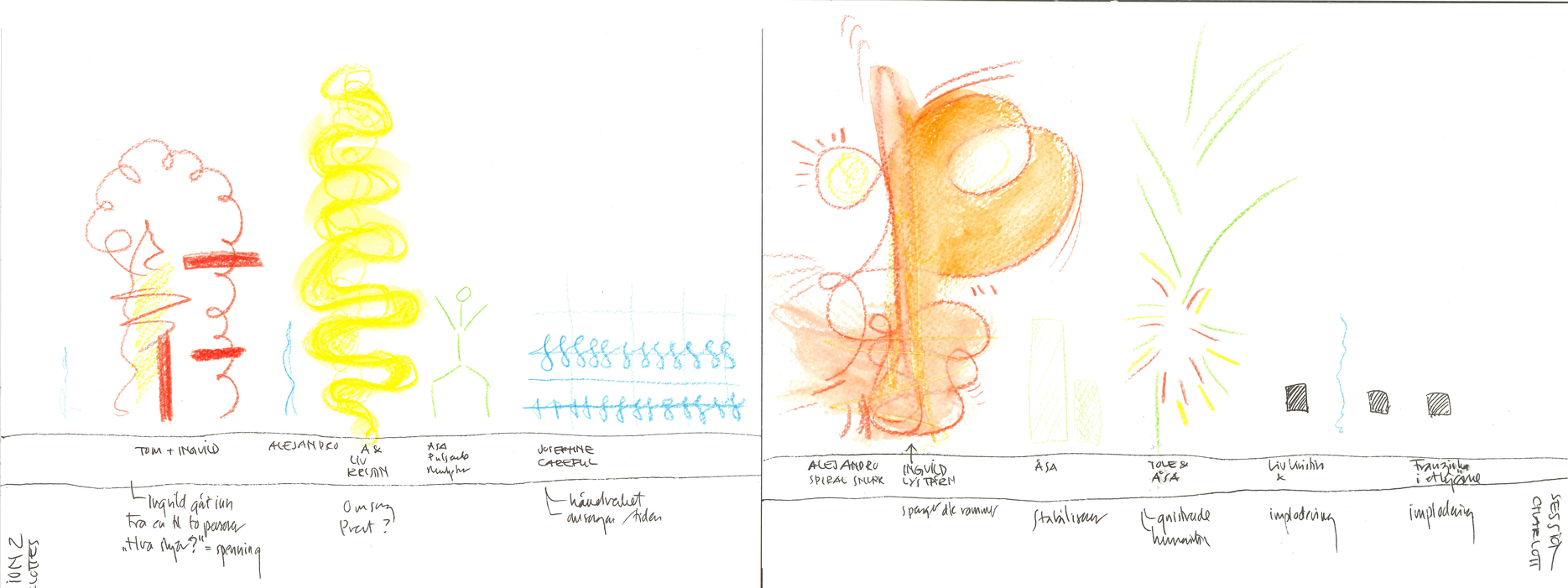
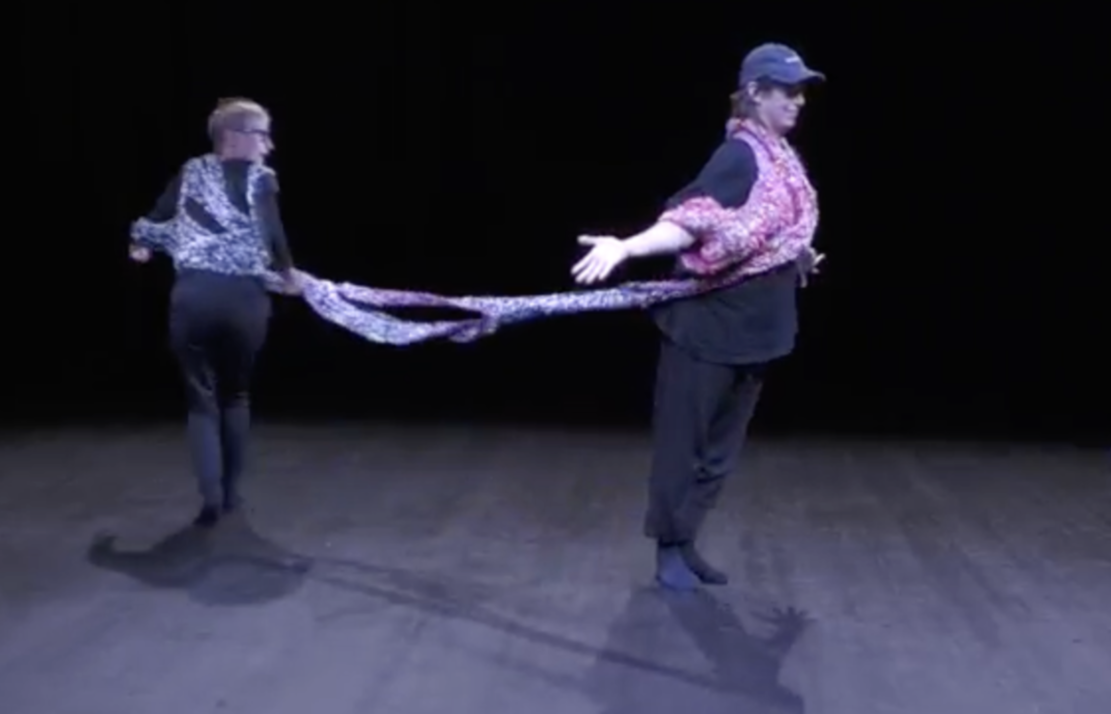
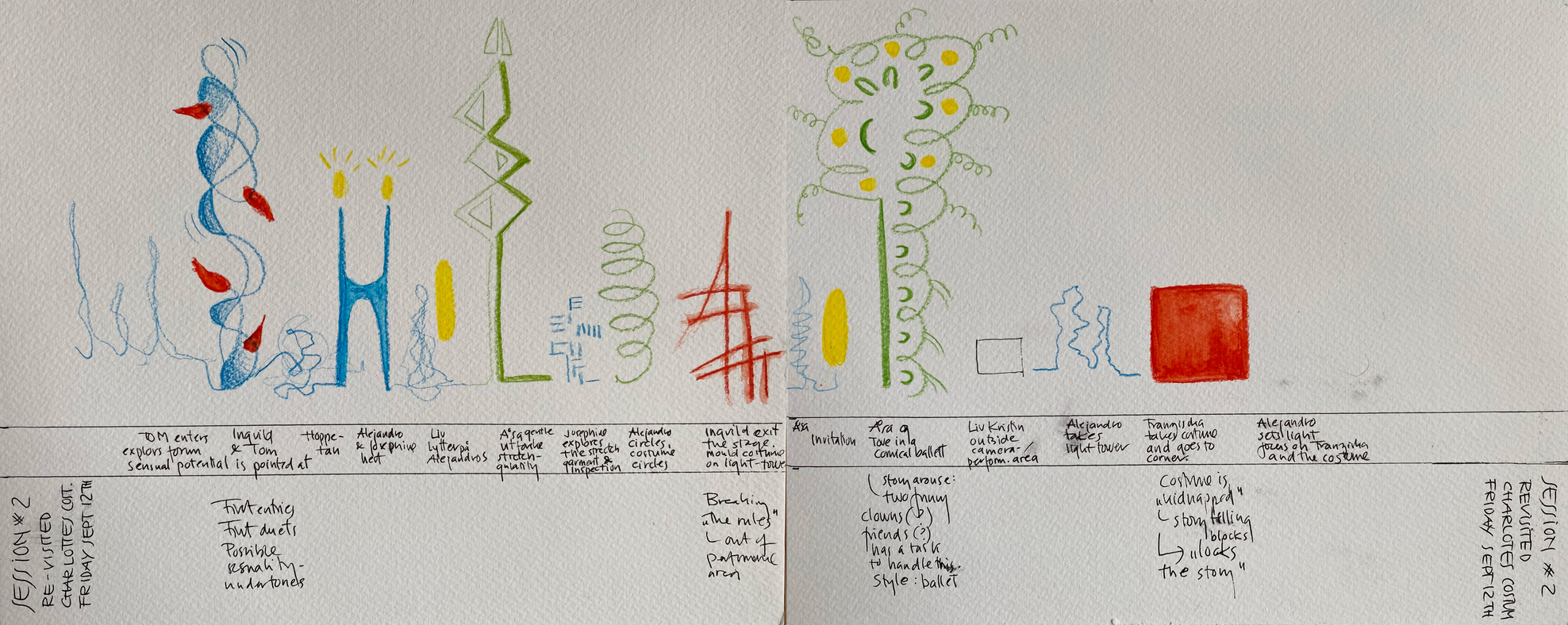
SESSION # 2 THE KNOTTED STRETCH COSTUME. One figure that stood out, was the one responding to the most funny action. This action created a lot of laughter and joy.
Another figure (orange) responded to the action when a performer involved the light towers, and stretched the costume between them. This was the first time the light towers or any other stage equipment was included.
The first figure that stood out, was the figure representing the interaction when a first participant entered the costume and called for someone to join. A second participant entered and a funny game started.
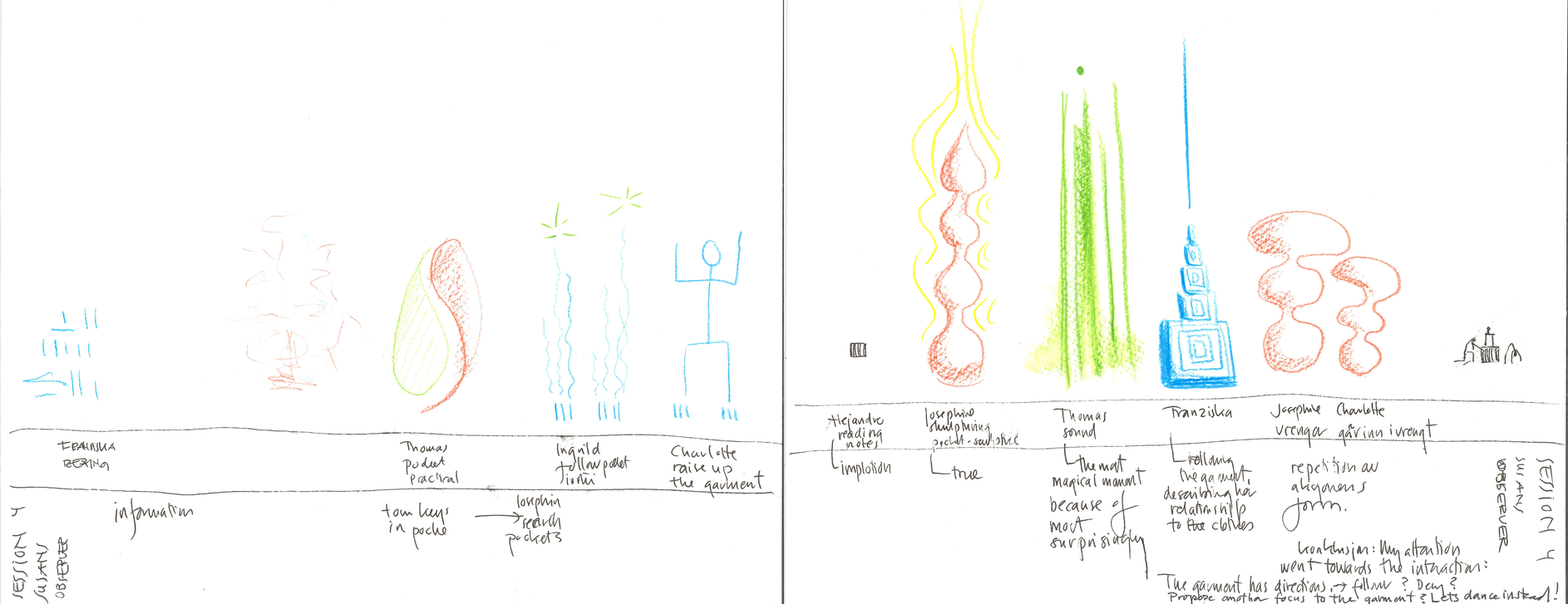
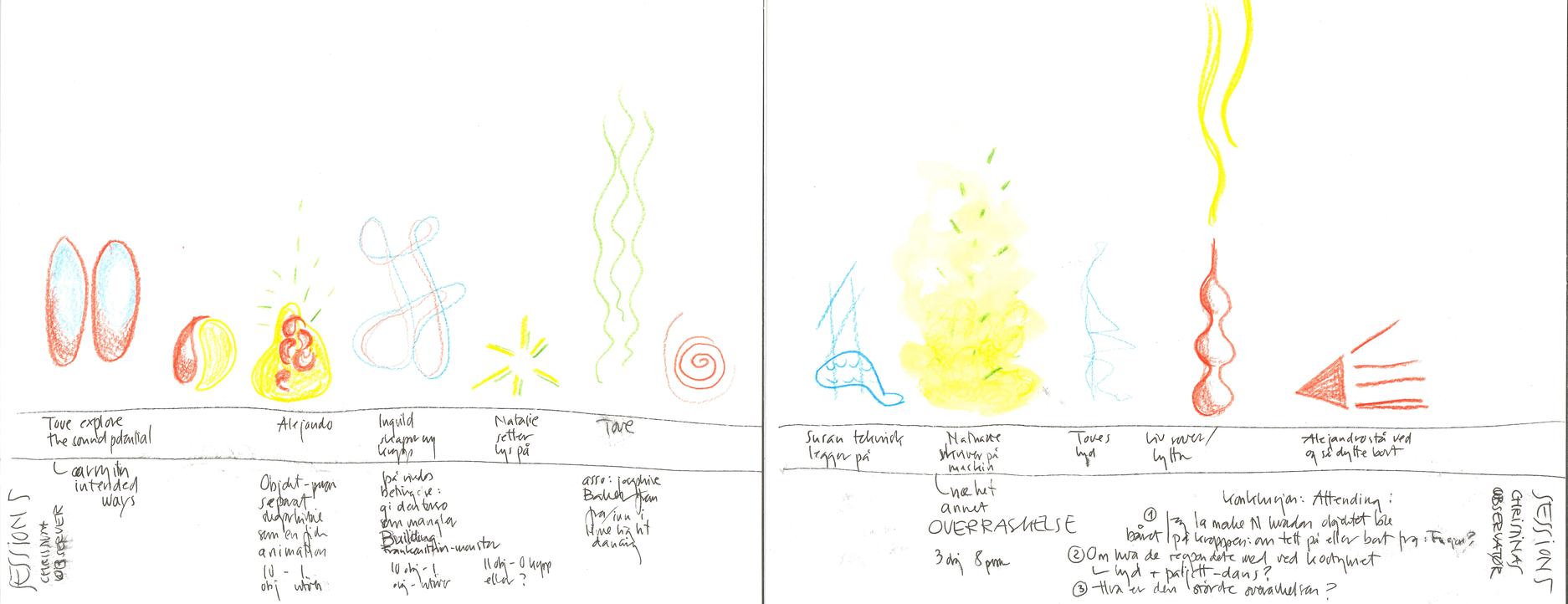
SESSION # 4 THE POCKET DRESS. The figure that stood out responded to the most surpricing action: A participant took the dress by hand, pulled it along, and to his surprice the dress made a funny scraping sound. The participant continue to pull the dress and create a sound composition this way (yellow-green figure). The dress contains pockets with paper with notes on. There were actions responding to this "invitation" by reading the notes, while others responded by ignoring this invitation. By this session I discovered that some costumes give strong invitations/ directions for actions, while other are less directional.
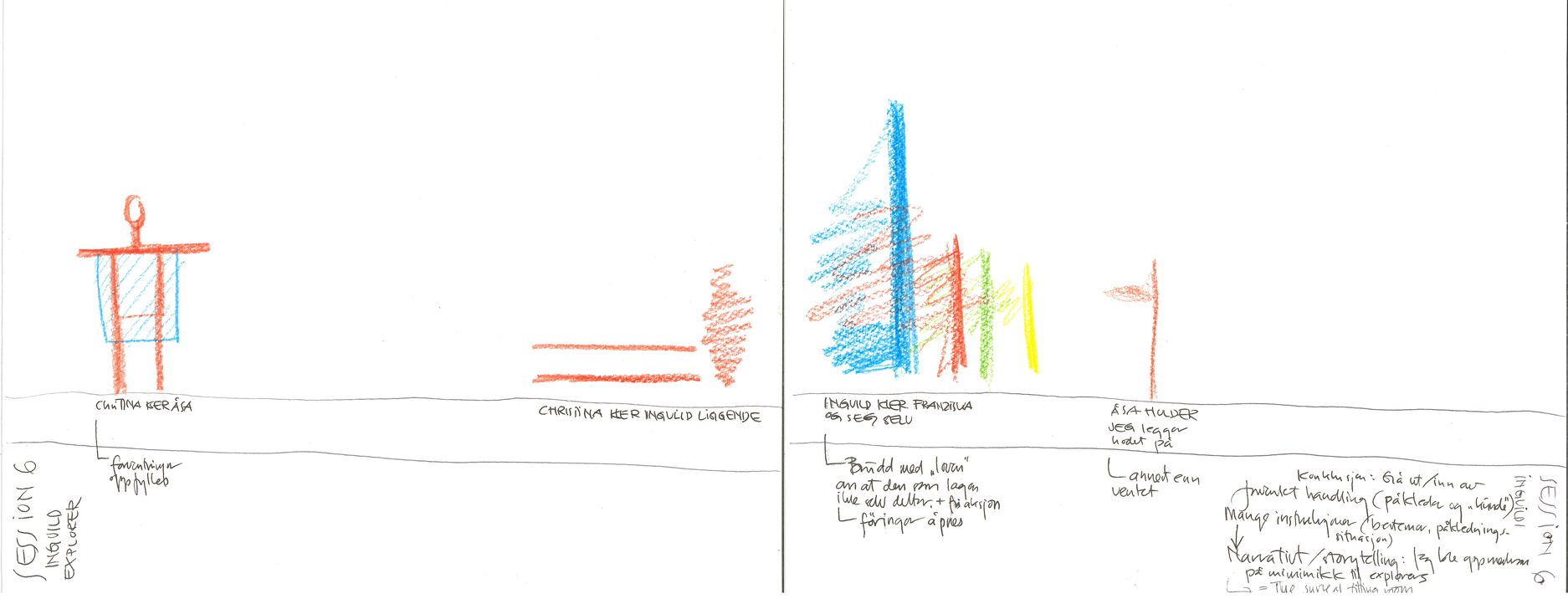
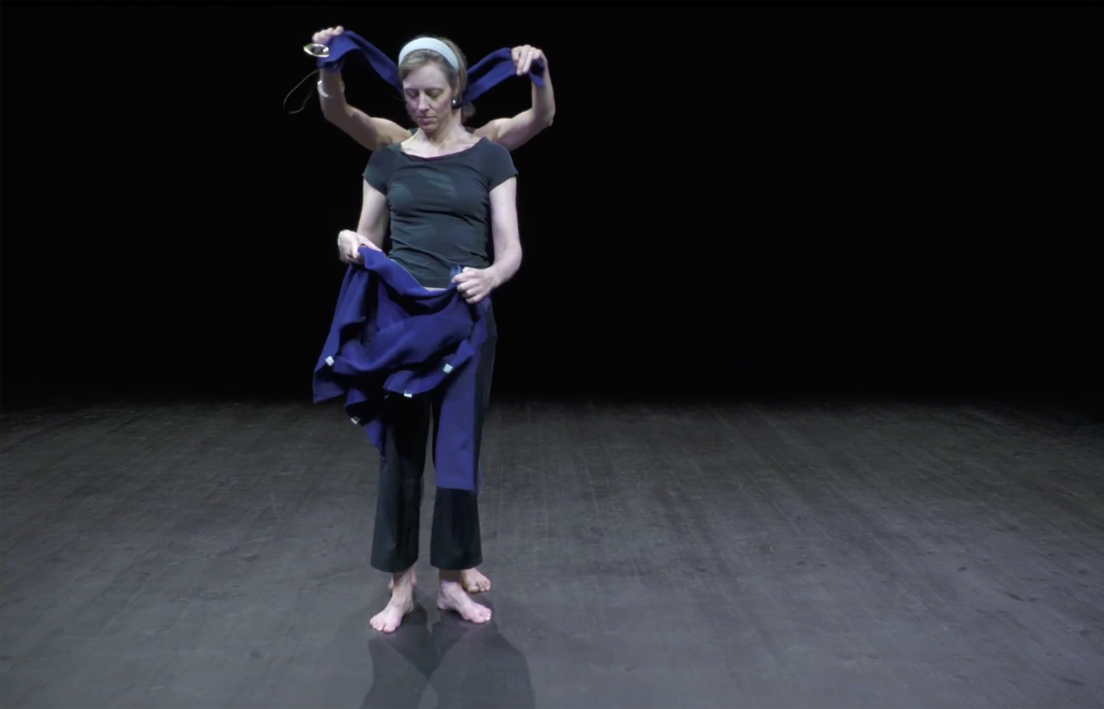
SESSION # 6 THE BLUE BAG / THE BAG BODY. The action that created a figure that stood most out, was the action where two performers were following the instructions of the garment to dress and undress. The garment was at the start folded, but by unfolding, it turned out to be a blue cocktaildress that had been constructed into a hand bag. The dressing, undressing, redressing actions were repetitive (blue, red, green, yellow figures). This session I was performing, and drawing the figures after the session was over. Hence the scarse number of figures.
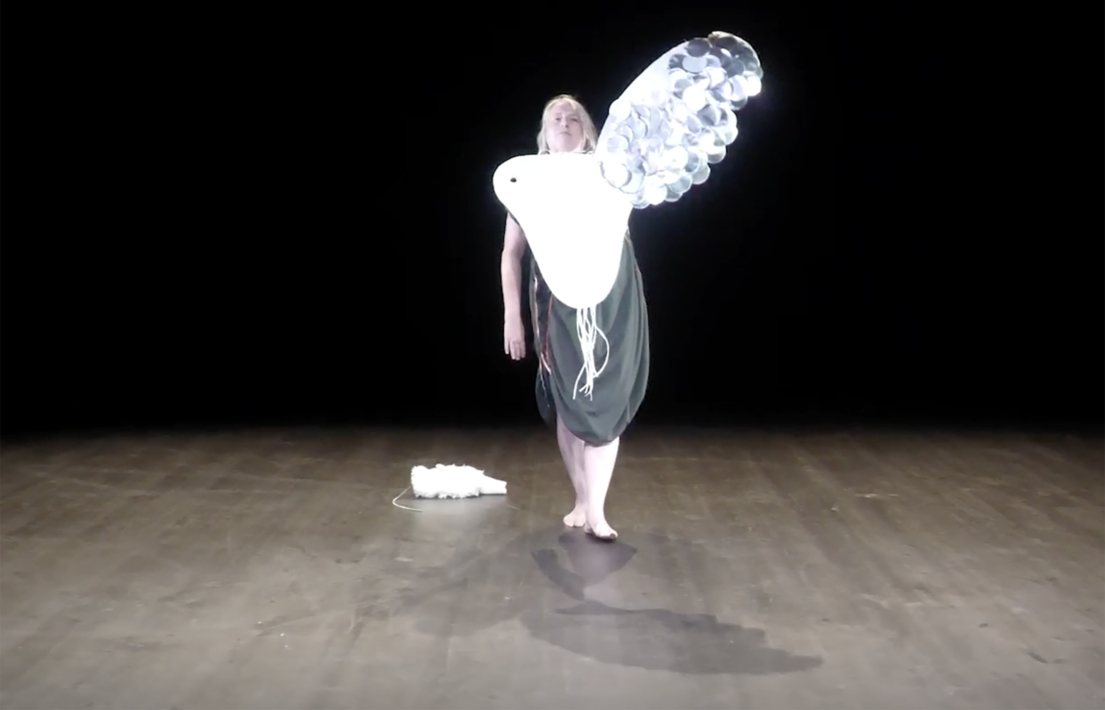
SESSION # 0 THE WING. This costume jam session took place with only three participants present, before the workshop had started. This was the first try-out with the method of dramatrugical seismography. One figure that stands out, is the figure with many crosses (red and blue), responding to a action lifting and streching the arm with the wing. This actions triggered emotions in me, both of sorrow and of joy, as my arm has been injuried and could not move freely. This session is analysed in the contribution by Sally E.Dean called The Dramaturgy of Attention, by a edited video.
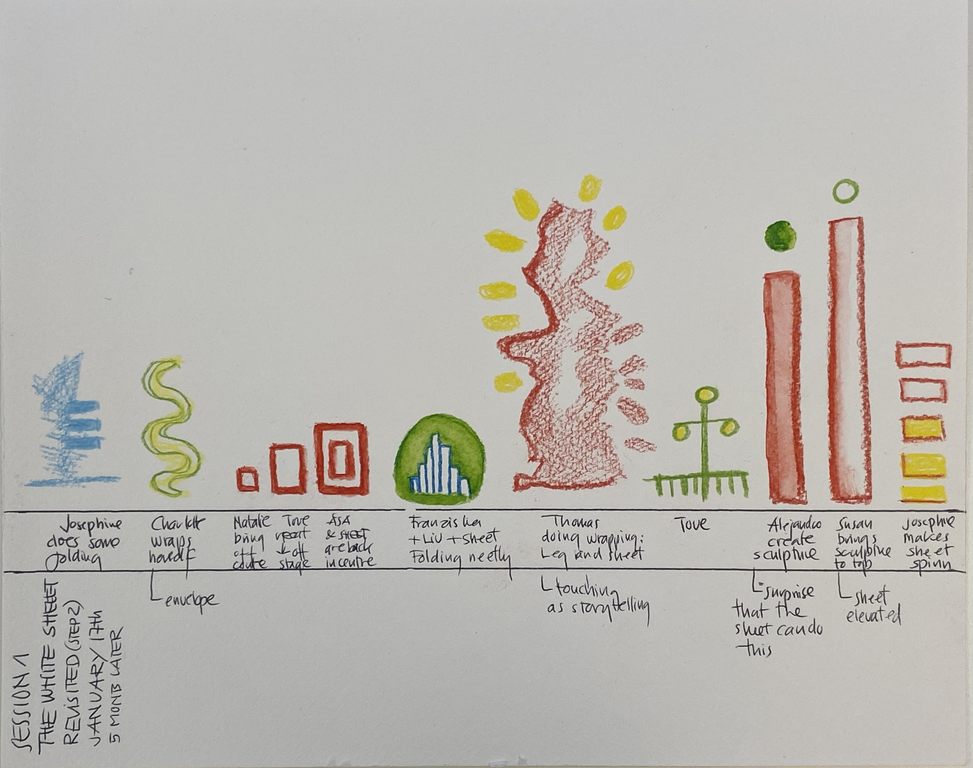
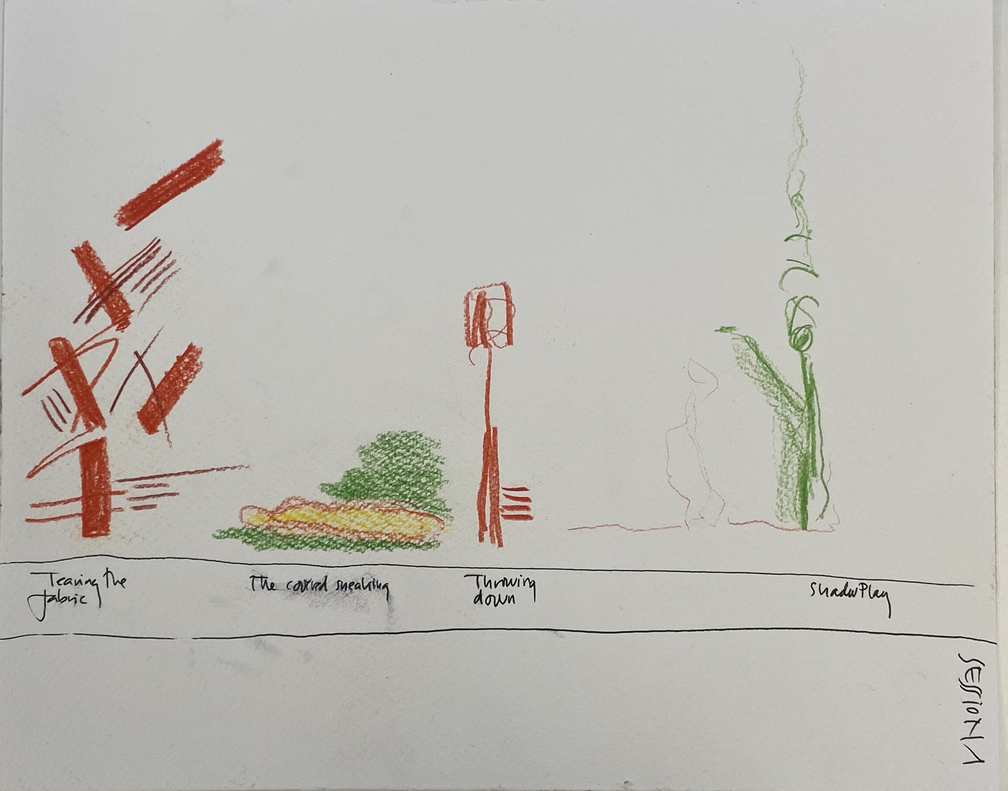
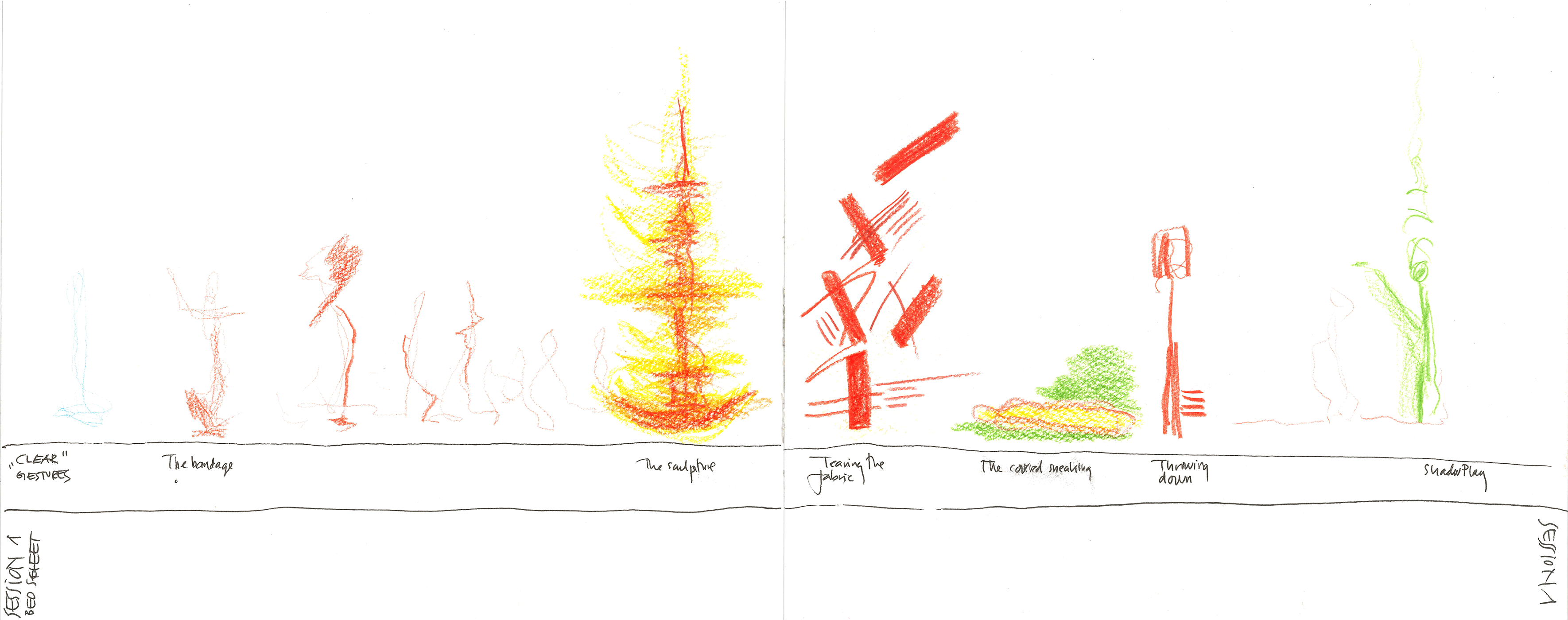
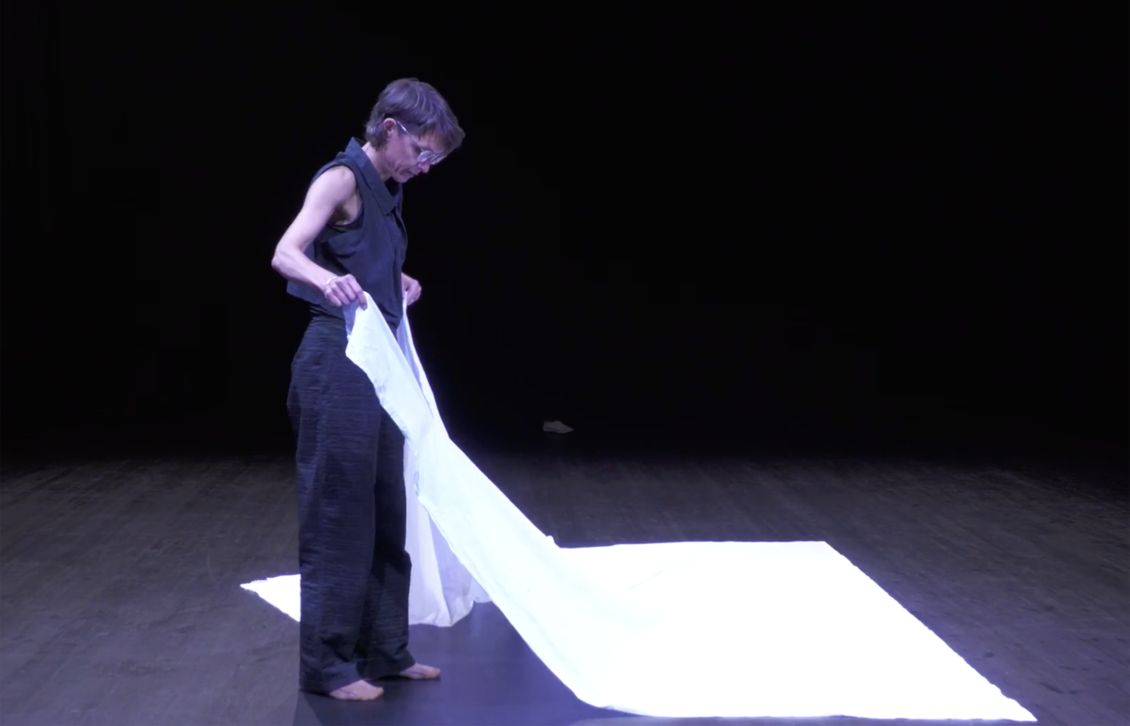
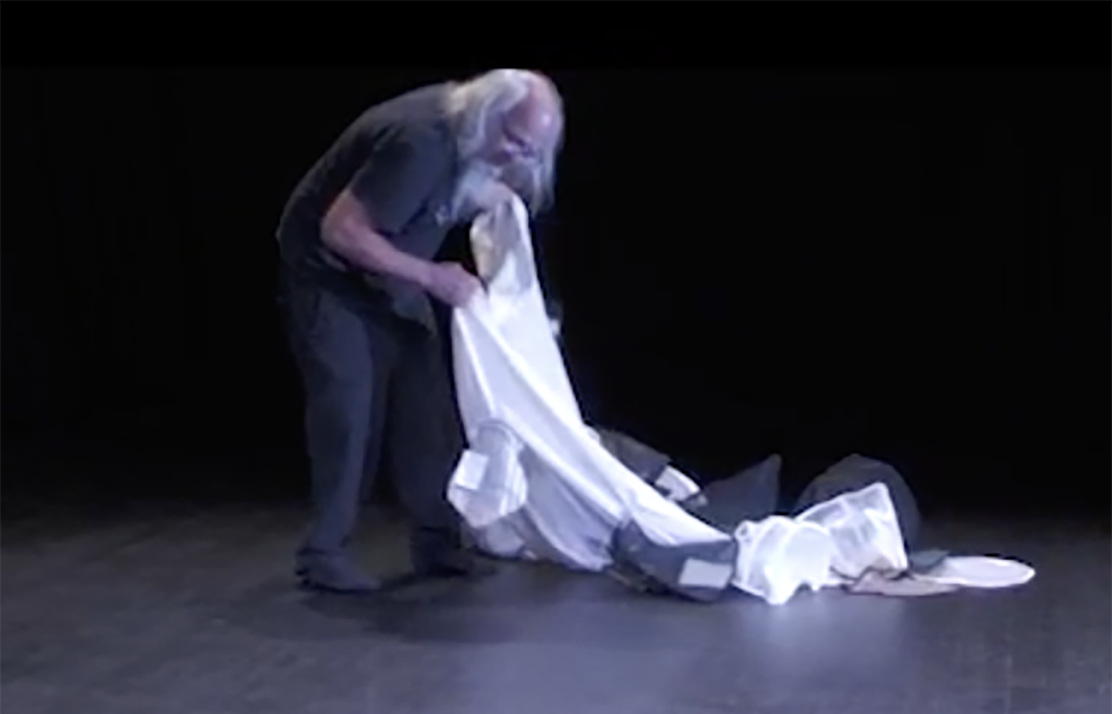
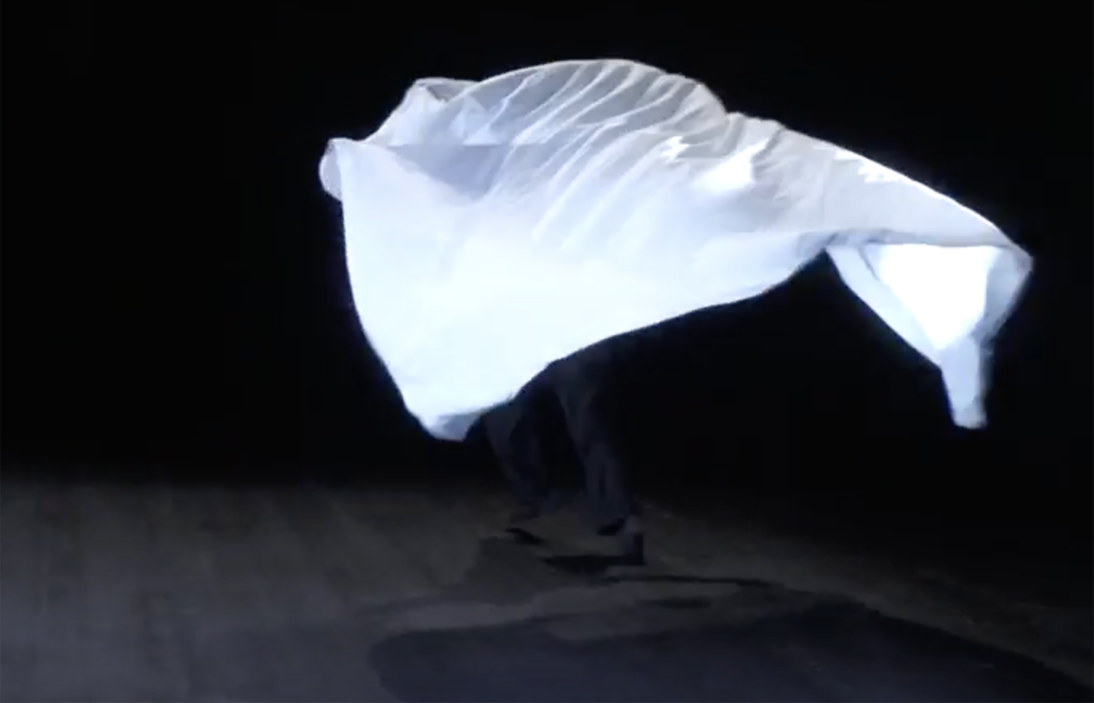
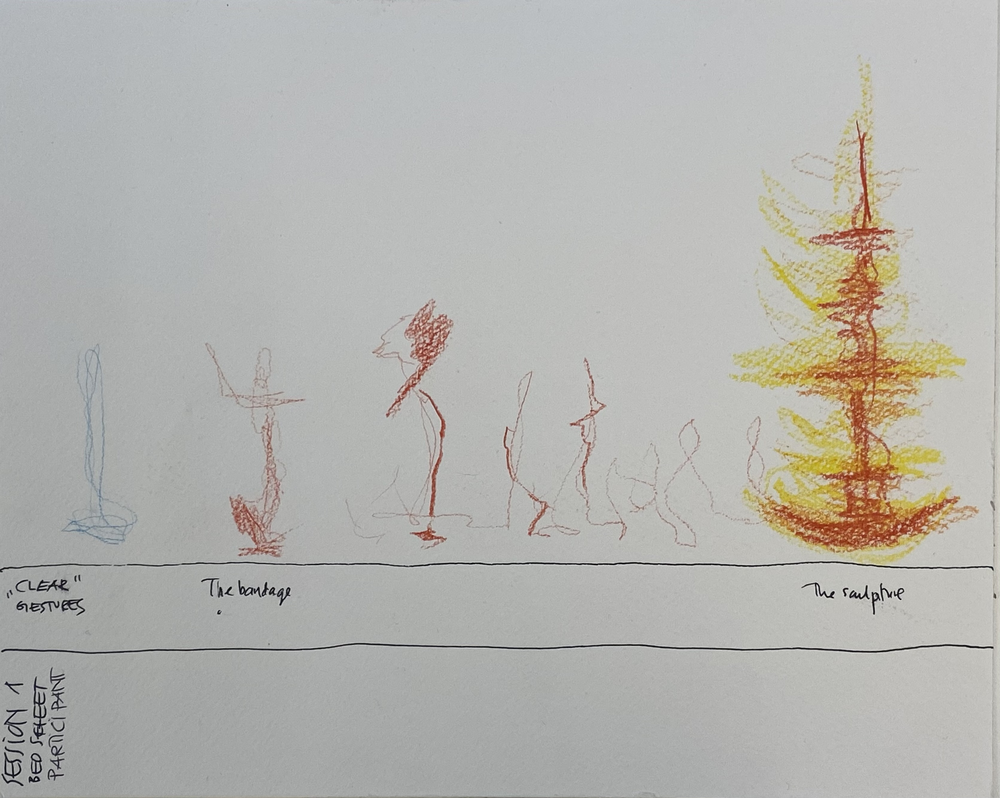
SESSION # 1 THE WHITE SHEET. Wednesday August 20th. The figure that stood out as the most intense and dynamic, was the figure when a participant tore up the sheet.
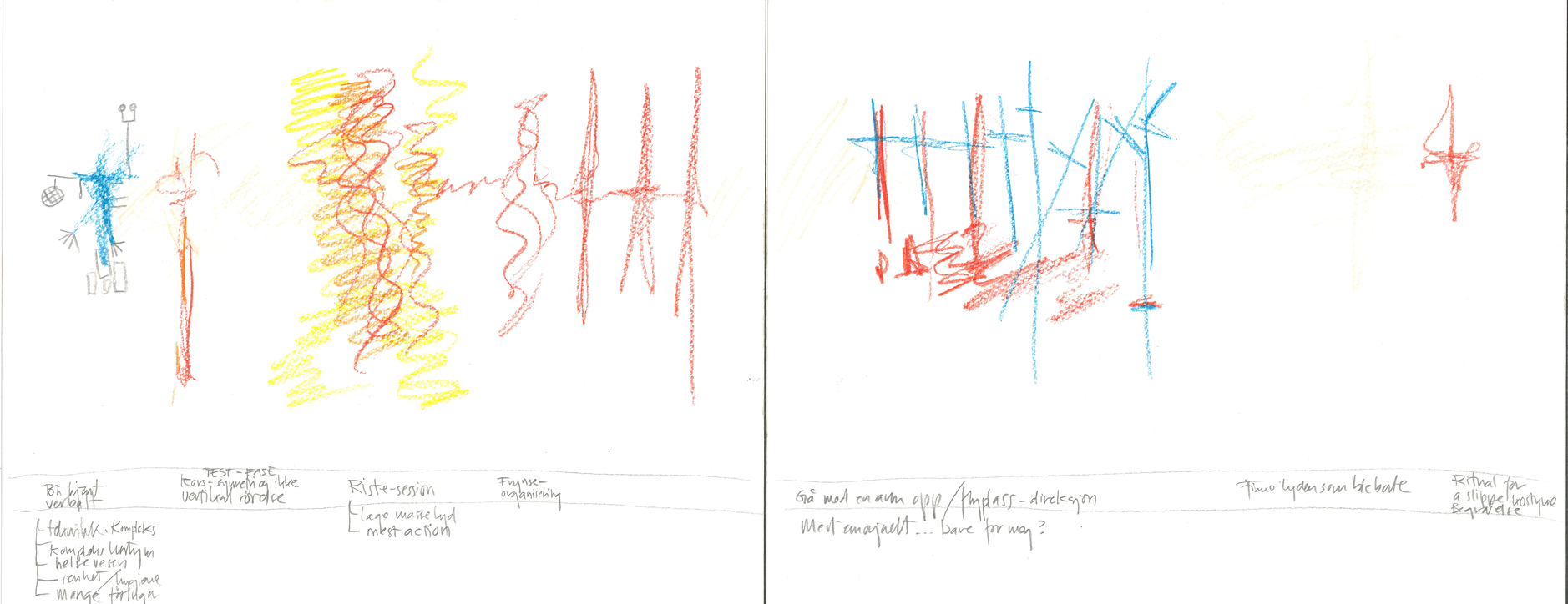
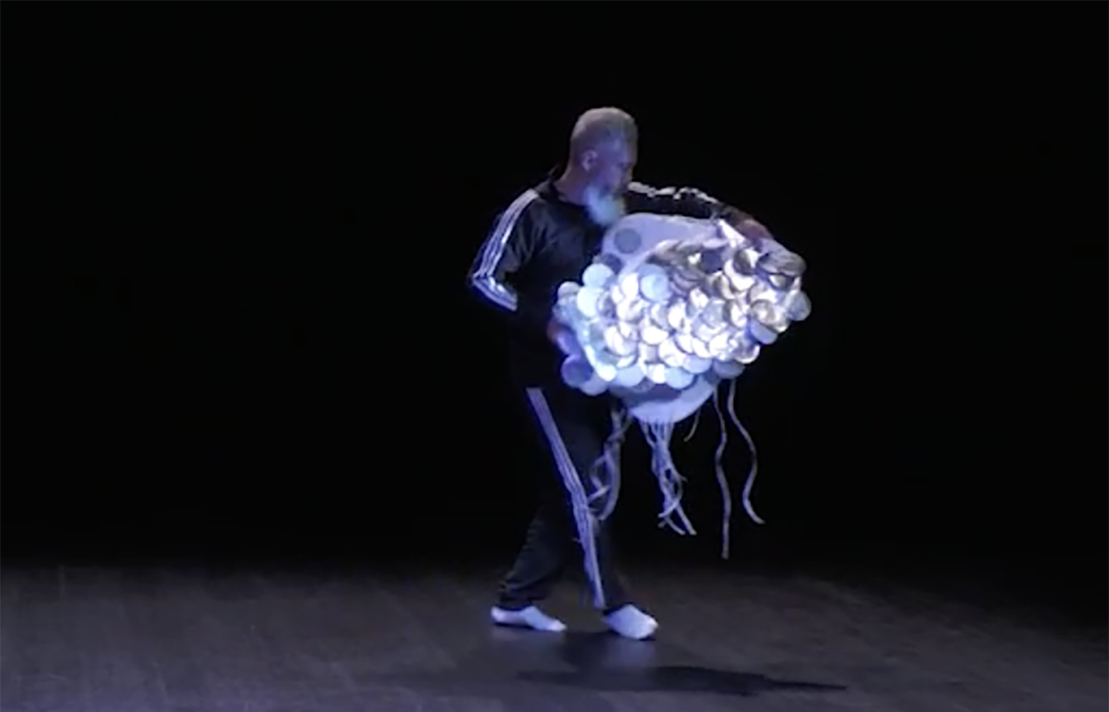
SESSION # 5 THE WING. There were some actions that did not resonded to the obvious "instruction" of the costume as a wing: An participant responded on the silver shells on the surface, and started to move the thing like a fish swimming. This trigggered a distinct figure (the first yellow and red figure) from the surprice. Another participant treated the wing as a type writing machine, which was surpricing and resulted in another distict figure (yellow figure).
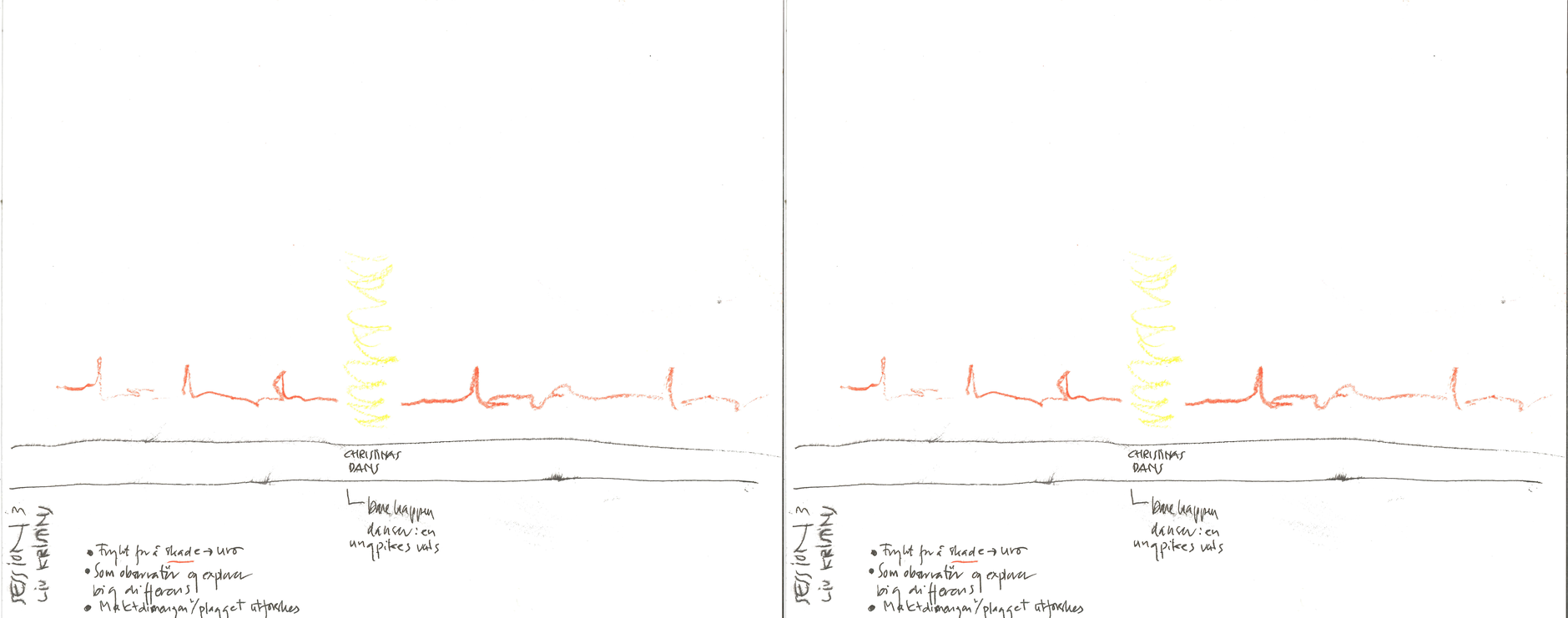
SESSION # 3 THE GOLDEN CAPE. The figure that stood out, was the figure responding to the most radical action, when a participant stamped on the cape, and with the hands tried to strangle it.
During this session, I was actively participating and not notating during the jam session. Entering and exiting the performing mode made it challening to note. A difference from previous notation experience.
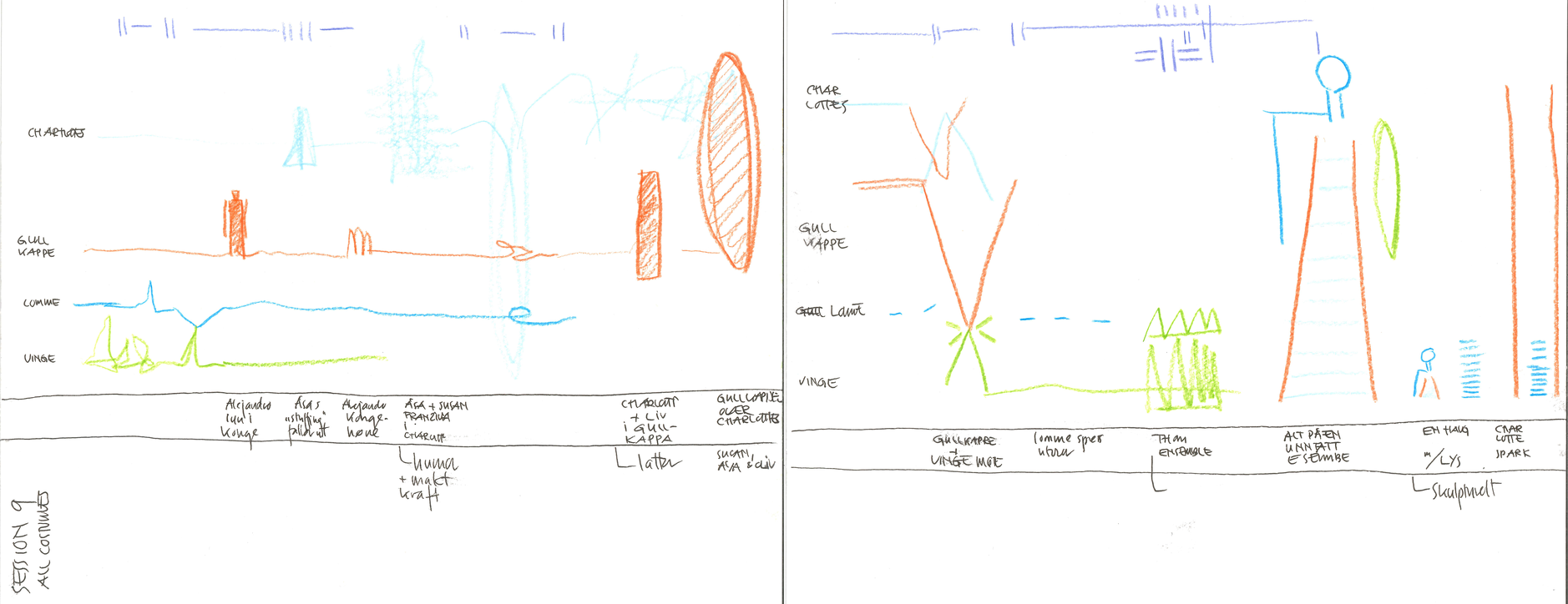
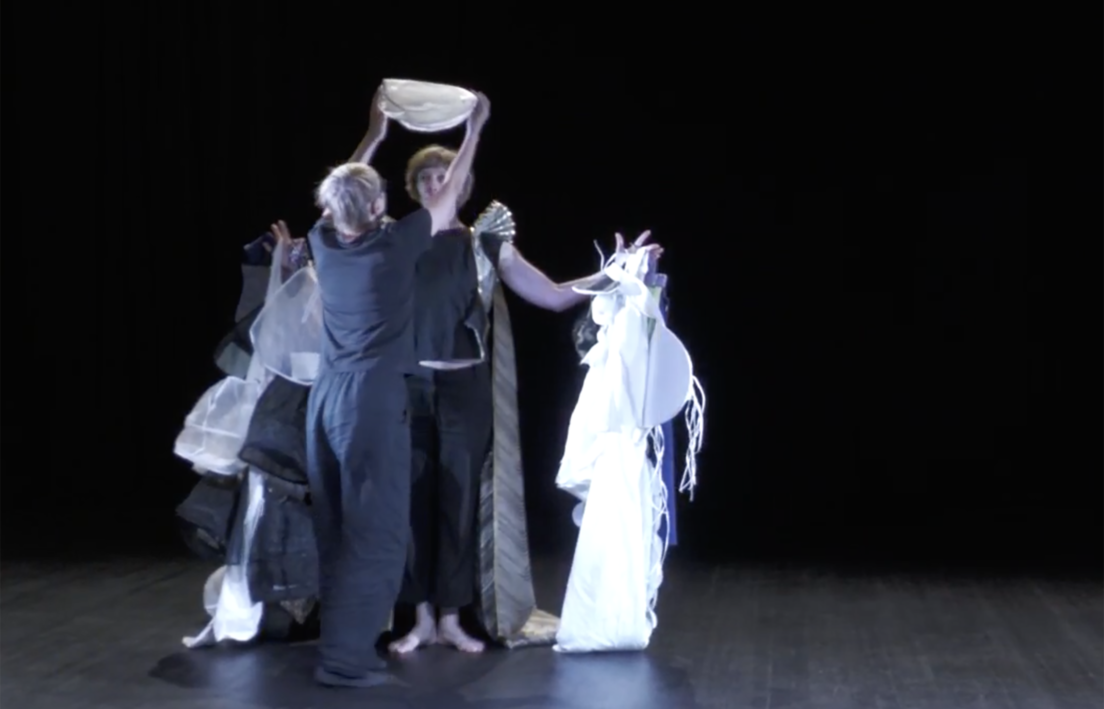
SESSION # 9 ALL COSTUMES. MANY PARTICIPANTS. ENDING IN A CLOSING RITUAL. The figure that stood out, is a figure emerging fromt he action where all costumes were on the body of one performer, or she held them in the arms – a beautiful and magic moment arose. In this sessions, with many garments and many participants, I started drawing paralell horisontal lines for each figure, responding to each costume. The actions were multiple resulting in a complexity we had not tried so far. This resulted in that it was challenging to keep the focus in order to capture the responces it created in me.
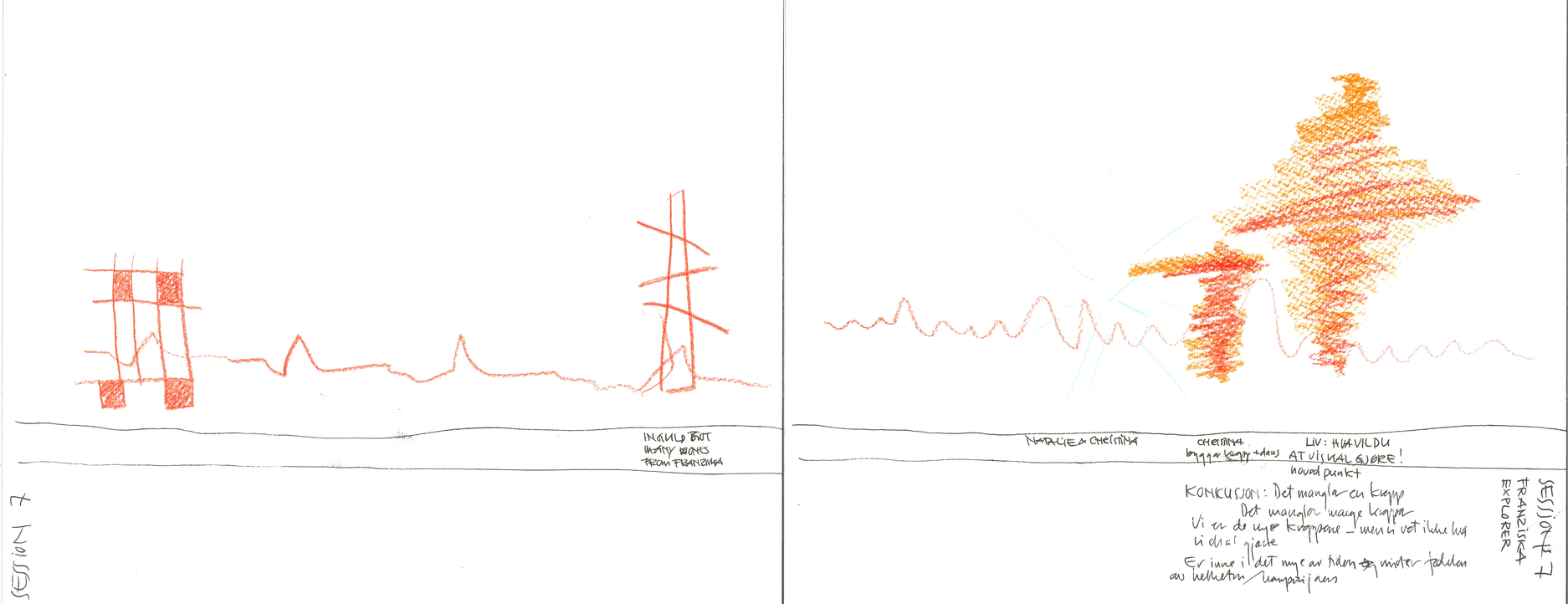
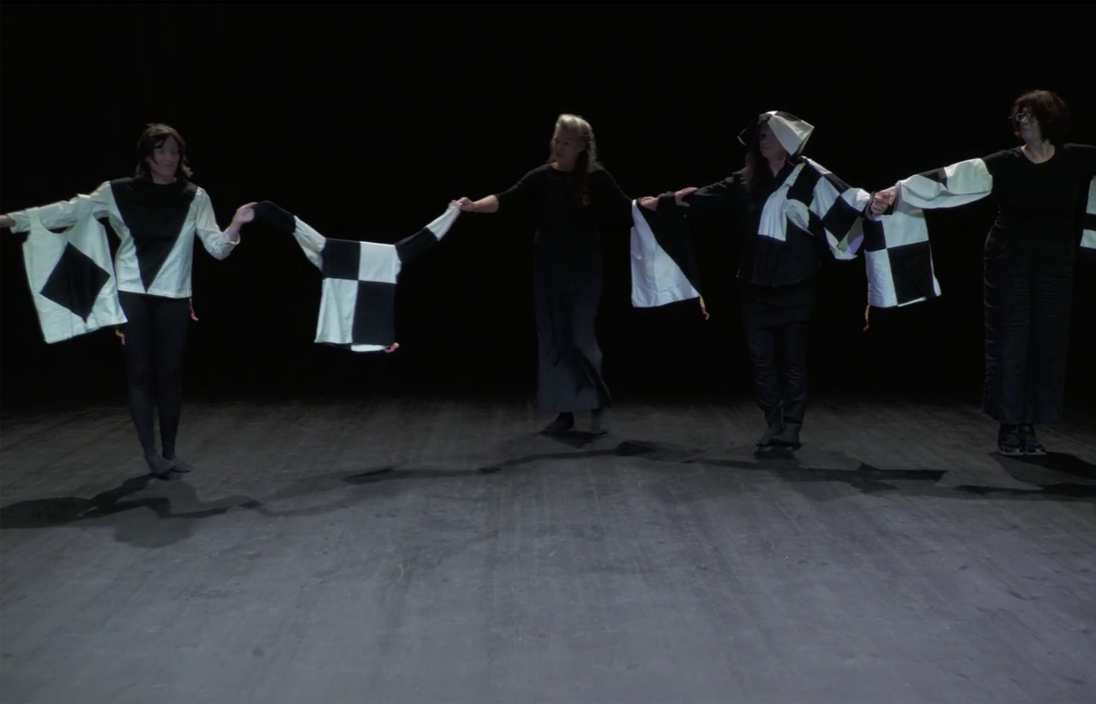
SESSION # 7 THE MULTIPLE BLACK AND WHITE GARMENTS. The figure that stood out was the (oragne-red) figure a the end. This figure emerged as as the many garments were arranged with/ by/ on the multiple participants. The costumes had black and white geometrical parts, inviting to arrange bodies in groups to cerate patterns. I was participating in the jamming, hence scarcely figures notated.
NINE COSTUME JAM SESSIONS – NINE DRAMATURGICAL SEISMOGRAPHY NOTATIONS
Below you find the nine notations – from nine costume jam sessions – drawn during or directly after the jam sessions.
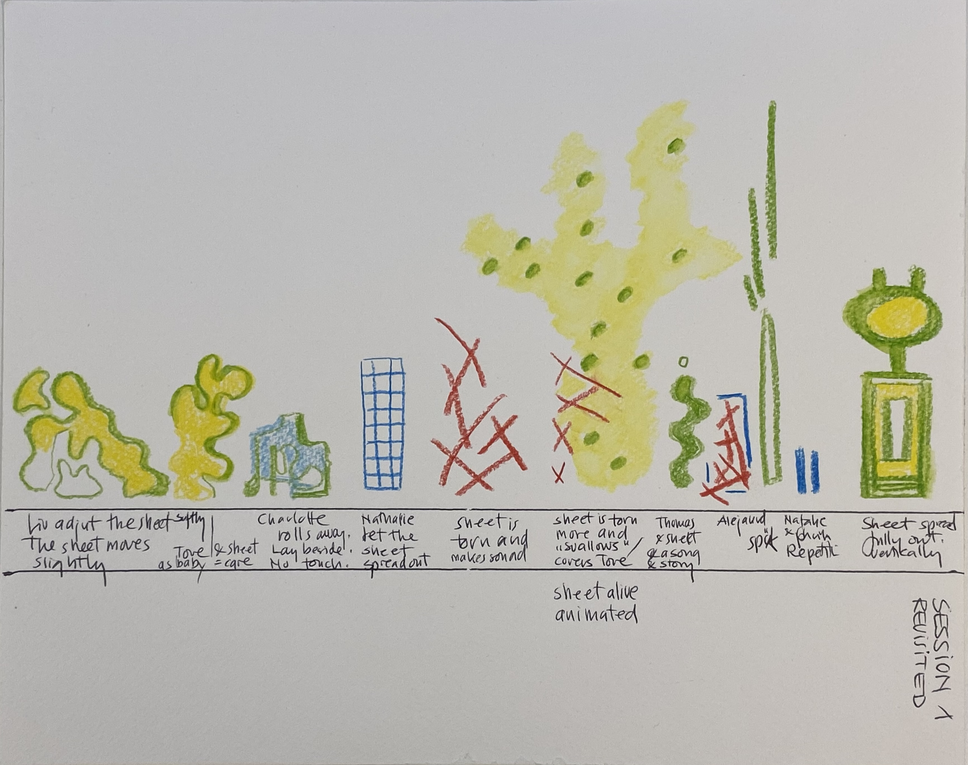
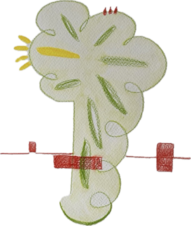
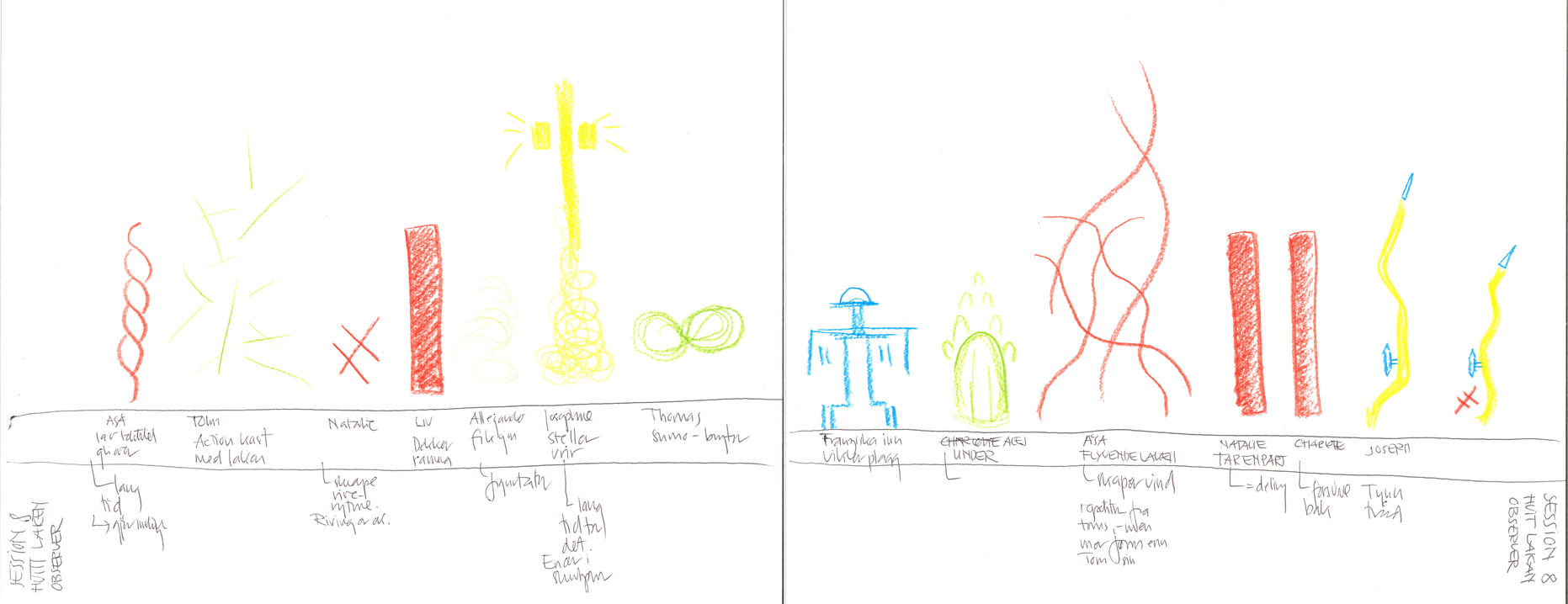
SESSION # 8 THE WHITE SHEET REVISITED. This garment we had jammed with the very first day, and wanted to revisit. The figures emerging, were distinct and clear. Some figures appears several times, as a result of actions that was repeating or eccoing preceeding actions (red rectangular boxes). Another figure that stood out is the fuígure with red wavy, vertical lines which was drawn as a response to a participant running fast, in circles thorugh the room for several rounds. The action created very much movement and in the sheet and the air around.
THREE STEPS OF DRAMATURGICAL SEISMOGRAPHY NOTATION – ONE COSTUME
Below you find the results of notation of costume jam session # 2 the knotted stretch costume, in three steps:
Step 1 Drawing during/ direct after the session
Step 2 Drawing several months after the session took place, responding to the video documentation
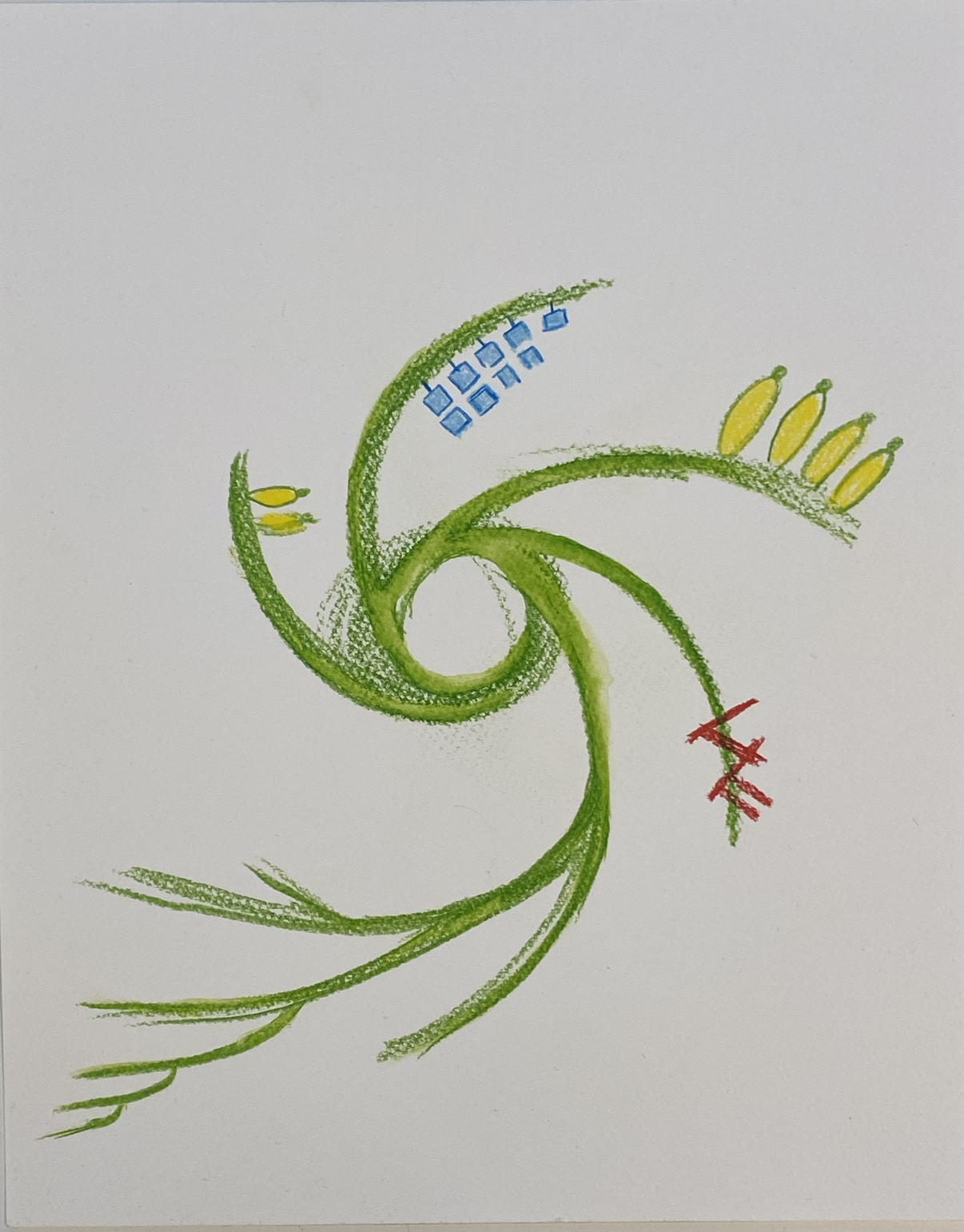
Step 3 Directly after step 2. Drawing from memory the after-image of the dramaturgy of the session
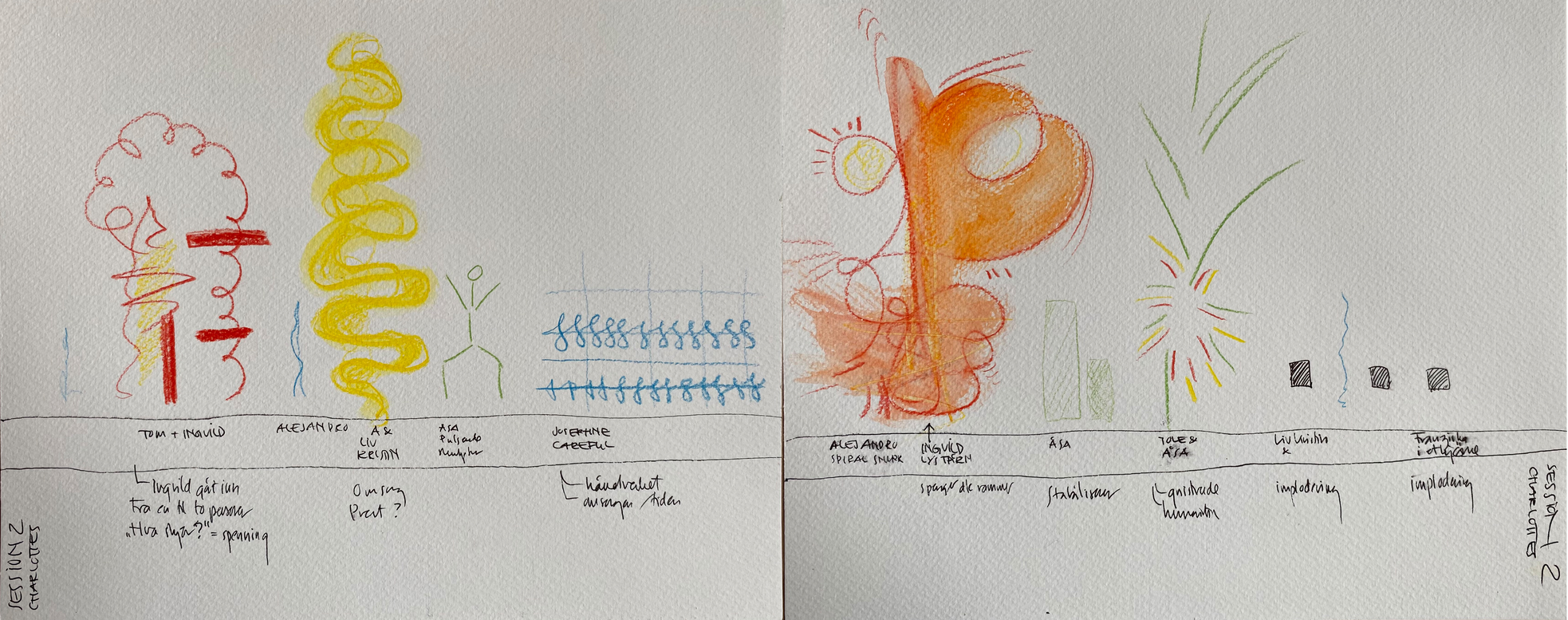
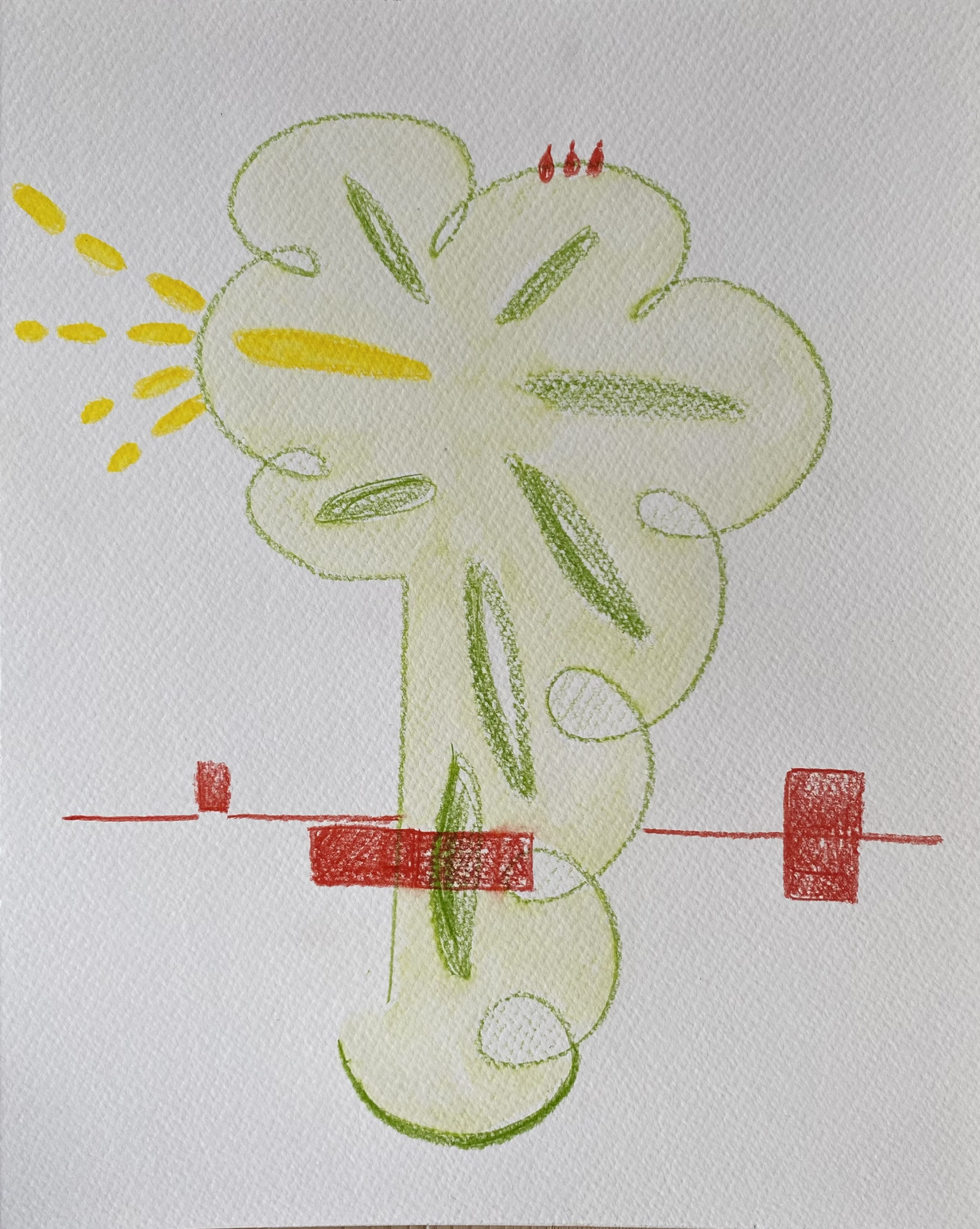
THREE STEPS OF DRAMATURGICAL SEISMOGRAPHY NOTATION – ONE COSTUME
Below you find the results of notation of costume jam session # 1 the white sheet, in three steps:
Step 1 Drawing during/ direct after the session
Step 2 Drawing several months after the session took place, responding to the video documentation
Step 3 Directly after step 2. Drawing from memory the after-image of the dramaturgy of the session
For your information: The video documentation of costume jam session # 1 with the white sheet, you can view here.