At Udtømme og At Berige
– Franiziska Bork-Petersen and Ingvild Rømo Grande.
In the conversation “To Exhaust and to Enrich,” Franziska Bork-Petersen and Ingvild Rømo Grande reflect critically on the Costume Jam Session as a performative research method. Coming from different disciplinary backgrounds, yet both working with costume as a central focus in their research, they engage in a rich dialogue about how the costume jam sessions were structured, who participated, and what kinds of research questions this method can meaningfully address.
They begin by reflecting on jam session #1, focusing on how the material itself – the white sheet – functions as an invitation to bodily engagement, for example by continuing a narrative thread or responding affectively to what the material calls for. The discussion emphasizes not only the agency of the material, but also the participants’ capacity to respond through embodied action. This eagerness to create with material points to a productive tension: the desire to exhaust the material through use while simultaneously enriching its potential meanings and affordances.
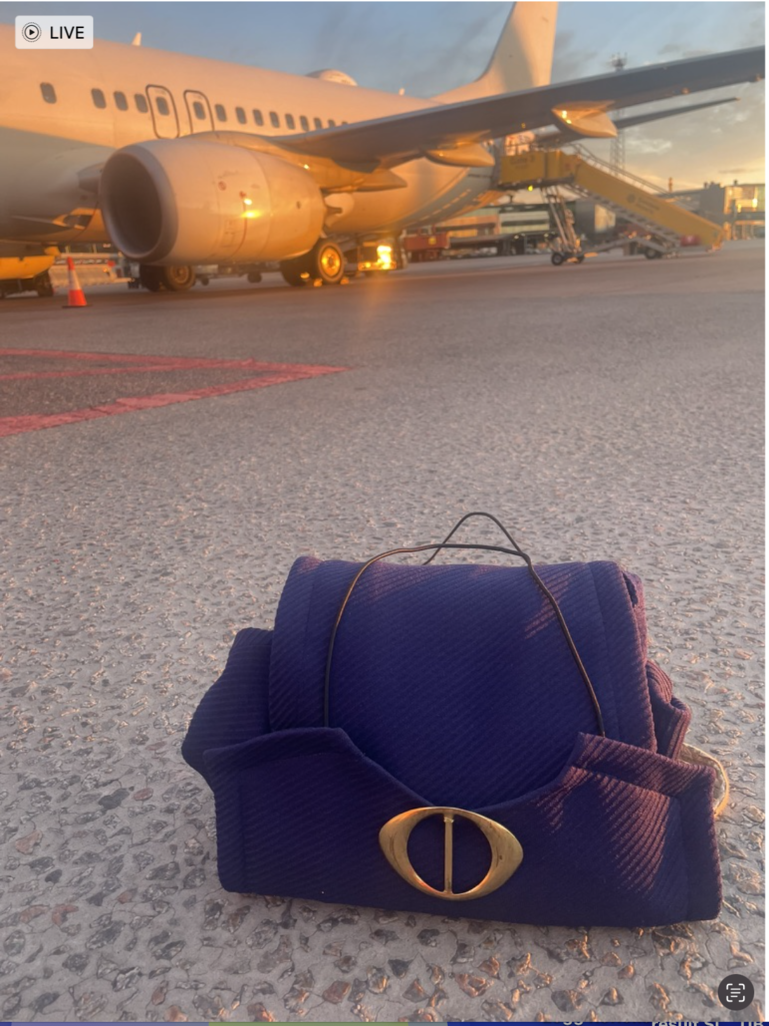
The researchers reflect on the format of costume jam sessions in relation to the historical costumes they brought to the workshop. They discuss the greeting situation involving Ingvild’s costume – her grandmother’s dress from the 60s transformed into a bag, that Ingvild titles “The Bag Body” – how it was placed at the centre and explored with all senses by the workshop participants. While acknowledging the potential of this approach, Ingvild and Franziska note that this greeting revealed a methodological challenge: in order to address specific research questions, this particular costume needs to be contextualized. Ingvild describes a sense of loss in not being able to introduce The Bag Body through its specific history —information embedded in the material, but yet invisible. Such contextualization is especially critical when researching costumes that like The Bag Body are historic, body, and character specific.
Both researchers had brought historical costumes, which testify to particular corporealities and ways of being worn. This leads the conversation to explore costume as an archive and as a knowledge technology. Wear marks and bodily traces – whether linked to a known person or documented through name tags in dance costumes – tell stories of previous bodies, modes of production, and lived experience. In this sense, costumes always belong to specific bodies, making bodily presence, limitations, and possibilities inseparable from the object itself. Drawing on historical perspectives, including how a dress or costume were worn, by whom, under certain circumstances, the researchers reflect on how past bodily practices inform contemporary understandings.
Throughout the dialogue, key themes recur: costume affordances, bodily experience, material agency, and the importance of meeting costume through all the senses – often in an affective rather than a rational mode. Context emerges as critical. The researchers question to what extent it is possible to meaningfully research historical costume when its context is withheld from participants. What kind of knowledge can we get out of perceiving the colour, weight, smell and size of a costume; bodily imprints and traces of use, if these material features remain unconnected to their specific history? Ingvild and Franziska suggest that costume jam sessions may function as a first meeting point – an opening encounter that reveals possibilities and constraints – while further research requires contextual knowledge and engagement with specific bodies. In this sense, the costume jam session operates primarily on the generative side of practice: a way of witnessing what costumes can and cannot do.
The conversation, recorded via zoom, is in Danish/Norwegian and does not include English subtitles.

Skreppa
Det ligger en hel kropp brettet sammen i denne veska. Skuldrene ligger der, brystene ligger der, halsen og kragebeinet. Ermet, foldet sammen ved albuen, ligger der. Hendene som glir ned langs låret og leter etter lommer ligger der. Leggene som hovner, som sovner, når dagen er gammel ligger der.
Rektorens blikk ligger i denne veska, ektemannens (manglende) blikk bor der, han var ikke på jobben, men hun var der, sekretærens skrivemaskinsbevegelser ligger der, papirsøpla med de krøllete bokstavarkene som ryggen bøyde seg over ligger der.
Den kongeblå, faste, smale kroppen er foldet, brettet, over.
I bevegelse. Den løftes opp og går videre, under armen på en annen som bærer denne kroppen med seg.
Ingvild R. Grande
Translated into English:
The Bag Body
There is a whole body folded up in this bag. The shoulders are there, the breasts are there, the neck and collarbone. The sleeve, folded up at the elbow, is there. The hands that slide down the thigh and look for pockets are there. The legs that swell, that fall asleep when the day is old are there.
The principal's gaze is in this bag, the husband's (missing) gaze lives there, he was not at work, but she was there, the secretary's typewriter movements are there, the paper waste with the crumpled sheets of letters that her back bent over is there.
The royal blue, firm, slender body is folded, folded, over.
In motion. It lifts and moves on, under the arm of another who carries this body with her.
Return to the connversation between Ingvild R. Grande and Franziska Bork-Petersen