the texts sung by the soprano come from poems written by Polish prisoners in the stalags; the title itself is taken from a fragment (translated from Polish) of the poem Plac Trzech Krzyży by Jan Knothe.
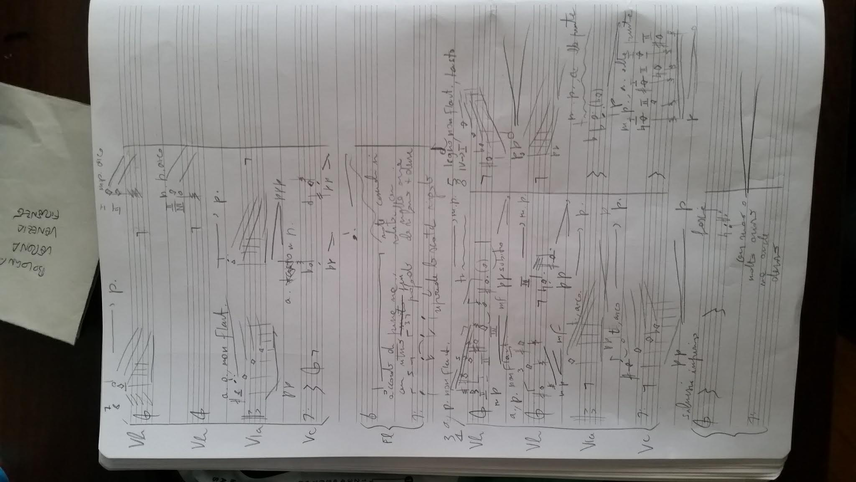
Like in Debris, for tenor saxophone and live electronics, the piece focuses on the idea of residue. The voice is not treated as a soloist but placed within the ensemble, blending with the winds to create a kind of “meta-voice.” The text is sometimes fragmented into syllables or phonemes, at other times not sung but merely whispered. The orchestration and the way the music unfolds over time are meant to highlight the most fragile aspects of the material, allowing these details to surface and shape the listening process.

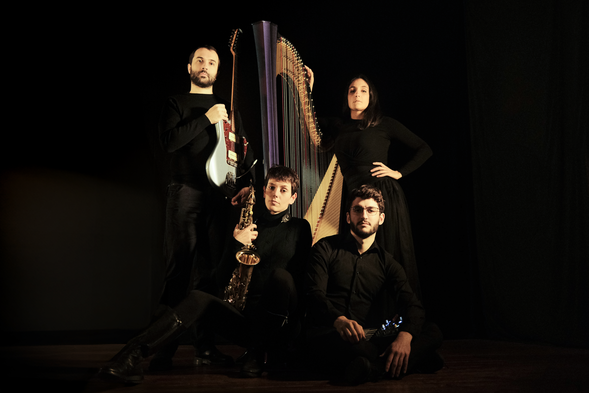
music about music about music. Burning Memory is a piece about how an album built from old samples works (Everywhere at the End of Time). It takes inspiration from The Caretaker’s reflections on memory loss, but focuses on the sound itself rather than the concept. The ensemble is quite special — tenor saxophone, electric guitar, electroacoustic harp, piano, and double bass — and fully amplified, with each instrument microphone-captured; the electronics consist of fixed-media samples recorded from the ensemble itself. The piece was written for a group of colleagues devoted mostly to improvisation, yet here they navigate composed materials, interacting with the electronic residue: sound gradually corrode, textures fragment, and familiar patterns dissolve, creating a continuous flow of decay that resists linear time. In listening to its own decay, Burning Memory becomes a meditation on fading, on fragments, and on how music can reflect on itself while it unfolds.