The Research Catalogue (RC) is a non-commercial, collaboration and publishing platform for artistic research provided by the
Society for Artistic Research. The RC is free to use for artists and
researchers. It
serves also as a backbone for teaching purposes, student assessment, peer review workflows and research funding administration. It strives to be
an open space for experimentation and exchange.
recent activities <>
Music in the making: identities and personality at play
(2026)
Jonas Howden Sjøvaag
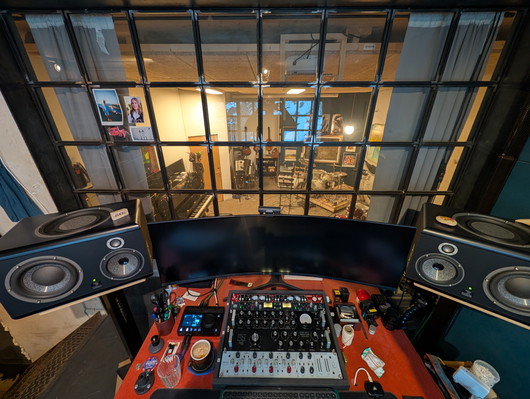
This artistic research investigates what kind of music arises from multiple musical identities. The answer is the album III, a collaborative work with guitarist Juhani Silvola, supported by a research exposition that documents and reflects upon the creative process, and an extensive timeline showing it as it unfolded.
The main argumentation within the work revolves around the importance of distinguishing between musical identities (plural) and personality (singular). The rationale behind this is to generate productive creative friction – to use the knowledge of multiplicity as a tool – to identify and push against boundaries and have knowledge from one identity inform, and expand, another.
Identities are multiple, situational, and enacted through doings: (in my case) the drummer, the singer, the producer, the programmer, et al. They coexist, each with its own expectations, vocabulary, and criteria for success. Personality, by contrast, is shown as the continuous thread – the container in which all identities meet and negotiate, providing coherence without dissolving difference. The research unfolds across three phases: Startup, Deconstruction, and Assemblage.
Methods include archival listening (revisiting accumulated recordings as material to draw from, either through self-gratification or analysis), physical and material constraints, custom software tools, and playing my instruments. In some cases, peripheral projects became ‘methodological sites’, allowing for focused and longer-term exploration and research. Spirit of Rain, Be Like Water, and a duo with Hans Martin Austestad, all function as experiments where methods combine and generate knowledge.
A central concern is the role of machines in creative practice. Noting, but not necessarily drawing on, philosopher John Searle's (1980) Chinese Room Argument and the concept of procedural agency, this work follows a line of thought in which machines may exhibit tendencies, but not personality. What emerges from human-machine collaboration is shaped by this asymmetry. The exposition, built using HTML and hosted in the Research Catalogue framework, is not a linear argument entirely, but rather a pathway through sounds, texts, videos, and fragments – organized semi-chronologically and tagged by function. It demonstrates that answering a question about musical identity requires both artistic result and theoretically aligned reflection.
Research Portal of Janacek Academy of Performing Arts in Brno
(2026)
Silvia Diveky, Monika Šimková

Research Portal of Janacek Academy of Performing Arts in Brno
Strangeness
(2026)
Catarina Casais
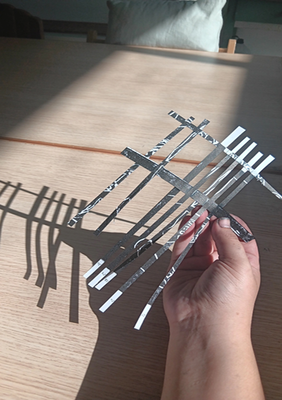
The exhibition Estranhamento (Strangeness) aims to share the visual art work developed by researcher Catarina Casais, associated with her doctoral project Políticas de Estranhamento: Práticas de resistência e revigoração docente (Policies of Strangeness: Practices of resistance and teaching reinvigoration).
These drawings, linocuts and embroideries seek connections between her artistic practice and research work, promoting possibilities for reflection on the teaching profession in the visual arts and the teaching demonstrations that took place between 2020 and 2024. The challenge in developing these works is to think, based on the materiality of the teaching demonstrations, about possible languages through the techniques and materials used. These languages reflect a desire to think about the daily reality of visual arts teachers and the moments of protest related to their professional practice.
Linocut, embroidery and drawing become ways of addressing the issue of visual arts teaching and its politicisation within the school environment, inviting everyone to visit the thinking laboratory that has been developed over the last academic year at Atelier Sem Forma.
recent publications <>
Paths of Artistic Research
(2026)
Silvia Diveky, Monika Šimková
Interviews about where artistic research is heading
The work Paths of artistic research is a collection of interviews with artistic researchers - Andrea Buršová, assistant professor at the Nika Brettschneiderová Dramatic Acting Department, Faculty of Drama, JAMU, Jiří Honzírek, director, manager of the Feste Theatre and PhD student at the Theatre Faculty, JAMU, Barbora Klímová, head of the Studio of Environmental Design at the FFA BUT, Lenka Klodová, head of the Studio of Body Design at the FFA BUT, Lucia Repašská, researcher at the Cabinet for Theatre and Drama Research, Theatre Faculty, JAMU, Hana Slavíková, head of the Studio of Radio and Television Dramaturgy and Scriptwriting, Theatre Faculty, JAMU, Pavel Sterec, artist and former head of the Intermedia Studio at the FFA, BUT, and Lenka Veselová, researcher at the Department of Theory and History of Art at the FFA, BUT and PhD student at the FFA, BUT. These are artists who have been associated with art colleges in Brno, specifically with the Faculty of Fine Arts of the BUT and the Theatre Faculty of the JAMU. Through interviews with the artists, the reader will learn under what circumstances they began to engage in artistic research, how they perceive it, what meanings they attribute to it and the purpose it serves for them. The selected group of artists is very diverse and their creative and research strategies are different, as are the purposes for which they use artistic research. The work does not aim to provide an exhaustive overview of the methods used in artistic research, but it does aim to show that there are many approaches to artistic research and to present the paths that have brought particular artists to artistic research.
Berlin, lava fields, rebellion, street life
(2026)
Ilpo Jauhiainen
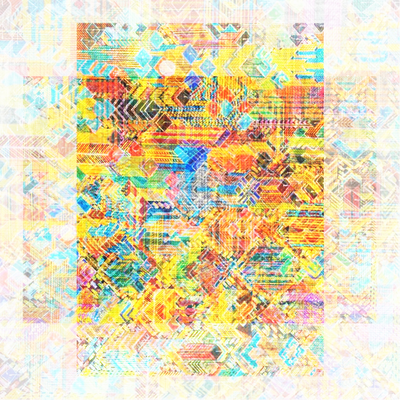
This essay examines the challenges of generative AI in composing ‘new’ music. The focus is on the commercial generative AI applications (i.e. AI music generators) due to their prominence in the mainstream cultural and technological discourse. The essay adopts a philosophical rather than a technological approach, situating the use of generative AI in music within a broader societal, cultural, and environmental context. If AI and music (understood as normative practices) are majoritarian, molar, and arborescent entities, then the approach taken here is Deleuzian: minoritarian, molecular, and rhizomatic. By engaging with their fault lines, disassembling and reassembling their structures, and connecting them to the wider world, the essay presents an alternative way of thinking about AI and music – and AI in music – and proposes one such possible application.
Sound, Performance, and Technology: Considering The Foley Grail
(2026)
Sara Pinheiro
Vanessa Theme Ament’s "The Foley Grail" was, for a long time, the only publication to discuss in detail the art of film sound effects (foley). In this issue, we review the third edition of the book while in dialogue with the author herself.