The Research Catalogue (RC) is a non-commercial, collaboration and publishing platform for artistic research provided by the
Society for Artistic Research. The RC is free to use for artists and
researchers. It
serves also as a backbone for teaching purposes, student assessment, peer review workflows and research funding administration. It strives to be
an open space for experimentation and exchange.
recent activities <>
Astrattismo
(2026)
Giusirames
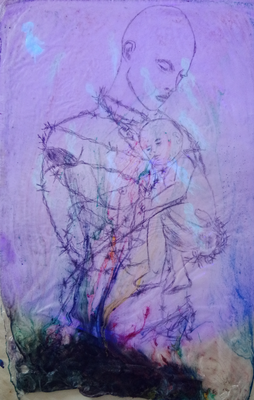
This thesis stems from the need to investigate an original painting technique developed by the author, which combines figurative painting and solidified atmospheric phenomena.
The heart of the research is a simple and radical question:
How can an ephemeral phenomenon be made permanent?
The answer takes shape through the creation of sheets of solidified rain, transparent membranes that preserve the logic of the drop, the flow, the surface tension. These membranes are superimposed on figurative paintings, generating a multidimensional visual language.
Transparency is not an aesthetic effect, but a temporal device: it freezes the work, suspends it, holds it in an eternal instant.
Narratografía y procesos de mediación gráfica en contextos de migración
(2026)
Pinzón Lizarazo Oscar Daniel
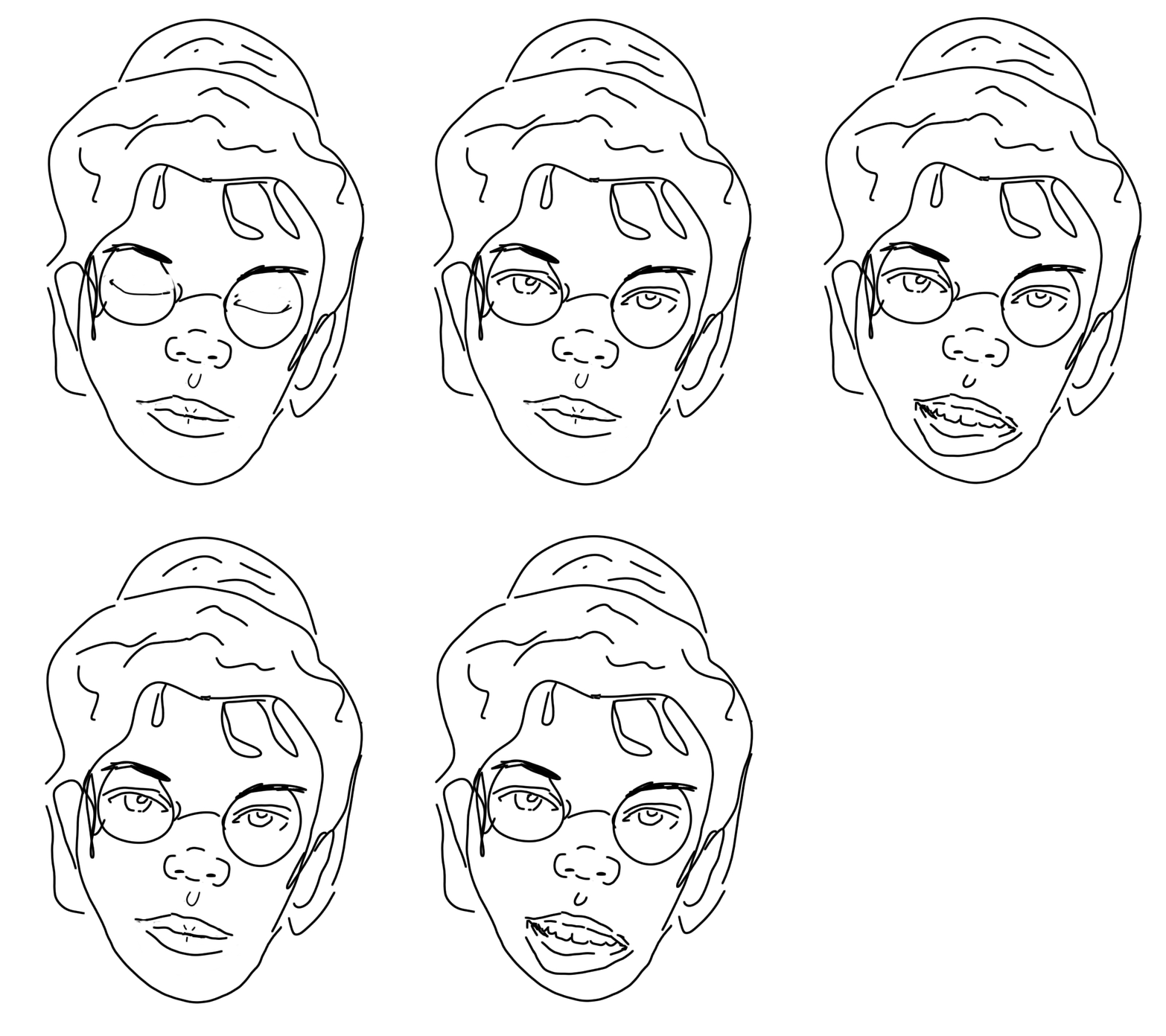
Esta web es producto digital del proyecto Narración gráfica, laboratorio de objetos, cartografía digital y mediaciones en experiencias con comunidades de artistas migrantes, registrado con Cód. 10160180521 proyecto institucionalizado sin financiamiento del Centro de Investigaciones y Desarrollo Científico - CIDC de la Universidad Distrital Francisco José de Caldas.
Hace parte del proceso metodológico de desarrollo de la tesis doctoral Narración Gráfica de Experiencias: Intercambios en Imágenes de migración.
Con la realización del proyecto, se busca incentivar el uso de la narración gráfica como proceso horizontal que permite relatar y revisar la importancia que tienen las prácticas artísticas de las comunidades en la construcción de tejido social. La propuesta de mediación artística se visibiliza como una estrategia colaborativa que permite el diálogo y el intercambio.
El trabajo se inscribe y contribuye a las apuestas del Grupo de investigación para la creación artística y de la Línea de investigación en: Estudios críticos de las corporeidades, las sensibilidades y las performatividades. Adscritos al doctorado en estudios artísticos de la Universidad Distrital Francisco José de Caldas.
TECHNICAL REPORT ON THE SOLIDIFICATION OF LIQUIDS: SEA AND RAIN
(2026)
Giusirames
Introduction
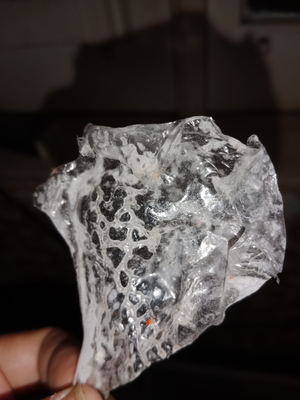
This research investigates the possibility of transforming ephemeral liquids—primarily seawater and rain—into solid, stable, and optically active materials, within the methodological framework of the Divergent Gaze, a phenomenological protocol that considers imagination as a pre-scientific hypothesis capable of being empirically verified.
The artist does not simply observe matter, but interrogates its molecular stability, manipulating transition states to arrest fluidity without destroying the identity of the liquid itself.
recent publications <>
Playing the Mountain
(2025)
Serena Lee
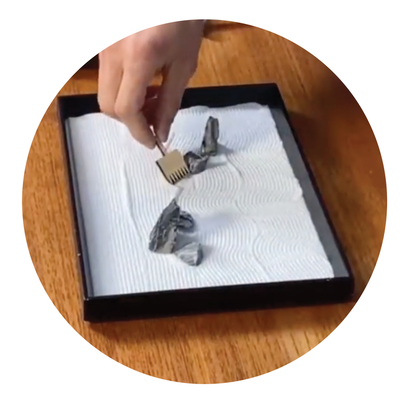
Playing the Mountain is an artistic research project investigating balance as the dynamic interplay of yinyang, through the practice of taijiquan (a Chinese internal martial art). Based on this embodied practice, I explore balance not as a state but as movement, by transposing this dynamic of opposing forces into a constellation of participatory, sculptural and expanded cinema forms. Drawing on principles of Chinese aesthetics from a diasporic perspective, Playing the Mountain deploys artistic strategies to consider agency, (non-)presence, tension, and resistance. This constellation traces unseen forces through kites, music, geological processes and Chinese calligraphy, gathering different ways to ask: what are the implications of understanding balance, not as a state, but as a process?
This research project manifests through material investigations, martial arts practice, participatory exchanges and collaboration, as part of my broader PhD-in-Practice research project, undertaken at the Academy of Fine Arts Vienna. The exhibition and writing workshop were presented in Summer - Autumn 2022 at Centre[3] for Artistic + Social Practice, in Hamilton, Canada, curated by Lesley Loksi Chan; the kite-making workshop was conducted in Summer 2024 at Decentric Circles Assembly in Warsaw, Poland (various sites), curated by the Work Hard! Play Hard! working group.
Download Accessible PDF
ECOTONE
(2025)
Niamh O Brien
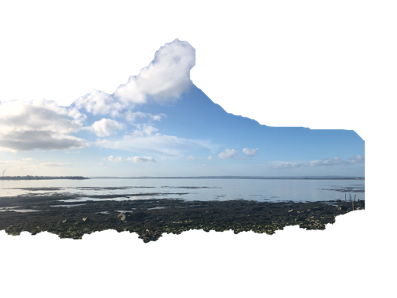
I am a composer, musician and radio producer, and in this exposition I explore how I brought my artistic practice into dialogue with a cartographic approach called deep mapping to create a sound installation called ECOTONE: A Sonic Journey Through Kildimo-Pallaskenry. Deep mapping encompasses the discursive and ideological dimensions of a place, such as memories, imaginations and the multiple realities that exist in our surroundings (Bodenhamer et al. 2015; Roberts 2016; Biggs and Modeen 2020). The approach has spatial considerations and adheres to locations and boundaries, but what is added is a reflexive narrativity that includes the complexity of human stories and identities that exist in a place. Deep mapping has the capacity to bring together histories, mythologies, facts and fictions, and weave them together in expressing a place. In this work, which formed part of my practice-as-research PhD, I developed a sonic deep mapping approach that involves recording the music, sounds and stories of place, and re-imaging them through my composition practice. This research explores a new approach to understanding and representing place, and adds a new perspective to the field of deep mapping. I propose that my sonic deep mapping approach forges connections between creative process, people and place. It invites us to listen deeply to our surroundings and to create representations of place that bring us into the realm of imagination and connection.
Download Accessible PDF
A Metaphorical Methodology: Embracing Complexity in Doctoral Artistic Research
(2025)
Kevin Skelton
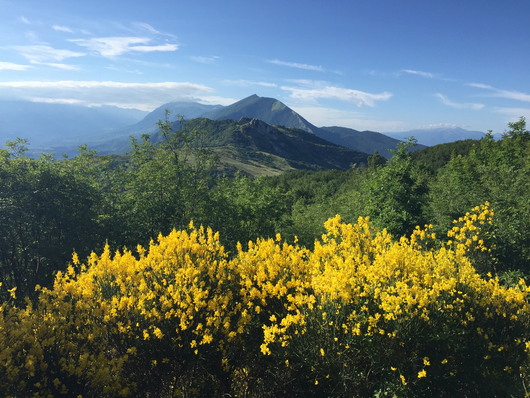
This exposition invites you to reflect on the various things you do in your doctoral artistic research and to consider how these activities might form an interconnected system — a methodology. In a guided tour of words, images, and visits to my garden, I reconsider several research models I encountered as a PhD student investigating transdisciplinary performing practices. However, my primary aim is to carve out a pathway — from model to metaphor — one that offers a viable means of seeing your doctoral project existing within a terrain of complexity rather than utter chaos.
Throughout the exposition I employ metaphors inspired not only by my artistic work, but also by my garden in Abruzzo, where I lived throughout my PhD studies. To fully discover Abruzzo, it is necessary to slow down — even allow yourself to get bored — before inevitably being revitalized and inspired by its natural beauty and ever-welcoming ambiance. I hope you will embrace this exposition’s journey. Permit yourself to be a rural-Italian wanderer, enjoy the breaks, and take extra ones so you can also enjoy an espresso or glass of Montepulciano d’Abruzzo.
Download Accessible PDF