The Research Catalogue (RC) is a non-commercial, collaboration and publishing platform for artistic research provided by the
Society for Artistic Research. The RC is free to use for artists and
researchers. It
serves also as a backbone for teaching purposes, student assessment, peer review workflows and research funding administration. It strives to be
an open space for experimentation and exchange.
recent activities <>
Exodus: um percurso à abstração.
(2026)
Ellen Spitz de Morais
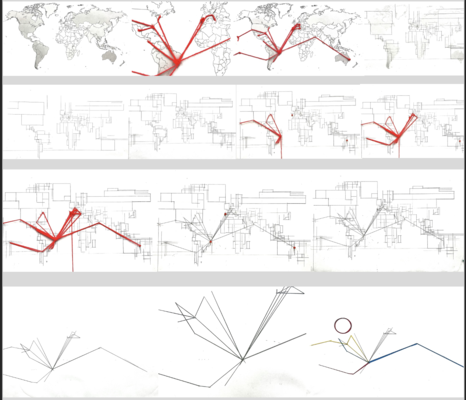
O papel do corpo na criação do lugar.
O percurso físico como motor investigador do percurso, viagem e abstração mental.
Embodied Memory and Subversive Performances Reimagining the Repressed Body in a Collective Action
(2026)
Majid Sarnayzadeh
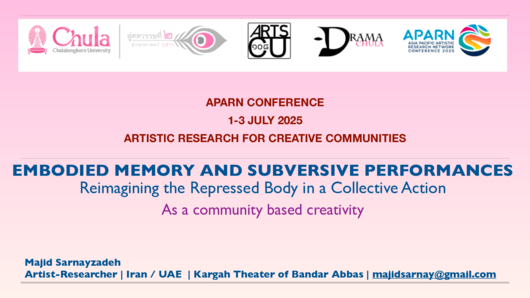
I presented my paper at the Asian Pacific Artistic Research Network 2025 Conference under the theme Artistic Research for Creative Communities.
My presentation, titled “Embodied Memory and Subversive Performances: Reimagining the Repressed Body in Collective Action,” explored how the Woman, Life, Freedom movement in Iran has generated a rich archive of embodied protest. Through gestures like group clapping, headscarf-burning, and silent standing, and plural embodied subversion experiences, that inspired from their collective memory, protestors challenged hegemonic gender norms and collectively reimagined femininity through performative resistance. Drawing on field interviews, sensory ethnography, and archive analyze, I reflected on how these subversive performances are shaping new femininity social imaginaries.
Walking As Practice WAP23
(2026)
WAP
WALKING AS PRACTICE
WAP23 was a process-based residency during September-November 2023, where artists using walking as a method delved into each others’ knowledges and things they encountered together at BKN, the Northern Stockholm Archipelago in Sweden. Fieldworks, share sessions and seminars were created jointly to locate and entangle structures, narratives and themes for walking. The residency formed a transformative, dynamic space for art that engaged with life and nature towards critical and poetic explorations, influenced by the immediate surroundings: the forest, lakes, sea and people living in the rural area. Processing how walking is interlocked in our artistic practices, this exposition represents a gathering of texts, visuals and audio from the walking art residency.
The selected artists contributed with interdisciplinary practices, primarily drawing, photography, video, performance and dance. They worked both individually, in spontaneous constellations and in group sessions. The dissemination of the program took place in share sessions upon arrival of new artists - including dinners, open studios, walks, workshops etc. In addition, as the program unfolded, each artist developed their own exposition.
recent publications >
Paths of Artistic Research
(2026)
Silvia Diveky, Monika Šimková
Interviews about where artistic research is heading
The work Paths of artistic research is a collection of interviews with artistic researchers - Andrea Buršová, assistant professor at the Nika Brettschneiderová Dramatic Acting Department, Faculty of Drama, JAMU, Jiří Honzírek, director, manager of the Feste Theatre and PhD student at the Theatre Faculty, JAMU, Barbora Klímová, head of the Studio of Environmental Design at the FFA BUT, Lenka Klodová, head of the Studio of Body Design at the FFA BUT, Lucia Repašská, researcher at the Cabinet for Theatre and Drama Research, Theatre Faculty, JAMU, Hana Slavíková, head of the Studio of Radio and Television Dramaturgy and Scriptwriting, Theatre Faculty, JAMU, Pavel Sterec, artist and former head of the Intermedia Studio at the FFA, BUT, and Lenka Veselová, researcher at the Department of Theory and History of Art at the FFA, BUT and PhD student at the FFA, BUT. These are artists who have been associated with art colleges in Brno, specifically with the Faculty of Fine Arts of the BUT and the Theatre Faculty of the JAMU. Through interviews with the artists, the reader will learn under what circumstances they began to engage in artistic research, how they perceive it, what meanings they attribute to it and the purpose it serves for them. The selected group of artists is very diverse and their creative and research strategies are different, as are the purposes for which they use artistic research. The work does not aim to provide an exhaustive overview of the methods used in artistic research, but it does aim to show that there are many approaches to artistic research and to present the paths that have brought particular artists to artistic research.
Berlin, lava fields, rebellion, street life
(2026)
Ilpo Jauhiainen
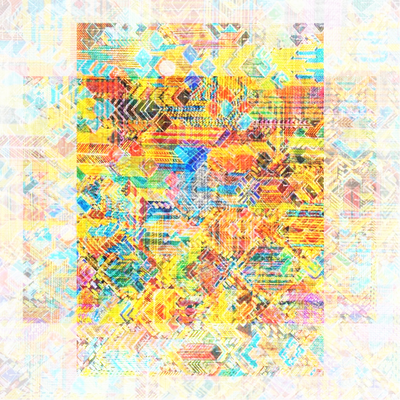
This essay examines the challenges of generative AI in composing ‘new’ music. The focus is on the commercial generative AI applications (i.e. AI music generators) due to their prominence in the mainstream cultural and technological discourse. The essay adopts a philosophical rather than a technological approach, situating the use of generative AI in music within a broader societal, cultural, and environmental context. If AI and music (understood as normative practices) are majoritarian, molar, and arborescent entities, then the approach taken here is Deleuzian: minoritarian, molecular, and rhizomatic. By engaging with their fault lines, disassembling and reassembling their structures, and connecting them to the wider world, the essay presents an alternative way of thinking about AI and music – and AI in music – and proposes one such possible application.
Sound, Performance, and Technology: Considering The Foley Grail
(2026)
Sara Pinheiro
Vanessa Theme Ament’s "The Foley Grail" was, for a long time, the only publication to discuss in detail the art of film sound effects (foley). In this issue, we review the third edition of the book while in dialogue with the author herself.