The Research Catalogue (RC) is a non-commercial, collaboration and publishing platform for artistic research provided by the
Society for Artistic Research. The RC is free to use for artists and
researchers. It
serves also as a backbone for teaching purposes, student assessment, peer review workflows and research funding administration. It strives to be
an open space for experimentation and exchange.
recent activities <>
Can Philosophy Exist?
(2026)
Zoe Panagiota (aka Betty) Nigianni
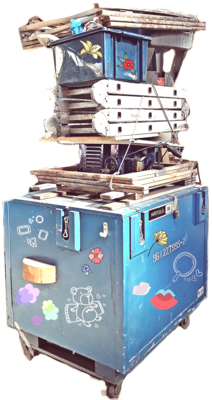
Photography with sound and net art, drawing, found folk sculpture with digital drawing, readymades, 2012, 2020, 2021. Accompanied by archival material.
The exposition exposes the question of what is artistic research. Usurping the mini-essayist format, which is traditionally associated with research in say the area of philosophy, the exposition formally operates on different levels. I selectively included visual art research material from my own artistic archive, as well as anonymous material that's readily available from the internet and in film archives. In this way, I wanted to emphasise the role of archiving and using archives in the artistic process, as an element of artistic research and artistic production that might involve remediation. Taking that we live in a largely theoretic culture, which means that we use external information systems for storage and retrieval of written, visual and other material, the implication is that art is part of this theoretical system.
Moreover, I specifically problematise the notion of value in relation to the visual arts by using the popular media figures of the counterfeit and the impostor, with reference to the so-called "impostor syndrome", correlated with being a minority of some sort in one's field: "A different thought is that two people may be answerable to the very same standard of success or competence, yet be subject to different epistemic standards for reasonable belief in their respective success or competence. This would be an example of pragmatic encroachment." (Katherine Hawley, "What is Impostor Syndrome?", Proceedings of the Aristotelian Society Supplementary Volume 93, 2019). I use visual art and figurative examples as illustrations, adapting from methods, such as the example, used in analytic philosophy.
I suggest that some artworks operate as philosophical provocations of the archive: "The artwork just exists", as Frank Stella argued. Artworks and archival artistic material are offered for aesthetic contemplation; they don't possess any "magical" qualities, they don't cause any phenomena or events in the world. In this view, I ordered this exposition as a design proposal for two independent, yet interconnected exhibitions: one for the final artistic exhibition show; and one as a general overview for the artist's studio, set up as a stand alone, if parallel, exhibition.
The conception of two parallel expositions as mocks of two parallel exhibitions is inspired by Jean Baudrillard's concept of "hyperreality", which refers to the blurring between reality and simulated representations, when sometimes, influenced by media, film, television, advertising, people tend to accept images or perceptions not corresponding to actual reality. The exposition hints at artists and others, who use different modes of communication, as skillfully exploiting the Baudrillardian concept of "hyperreality", with its accompanied "simulacra" and "simulations", for making indirect references on a sociological level; as well as for putting forward a critical commentary on the artistic and conceptual level.
Astrattismo
(2026)
Giusirames
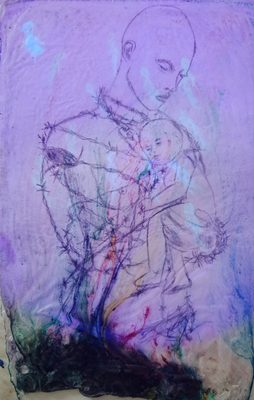
This thesis stems from the need to investigate an original painting technique developed by the author, which combines figurative painting and solidified atmospheric phenomena.
The heart of the research is a simple and radical question:
How can an ephemeral phenomenon be made permanent?
The answer takes shape through the creation of sheets of solidified rain, transparent membranes that preserve the logic of the drop, the flow, the surface tension. These membranes are superimposed on figurative paintings, generating a multidimensional visual language.
Transparency is not an aesthetic effect, but a temporal device: it freezes the work, suspends it, holds it in an eternal instant.
Narratografía y procesos de mediación gráfica en contextos de migración
(2026)
Pinzón Lizarazo Oscar Daniel
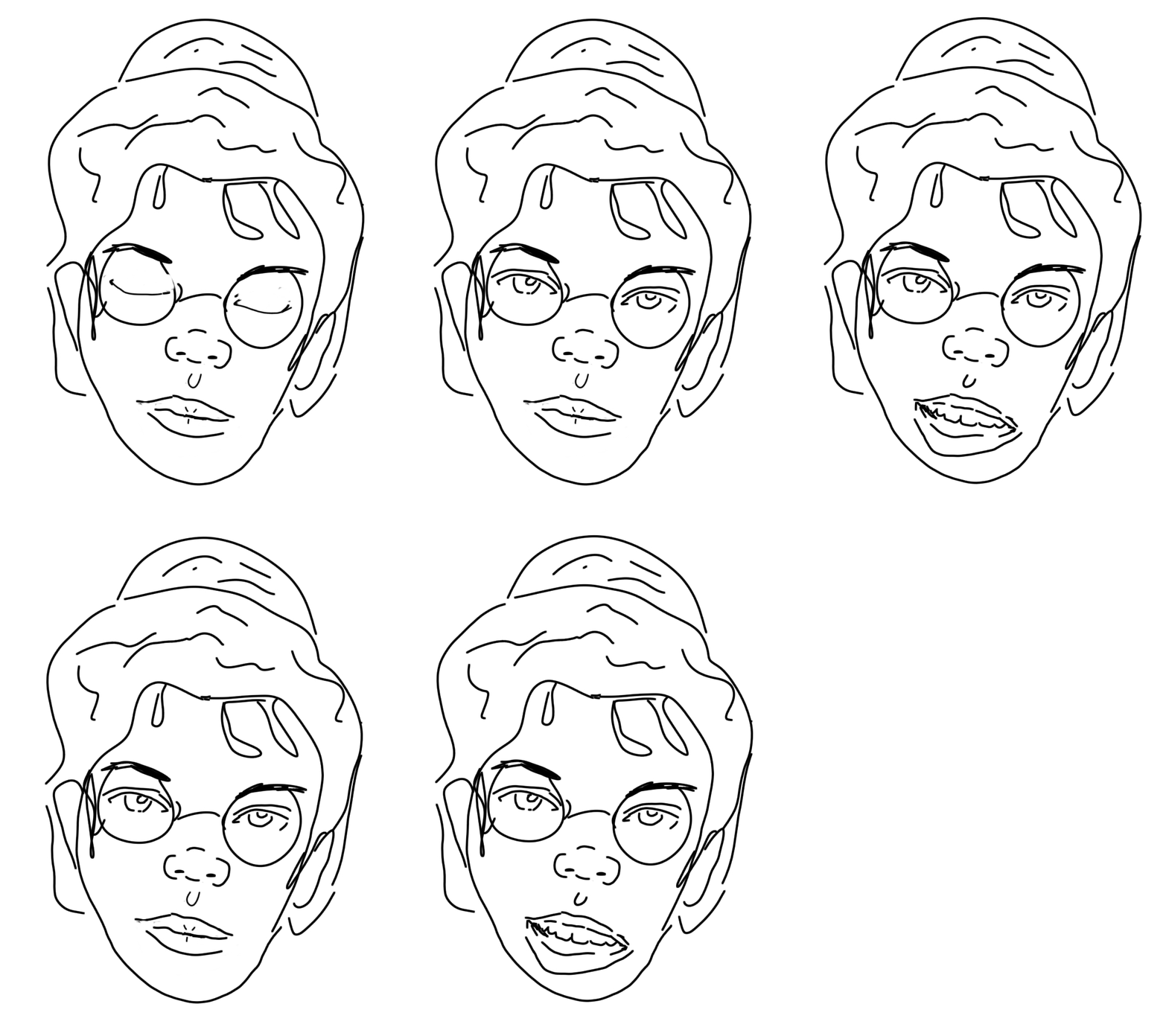
Esta web es producto digital del proyecto Narración gráfica, laboratorio de objetos, cartografía digital y mediaciones en experiencias con comunidades de artistas migrantes, registrado con Cód. 10160180521 proyecto institucionalizado sin financiamiento del Centro de Investigaciones y Desarrollo Científico - CIDC de la Universidad Distrital Francisco José de Caldas.
Hace parte del proceso metodológico de desarrollo de la tesis doctoral Narración Gráfica de Experiencias: Intercambios en Imágenes de migración.
Con la realización del proyecto, se busca incentivar el uso de la narración gráfica como proceso horizontal que permite relatar y revisar la importancia que tienen las prácticas artísticas de las comunidades en la construcción de tejido social. La propuesta de mediación artística se visibiliza como una estrategia colaborativa que permite el diálogo y el intercambio.
El trabajo se inscribe y contribuye a las apuestas del Grupo de investigación para la creación artística y de la Línea de investigación en: Estudios críticos de las corporeidades, las sensibilidades y las performatividades. Adscritos al doctorado en estudios artísticos de la Universidad Distrital Francisco José de Caldas.
recent publications <>
Uncovering an Occupational Folklore of Ceramics: Small Stories Found in the Spaces Between Word, Gesture and Clay
(2025)
Natasha Mayo, Kim Norton, Sam Lucas
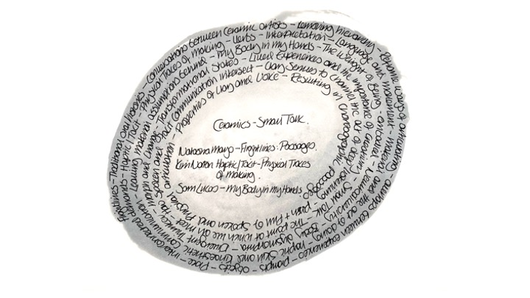
The term ‘Occupational Folklore’ refers to the social expressions of people, linked to the work that they do. This exposition explores the possibility of there being a common language of clay, a vernacular that can be used to story-tell, and how stories arise from the studio, from the intersection of making, thinking/talking and clay.
Comprising three discrete projects, we move from a study of the materiality of voice to establishing a vocabulary of clay to a narrative collection of embodied experiences. Their combined knowledge leads to a fourth project, in the form of conversations held whilst making around a studio table. Passages from the exchange are filmed and analysed from the perspective of ‘small stories’, an oral history methodology that gives focus to the speculative, iterative and nuanced decisions often overlooked in a conventional account of a conversation. When applied to the making process, it begins to uncover a deeper understanding of the processual and implicit decisions that take place through the interaction of making, thinking and material properties. The passages allow us to witness the very emergence of storytelling taking place, the moment at which life experiences intersect with formations in clay.
The aim of collecting all four projects together is not simply to document examples but, as with all modes of folklore, to use story to identify and share more resilient and connected ways of being in the world. Within these intersections lie the porous and mutable properties of clay practice, that are rapidly redefining the wider field of ceramics in terms of its social contribution. Contained within these social expressions of clay lies its ability to connect with and contribute to wider community and environmental issues. The term occupational folklore is used in recognition of the historic continuity of behaviours, actions and beliefs that arise from these interactions, if only we shift our focus from individual attainments to the collective knowledge and transferable learning these small stories contain.
Troubling the Ideal Landscape A Visual Narrative
(2025)
Ilaria Biotti
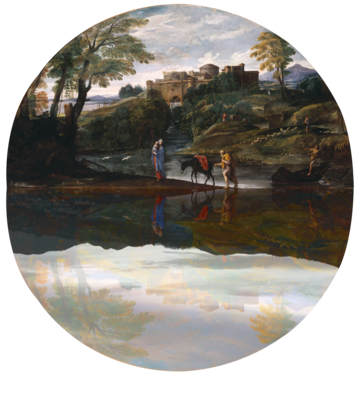
Troubling the Ideal Landscape – A Visual Narrative critically examines possible intersections between imagination and physical landscape. Through a practice-based approach, this exposition explores the composition and decomposition of ideal landscapes, with a focus on Cannero Riviera, a small Italian village. Grounded in my doctoral research at PhDArts, a collaboration between ACPA, Leiden University, and the Royal Academy of Art in The Hague, the project employs spatial montage as both a methodological tool and an artistic outcome.
By fragmenting the landscape into moving images, I seek to disrupt conventional visual regimes and reflect on the ideological forces shaping the village and its environment. This approach is informed by Aby Warburg's Mnemosyne Atlas, where fragmented images form unstable constellations that navigate multiple meanings, temporalities, and spaces. Engaging with Warburg’s method, I question crystallised, linear visualisations of the ideal, focusing on dynamic processes of spatial composition.
The exposition aims to reframe landscape imagery not as a passive backdrop, but as an active force. It proposes a model of the ideal landscape that resists linearity, embracing a complex, shifting narrative that questions the visual regimes through which contemporary imaginaries of place are constructed.
The Antonioni House: Sensory-Temporal Architecture
(2025)
Peter Spence
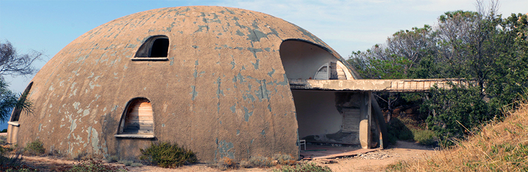
In this paper I propose to re-visit the outcome of a research trip I made a few years ago to the island of Sardinia in order to capture stills and video of a dilapidated villa, La Cupola, once belonging to the Italian filmmaker Michelangelo Antonioni. The research output took the form of an essay video using a film studies methodology to critically re-assess Antonioni’s classic 1960 film L’Avventura. The research took the form of what I would term an occularcentric-cognitive approach whereby my analysis was based primarily on my visual interpretation of the villa. My mental image of La Cupola on first hearing about it was replaced by the online image in my research process, which in turn was replaced by the real image when I arrived at the site, and ultimately by the mediated images of my audio-visual essay. But what wasn’t included in this original research was an unexpected opportunity to enter inside La Cupola, which I retrospectively realised offered an entirely new understanding of the space. With reference to both film and architectural theory, this paper will seek to understand my encounter with the villa according to a primarily sensory and embodied interpretation rather than a sighted one.