The Research Catalogue (RC) is a non-commercial, collaboration and publishing platform for artistic research provided by the
Society for Artistic Research. The RC is free to use for artists and
researchers. It
serves also as a backbone for teaching purposes, student assessment, peer review workflows and research funding administration. It strives to be
an open space for experimentation and exchange.
recent activities <>
Help creating expositions in Research Catalogue?
(2026)
Frida Starvid
Do you need help in creating an exposition for your research project in Research Catalogue? I am an artist and freelancing graphic designer who would happily help you.
Contact me for further info!
Email: frida.starvid@gmail.com
Hugarflug 2025 - Unstable Systems
(2026)
Sigmundur Pall Freysteinsson

Unstable Systems
Instability can be a creative force in art, design, and architecture. Artists, designers, and scholars work both with and against systems that are ever-changing, fragile, or unpredictable. Whether dealing with technological systems, ecosystems, social structures, or sensory experiences, instability is often a prerequisite for creation.
Instability opens pathways for new ideas and processes, reshaping how we approach and redesign the systems that shape our lives. It can also refer to the creative act itself—one that does not follow predetermined trajectories or established norms. Art, design, and architecture serve as tools to disrupt stable systems and/or shed new light on systems that appear stable but in reality, they are not. No system is truly stable, and when we resist that instability, it becomes a problem. Instability is perhaps the only certainty we can rely on.
Hugarflug 2025, the annual conference on artistic research, will take place on September 11–12. It will serve as a platform for research that engages with instability across various systems—from technological advancements such as AI and interactive systems to issues related to politics, society, and the environment. We will explore how instability functions as a tool for generating new possibilities while also fueling unrest and transformation within society and academia. The Iceland University of the Arts invites proposals of all kinds, including presentations of ongoing or completed research by our faculty, students, and collaborators.
Animated Ecology
(2026)
Lina Persson
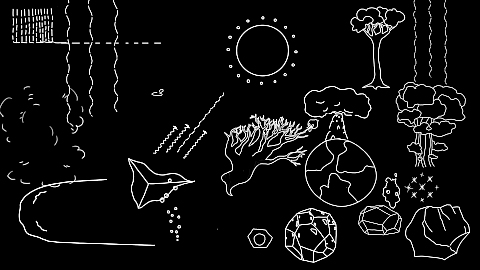
In these works I have explored how I can relate to my environment through my daily practices of teaching, eating, animating etc. I begun the project by improvising lectures for various audiences I wanted to have input from. I have lectured to all possible enteties in the ecosystem I am a part of, from blueberries to colleagues to films. Every time something new continues to take shape. The exposition include essays, paintings and animations.
recent publications <>
Lyssna på Myrstack - Närvaro med skogen och leran
(2026)
Anna Gäfvert
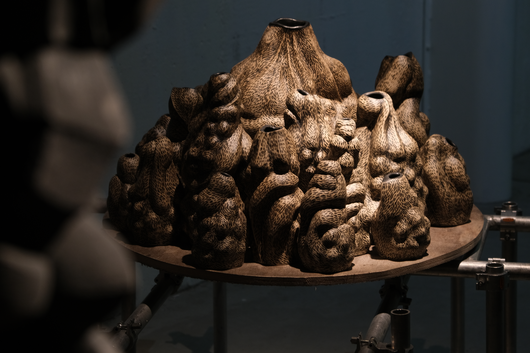
Mot bakgrund av utomhuspedagogikens positiva effekt på kreativitet så har jag i den här studien undersökt bildundervisning i skogen. I studien använder jag arbetsmetoden A/R/tography och den post-kvalitativa metodologin för att främja ett rhizomatiskt förhållningssätt till undersökandet och lärandet. Studiens fokus är att förändra mål, kravfyllda tankar och ramar för att ge plats åt mer undersökande, experimenterande och fantasifullt förhållningssätt till bildlektionen. Syftet är också att skapa händelser som kan stärka idéprocesser och öka närvaron med omvärlden under bildlektionen genom ett inkluderande och holistiskt tillvägagångssätt. Jag har arbetat med detta genom ett teoretiskt perspektiv som belyser mänskliga och icke-mänskliga aktörers roll i lärandet. Centralt i undersökandet av konstnärliga metoder och material har Jane Bennets begrepp “Thing-power” varit plattformen för att öppna upp en stark närvaro med material och omvärlden. Frågeställningarna som bearbetats är: Hur skapar skogen ett “lärandets rum” som främjar sättet att undersöka material i en bildpedagogisk process? Och: Hur stimulerar perspektivet "Thing-power" en utveckling av bildpedagogiska arbetsmetoder? Frågorna har jag utforskat genom en konstnärlig process med olika händelser som jag i arbetet satt ihop till ett lektionsupplägg i skogen. Två utforskande händelser bearbetas och analyseras utifrån begreppen thing-power, konst-som-görande, ännu-icke-sedda, släta rum och lerbaserad språklighet. Studien har visat hur en större närvaro och uppmärksamhet till de icke mänskliga krafterna hjälper till i konstnärliga processer och att skogen är en plats som gör det enklare att undersöka och experimentera med material på nya sätt.
Latency Records: The Delay, an Inhabitable Field
(2026)
Léo Raphaël

'Latency Records: The Delay, an Inhabitable Field' analyses a fictional mediated environment by studying the lapses of time involved in its diffusion. Approaching media as a source for new habits of perception over a landscape, it is concerned with the electronic tools used for the representation of nature; in particular those applied for near-real-time broadcast from sensory meteorological tools, webcams or satellites. Introduced with seven images from audiovisual references, punctuated by fourteen quotes from various sources and interwoven to three poems written exclusively for the essay, 'Latency Records: The Delay, an Inhabitable Field' is inspired by humans’ incomprehension of the artificial structures in which they blindly place their hopes for representing the unrepresentable: a living image of the exterior world. In doing so, it delves into humans’ attempts to portray themselves in order to comprehend who they are. Therefore, 'Latency Records: The Delay, an Inhabitable Field' interrogates the instantaneity of these naturalistic archives, ultimately shaping our cognitive engagement with our environment—which acts both as a mirror and a departure from it.
mapping water futures
(2026)
Riekje Paruschke
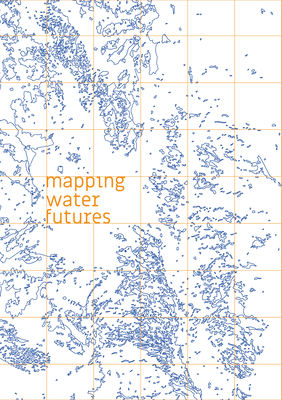
Water covers more than 70% of the earth’s surface, and thus constitutes a major section of the ecosystem on Earth. It is a vital element on earth, all life (as we know it) depends on water to be able to thrive.
The climate has always changed a bit, but in recent years, due to greenhouse gases, the climate has experienced extreme changes which have also strongly impacted the global water cycle. From melting glaciers to ocean acidifications, flash floods, and prolonged droughts, disruptions in ecosystems now happens faster than most species can adapt to. Because of global warming, the atmosphere can hold and transport more moisture.
Water doesn’t have the opportunity to fully infiltrate the soil. This accelerates the hydrological cycle. While it is still important to decelerate this process as much as we can, it is also important to look into strategies of adaptation and think ahead to a future with water that will be compromised.
In this book, we explore water futures through the speculative design approach. This design practice aims to challenge preconceptions, raise questions, and provoke debates. It opened the doors for designers to imagine and explore possible water futures globally.
We start with the water spring in India where the Ganga river starts, then travel further down the river stream. We end up in the Netherlands where different rivers connect to the sea. We continue where the river meets the sea and travel to the salterns in France and Croatia. Here water changes form, turning into gas and flowing through the air as evaporating steam in the geothermal region of Iceland. Eventually this book will end up with the condensation of the fog net in the Namib Desert.