The Research Catalogue (RC) is a non-commercial, collaboration and publishing platform for artistic research provided by the
Society for Artistic Research. The RC is free to use for artists and
researchers. It
serves also as a backbone for teaching purposes, student assessment, peer review workflows and research funding administration. It strives to be
an open space for experimentation and exchange.
recent activities <>
Varder: Words and Images from a Brief Watch in the Arctic
(2026)
Sam Horowitz
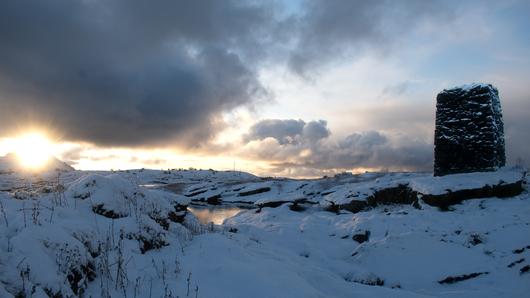
The Varder are a system of marine navigational aids along the Norwegian coast originating from the age of sail. Officially still part of the oldest maritime navigational system still in use, these forms now act as anchors to a physical present. In a digital society losing its patience, the Varder stand in contrast to the accelerations surrounding them: analogue, material, and static.
Staging the Invisible Elephant that Remains Overlooked
(2026)
Verena Miedl-Faißt
In the scope of my PhD-in-Art project “Staging the Invisible Elephant that Remains Overlooked”, I investigate collaborative and co-creative work with children as equal partners – from my perspectives as an artist, workshop leader, teacher, aunt, recent mother, and adult friend. The intersections, tensions, and synergies between artistic research and pedagogical practice form the core of my research.
Spanning 2017–2025 the work unfolds as an open, reflective process grounded in project-based artistic practice, dialogical encounters, and reflective writing. Additionally, reading experiences in different literary and scientific fields serve as resonant spaces in which insights take shape and intensify. Recurring themes include the interplay of structure and freedom; the negotiation of shared authorship, responsibility, representation and ethics in co-creative work with children across different contexts; and the possibilities and limitations of conducting artistic research “at eye level” within school environments. I also examine the potentials that artistic approaches offer in addressing contemporary pedagogical challenges related to digital technologies, social media, and artificial intelligence.
In accordance with the principles of artistic research, I understand ambiguity, contradiction, and subjectivity as methodological strengths. I foreground transparency, vulnerability, and the transformative potential of misunderstanding, and I propose ways in which we might relate to one another differently in a complex world and strengthen democracies at risk.
Letting Nothingness…
(2026)
Elisabeth Laasonen Belgrano, Cheung Ching-yuen
a lesson in the shadows of death
entangled moment of frozen fragments
embodying sacred movements through
air, body, mind, mattering, voicing
as if NOTHING
recent publications <>
Latency Records: The Delay, an Inhabitable Field
(2026)
Léo Raphaël
'Latency Records: The Delay, an Inhabitable Field' analyses a fictional mediated environment by studying the lapses of time involved in its diffusion. Approaching media as a source for new habits of perception over a landscape, it is concerned with the electronic tools used for the representation of nature; in particular those applied for near-real-time broadcast from sensory meteorological tools, webcams or satellites. Introduced with seven images from audiovisual references, punctuated by fourteen quotes from various sources and interwoven to three poems written exclusively for the essay, 'Latency Records: The Delay, an Inhabitable Field' is inspired by humans’ incomprehension of the artificial structures in which they blindly place their hopes for representing the unrepresentable: a living image of the exterior world. In doing so, it delves into humans’ attempts to portray themselves in order to comprehend who they are. Therefore, 'Latency Records: The Delay, an Inhabitable Field' interrogates the instantaneity of these naturalistic archives, ultimately shaping our cognitive engagement with our environment—which acts both as a mirror and a departure from it.
mapping water futures
(2026)
Riekje Paruschke
Water covers more than 70% of the earth’s surface, and thus constitutes a major section of the ecosystem on Earth. It is a vital element on earth, all life (as we know it) depends on water to be able to thrive.
The climate has always changed a bit, but in recent years, due to greenhouse gases, the climate has experienced extreme changes which have also strongly impacted the global water cycle. From melting glaciers to ocean acidifications, flash floods, and prolonged droughts, disruptions in ecosystems now happens faster than most species can adapt to. Because of global warming, the atmosphere can hold and transport more moisture.
Water doesn’t have the opportunity to fully infiltrate the soil. This accelerates the hydrological cycle. While it is still important to decelerate this process as much as we can, it is also important to look into strategies of adaptation and think ahead to a future with water that will be compromised.
In this book, we explore water futures through the speculative design approach. This design practice aims to challenge preconceptions, raise questions, and provoke debates. It opened the doors for designers to imagine and explore possible water futures globally.
We start with the water spring in India where the Ganga river starts, then travel further down the river stream. We end up in the Netherlands where different rivers connect to the sea. We continue where the river meets the sea and travel to the salterns in France and Croatia. Here water changes form, turning into gas and flowing through the air as evaporating steam in the geothermal region of Iceland. Eventually this book will end up with the condensation of the fog net in the Namib Desert.