The Research Catalogue (RC) is a non-commercial, collaboration and publishing platform for artistic research provided by the
Society for Artistic Research. The RC is free to use for artists and
researchers. It
serves also as a backbone for teaching purposes, student assessment, peer review workflows and research funding administration. It strives to be
an open space for experimentation and exchange.
recent activities <>
Can Philosophy Exist?
(2026)
Zoe Panagiota (aka Betty) Nigianni
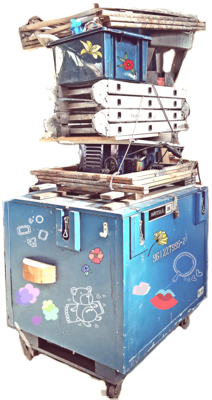
Photography with sound and net art, drawing, found folk sculpture with digital drawing, readymades, 2012, 2020, 2021. Accompanied by archival material.
The exposition exposes the question of what is artistic research. Usurping the mini-essayist format, which is traditionally associated with research in say the area of philosophy, the exposition formally operates on different levels. I selectively included visual art research material from my own artistic archive, as well as anonymous material that's readily available from the internet and in film archives. In this way, I wanted to emphasise the role of archiving and using archives in the artistic process, as an element of artistic research and artistic production that might involve remediation. Taking that we live in a largely theoretic culture, which means that we use external information systems for storage and retrieval of written, visual and other material, the implication is that art is part of this theoretical system.
Moreover, I specifically problematise the notion of value in relation to the visual arts by using the popular media figures of the counterfeit and the impostor, with reference to the so-called "impostor syndrome", correlated with being a minority of some sort in one's field: "A different thought is that two people may be answerable to the very same standard of success or competence, yet be subject to different epistemic standards for reasonable belief in their respective success or competence. This would be an example of pragmatic encroachment." (Katherine Hawley, "What is Impostor Syndrome?", Proceedings of the Aristotelian Society Supplementary Volume 93, 2019). I use visual art and figurative examples as illustrations, adapting from methods, such as the example, used in analytic philosophy.
I suggest that some artworks operate as philosophical provocations of the archive: "The artwork just exists", as Frank Stella argued. Artworks and archival artistic material are offered for aesthetic contemplation; they don't possess any "magical" qualities, they don't cause any phenomena or events in the world. In this view, I ordered this exposition as a design proposal for two independent, yet interconnected exhibitions: one for the final artistic exhibition show; and one as a general overview for the artist's studio, set up as a stand alone, if parallel, exhibition.
The conception of two parallel expositions as mocks of two parallel exhibitions is inspired by Jean Baudrillard's concept of "hyperreality", which refers to the blurring between reality and simulated representations, when sometimes, influenced by media, film, television, advertising, people tend to accept images or perceptions not corresponding to actual reality. The exposition hints at artists and others, who use different modes of communication, as skillfully exploiting the Baudrillardian concept of "hyperreality", with its accompanied "simulacra" and "simulations", for making indirect references on a sociological level; as well as for putting forward a critical commentary on the artistic and conceptual level.
Astrattismo
(2026)
Giusirames
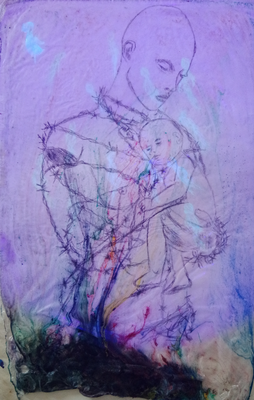
This thesis stems from the need to investigate an original painting technique developed by the author, which combines figurative painting and solidified atmospheric phenomena.
The heart of the research is a simple and radical question:
How can an ephemeral phenomenon be made permanent?
The answer takes shape through the creation of sheets of solidified rain, transparent membranes that preserve the logic of the drop, the flow, the surface tension. These membranes are superimposed on figurative paintings, generating a multidimensional visual language.
Transparency is not an aesthetic effect, but a temporal device: it freezes the work, suspends it, holds it in an eternal instant.
Narratografía y procesos de mediación gráfica en contextos de migración
(2026)
Pinzón Lizarazo Oscar Daniel
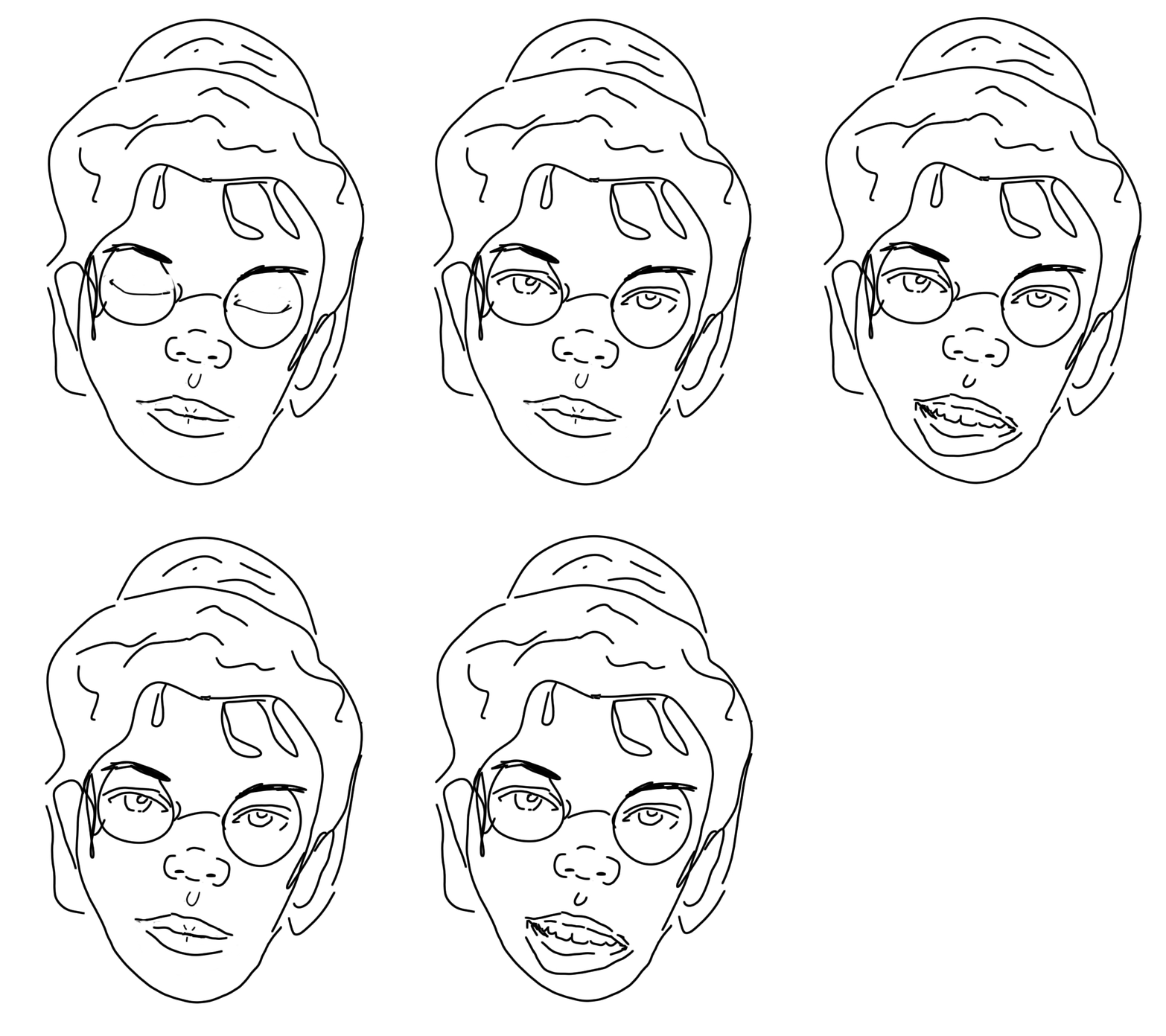
Esta web es producto digital del proyecto Narración gráfica, laboratorio de objetos, cartografía digital y mediaciones en experiencias con comunidades de artistas migrantes, registrado con Cód. 10160180521 proyecto institucionalizado sin financiamiento del Centro de Investigaciones y Desarrollo Científico - CIDC de la Universidad Distrital Francisco José de Caldas.
Hace parte del proceso metodológico de desarrollo de la tesis doctoral Narración Gráfica de Experiencias: Intercambios en Imágenes de migración.
Con la realización del proyecto, se busca incentivar el uso de la narración gráfica como proceso horizontal que permite relatar y revisar la importancia que tienen las prácticas artísticas de las comunidades en la construcción de tejido social. La propuesta de mediación artística se visibiliza como una estrategia colaborativa que permite el diálogo y el intercambio.
El trabajo se inscribe y contribuye a las apuestas del Grupo de investigación para la creación artística y de la Línea de investigación en: Estudios críticos de las corporeidades, las sensibilidades y las performatividades. Adscritos al doctorado en estudios artísticos de la Universidad Distrital Francisco José de Caldas.
recent publications <>
how to strike roots into the void – a trapeze artists view on artistic processes as permacultural growing
(2026)
Carmen Raffaela Küster
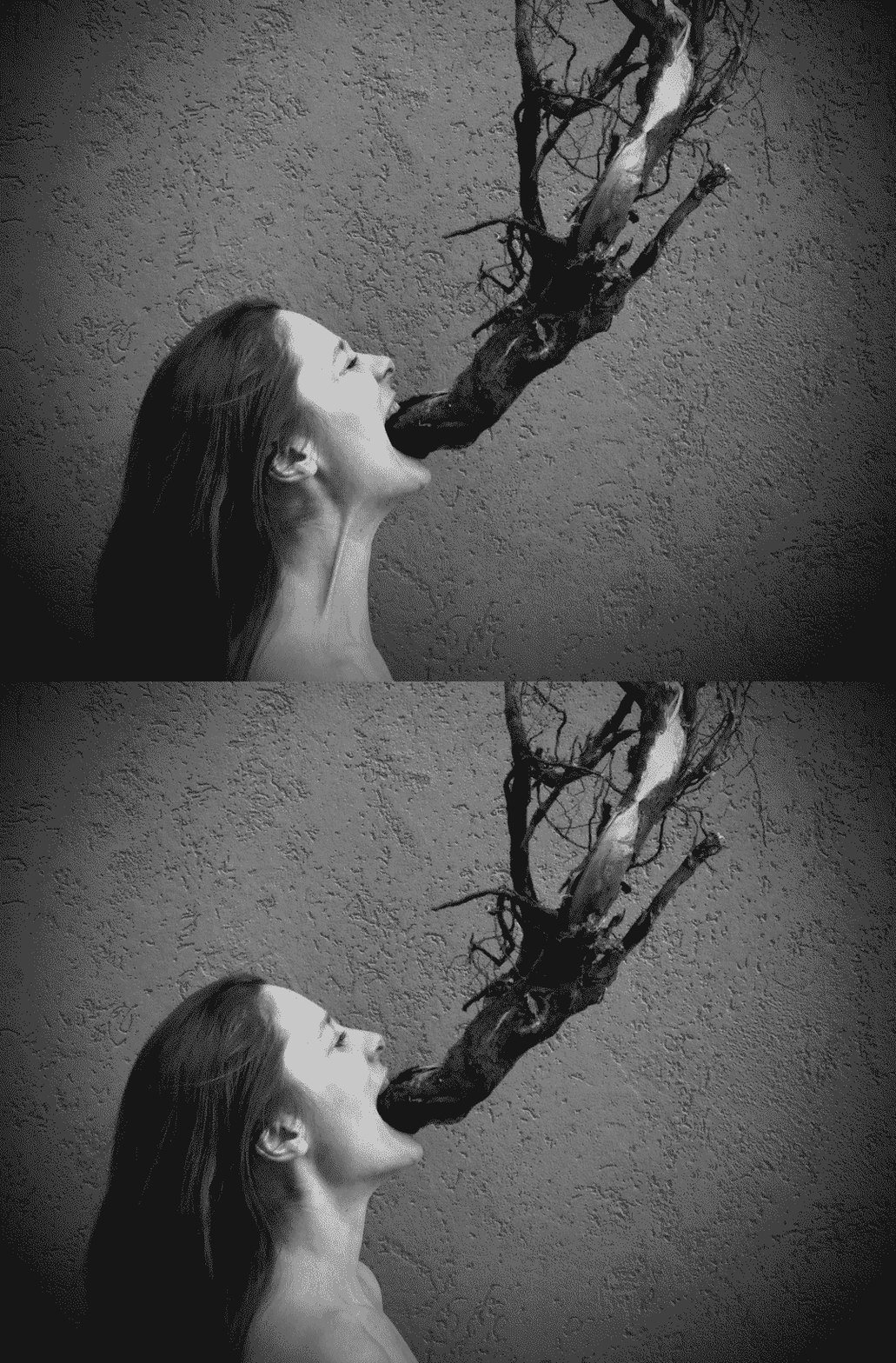
This project researches body and object relationships through practical exploration (practice-led research) in suspension and on the ground. It illuminates connected thoughts linked to posthuman philosophy, permaculture, physical movement and contemporary circus.
Our perception of the world is getting more global and connected, but we have not realised yet the full complexity of all the interdependencies and interplays. In fact it is more than questionable whether this might be graspable for any human to its full extend at all…
The state of being ‘in suspension’ is taken as an analogy for the times we live in – life itself. In a world in which pop-stars sing ‘I have no roots’ (Merton, 2016), mass-migration makes people leave their homes involuntarily and others choose nomadic livestyles that leave them only loosely connected with a geographical place and a single culture. But at the same time, we are always tightly connected (digitally) with ‘the whole world’.
'How to strike roots into the void?' is the essential question of this interdisciplinary research, which has its roots deep 'down' in aerial acrobatic movement. How could this rooting be possible at all? And in which ways? – referring to the question of quality: 'HOW' can we in these times as human being strike out our own roots? Who and what can keep us grounded? To whom or what are we reaching out to search for connection? What nourishes us? And where to hold on to, if the substrate is emptiness – the Void – the uncertainty of life itself?
Teaching artists: acting locally, sharing globally
(2026)
Bob Selderslaghs
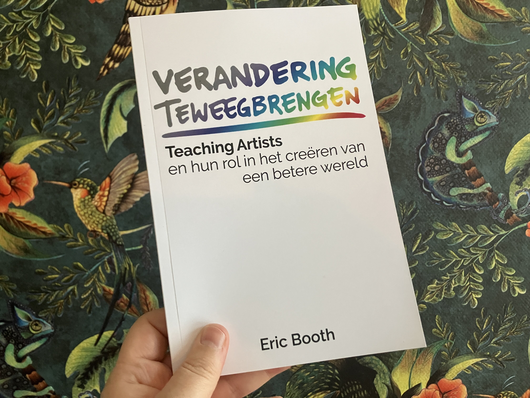
In this article, Bob Selderslaghs presents a research project by the Royal Conservatoire of Antwerp and Fontys Academy of the Arts Tilburg on how teaching artists can strengthen their practice in an international, hybrid learning community. Through inspiring lectures, practical experiments and in-depth reflection, participants gained recognition for their practice, expanded their artistic-pedagogical repertoire and built valuable contacts. The project emphasises the power of flexible frameworks, embodied learning and sustainable networks for greater visibility and impact in this dynamic field.
Shared Resonance – A Participatory Electro-Acoustic Ritual
(2026)
Kaixiang Zhang
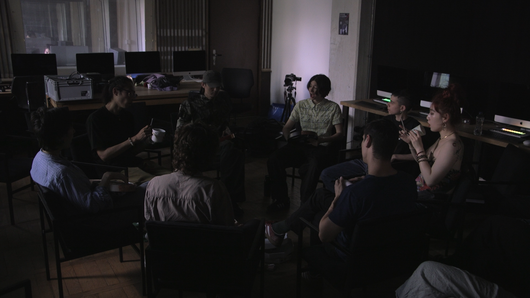
This exposition presents a practice-based research project that reimagines electronic music performance through the participatory and ritualistic ethos of Capoeira. Initially motivated by a critique of audience passivity in contemporary electronic performance, the project shifted from “translating” Capoeira into an electronic context toward constructing ritual-based frameworks that foster shared authorship, presence, and collective agency.
The research unfolded through iterative processes of design, testing, and reflection. Early on, ritual was established as a conceptual foundation, situating the work within debates on participation, spectacle, and cultural belonging. Subsequent phases explored instrument-making as both technical and symbolic practice, producing DIY electroacoustic objects (Lua and Mar) that embody accessibility, agency, and transparency. Attention then turned to orchestrating the ritual performance itself, experimenting with spatial, temporal, and sensory structures that redistribute power and unsettle the artist–audience divide. The process culminated in a public performance integrating instruments, structure, and reflection, while raising new questions around documentation, belonging, and the fragility of agency.
From these iterations emerged the framework of ritual as multi-dimensional architecture: a compositional and perceptual field where time, space, materials, and social dynamics interweave to sustain collective creativity. The exposition combines documentation of instruments and performances with reflective writing, offering both a record of process and a proposition for future development.