The Research Catalogue (RC) is a non-commercial, collaboration and publishing platform for artistic research provided by the
Society for Artistic Research. The RC is free to use for artists and
researchers. It
serves also as a backbone for teaching purposes, student assessment, peer review workflows and research funding administration. It strives to be
an open space for experimentation and exchange.
recent activities <>
WAP25 - Walking as Passion and Embodied Thinking
(2026)
WAP
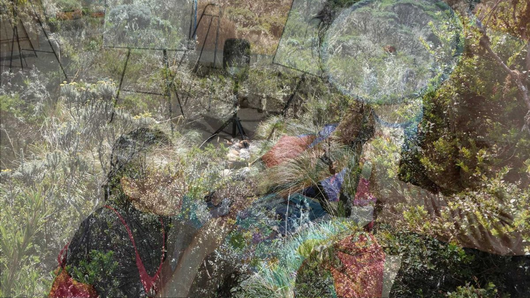
WAP/Walking As Practice Program takes place where the forest meets the sea in the Northern Stockholm Archipelago, Sweden. It is a program for self-identifying walking artists. Exploring and sharing strategies for proximity through artistic expressions in the field of walking practices, creating a transformative, dynamic space for art that engages with life and nature. This involves critical and poetic explorations influenced by the immediate surroundings.
We participate in each other’s walkshops or interventions, and we also host Share Sessions to familiarize ourselves with each other’s practices. Additionally, we introduce the Research Catalogue for final dissemination, where each artist create their individual exposition.
LANGUAGE-BASED ARTISTIC RESEARCH (SPECIAL INTEREST GROUP)
(2026)
Emma Cocker, Alexander Damianisch, Lena Séraphin, Cordula Daus
Conceived and co-organised by Emma Cocker, Alexander Damianisch, Cordula Daus and Lena Séraphin, this Society of Artistic Research Special Interest Group (SAR SIG) provides contexts for coming together via the exchange of language-based research. The intent is to support developments in the field of expanded language-based practices by inviting attention, time and space for enabling understanding of/and via these practices anew.
Antiracism ... production
(2026)
Artur Uronen
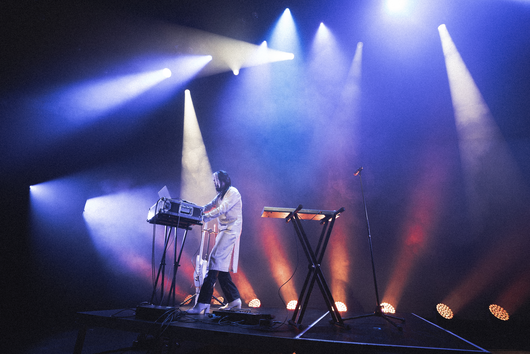
This research project examines antiracist ideas and approaches presented by the likes of Ibram X. Kendi and Ijeoma Oluo with the goal of finding out if they can be effectively applied into modern music production pedagogy. The study is conducted by using the approach of qualitative research, and reflects on the themes of representation, infrastructure, and power dynamics.
Keywords:
Antiracism, equity, justice, empowerment, representation, white fragility, white privilege, white supremacy, caste, race, CRT (critical race theory), music production, pedagogy
recent publications <>
Lyssna på Myrstack - Närvaro med skogen och leran
(2026)
Anna Gäfvert
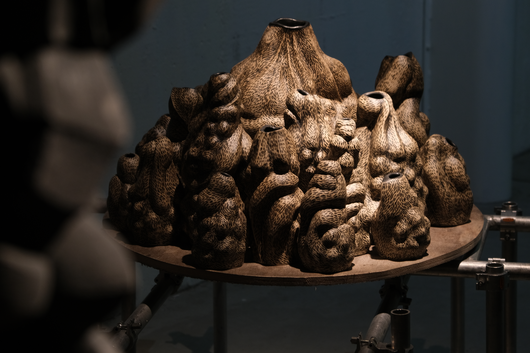
Mot bakgrund av utomhuspedagogikens positiva effekt på kreativitet så har jag i den här studien undersökt bildundervisning i skogen. I studien använder jag arbetsmetoden A/R/tography och den post-kvalitativa metodologin för att främja ett rhizomatiskt förhållningssätt till undersökandet och lärandet. Studiens fokus är att förändra mål, kravfyllda tankar och ramar för att ge plats åt mer undersökande, experimenterande och fantasifullt förhållningssätt till bildlektionen. Syftet är också att skapa händelser som kan stärka idéprocesser och öka närvaron med omvärlden under bildlektionen genom ett inkluderande och holistiskt tillvägagångssätt. Jag har arbetat med detta genom ett teoretiskt perspektiv som belyser mänskliga och icke-mänskliga aktörers roll i lärandet. Centralt i undersökandet av konstnärliga metoder och material har Jane Bennets begrepp “Thing-power” varit plattformen för att öppna upp en stark närvaro med material och omvärlden. Frågeställningarna som bearbetats är: Hur skapar skogen ett “lärandets rum” som främjar sättet att undersöka material i en bildpedagogisk process? Och: Hur stimulerar perspektivet "Thing-power" en utveckling av bildpedagogiska arbetsmetoder? Frågorna har jag utforskat genom en konstnärlig process med olika händelser som jag i arbetet satt ihop till ett lektionsupplägg i skogen. Två utforskande händelser bearbetas och analyseras utifrån begreppen thing-power, konst-som-görande, ännu-icke-sedda, släta rum och lerbaserad språklighet. Studien har visat hur en större närvaro och uppmärksamhet till de icke mänskliga krafterna hjälper till i konstnärliga processer och att skogen är en plats som gör det enklare att undersöka och experimentera med material på nya sätt.
Latency Records: The Delay, an Inhabitable Field
(2026)
Léo Raphaël

'Latency Records: The Delay, an Inhabitable Field' analyses a fictional mediated environment by studying the lapses of time involved in its diffusion. Approaching media as a source for new habits of perception over a landscape, it is concerned with the electronic tools used for the representation of nature; in particular those applied for near-real-time broadcast from sensory meteorological tools, webcams or satellites. Introduced with seven images from audiovisual references, punctuated by fourteen quotes from various sources and interwoven to three poems written exclusively for the essay, 'Latency Records: The Delay, an Inhabitable Field' is inspired by humans’ incomprehension of the artificial structures in which they blindly place their hopes for representing the unrepresentable: a living image of the exterior world. In doing so, it delves into humans’ attempts to portray themselves in order to comprehend who they are. Therefore, 'Latency Records: The Delay, an Inhabitable Field' interrogates the instantaneity of these naturalistic archives, ultimately shaping our cognitive engagement with our environment—which acts both as a mirror and a departure from it.
mapping water futures
(2026)
Riekje Paruschke
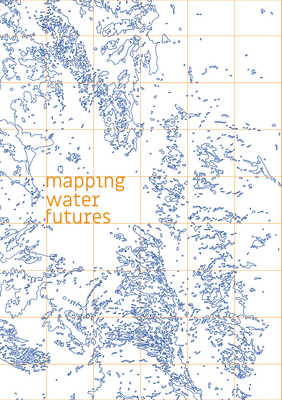
Water covers more than 70% of the earth’s surface, and thus constitutes a major section of the ecosystem on Earth. It is a vital element on earth, all life (as we know it) depends on water to be able to thrive.
The climate has always changed a bit, but in recent years, due to greenhouse gases, the climate has experienced extreme changes which have also strongly impacted the global water cycle. From melting glaciers to ocean acidifications, flash floods, and prolonged droughts, disruptions in ecosystems now happens faster than most species can adapt to. Because of global warming, the atmosphere can hold and transport more moisture.
Water doesn’t have the opportunity to fully infiltrate the soil. This accelerates the hydrological cycle. While it is still important to decelerate this process as much as we can, it is also important to look into strategies of adaptation and think ahead to a future with water that will be compromised.
In this book, we explore water futures through the speculative design approach. This design practice aims to challenge preconceptions, raise questions, and provoke debates. It opened the doors for designers to imagine and explore possible water futures globally.
We start with the water spring in India where the Ganga river starts, then travel further down the river stream. We end up in the Netherlands where different rivers connect to the sea. We continue where the river meets the sea and travel to the salterns in France and Croatia. Here water changes form, turning into gas and flowing through the air as evaporating steam in the geothermal region of Iceland. Eventually this book will end up with the condensation of the fog net in the Namib Desert.