The Research Catalogue (RC) is a non-commercial, collaboration and publishing platform for artistic research provided by the
Society for Artistic Research. The RC is free to use for artists and
researchers. It
serves also as a backbone for teaching purposes, student assessment, peer review workflows and research funding administration. It strives to be
an open space for experimentation and exchange.
recent activities <
Material for Gifts from the Sentient Forest
(2025)
Annette Arlander
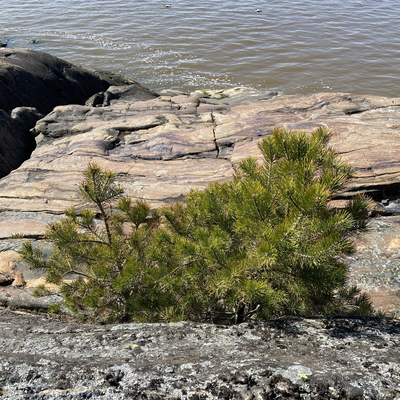
This page is under construction
It contains material created for and in the context of the research project Gifts from the Sentient Forest at the University of Lapland. See https://www.sentientforestproject.com
WITHDRAWING THE PERFORMER
(2025)
Charlotta Ruth, Jasmin Schaitl

WITHDRAWING THE PERFORMER
WITHDRAWING THE PERFORMER is conceptualized and conducted collaboratively by Charlotta Ruth (SE/AT) and Jasmin Schaitl (AT). The starting point are two artistic practices based on methods of mindfulness and game/play; Performances for the Mind and Choreographic Clues. These two individual perspectives on participation emerge from the project leaders’ ongoing artistic research and merge in their common artistic curiosity in the facilitator role and facilitating the creation of immaterial material. Accompanied by neuroscientist and performer Imani Rameses (US/AT) the research asks:
How does immaterial material perform within participatory situations?
What role does participatory setting play and how does participation differ if situations are communicated as a workshop, a treatment, a practice or a performance?
How can neuroscience support how immaterial and participatory art practices are developed and described?
What relation exists beyond involvement and how can a participant become the situation rather than being part of a situation? What has to occur in the mind and body for this to happen?
Through practice and dialogue conducted with experts in the fields of contemplative sciences, sound art, choreography, game art and somatics, the research explores how input from participants (e.g. memory, thought, emotion) can be placed at the centre of a flexible yet framed performance situation.
WITHDRAWING THE PERFORMER was realised in collaboration with the Angewandte Performance Laboratory 2021-2022.
In the course of the project, a lecture was given at the Center for Didactics of Art and Interdisciplinary Education, and a public series was realised at Kunsthalle, Wien & Angewandte Performance Lab.
Collaborating expert practitioners and dialogue partners are: Philipp Ehmann (AT), Nikolaus Gansterer (AT), Mariella Greil (AT), Dennis Johnson (US/AT), Anne Juren (FR/AT), Krõõt Juurak (EE/AT), Imani Rameses (US/AT), Christian Schröder (AT), Lucie Strecker (DE/AT).
"Esparto, approached"; Field insights on resisting disposability
(2025)
Pilar Miralles
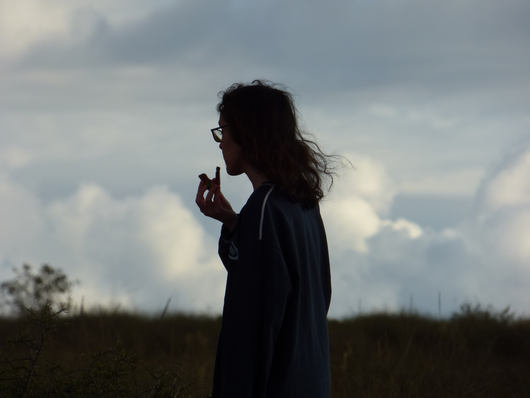
In this exposition, I discuss the multimedia installation "Esparto, approached", to which I opened doors last May 10th, 2025, in Organo Hall, Helsinki Music Center. "Esparto, approached" is the first of a series of three installations representing the artistic component of my doctoral degree at the Sibelius Academy, Uniarts Helsinki. The research project in which this installation is contextualized is currently titled "Listening through remembrance: An autoethnography of presence in the age of disposability". In this artistic research, the notions of listening, remembering, and presence-making are interwoven in an attempt to understand how we confer meaning and value on things despite our embeddedness in a world of disposable nature, where things are susceptible to being quickly discarded, replaced, and, therefore, forgotten.
This exposition opens up a space of reflection in the aftermath of "Esparto, approached". The installation represented a collective recall of the field practice that led me to search for signs of durability in abandoned contexts of my homeland in rural Southeastern Spain. This exposition poses the following questions about it: What happened? (Description); What does "what happened" mean? (Analysis); And, how does "what happened" keep happening now? (Further becomings). The objective of creating an online exposition right after the event is to open a window to the reflective process of this investigation before its completion, thus making visible its traces. The process itself is therefore turned into an accessible outcome that manifests the continual nature of the project as a whole.
recent publications <>
Unsettled Subject: From Emancipation to Separation
(2026)
Martin Pšenička
This essay is inspired by the contributions to this issue, whose common denominator seems to be the transformation of the nature of authorship and the position of the authorial subject, reflecting the broader theme of the position of the subject in the contemporary world. Some authors, responding to ArteActa’s previous call for submissions, “AI (and) Art: The Poetics of Prompting,” explore the changing conditions of artistic work with AI, while others focus on the interaction between materiality and human perception. All raise urgent questions related to the concept of the subject and the connection between the perceiving mind and the surrounding world. Through a historical reflection of poetics as the art of “prompting,” the text addresses theoretical conceptualization of the subject, in which emancipation at the level of the perceiver plays an increasingly important role. With the advent of AI as a “separate intellect” (Agamben 2025), the emancipation and transformation of (creative) subject raises questions stemming from today's paradox, in which all important and necessary emancipation efforts seem to be distorted or lead to tendencies that brutally contradict them. In this context, does AI bring about the final stage of the emancipation of the subject, or does this autonomous intellect enable hedonistic ochlos-authorship? Without reviving the laments of the past, the essay attempts to point out the fragility and uncertainty of the subject facing unprecedented pressure.
how to strike roots into the void – a trapeze artists view on artistic processes as permacultural growing
(2026)
Carmen Raffaela Küster
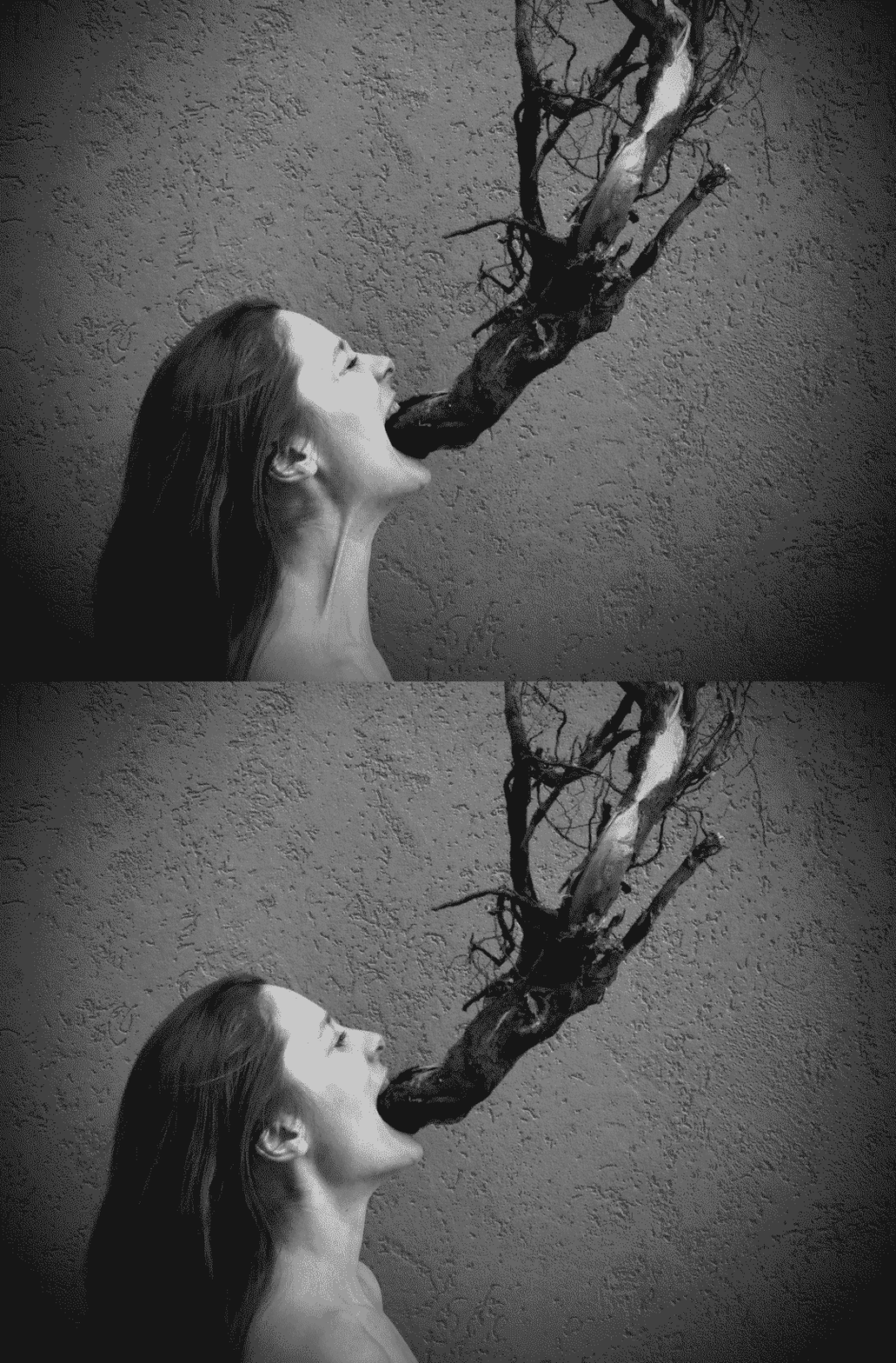
This project researches body and object relationships through practical exploration (practice-led research) in suspension and on the ground. It illuminates connected thoughts linked to posthuman philosophy, permaculture, physical movement and contemporary circus.
Our perception of the world is getting more global and connected, but we have not realised yet the full complexity of all the interdependencies and interplays. In fact it is more than questionable whether this might be graspable for any human to its full extend at all…
The state of being ‘in suspension’ is taken as an analogy for the times we live in – life itself. In a world in which pop-stars sing ‘I have no roots’ (Merton, 2016), mass-migration makes people leave their homes involuntarily and others choose nomadic livestyles that leave them only loosely connected with a geographical place and a single culture. But at the same time, we are always tightly connected (digitally) with ‘the whole world’.
'How to strike roots into the void?' is the essential question of this interdisciplinary research, which has its roots deep 'down' in aerial acrobatic movement. How could this rooting be possible at all? And in which ways? – referring to the question of quality: 'HOW' can we in these times as human being strike out our own roots? Who and what can keep us grounded? To whom or what are we reaching out to search for connection? What nourishes us? And where to hold on to, if the substrate is emptiness – the Void – the uncertainty of life itself?
Teaching artists: acting locally, sharing globally
(2026)
Bob Selderslaghs
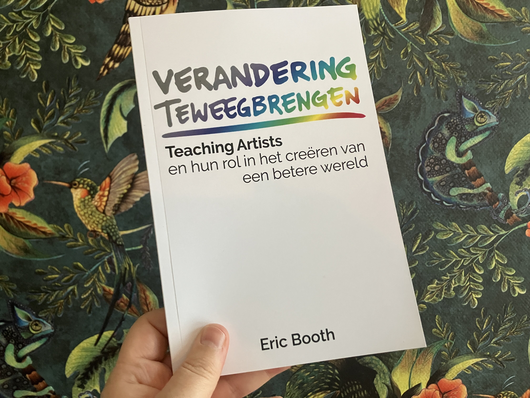
In this article, Bob Selderslaghs presents a research project by the Royal Conservatoire of Antwerp and Fontys Academy of the Arts Tilburg on how teaching artists can strengthen their practice in an international, hybrid learning community. Through inspiring lectures, practical experiments and in-depth reflection, participants gained recognition for their practice, expanded their artistic-pedagogical repertoire and built valuable contacts. The project emphasises the power of flexible frameworks, embodied learning and sustainable networks for greater visibility and impact in this dynamic field.